
Barbra Streisand, a legendary performer, made an innocent comment on one of Melissa McCarthy’s Instagram posts, which sparked a heated discussion about body image, body shaming, and the rising use of medications for weight loss management.
The situation unfolded when McCarthy, the 53-year-old Emmy-winning actress and comedian, shared a pair of photos on Sunday showing her posing with director Adam Shankman at a glitzy gala in Los Angeles over the weekend.
In the comments section under McCarthy’s post, Streisand, 82, initially wrote, “Give him my regards” in an apparent reference to Shankman before adding the pointed question: “Did you take Ozempic?”
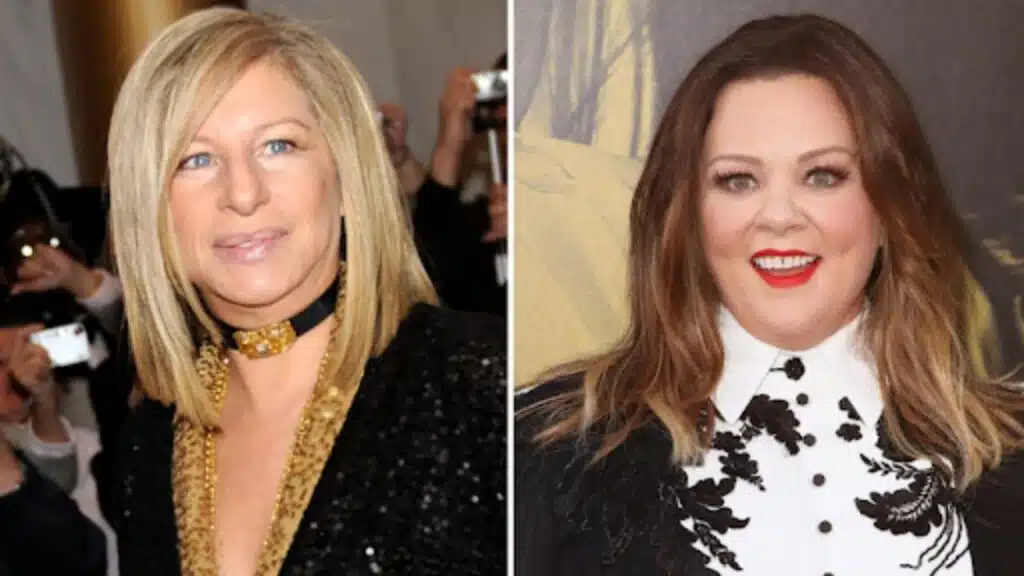
Streisand’s query about whether McCarthy had used the popular diabetes drug Ozempic for weight loss purposes immediately raised eyebrows.
While the music icon’s comment was swiftly deleted, it had already been screengrabbed by the popular Instagram account Comments by Celebs, which re-shared it to their millions of followers, accompanied by a pithy “Babs!!” caption.
As the captured comment rapidly spread across social media, it kicked off an impassioned discussion and debate around body shaming, the stigma of weight loss drugs, and the fairness of speculating about someone’s personal health choices. Many criticized Streisand’s comment as an inappropriate and unwarranted line of questioning that could promote feelings of shame.
“Why is it that people that haven’t had obesity care so much? What does it matter, Barbara? If she has or hasn’t, it’s not your concern,” one commenter wrote, adding, “And even if it was meant to be a DM, – still rude!”
Another remarked, “Ozempic, admit or keep silent!! Not one celebrity has admitted to losing over the magic number of 40 pounds in every article written around the world. No one wants to admit they have been on the medication for a year, have dropped 6 sizes and are trying to explain away only 40 pounds. Total nonsense.”
In a follow-up Instagram Story post hours later, Streisand attempted to address and clarify her earlier comment, writing, “OMG – I went on Instagram to see the photos we’d posted of the beautiful flowers I’d received for my birthday!
Below them was a photo of my friend Melissa McCarthy, who I sang with on my Encore album. She looked fantastic! I just wanted to pay her a compliment. I forgot the world is reading!”
Streisand’s reference to Ozempic underscored the drug’s soaring popularity and use over the past couple of years, as a new generation of weight loss medications have become more widely prescribed and embraced. Both Ozempic (semaglutide) and Mounjaro (tirzepatide) are FDA-approved for treating type 2 diabetes but are also commonly prescribed off-label to aid with weight management.
Two other drugs, Wegovy and Zepbound, contain similar active ingredients as Ozempic and Mounjaro, respectively but have been specifically approved by the FDA as chronic weight management treatments for obese or overweight patients with weight-related health conditions.
As these powerful new weight loss drugs have exploded in popularity, particularly among celebrity and influencer circles, their increased visibility has sparked important conversations around society’s understanding and perceptions of obesity as a chronic medical condition.
Prominent public figures like Oprah Winfrey, who has been open about using Ozempic injections to help maintain her weight, have spoken candidly about the unfair stigma and judgment that still exists around using medications as part of a weight management strategy.
“The fact that there’s a medically approved prescription for managing weight and staying healthier, in my lifetime, feels like relief, like redemption, like a gift, and not something to hide behind and once again be ridiculed for,” Winfrey stated when confirming she takes Ozempic.
According to leading experts in obesity medicine, much of the persistent stigma stems from it being one of the most outwardly visible yet grossly misunderstood medical conditions.
While obesity affects a staggering 41.9% of adults in the United States based on CDC data, it is still often viewed through an inaccurate lens of personal responsibility rather than as the complex, chronic metabolic disease influenced by genetics and biological factors that modern science recognizes.
“The reality is that, yes, obesity is a disease, but unlike other diseases, you can see it. That’s part of the issue,” said Dr. Caroline Apovian, an endocrinologist and co-director of the Center for Weight Management and Wellness at Brigham and Women’s Hospital in Boston. “And its not a disease that affects 1 in a million. It affects 42% of adult Americans.”
Dr. Fatima Cody Stanford, an obesity medicine physician and scientist at Massachusetts General Hospital and Harvard Medical School, argues it is not only inappropriate but patently unfair for others to scrutinize how any individual patient chooses to proactively treat their obesity and pursue better health.

“We shouldn’t be able to make a judgment call on how a person has chosen to address this disease, whether they’ve chosen lifestyle or behavioral modifications, whether they’ve chosen medicines, whether they’ve chosen metabolic or bariatric surgery or, for many of my patients, all of the above,” Stanford told ABC News.
“Individuals that have chosen these strategies don’t owe anyone an explanation on how or why or when they’ve chosen to use the strategies to address their chronic disease of obesity.”
Part of the misunderstanding around weight loss medications like Ozempic, Wegovy and Mounjaro stems from the fundamental way they work. These drugs are part of a class that mimics and amplifies the effects of natural hormones like glucagon-like peptide-1 (GLP-1) that regulate appetite, feelings of fullness and slow digestion.
“I think a lot of people don’t know that every single human who was ever born and lived has GLP-1s in their body,” explained Stanford. “Those of us that happen to have a leaner body as a baseline just happen to have more GLP-1 at baseline. Those of us who just weren’t born with that privilege happen to need more of this, and maybe get it through medication.”
By framing it through the lens of an inherent physiological imbalance, Stanford rejects the narrative that medications represent “the easy way out” for weight loss. Instead, she views them as leveling the playing field for those whose bodies don’t produce sufficient amounts of these appetite-regulating hormones naturally.
“I don’t care if you’re a celebrity or an average patient without a celebrity status; I don’t think we should judge people for what they are or are not taking,” Stanford stated frankly. “Some of us don’t have the same privilege as others to have a fully functioning body, so let’s give the others a fair shot.”
For her part, while McCarthy has been refreshingly candid about her weight struggles and experiences with body shaming over the years, she has not directly addressed whether she personally uses any medications for weight management.
In a 2016 interview with Refinery29, the Bridesmaids star expressed her dismay with society’s fixation on women’s bodies and weight.
“I’ll be up, I’ll be down, probably for the rest of my life,” McCarthy said at the time. “The thing is, if that is the most interesting thing about me, I need to go have a lavender farm in Minnesota and give this up. There has to be something more. There are so many more intriguing things about women than their butt or they’re this or they’re that. It can’t be the first question every time or a question at all.”
The intense scrutiny and debate sparked by Streisand’s seemingly innocuous Instagram comment lays bare how fraught and sensitive matters of weight and body image remain in current culture, even as new acceptance and treatment paradigms gradually take shape.
As these new weight loss medications become more mainstream, they have the potential to aid millions in achieving better metabolic health.
But incidents like this also demonstrate how much more education and compassion is still needed to fully destigmatize obesity and the variety of paths people may choose to confront it.
The Information is Taken from WION and USA Today