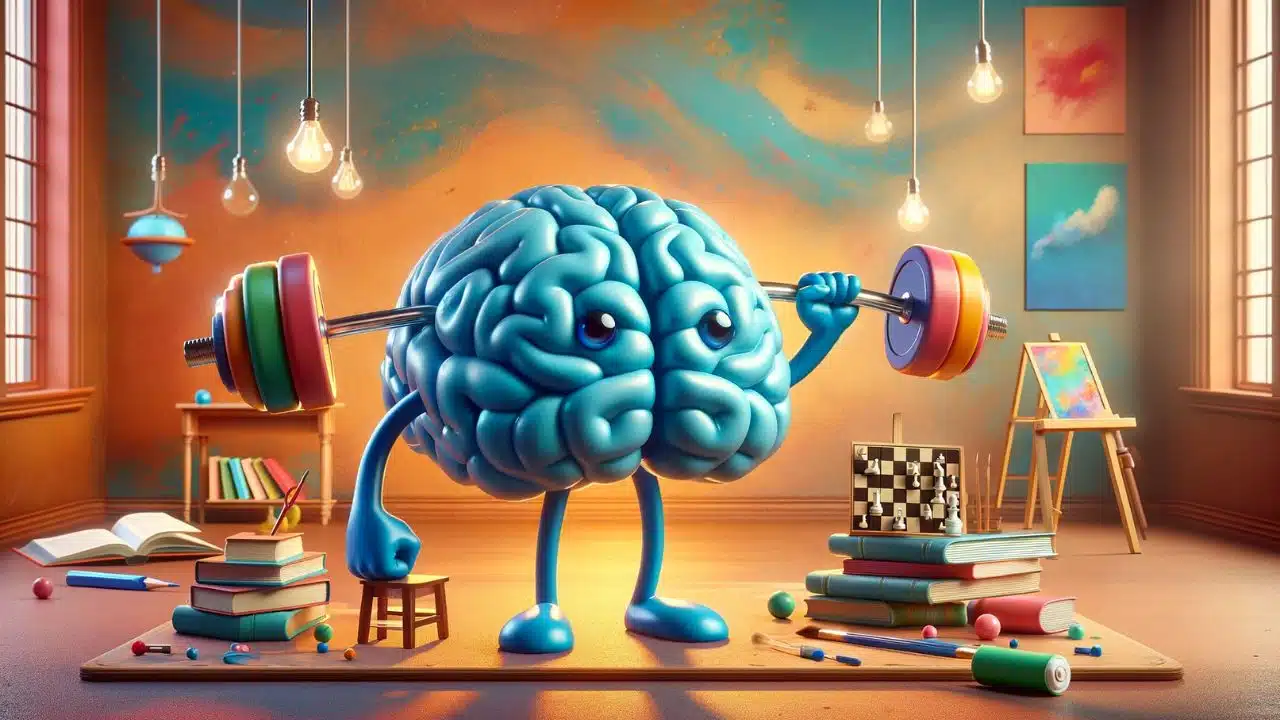
Just like your body, your brain needs regular exercise to stay nimble and healthy. Exercising your brain builds cognitive reserve—extra brain capacity that acts as a buffer against age-related cognitive decline and neurodegenerative diseases like Alzheimer’s.
The good news is that you don’t need fancy equipment or training to get your brain working. Simple lifestyle tweaks and mini-brain training sessions throughout your day are excellent ways to keep your mind mentally fit. Plus, brain exercises can be fun!
This article covers 20 great brain workouts that target different cognitive skills like memory, attention, reasoning, and more. Mix and match activities to keep your routines fresh and engaging. Don’t forget to track your progress to stay motivated!
Content Highlights
- Exercising your brain regularly builds cognitive reserve to buffer against mental decline as you age.
- You don’t need fancy equipment to get a brain workout! Simple activities throughout your day offer mental exercise.
- Word games, memory training, learning new skills, brain training apps, strategy games, and podcasts are great for exercising your brain.
- Try introducing more variety into your brain training so you can continue challenging your mind.
- Aim for 10–15 minutes of brain exercise per day. Going longer yields even more mental benefits.
- To boost your mental fitness, avoid getting stuck in an exercise rut. Branch out, play brain games you enjoy, track your progress, and remember—exercising your brain should be fun! By actively working out your mind, you can nourish your cognitive abilities now and well into the future.
20 Exercises to Keep Your Brain Fit
Word Games
Word games like crossword puzzles and Scrabble flex your vocabulary, memory, and visual-spatial reasoning. Try playing a quick game during commercial breaks or spending 10–15 minutes word gaming after dinner.
Memory Training
Build your powers of recall with memory training apps and games. For example, test yourself on grocery lists, people’s names, song lyrics—anything that engages your memory!
Neurobic Routines
Neurobics involves using your senses in new ways to challenge your brain. Browse Pinterest with your non-dominant hand, drive home a new way, or try identifying objects by touch alone.
Logic Puzzles and Riddles
Flex your critical thinking and problem-solving muscles with logic puzzles, riddles, Sudoku, and nonograms. Start with simpler brainteasers and work your way up.
Speed Reading
Push your brain by speed-reading articles, books, or websites you find interesting. Time yourself and try to beat your speed without compromising comprehension.
Dual N-Back Training
This app-based exercise boosts working memory. It involves remembering a sequence of briefly displayed letters or images. The difficulty increases as you progress.
Learn Something New
Take an online course, learn a language, pick up a musical instrument—the options are endless! Learning engages your brain.
Practice mindfulness
Mindfulness exercises like meditation and yoga train your ability to focus and improve cognitive function. Start small, with 5–10 minutes per day.
Brain Training Games and Apps
Download brain-training games and apps like Lumosity, Elevate, and BrainHQ. These programs adapt to your current level and get harder as you improve!
Verbal Fluency Games
Test your verbal fluency by naming items in a category (e.g., animals, countries) or starting with a certain letter (F words) against the clock.
Try Mnemonic Devices
Mnemonic devices like acronyms and rhymes can help boost your memory for things like steps in a process or items on a list. Invent your own to remember key information.
Dance!
Studies show learning choreographed dances boosts hippocampus volume, which is crucial for memory and learning. All those dance steps are great brain exercise!
Listen to Podcasts
Find some brain-stimulating podcasts like Hidden Brain and The Learning Scientists Podcast so you can exercise your brain during your commute or workout.
Read Outside Your Norm
Push your reading boundaries! Alternate fiction with non-fiction, tackle complex literature, read about new topics—keep your brain guessing.
Have Discussions
Engaging in lively discussions and debates keeps your brain nimble. Share ideas and perspectives with friends or join local debate groups.
Write Stories
Flex your creativity by writing short stories, flash fiction, journal entries, or poems—whichever style you prefer. Make up the events and characters.
Play strategy games
Games like chess, checkers, GO, and bridge activate planning, focus, reasoning skills, and working memory. Find a partner or play online.
Try Brain Training Websites
Websites like BrainMetrix and Happy Neuron offer fun, interactive exercises targeting different cognitive abilities. Mix and match for a workout.
Learn a Musical Instrument
Learning to play an instrument engages many brain regions at once. Dust off those old piano books or try a new challenge like the violin!
Conclusion
Exercising your brain regularly is crucial for maintaining your cognitive health and abilities as you age. Luckily, you don’t need fancy equipment or training programs. Simple lifestyle tweaks like word games, memory exercises, learning new skills, playing brain training games, and engaging in social interaction are excellent ways to keep your mind mentally fit!
Aim for variety in your brain workouts so you can continue challenging yourself without getting bored. Track your progress as you go to stay motivated. Most importantly, have fun getting those brain cells firing! At the end of the day, the best brain exercises are ones you enjoy. So explore different mental activities and find what suits you best. Your brain will thank you.
Frequently Asked Questions
How often should I exercise my brain?
Aim for 10–15 minutes of brain exercise daily as part of your routine. You can break this down into shorter 5-minute sessions throughout the day. Going longer than 15 minutes is great too; just listen to your mental energy levels.
What happens if I don’t exercise my brain?
Failing to exercise your brain can accelerate cognitive decline as you age. Like your body, your brain stays healthier when you keep it active and challenged. So make some time for those brain-training games!
At what age should I start doing brain exercises?
It’s never too early or too late to start exercising your brain! Nourishing cognitive development is great, even for kids. As for adults, engaging in mental workouts can help stave off cognitive decline, starting in your 20s.
Do brain exercises really work?
Yes! Studies demonstrate cognitive and memory perks from various forms of brain training. And participants report feeling more focused, productive, and mentally energized. Brain exercise won’t transform you overnight, but it can drive major mental benefits over time.
Are there apps to exercise my brain?
Definitely! Excellent brain training apps include Lumosity, Elevate, BrainHQ, Fit Brains, CogniFit, and Peak. These apps feature fun mini-games targeting different cognitive skills. Many offer advanced stats tracking too.