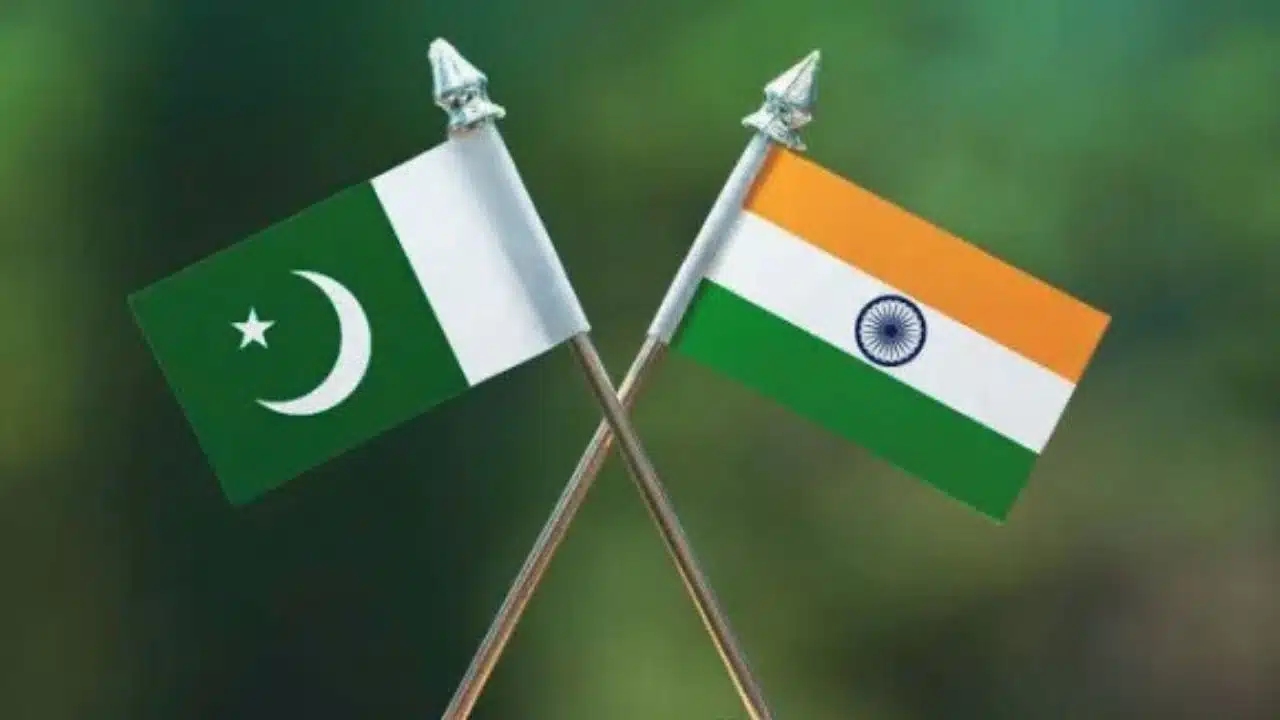
On May 7, 2025, India launched a wide-reaching military offensive code-named Operation Sindoor targeting alleged terrorist infrastructure in Pakistan-administered Kashmir. This marked one of the most significant cross-border military actions between India and Pakistan in recent history, sending shockwaves through global diplomatic circles.
The operation was launched in direct retaliation for the April 22 terror attack in Pahalgam, a popular tourist site in Indian-administered Kashmir, where 26 civilians, most of them Hindu pilgrims, were killed. According to Indian authorities, the attack was orchestrated by Pakistan-based militant organizations, reigniting long-standing tensions between the two nuclear-armed neighbors.
The Kashmir Dispute: A Brief Historical Context
To understand the gravity of this escalation, it’s vital to revisit the decades-long conflict over Kashmir. Since the Partition in 1947, India and Pakistan have fought three wars (1947, 1965, and 1999 Kargil conflict) over Kashmir, and the region remains a flashpoint for military confrontations and insurgency.
While India controls Jammu and Kashmir, Pakistan administers Azad Kashmir and Gilgit-Baltistan. Both nations claim the territory in full, but tensions frequently escalate over alleged cross-border terrorism and military engagements.
Inside Operation Sindoor: Precision, Symbolism, and Strategy
According to official Indian sources, Operation Sindoor was conducted with pinpoint airstrikes and special forces incursions targeting:
-
Training camps operated by Lashkar-e-Taiba (LeT) and Jaish-e-Mohammed (JeM)
-
Ammunition depots and weapon storage sites
-
Communication centers used for coordinating attacks on Indian territory
The operation lasted just 25 minutes, but involved more than a dozen Indian Air Force fighter jets, drone surveillance, and satellite-guided weaponry.
The operation’s name—”Sindoor”—holds deep emotional and cultural symbolism in India. It references the red powder applied by married Hindu women in their hair parting. Following the death of 26 pilgrims, many of them married women, Indian leadership aimed to strike a symbolic chord of grief and justice through the operation’s title.
Collateral Damage and Human Toll
Pakistan’s Claims
Pakistani officials stated that India’s airstrikes caused:
-
31 civilian deaths, including women and children
-
Over 45 people injured
-
Damage to civilian infrastructure in Muzaffarabad, Kotli, and surrounding areas
In a national address, Prime Minister Shehbaz Sharif condemned India’s move as an “unprovoked act of war” and said the country would respond “at a time and place of its choosing.”
India’s Claims
India maintains that the strikes were surgical and targeted to avoid civilian casualties. However, India also reported that 10 civilians were killed and 43 injured in Pakistani retaliatory artillery shelling in parts of Jammu and Kashmir.
Pakistan also claimed it had shot down five Indian fighter jets and one UAV, although Indian officials have not confirmed any such losses.
World Reactions: Diplomatic Pressure Intensifies
As global fears of a wider conflict mount, international responses have come in swiftly and pointedly.
United Nations
The UN Secretary-General António Guterres called the escalation “deeply alarming”, urging both countries to:
-
Avoid further military engagement
-
Exercise maximum restraint
-
Prioritize diplomacy
“The world cannot afford a military confrontation between India and Pakistan,” said his spokesperson.
United States
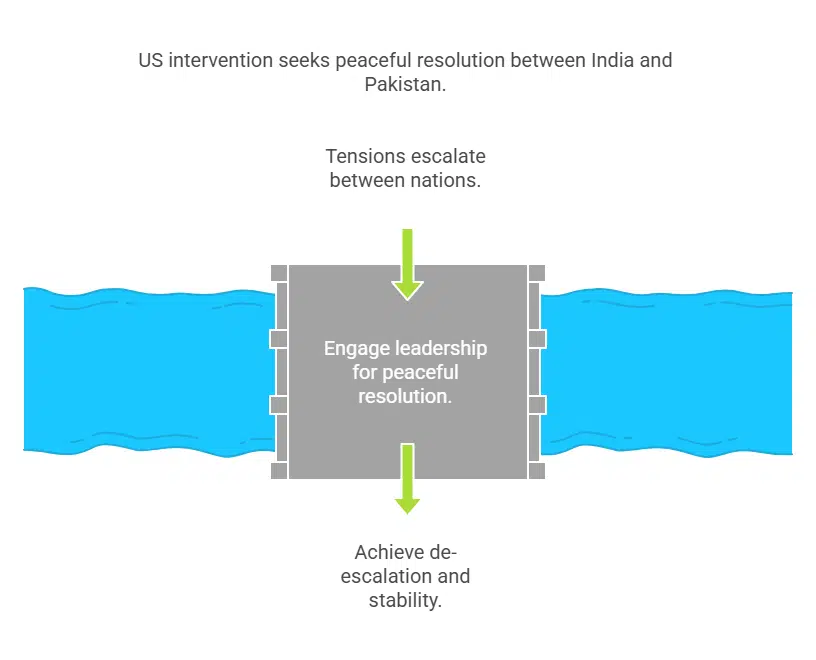
President Donald Trump called the developments “a shame” and emphasized that the conflict must “end very quickly.” Senator Marco Rubio added:
“We are closely monitoring the situation and actively engaging Indian and Pakistani leadership toward a peaceful resolution.”
The U.S. has a strategic interest in South Asia, and analysts believe it may play a behind-the-scenes mediating role, similar to during the Pulwama-Balakot crisis in 2019.
United Kingdom
Foreign Secretary David Lammy released an official statement:
“We are deeply concerned. The UK urges both India and Pakistan to show restraint and immediately engage in diplomatic dialogue.”
The UK, home to a large South Asian diaspora, often finds itself balancing strong relations with both New Delhi and Islamabad.
China
China, which shares borders with both nations and has its own territorial disputes with India, reacted cautiously:
“China regrets India’s military actions and is concerned about regional developments. We oppose terrorism but call for peace and stability.”
China has traditionally backed Pakistan but has also maintained extensive trade relations with India.
Russia
Russia expressed deep concern and emphasized that dialogue is the only sustainable path. Moscow has long-standing defense ties with India and increasing relations with Pakistan.
“We strongly condemn terrorism but call on both nations to avoid escalation.”
Iran, 🇹🇷 Turkey, 🇯🇵 Japan, 🇶🇦 Qatar, 🇦🇪 UAE, 🇮🇱 Israel
-
Iran and Qatar urged diplomatic dialogue and restraint.
-
Turkey, a close ally of Pakistan, criticized India’s action and demanded an international investigation into the Kashmir attack.
-
Japan and the UAE called for stability and peace, while
-
Israel publicly supported India’s right to self-defense.
Economic and Security Fallout
Markets and Trade
-
Pakistan’s KSE-100 index dropped by 5.5% within 24 hours of the attack.
-
India’s Sensex and Nifty indexes remained steady, backed by strong institutional buying.
-
Airspace closures by both countries disrupted commercial flights across Asia, including Emirates and Qatar Airways routes.
Diplomatic Suspension
-
India has revoked visa agreements and diplomatic talks with Pakistan.
-
Cultural exchanges, sports events, and business conferences have been canceled or postponed.
-
Water-sharing dialogues under the Indus Waters Treaty are now in limbo.
Strategic Analysts Weigh In
Think tanks like Brookings Institution, Carnegie Endowment, and Observer Research Foundation believe this escalation is unprecedented in scale since the Kargil War (1999).
Many warn that:
-
A miscalculation or accidental exchange could spiral into a full-scale war
-
The use of nuclear rhetoric, even subtly, could further destabilize the region
-
There’s an urgent need for third-party mediation to de-escalate the situation
The Road Ahead: De-escalation or Wider War?
As of May 8, 2025, both India and Pakistan remain on high military alert. Cross-border firing continues sporadically, and both sides are reinforcing troop presence along the Line of Control.
The global community is pushing for:
-
Emergency UN Security Council involvement
-
Backchannel diplomacy through Russia, UAE, and the U.S.
-
A possible ceasefire framework, modeled after the 2003 LoC agreement
However, with both governments facing domestic pressure for a strong response, it remains uncertain whether de-escalation is immediately possible.
Operation Sindoor is not just another military strike—it is a watershed moment in South Asian geopolitics. The operation’s scale, precision, and symbolic value signal a new era in India’s counterterrorism posture. For Pakistan, it marks another chapter in its fraught relationship with India and the international community’s increasing demands to crack down on cross-border terrorism.
With more than 35 lives lost, hundreds displaced, and a region on the brink of war, the world watches with bated breath. Whether India and Pakistan choose confrontation or conversation in the coming days could determine not just the fate of Kashmir—but the future of peace in South Asia.