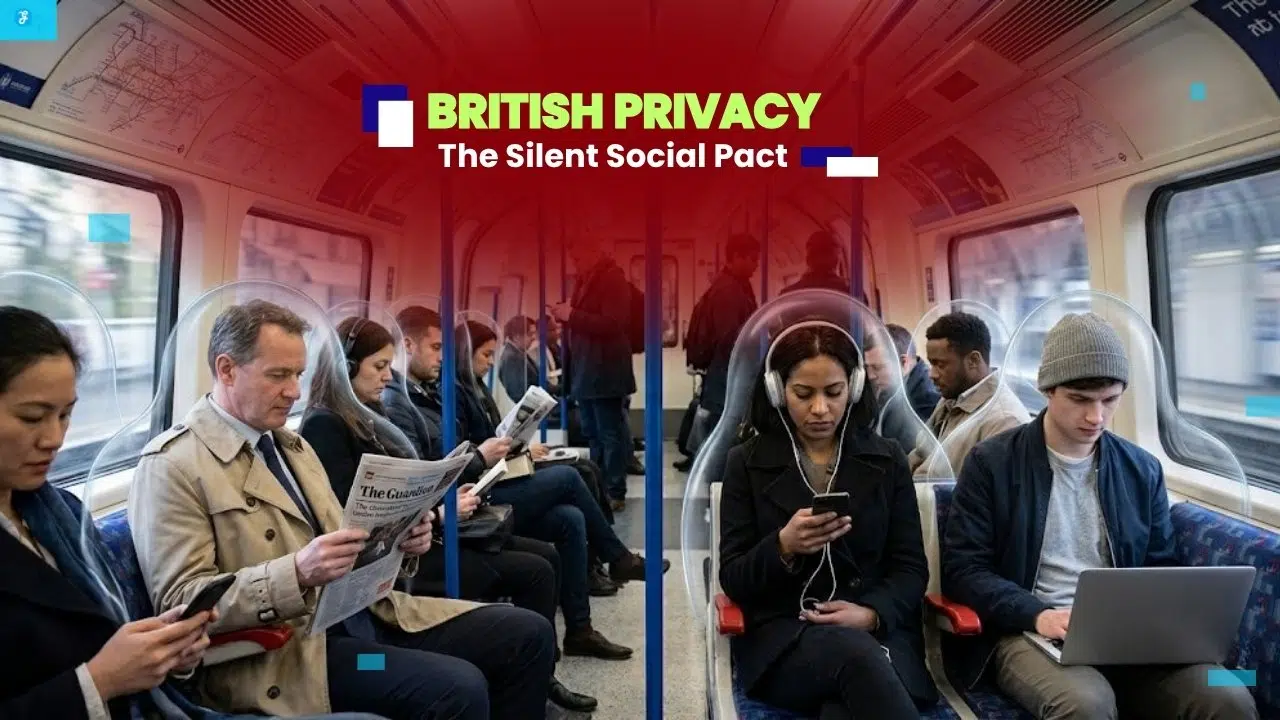
British public life operates on a quiet and unspoken agreement. People call it emotional privacy. Observers often mistake this trait for absolute coldness. It is actually a highly sophisticated form of civic respect. You grant others the right to navigate shared public spaces without facing your personal drama. Social anthropologists highlight this behaviour as a deep obsession with privacy.
Kate Fox details this thoroughly in her sociological study, Watching the English. She explains that British citizens treat public space as a shared and precious resource. They protect an invisible bubble around themselves and everyone else. Sociologists label this concept negative politeness, a term originally stemming from the renowned politeness theory developed by linguists Penelope Brown and Stephen Levinson. It simply means a strong desire to not impede or intrude upon any other person. You coexist quietly without demanding any forced emotional intimacy.
Emotional Privacy: The Anatomy of a Scene
Making a scene remains the ultimate social breach in the United Kingdom because it shatters the silent social contract. When an individual experiences sudden anger or extreme joy, erupting into the public sphere forces complete strangers into an uninvited emotional event.
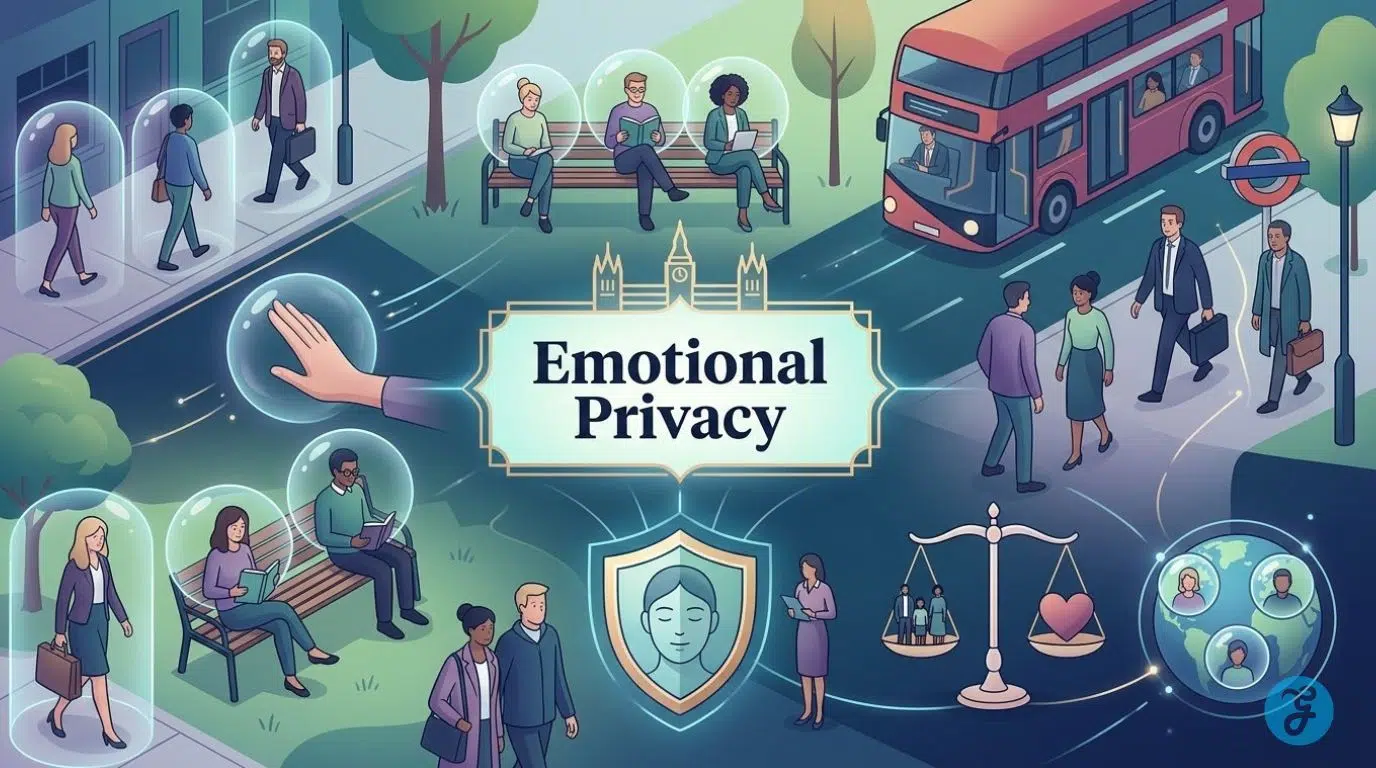
Instead, the practice of restraint acts as a daily form of civic hygiene. By actively managing your emotional volume control, you prioritise the psychology of the witness over personal venting. The phrase “do not make a scene” serves as a powerful deterrent, reminding everyone that public harmony and the comfort of the shared environment matter significantly more than loud individual expression.
The London Exchange versus The California Shout
Corporate cultures handle workplace stress very differently across the globe. American tech hubs often encourage highly expressive work environments. British offices rely on quiet professional reserve to manage daily pressure.
A High Stakes Workplace Crisis
Consider a modern workplace scenario to understand this better. It highlights the stark contrast between expressive cultures and British professional reserve. John is a Senior Public Relations Officer based in London. Avery is a Junior Strategist working in a bustling California tech hub. They are finalising a major digital campaign together. Avery makes a massive operational error. She accidentally deletes a huge set of semantic keyword data. A typical modern corporate environment might encourage a visible display of frustration. A manager might deliver a loud lecture or demand a tearful apology.
The Choice of Restraint
John feels the immediate stress of the error. He chooses a completely different path. He applies the unwritten rules of emotional privacy. He does not sigh loudly, nor does he pace the floor. He never uses Avery as a sounding board for his sudden panic.
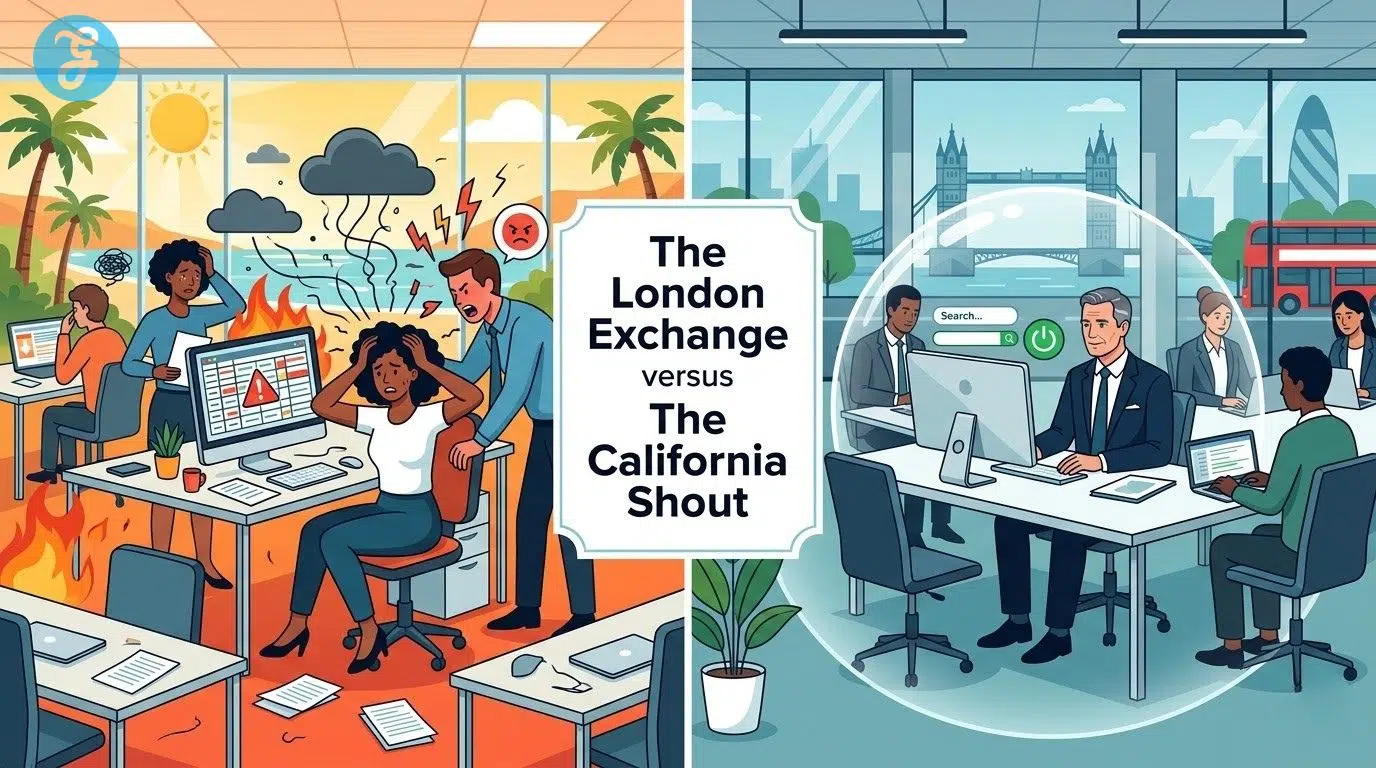
He acknowledges the mistake with a perfectly neutral statement. He suggests they simply check the backup servers. John avoids the expressive reaction common in many American startup cultures. He maintains his professional composure entirely.
Preventing Emotional Contagion
This choice brings immediate benefits to the entire team. John ensures the rest of the office remains productive and focused. He does not shame Avery in front of the digital marketing department. This restraint preserves the civic hygiene of the workspace. John shows pure professional stewardship. He knows his anger would strip Avery of her dignity. It would also ruin the comfort of the boardroom. He successfully prevents emotional contagion. One person having a bad mood does not infect the entire organisation.
Historical Roots From Victorian Ethics to Postwar Resilience
The modern British temperament did not appear by accident. It grew from centuries of specific social and political pressures.
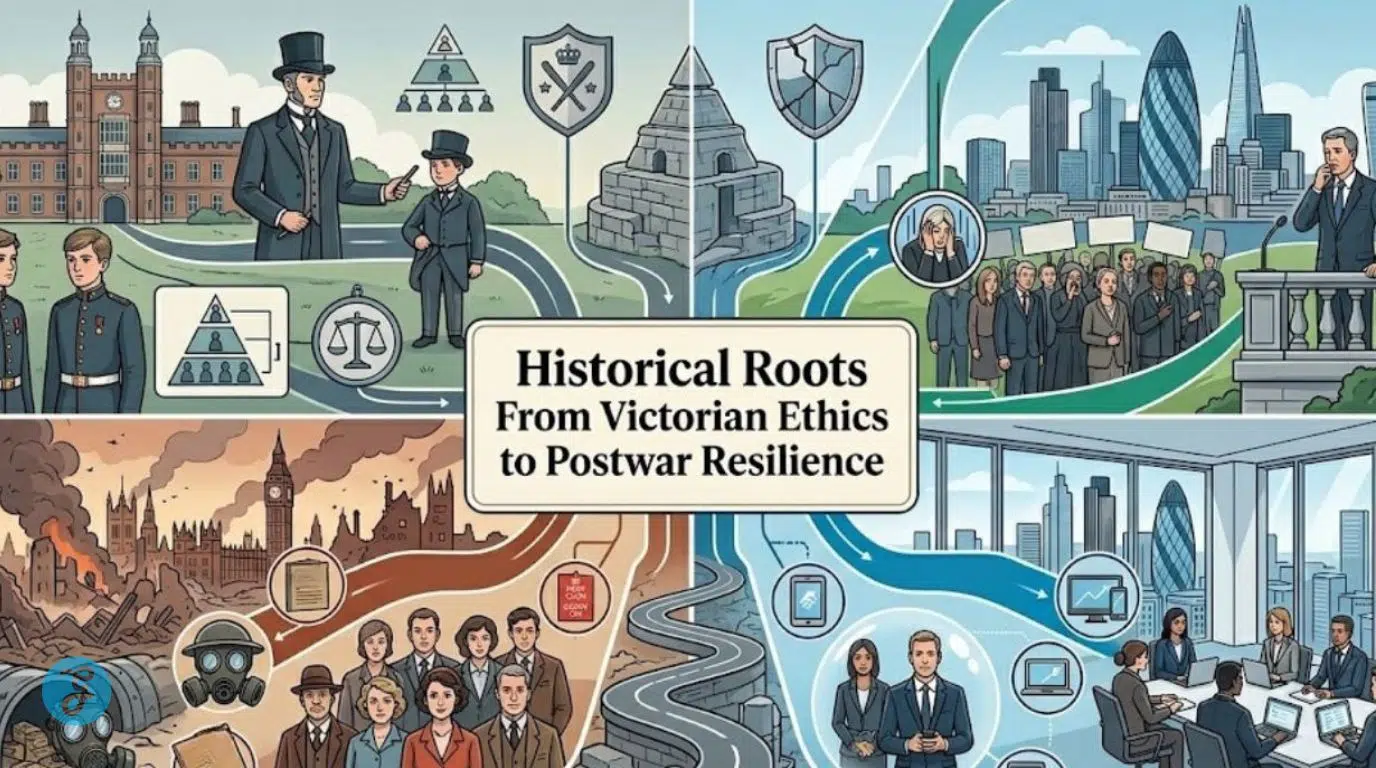
National crises helped shape the way people managed their internal lives in public. These historical layers still influence how a professional behaves in a London boardroom today.
The Victorian Moral Compass
This culture of restraint has deep historical roots. Many trace the famous stiff upper lip back to the nineteenth century. It started in elite private schools. Teachers used this moral code based on class to instil strict discipline. They wanted to build a strong sense of duty in young men. It was never just about acting tough. It was a strategic tool for social stability. Historic UK notes that Victorian etiquette served as a social weapon. It helped maintain absolute order in a rapidly changing world. The gentlemanly code eventually filtered down to the general public over decades.
Wartime Necessity
The twentieth century solidified these behaviours further. The Second World War required immense public endurance. While the famous “Keep Calm and Carry On” poster was actually held in reserve and rarely seen by the public during the conflict, the phrase perfectly captures the underlying ethos of the era. Wartime necessity dictated that private distress must not disrupt public function. The British Psychological Society notes that individualist cultures often enforce strong emotion norms. People learn to conform strictly for the greater good. Citizens endured daily bombings and severe rationing. They learned to mask their fear to support their neighbours. This shared resilience cemented the idea of emotional restraint.
The Modern Shift
Culture always shifts slightly over time. Historians often point to the late nineties as a major turning point. The tragic death of Princess Diana changed public expectations overnight. The public suddenly demanded visible emotion from the Monarchy. This specific event challenged the traditional culture of privacy. The traditional reserve cracked slightly under the pressure. It did not disappear completely. The invisible bubble adapted to modern times. The British public still values emotional privacy highly today. They just navigate it differently in our modern digital age.
Sociological Frameworks Watching the English
Academic study provides a clear lens into these unique social behaviours. Researchers often use specific models to explain why British citizens value emotional privacy so highly. Understanding these frameworks reveals the logic behind the famous national reserve.
The Kate Fox Perspective
The reflex apology serves as a primary example of British social lubricant. People say sorry even when someone else bumps into them in the street. This is not an admission of guilt or a sign of weakness. It is a strategic move to prevent a scene from escalating. The weather-speak rule functions in a very similar way. Discussing the rain allows for social interaction without requiring any emotional engagement. It provides a safe middle ground for two strangers to coexist.
Peach versus Coconut Cultures
The Trompenaars model categorises global cultures using fruit analogies. Many people view Americans as peaches because they are soft and friendly on the outside. The British are often seen as coconuts due to their hard and protective outer shells. This exterior is not meant to be unwelcoming or cold. It acts as a necessary barrier to protect a private and highly loyal interior. Once you break through that shell, the bond is often deeper and more permanent. The shell simply ensures that intimacy is earned rather than forced.
The London Underground provides a perfect laboratory for observing negative politeness. Commuters avoid eye contact to respect the personal space of others in a crowded carriage. This desire to not be imposed upon is a core tenet of the British psyche. It allows millions of people to travel in close proximity without feeling violated. You grant your neighbour the gift of invisibility so they can do the same for you. It is a sophisticated way to manage high density urban living.
Professional Stewardship Emotional Privacy in Modern Media
The modern newsroom or digital agency requires a high level of emotional regulation. Professionals must navigate constant deadlines without letting their personal stress impact the team. This discipline creates a more stable and productive work environment for everyone involved.
Workplace Wellness and Burnout by Proxy
Emotional privacy serves as a vital tool for long-term mental health. It prevents the phenomenon known as burnout by proxy. This happens when the constant emotional outbursts of one colleague exhaust the entire team. By maintaining a measured exterior, you protect your peers from unnecessary psychological labour. You take responsibility for your own internal state rather than dumping it on others. This creates a workspace where people feel safe to focus on their actual tasks.
Digital Content Strategy and Online Discourse
The no scenes mindset translates remarkably well to the digital world. Professional social media presence benefits from a sense of measured restraint. Avoid the urge to overshare every personal struggle or fleeting grievance online. High quality content strategy relies on providing value rather than seeking constant validation. A disciplined approach to communication builds a more reliable and trusted brand voice. It shows the audience that the creator is in control of their narrative.
The Hallmarks of a Seasoned Executive
True leadership often manifests as a form of quiet composure. A seasoned executive stays calm when a crisis strikes the organisation. They provide a steady hand that reassures juniors and stakeholders alike. This restraint is the ultimate sign of authority and professional experience. It proves that the leader can prioritise the collective goals over their own temporary impulses. Real power does not need to shout to be felt or respected.
Functional Lessons from the British Pact
Maintaining a quiet public persona offers several practical advantages for modern society. Applying these specific behaviours helps manage social friction and professional stress in high-density environments.
- Practising Emotional Volume Control: Active self-regulation prevents the unnecessary spread of stress to colleagues and strangers during high-pressure situations.
- Applying Negative Politeness: Actively granting others the right to remain unbothered functions as a sophisticated, practical form of civic kindness in crowded urban spaces.
- Prioritising Professional Stewardship: Choosing composure over outbursts actively protects the mental well-being and productivity of the entire team.
- Cultivating Professional Composure: Mastering the art of the steady, neutral response ensures that logic and long-term strategy always lead over temporary impulse.
- Preserving Psychological Bandwidth: Containing your outward reactions conserves your personal mental energy, preventing emotional exhaustion from fleeting grievances so you can maintain sharp focus.
The Kindness of Restraint
Choosing silence over a loud emotional display is a profound act of generosity. It acknowledges that your personal feelings are not more important than the peace of the room. This practice creates a culture where everyone has the space to breathe and think. We must recognise that this reserve is a functional form of social kindness.
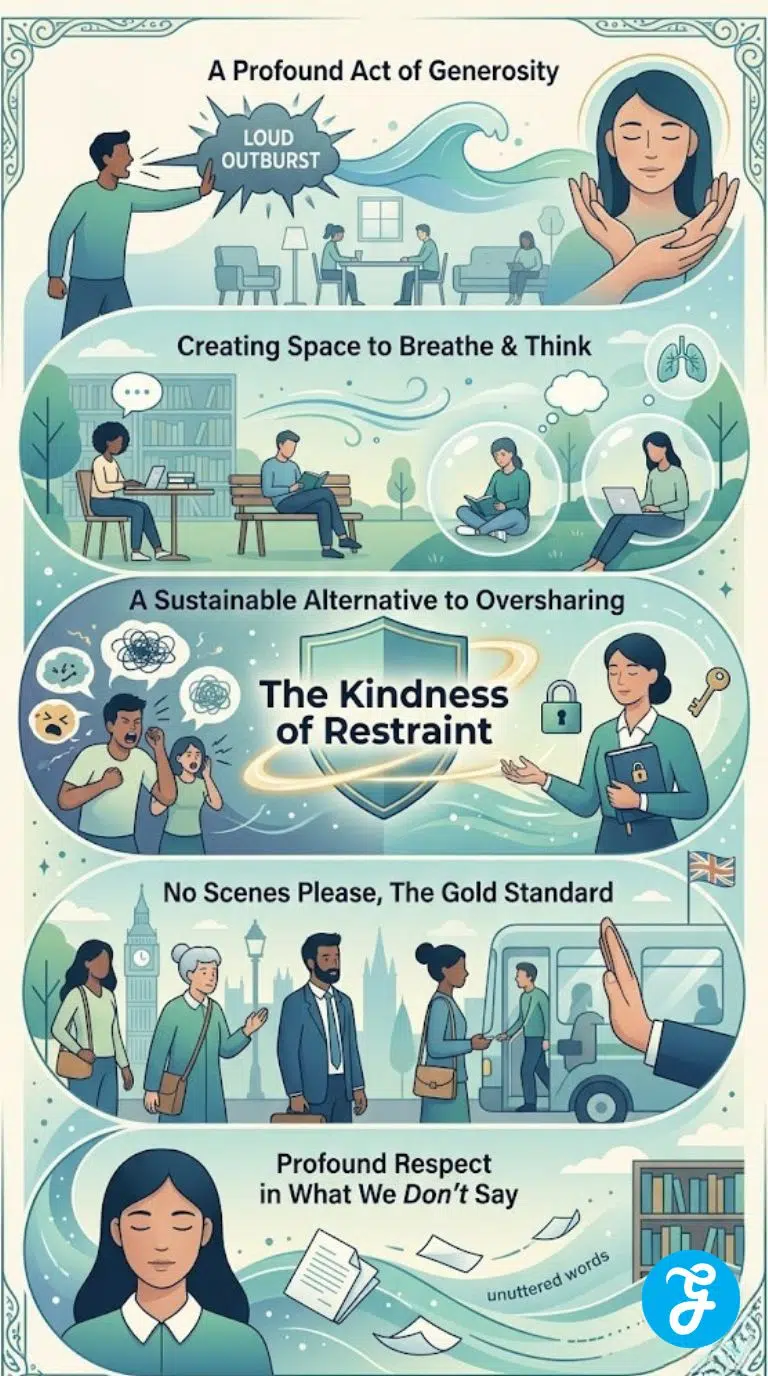
In an era of hard-launching every minor feeling, the British pact of privacy offers a sustainable alternative. It reminds us that not every internal thought requires a public platform. This model of emotional privacy provides a blueprint for a more respectful and dignified global society. We find a better way to live together when we stop demanding that others witness our every mood.
No Scenes Please, remains the gold standard for civic life. The most profound respect is often found in what we choose not to say. By holding back, we move forward together with much greater grace.