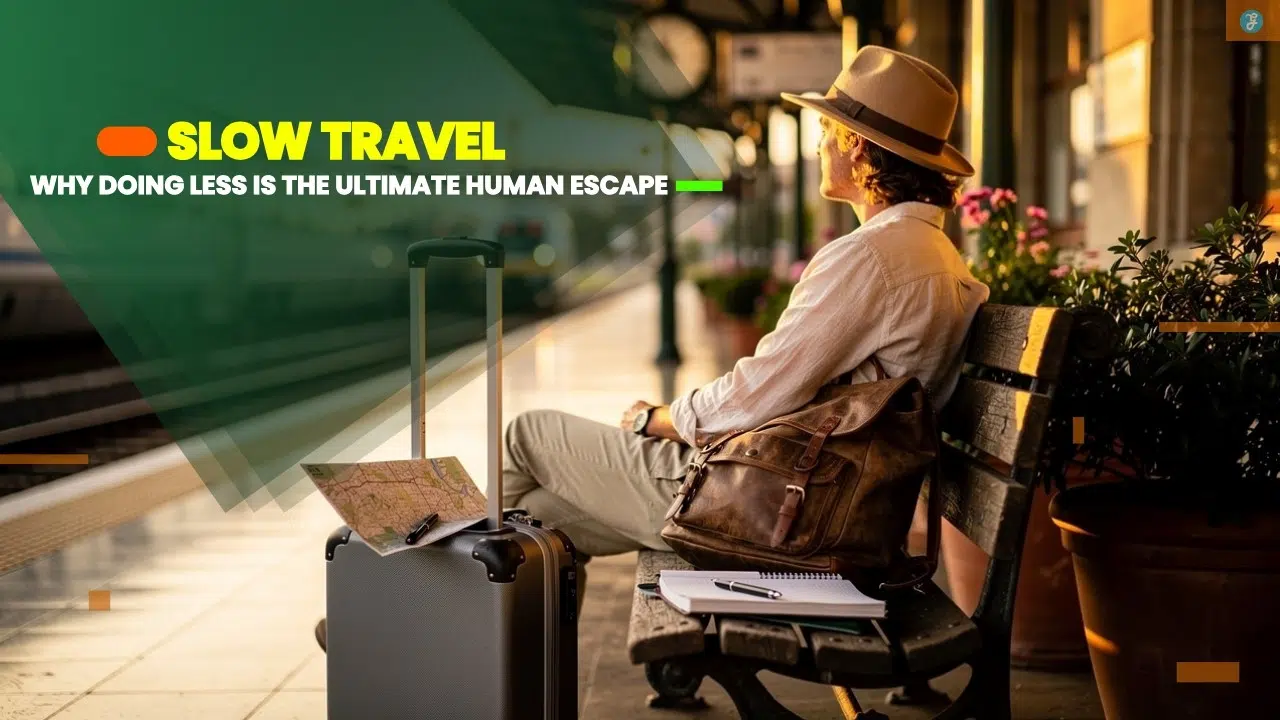
Imagine waking up to the rhythmic thrum of a local baker kneading dough next door. There is no blare from a hotel alarm clock. No frantic rush to catch a tour bus. In a world that demands we move faster and pack every second with curated content, a quiet rebellion is brewing. This is the heart of Slow Travel 2026. It is far more than a holiday style. It is a fundamental shift in how we value our time. We are finally choosing connection over collection. We are trading the exhausting sprint of ten cities in ten days for a deep embrace of a single culture. This is the new luxury of doing less to experience profoundly more.
The Catalyst: Camelia and Raja Find Their Breath
Meet Camelia and Raja. They are a couple from India who spent years perpetually “on” while hopping between the high octane boardrooms of Delhi, Mumbai, and Bangalore. For a decade, they collected passport stamps like trophies. They treated travel as just another to-do list to be conquered. Eventually, they found themselves exhausted and teetering on the edge of burnout. For their 2026 break, they decided to rewrite their entire playbook. Instead of a frantic two week sprint through South East Asia, they chose a radical pause. They split a full month between the bike led rhythms of Amsterdam and a restored farmhouse near the medieval Èze village overlooking the Mediterranean.
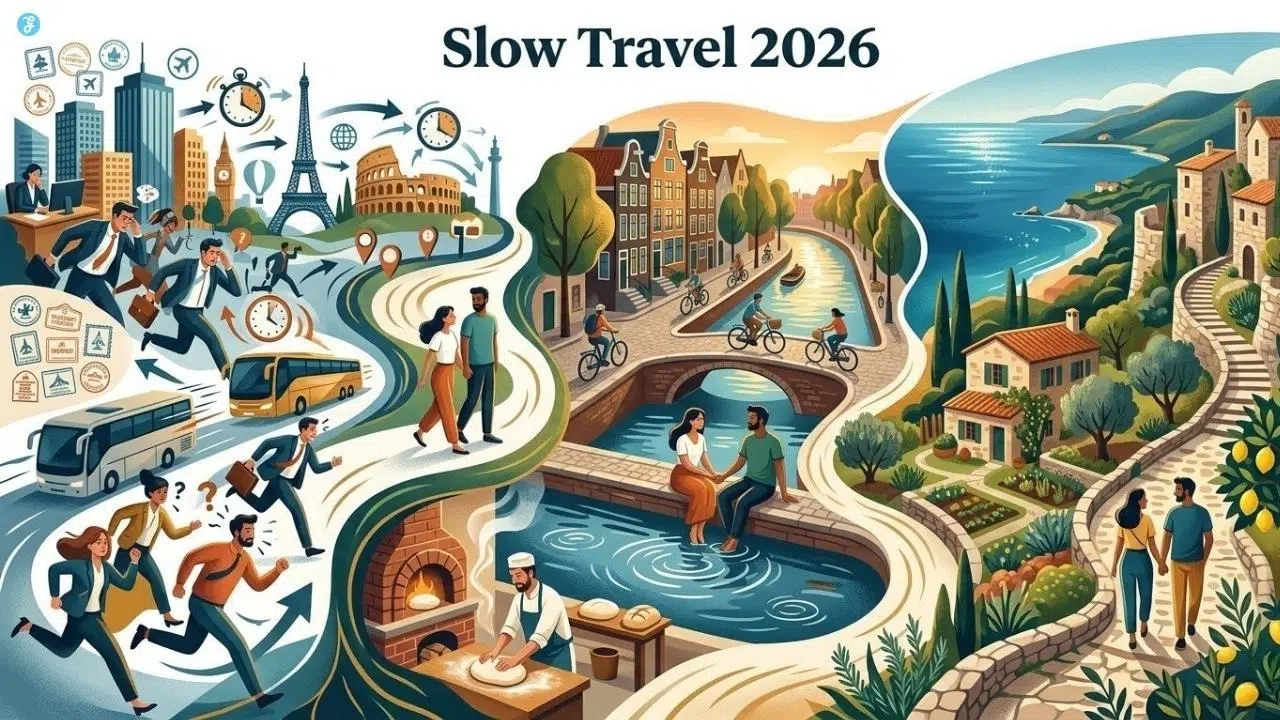
They traded rigid itineraries for slow morning strolls to the local boulangerie. The scent of warm crust became their only alarm clock. High above the sea in the stone paths of Èze, they learned to forage for wild rosemary and sun drenched lemons along the ancient limestone walls. In Amsterdam, they spent entire afternoons simply watching the ripples on the Herengracht canal as the golden hour light danced against gabled houses. This shift was not just a holiday. It was a restorative life intervention. It brought them back to themselves and to each other. Their journey proves that the magic happens in the unstructured spaces between plans.
Slow Travel 2026: The Industry Expert Perspective
To understand the magnitude of this change, one must look at the data flowing through the world’s leading travel networks. Industry veterans are seeing a sharp pivot in how high-net-worth individuals approach their leisure time. Srinjoy Sen, Director of 3S Travel Network Private Limited and Executive Committee Member of SKAL International, has spent his career navigating these global shifts. After travelling to 50 countries by the age of 25, he now leads a specialist team of consultants who manage everything from complex international passports to highly bespoke, off-grid itineraries. His observations confirm that the frantic pace of the past is officially over.
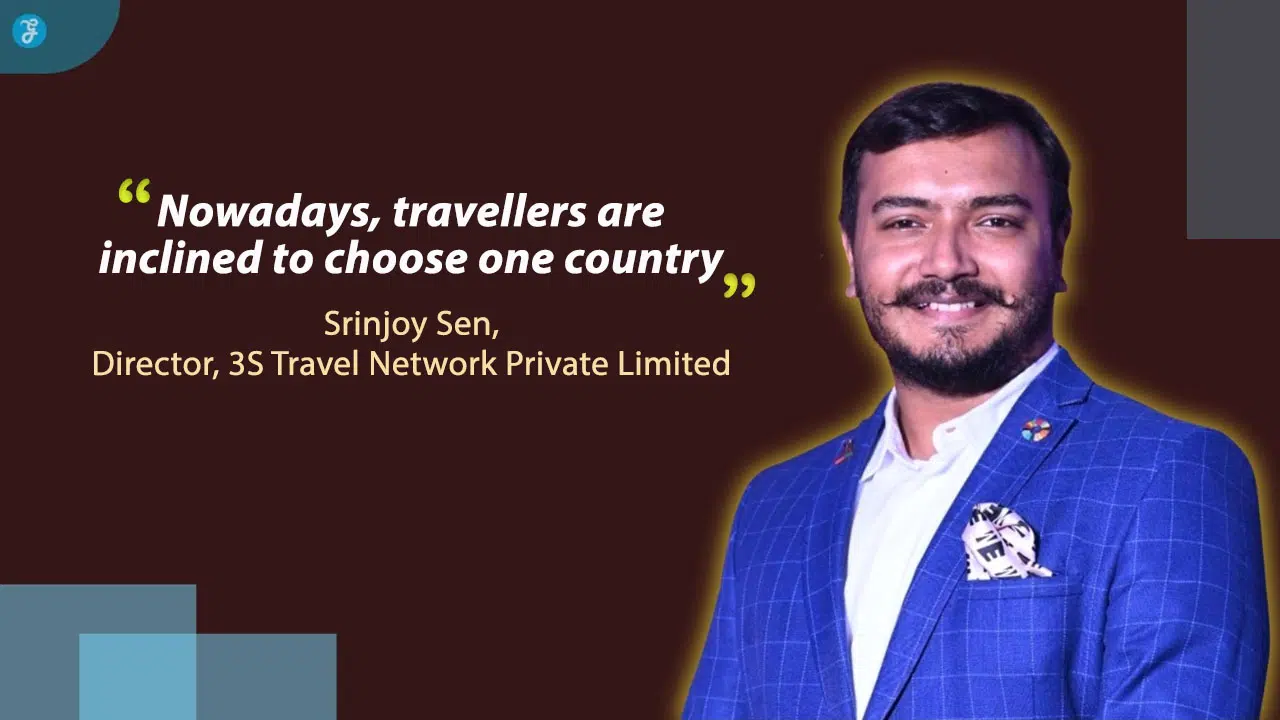
“Travellers have recently realised that simply collecting passport stamps and ticking off a country count is no longer enough,” Sen explains. He notes that the era of the whistle-stop tour is being replaced by a desire for meaningful presence. “While we used to receive constant queries for multi-country trips over short spans in Europe, today’s travellers are far more inclined to choose one country for their entire duration and do it well. This means going deep into unknown local spots, immersing themselves in the culture, and truly visiting a place rather than just passing through.”
The Psychology of the Pause: Why Our Brains Crave the Slow Down
We are currently living through a global exhaustion epidemic. Modern life feels like a treadmill that only knows how to accelerate. For years, we treated our holidays as an extension of this race, prioritising territorial breadth over emotional depth. We packed our bags with high expectations and even higher stress, treating vast distances as a measure of a successful trip. Many of us returned home feeling more depleted than when we left. This ‘vacation from the vacation’ cycle is finally breaking. In 2026, the trend of Slow Travel is the human response to systemic burnout. We are tired of transactional transit. We no longer want to see the world through a viewfinder. We want to feel it.
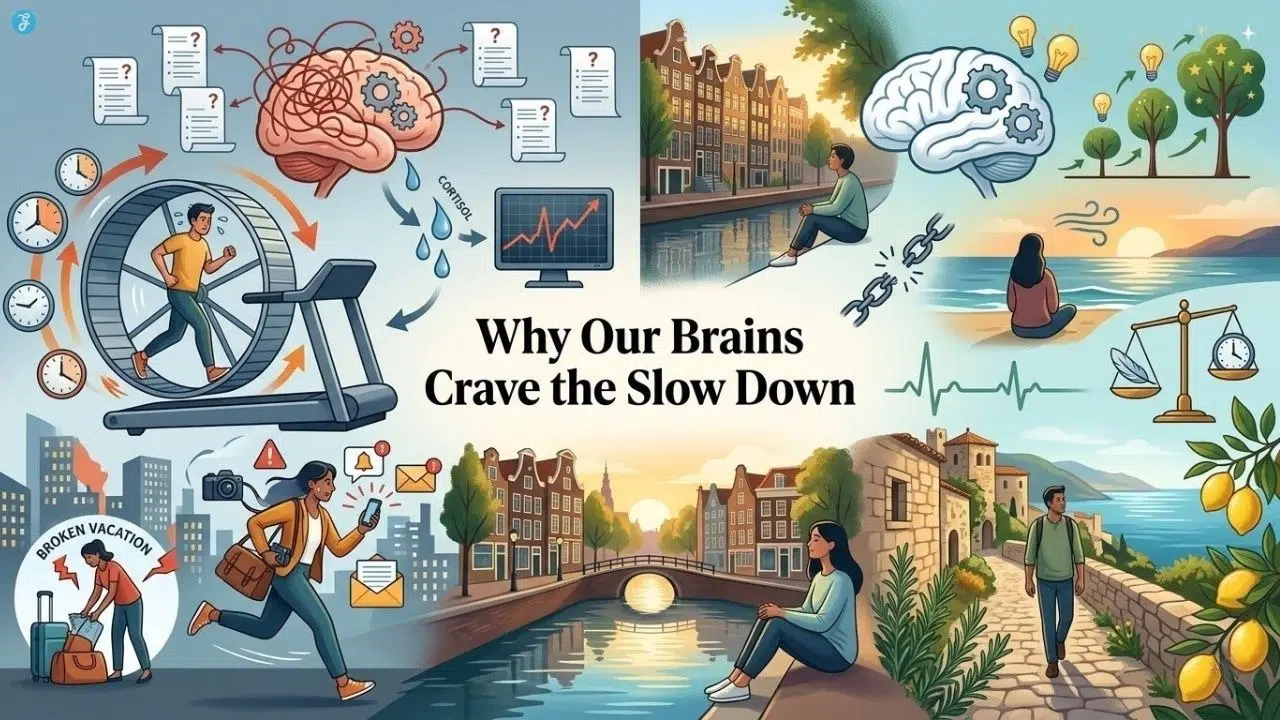
The science behind this shift is grounded in the need for cognitive white space. When we remove the pressure to “see it all,” our bodies undergo a physical change. Constant sightseeing keeps the brain in a state of high alert. It triggers a steady drip of cortisol, the primary stress hormone. By staying in one place, we allow our nervous systems to regulate. Clinical studies show that unstructured time reduces anxiety and boosts creative problem solving. When Camelia and Raja stopped checking their watches, they allowed their brains to enter a “flow state.” This is where genuine joy lives. It is the mental clarity that only arrives when the schedule is empty.
There is also a new social currency at play. In 2026, the ultimate status symbol is being unreachable. We call this the digital disconnect. For decades, being “busy” was a badge of honour. Today, the real flex is the ability to switch off. High earners and weary professionals are seeking out “dead zones” where the Wi-Fi is weak but the connection to nature is strong. This isn’t about being anti-technology. It is about reclaiming our attention.
Psychologists now highlight the “Zeigarnik Effect” in travel. This is the tension we feel when tasks or itineraries are left unfinished. Slow travel eliminates this tension by removing the “task” of tourism altogether. We are learning that a single morning spent watching the tide is more restorative than a week of museum hopping. This psychological reset is the reason why Slow Travel 2026 is becoming a non-negotiable part of a healthy lifestyle. We are finally giving ourselves permission to simply be.
Redefining the Currency of Luxury
The definition of a high end holiday has shifted. In 2026, the flashiest status symbol is no longer a gold plated bathroom or a rare vintage of champagne. True opulence is now found in the luxury of time. We are seeing a move away from material excess toward the quiet privilege of staying exactly where you are.
Time Over Thread Count
For years, we measured luxury by the height of a thread count or the number of stars on a hotel facade. Today, those markers feel hollow. The new wealthy traveller is looking for something far rarer than a silk pillowcase. They are looking for the ability to linger. In our hyper connected world, the greatest indulgence is having nowhere else to be. This is the foundation of Slow Travel 2026. It is about the freedom to spend a Tuesday morning watching the fog lift off a valley in Eze. It is the wealth of a schedule that has been completely cleared of obligations.
The Five Night Minimum
The travel industry is taking note of this shift. Many boutique properties are now introducing a five night minimum stay. They have realised that true immersion cannot happen in a weekend. It takes time to learn the rhythm of a neighbourhood. You need to know which corner shop has the freshest olives. You need to recognise the local cat that sits on the stone wall at noon. By day three, you are no longer a tourist. You are a temporary resident. This shift allows hotels to offer deeper services like grocery stocking or long term pantry access. It creates a sense of belonging that a revolving door of guests can never achieve.
Quality Over Quantity
We are witnessing the death of transactional sightseeing. Paying a fee just to snap a photo of a monument is losing its appeal. Instead, travellers are seeking transformational experiences. They would rather spend four hours in a dusty workshop learning the secrets of French lace from a local artisan. They want to understand the history of a single vineyard through the eyes of the person who planted the vines. This is about the quality of connection. One deep conversation with a village elder is worth more than a dozen blurry photos of a cathedral. We are finally prioritising memories that change who we are over souvenirs that just collect dust.
The Local Love Affair: Community Impact
Slow travel is the ultimate antidote to the “hit and run” style of tourism that has scarred so many global cities. When we choose to linger, we stop being part of the problem and start becoming part of the solution. This is about a mutual respect between the visitor and the host.
Micro Economies and the Power of Staying Put
When you stay in one place for two weeks instead of two days, your financial footprint changes. Money stops leaking into the pockets of multinational hotel chains and starts flowing into the hands of the community. In Slow Travel 2026, the true economic heroes are the neighbourhood cafes and the independent guides.
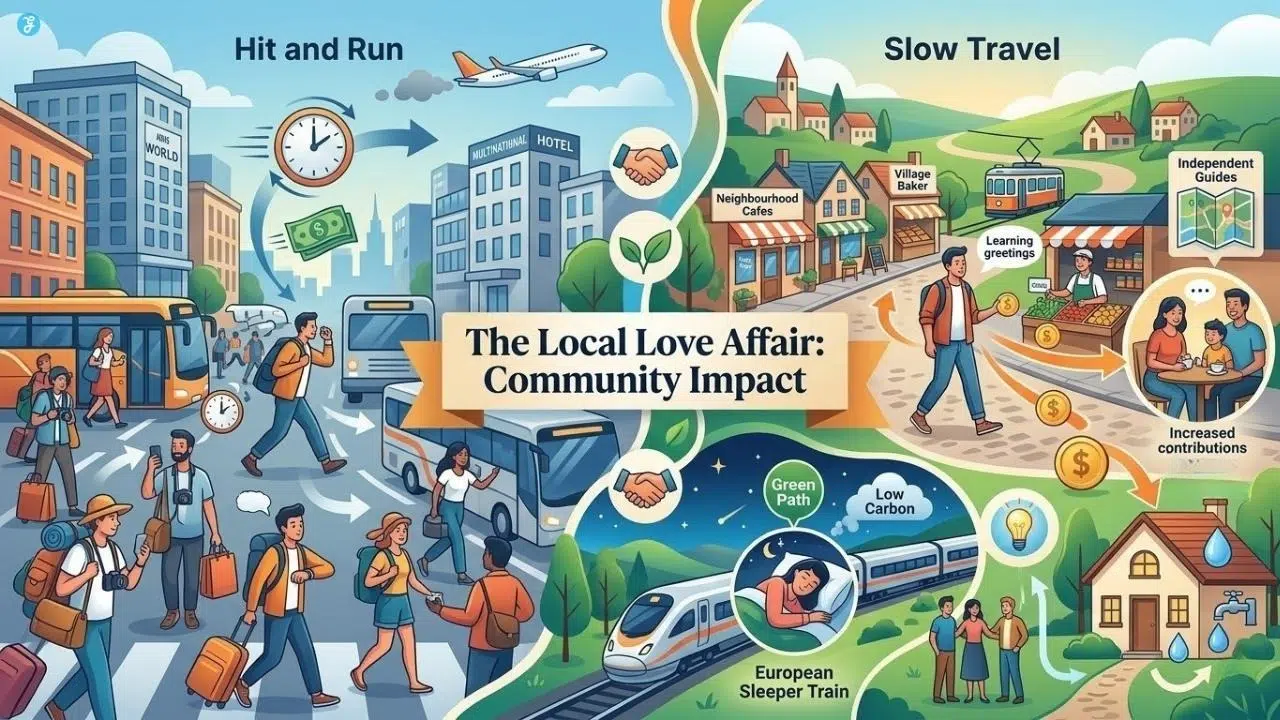
Every morning coffee bought at the corner shop helps a local family. Every loaf of bread from the village baker supports a traditional craft. Industry estimates suggest that slow travellers contribute up to 60% more to the local economy than transit tourists by prioritising independent stays and neighbourhood businesses. It is a more equitable way to see the world. Your presence becomes a support system for the very culture you came to admire.
Authentic Integration: From Spectator to Resident
There is a profound difference between being a spectator and becoming a temporary resident. A spectator watches from behind a camera lens. A resident learns the shorthand of the street. It starts with learning a few words of the local language to greet the grocer. It continues by navigating the local bus or tram system instead of calling a private car. Slowly, you become a familiar face. You start to understand the local gossip and the best time to visit the market. This integration creates a layer of empathy that a quick tour can never provide. You aren’t just passing through. You are living a parallel life, even if only for a month.
Environmental Stewardship and the Greener Path
The environmental benefits of this movement are undeniable. By staying longer, you naturally reduce the need for short haul flights. In 2026, the resurgence of the European sleeper train is making overland travel a sophisticated choice. Choosing a train over a short-haul flight can cut your carbon emissions by an average of 80%, depending on the route and energy source. Slow travel also reduces the strain on local resources. One person staying in a cottage for a month uses far less water and energy than fifteen different guests rotating through a hotel room. It is a cleaner, quieter way to explore. We are learning that the most sustainable way to see the world is to simply stop rushing through it.
A Roadmap for Slow Travel 2026
If you are ready to step off the treadmill, you need a new set of rules. Planning a slow trip is not about filling a calendar. It is about creating the conditions for magic to happen. Here is how to build a journey that actually restores you.
Choosing the Path Less Travelled
In 2026, the smartest travellers are avoiding the “bucket list” capitals. Major hubs like Paris or Venice are often victims of their own fame. Instead, we are seeing a massive shift toward second cities and rural escapes. Think of Utrecht instead of Amsterdam, or the quiet stone hamlets near Eze rather than the crowded beaches of Nice. These destinations offer a more honest look at local life. They are quieter, more affordable, and far more welcoming to those who want to stay a while. By choosing a “sleeper” destination, you escape the noise of mass tourism. You find the space to breathe and the time to notice the small details that make a place unique.
The Art of the Empty Itinerary
The biggest mistake you can make is over-scheduling your peace. To truly embrace Slow Travel 2026, you must master the empty itinerary. The goal is to have only one “anchoring” activity per day. This might be a morning visit to a specific market or a sunset walk along a certain trail. Leave the rest of the day completely open to serendipity. If you meet a local potter who invites you for tea, you have the time to say yes. If you find a hidden courtyard that demands an extra hour of your attention, you won’t be checking your watch. This lack of structure is where the best memories are made. It turns a holiday into an adventure of discovery rather than a series of appointments.
Embracing the Scenic Route
We are witnessing a glorious resurgence of overland travel. Getting there is no longer a chore to be endured at 30,000 feet. It is now half the experience. The rise of luxury sleeper trains across Europe and Asia has made the journey itself a destination. There is something deeply human about watching the landscape change slowly through a window. It allows your mind to transition at the same pace as your body. Whether it is a ferry across the Mediterranean or a scenic rail route through the Alps, these slower modes of transport offer a sense of scale and wonder that a flight simply cannot match. You arrive at your destination already in a state of calm. This transition into a quieter rhythm naturally extends beyond the daylight hours through the growing appeal of Night Tourism, where the landscape continues to offer a sense of wonder long after the sun has set.
The Core Essence: Why Slow Travel 2026 Works
The shift toward a slower pace is a deliberate act of reclaiming your narrative. It is about moving away from the exhaustion of “seeing it all” and moving toward the fulfillment of “feeling it all.”
- The Recovery of Time: Trading rigid checklists for the luxury of an empty morning.
- Economic Integrity: Funnelling travel spend directly into the hands of local artisans and family run cafes.
- Mental Clarity: Reducing the cognitive load of travel to allow for genuine rest and creative sparking.
- Low Impact Living: Cutting carbon footprints by nearly 80% by choosing rail and long stays over short haul flights.
The Afterglow of Slow Travel: When the Journey Slows, the Self Arrives
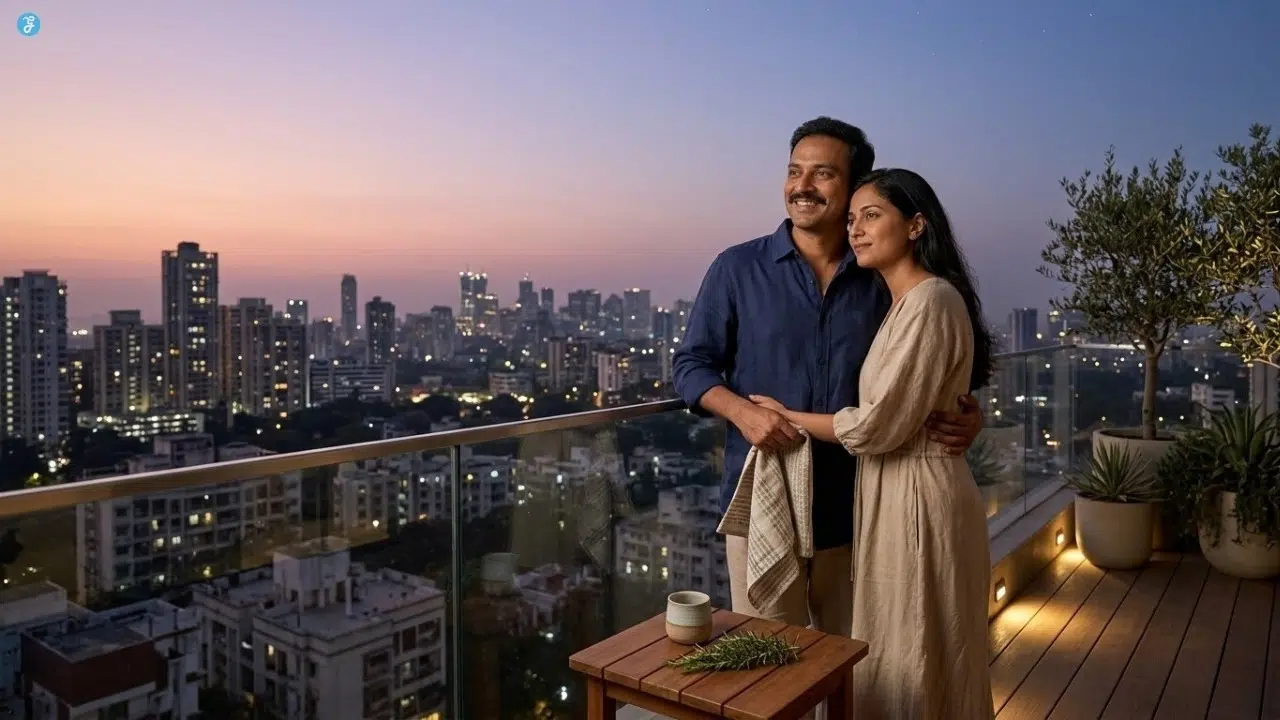
As their month draws to a close, Camelia and Raja pack without hurry. No last minute rush. No ticking lists. Their bags carry the scent of woodsmoke from a farmhouse in rural France and a few linen napkins bought from a local weaver. Small things. Lasting things.
They are not returning to Delhi, Mumbai, or Bangalore drained from travel. They return steady. Rested. Changed in quiet ways.
This is the promise of slow travel. Stay longer. Do less. Notice more. The idea is not new. It draws from the Slow Movement, which began in Italy in the late twentieth century as a response to fast living. Today, it shapes how many people choose to travel across Europe and beyond.
Research supports this shift. A 2023 report by the World Tourism Organization noted a rise in travellers seeking longer stays and local experiences over packed itineraries. The goal is simple. Connection over consumption.
For Camelia and Raja, the change is clear. The highlight was not the canals of Amsterdam or the hilltop lanes of Èze Village. It was the space to sit still. An afternoon without plans. A meal that took its time.
Slow travel asks less of you. Yet it gives more. It shifts your pace. It sharpens your senses. It reminds you that travel is not a race.
A quiet street. A sunlit wall. The rhythm of an ordinary day in a new place. These moments stay.
The world is moving faster each year. Choosing to slow down is not indulgent. It is a deliberate act. One that brings you back to your breath. And, often, back to yourself.