
When moving away from conventional school structures, finding the right online class platforms homeschool families can rely on is often the first major hurdle. Moving your child’s education to the digital realm sounds straightforward, but the operational reality involves navigating wildly different software systems, teaching philosophies, and hidden administrative burdens.
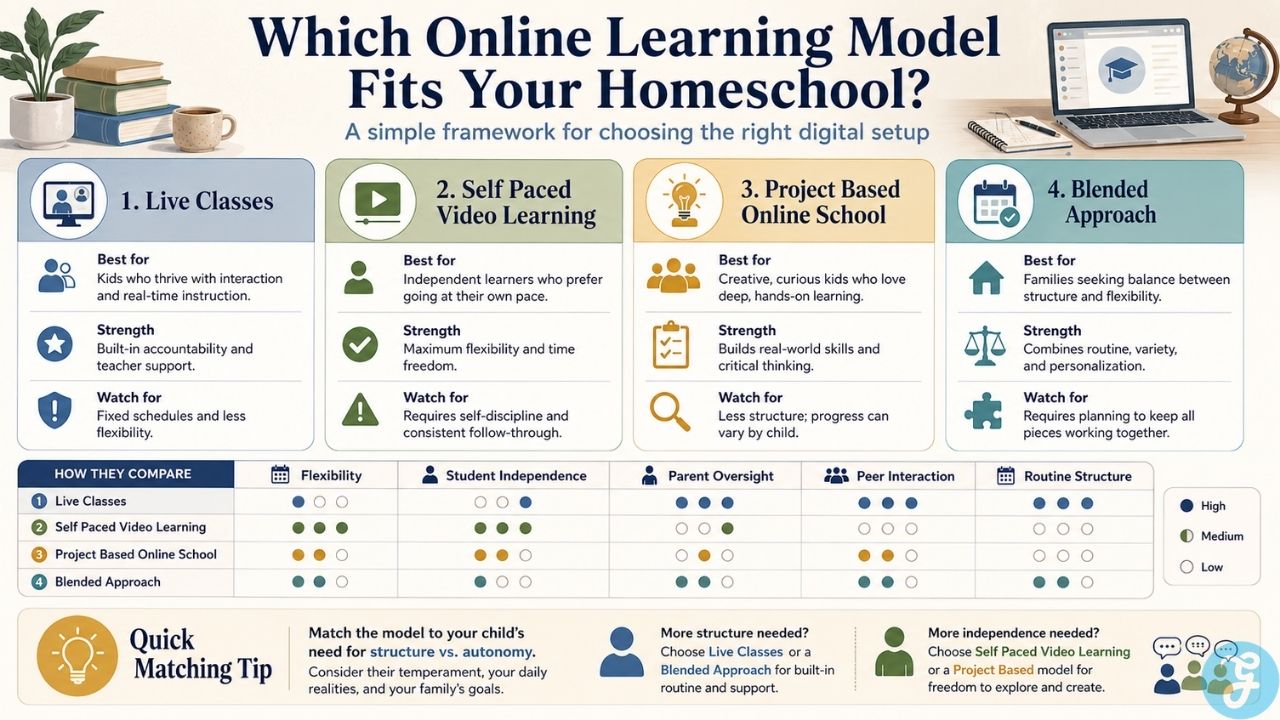
The biggest mistake parents make is assuming that every virtual program functions the same way. A model that relies on pre-recorded lectures requires immense student self-discipline, while a platform built entirely around real-time virtual meetings strips away the scheduling flexibility that drew many families to home education in the first place. To make an informed choice, you need to look past shiny user interfaces and evaluate how these tools handle live instruction, curriculum management, and student accountability.
Top 7 Online Class Platforms Homeschool Families Choose for Core Academics
Selecting the right digital environment requires balancing your weekly schedule with your child’s learning preferences. Some families require real-time interaction to keep their students accountable, while others favor self-paced multimedia paths. The following options provide a mix of live and recorded frameworks designed to accommodate different instructional styles.
1. Outschool
When researching online class platforms homeschool circles frequently point to Outschool as a top marketplace for flexible learning. This platform functions as an educational directory where thousands of independent, vetted teachers list custom live class homeschool sessions. Class sizes are kept small, typically maintaining an average five-to-one student-to-teacher ratio that encourages direct group discussion over simple lecture listening.
The operational hurdle here is the lack of a unified curriculum. Because each class is designed and sold by individual instructors, treating Outschool as a full-time school option requires parents to manually stitch together separate courses for math, science, and language arts. Teacher quality can vary despite vetting processes, meaning you must spend considerable time reading parent reviews and analyzing course syllabi before buying. It works exceptionally well for elective subjects or targeted academic support, but it demands heavy parental curation for core schooling.
2. Well-Trained Mind Academy
For families seeking a rigorous, classical academic track for middle and high school students, the Well-Trained Mind Academy focuses heavily on real-time group dialogue. Rather than using pre-recorded video presentation elements, this program centers its model on scheduled live interactions where students are pushed to articulate thoughts and defend analytical viewpoints directly to their instructor and peers.
This high level of academic accountability comes with significant lifestyle friction. The courses follow strict semester schedules, firm assignment deadlines, and heavy reading workloads. If your family prioritizes travel flexibility or an adaptable daily schedule, the rigid class meeting times will conflict with your routine. However, for parents wanting to step back entirely from grading complex high school essays and research papers, the professional instructor feedback provides immense value.
3. Miacademy
Miacademy addresses the opposite end of the spectrum by offering a fully automated, parent-supported asynchronous curriculum for kindergarten through eighth grade, alongside Miaprep for high schoolers. The system guides students through short, targeted homeschool video classes followed immediately by interactive practice quizzes and gamified rewards.
The benefit to this design is total scheduling independence; your child can log in at midnight or dawn without missing a session. The practical drawback stems from the lack of human interaction. Because there are no live instructors or mandatory peer discussions, students can easily feel isolated if this is their primary link to education. Additionally, the game-like reward tokens can occasionally incentivize younger children to click through text boxes rapidly just to access the built-in game world, requiring parents to monitor the administrative backend to ensure actual comprehension.
4. Apologia Live Classes
Apologia is highly regarded for its instructor-led live class homeschool tracks specifically targeting grades six through twelve. While they offer humanities courses, their main reputational strength lies in their rigorous home laboratory science sequences, including chemistry, physics, and advanced biology. Instructors handle all lecture delivery, assignments, and formal grading, completely removing the instructional burden from the home environment.
The clear limitation for general audiences is the platform’s foundational philosophy. Apologia operates strictly from an intensive, faith-based Christian worldview across all its textbooks and live lectures. If your family is searching for a secular or completely neutral academic environment, the course content will not match your goals. The classes also require attendance at fixed times, leaving little room for spontaneous weekday adjustments.
5. Power Homeschool
Power Homeschool stands out among the online class platforms homeschool spaces offer for families prioritizing asynchronous paths. Driven by the Acellus learning system, it utilizes high-definition homeschool video classes matched with an adaptive software mechanism that pinpoints specific student knowledge gaps. When a child answers a quiz question incorrectly, the platform automatically serves up a targeted review video to explain the core concept again before letting them proceed.
This data-driven setup excels at helping students master fundamental STEM skills efficiently. However, the learning process can feel incredibly mechanical. Sitting in front of a screen answering algorithmic multiple-choice questions lacks the intellectual depth of open-ended discussions. For highly creative students or those who learn best through narrative writing and hands-on projects, the repetitive nature of the interface can lead to rapid screen fatigue.
6. Bina School
Bina School offers an accredited, fully live digital classroom model optimized specifically for younger learners between the ages of four and twelve. Recognizing that young children struggle to maintain focus during long, isolated video calls, Bina groups students into permanent micro-cohorts of just six to eight peers who meet daily for precise, teacher-guided sessions.
The micro-school framework successfully solves the isolation problem common to virtual classes homeschool tracks by fostering genuine social bonds among young students. The friction points are demographic and financial. The program is currently capped at age twelve, meaning you will eventually be forced to migrate to an entirely different secondary education provider as your child grows. Furthermore, the specialized nature of daily live instruction across small groups commands a high tuition fee compared to mass-market video libraries.
7. Sora Schools
Sora Schools flips the traditional high school and middle school model entirely by trading conventional textbooks and test-based grading for project-based virtual learning expeditions. Students work within live, collaborative digital environments to solve real-world problems, shaping their own academic schedules based on their current research interests.
The student-directed nature of Sora makes it an exceptional haven for highly motivated, independent teenagers who thrive outside the constraints of traditional memorization frameworks. The challenge arises if your child lacks natural time-management skills; without a teacher dictating daily checklist tasks, students can easily fall behind on their portfolio development. Additionally, translating project portfolios into standard letter-graded transcripts can require extra administrative steps if you ever need to transfer your child back into a conventional local school district.
The Boring Check That Matters
Before linking your family’s routine to an external digital system, you must categorize the underlying delivery method to understand what will be required of your household.
| Operational Model | Instructional Format | Parent Responsibility | Primary Structural Limitation |
| Live Marketplace | Scheduled interactive video blocks | High curation and scheduling management | Inconsistent course quality across different instructors. |
| Classical Live Academy | Fixed-time group discussion sessions | Schedule enforcement and tracking deadlines | High academic stress and zero calendar flexibility. |
| Asynchronous Video Hub | Self-paced recorded multimedia clips | Progress monitoring and social supplementation | Increased risk of student isolation and screen fatigue. |
| Project-Based School | Interactive digital group expeditions | Portfolio guidance and tracking motivation | Requires high student autonomy; complex transcript translation. |
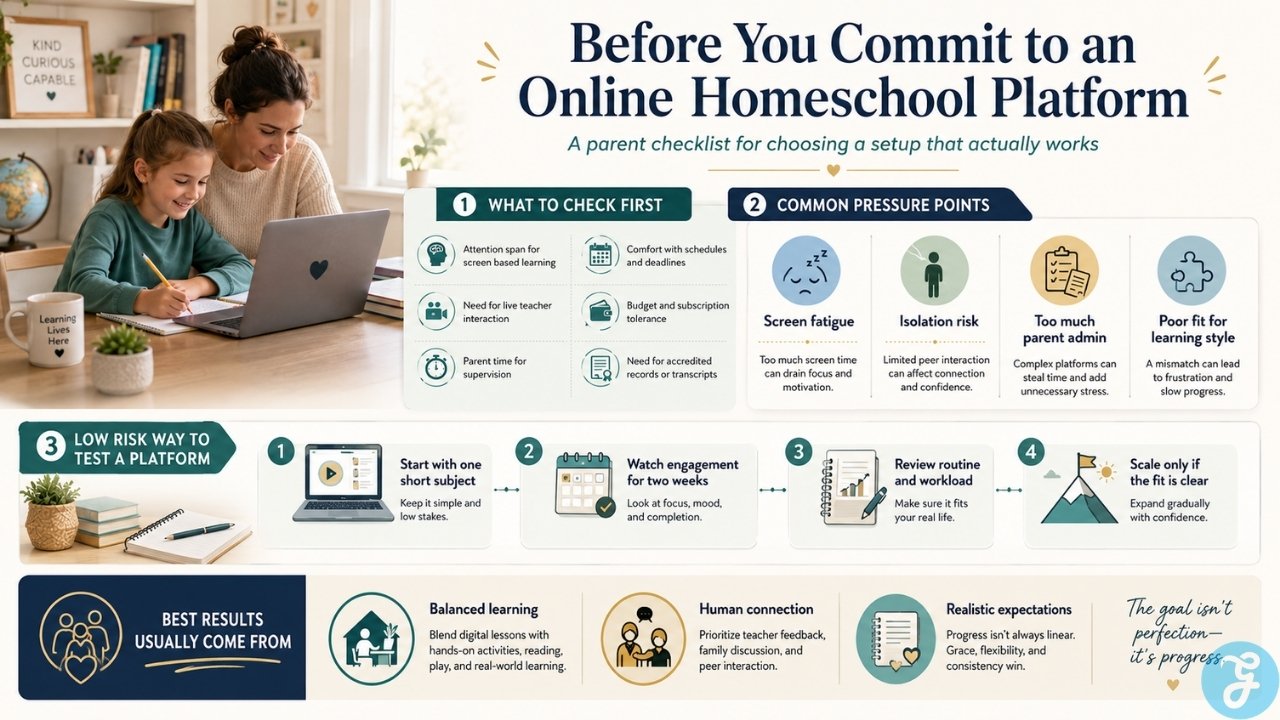
Before Selecting Your Digital Learning Setup
Sifting through various educational applications can easily create choice paralysis. The most dependable path forward is to avoid committing to a massive, full-year tuition package right from the start. If you are uncertain whether your child will thrive under real-time lectures or self-paced videos, use a modular approach.
Test a short, single-subject elective course on a marketplace site to observe how your student interacts with a digital instructor. Watch how they manage screen fatigue, digital assignment portals, and webcam etiquette over a multi-week period. Once you understand their specific threshold for digital focus, you can confidently invest in a more permanent academic framework. Ultimately, choosing between these online class platforms homeschool choices depends entirely on your target balance of autonomy and structure.
Frequently Asked Questions (FAQs) About Online Class Platforms Homeschool Options
Do online class platforms provide accredited high school diplomas?
Most standalone platforms do not issue diplomas because they function as curriculum providers rather than full private schools. To secure a formal diploma, parents must either enroll their child in a fully accredited virtual private school or issue a parent-led diploma that fulfills their specific regional graduation requirements.
How do I know if an online platform complies with my state’s homeschool laws?
Digital platforms rarely track individual state compliance automatically. Parents retain the legal responsibility to verify that the course hours, grading metrics, and subjects provided by the platform satisfy their local district’s reporting mandates.
Can I mix and match different virtual platforms for different subjects?
Many families utilize a modular approach by combining completely different systems to fit their schedule. For instance, you can use a live interactive marketplace for foreign language electives while relying on a self-paced video hub for core mathematics.
What basic hardware setup is required for live class homeschool tracks?
Real-time interactive classes demand a stable high-speed internet connection, a functioning webcam, and a dedicated headset with an integrated microphone to eliminate household background noise. Relying purely on a smartphone or basic tablet can sometimes restrict access to the digital whiteboards and chat tools used by instructors.
Do these digital platforms accommodate children with special learning needs?
Self-paced asynchronous hubs work exceptionally well because they allow students to pause, rewind, and review multi-media content without peer pressure. For live real-time tracks, parents should contact individual instructors prior to enrollment to arrange specific structural accommodations like extended deadlines or modified writing assignments.