
Link gap analysis is the process of comparing your backlink profile against top competitors to pinpoint high-value websites linking to them, but not to you. Because search engines view backlinks as trust signals, closing this gap is one of the most direct ways to build domain authority and capture higher rankings.
However, raw backlink exports are filled with broken links, irrelevant directories, and paid placements. Turning a link gap report into real organic growth requires filtering out the noise, selecting strong target pages, and offering publishers a compelling reason to link to your content instead.
What a Link Gap Analysis Actually Shows
At the domain level, the analysis compares referring domains across entire websites. It can reveal publications, associations, directories, and partner sites that regularly mention businesses in your market.
At the page level, it compares one URL with pages covering the same subject. This is usually the more useful approach when promoting a guide, report, calculator, template, or other linkable resource.
A link gap analysis also serves a different purpose from two related SEO reports:
| Analysis | What It Examines | Main Use |
| Link gap analysis | Competitor links your site lacks | Finding potential link sources |
| Backlink audit | Links already pointing to your site | Reviewing quality, risk, lost links, and broken targets |
| Keyword gap analysis | Queries competitors rank for | Finding missing content opportunities |
Google uses links to discover pages and understand how pages relate to one another. PageRank also remains part of Google’s core ranking systems. None of this makes a link gap report a ranking formula. Acquiring a particular backlink does not guarantee a predictable change in search position.
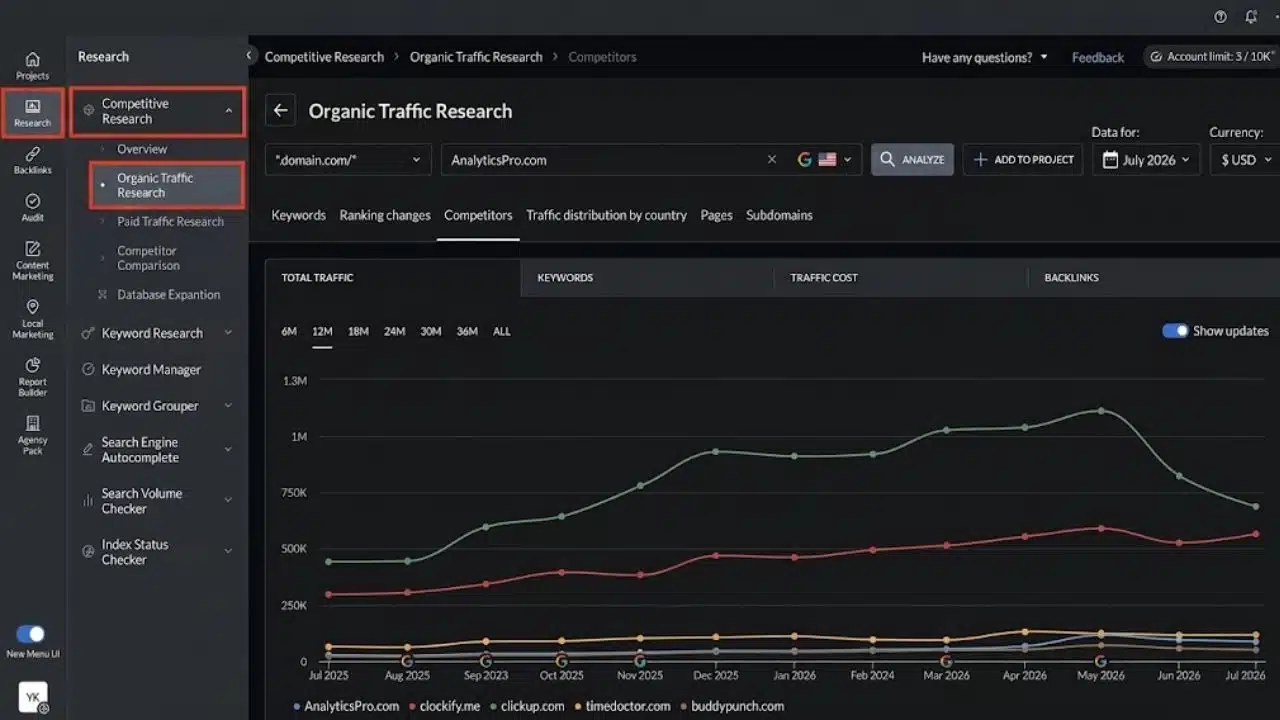
Your closest commercial rival may not be your most useful SEO competitor. A software company might compete in search results with review websites, industry publications, professional associations, or educational resources that sell no competing software.
Choose three to five sites that rank for the subjects you care about, serve a similar audience, and have link sources you could realistically approach.
Avoid adding enormous marketplaces, reference sites, or international publishers simply because they rank above you. Their links may come from decades of coverage, brand recognition, or private relationships that a smaller site cannot reproduce.
For a campaign built around one article, compare the pages ranking for that subject—not their entire domains. Otherwise, thousands of unrelated links can bury the few useful opportunities.
How to Run a Link Gap Analysis
A link gap analysis works best when the setup is deliberate. Before exporting data, decide which competitors, pages, and markets genuinely overlap with yours. The steps below help you collect prospects, filter weak opportunities, and turn the findings into outreach.
1. Define the scope
Decide what the analysis must support. Use a domain-level comparison to find broad industry relationships and recurring link sources. Use an exact-URL comparison when promoting one page or investigating why competing content attracts citations.
Mixing a root domain with several individual articles may still return data, but the results will be difficult to interpret.
2. Establish your backlink baseline
Export the referring domains already linking to your site. Google Search Console can show major linking sites, linked pages, and common link text, but Google describes the Links report as a sample rather than a complete backlink index.
The report may include links discovered in the past that have since been removed. It also does not identify whether a backlink has a nofollow attribute.
Competitor research normally requires a third-party backlink database. Ahrefs, Semrush, Search Console, and other platforms will rarely show identical totals because they maintain different indexes. Treat those numbers as working datasets, not a complete census of the web.
3. Run the comparison
Ahrefs provides this workflow through Link Intersect. Its current documentation allows a target to be compared with up to 10 competitors, using either referring domains or referring pages.
Semrush offers Backlink Gap. Its documentation describes comparisons of up to five websites and instructs users to place their own domain in one field when looking for missing backlinks. Access and report limits may vary by subscription and can change.
Start with referring domains. Filter for websites linking to several competitors but not to you, then export the results. Repeat the process at the exact-URL level for priority content.
Multiple matches can indicate that a website regularly references sources in your market. They do not prove that it will link to you.
4. Review the source pages, not just the scores
Authority scores can help sort a long export, but they should not control the campaign. Domain Rating and Authority Score are proprietary measurements created by their respective SEO platforms. They are not Google metrics.
Open the exact page containing each competitor link. Confirm that the page is live, the link remains present, and the content appears to receive normal editorial care. Then record:
- The competitor page receiving the link
- The surrounding sentence or section
- The apparent reason for the citation
- Topical, audience, language, and regional relevance
- Whether the placement is editorial, sponsored, user-generated, or directory-based
- A suitable page on your site
- Contact details and outreach status
This manual check removes much of the noise. One domain may appear hundreds of times because a link was duplicated across tags, archives, search pages, or sitewide templates.
A modest specialist publication with the right readers can be a stronger prospect than a high-scoring domain filled with unrelated guest posts.
5. Work out why the link exists
The linking reason determines the next action. A competitor may have earned coverage through original research, a free tool, a useful definition, an industry membership, an expert contribution, or inclusion in a comparison. Some links are commercial. Others exist because the publisher needed a specific source at a particular moment.
Consider a payroll software company reviewing three prospects. An HR association links to two competitors’ worker-classification guides. A finance blog cites an outdated tax table. A software directory links to another competitor through a paid profile.
The association may need a well-maintained reference with clearer sourcing. The finance blog could be approached with an accurate replacement or update. The directory should be judged by its audience and referral value, not treated as an automatic SEO win.
That is where editorial judgment matters. A link gap analysis should produce different decisions for different prospects, not one email sent to every exported domain.
6. Match the prospect with the right asset
Do not send every publisher to your homepage. If competing pages earned links through original research, a general blog article is unlikely to replace them. You may need transparent data, a clear methodology, or a reference page that is updated regularly. For a curated resource list, your page should add something the existing entries do not provide.
Sometimes the report exposes a content problem rather than an outreach opportunity. Build the missing resource before asking anyone to cite it.
7. Keep outreach focused
A credible message identifies the publisher’s exact page, explains why your resource fits, and shows how the addition would help its readers. “You link to our competitor” is research for your team, not a persuasive reason for an editor.
Track pitches, replies, follow-ups, declined requests, placements, and invalid contacts. This prevents duplicate outreach and shows which link types are worth pursuing again.
Do not copy questionable tactics found in a competitor profile. Google classifies automated link creation, excessive exchanges, and paid links that pass ranking credit as link spam. Paid placements should be qualified with rel=”sponsored”; nofollow remains an acceptable alternative for that purpose.
Mistakes That Make the Report Misleading
Several mistakes can make a technically correct report practically useless:
- Choosing competitors by reputation: Search overlap and audience relevance make better selection criteria.
- Counting links instead of referring domains: Repeated template links can inflate the total without creating additional relationships.
- Trusting authority scores too much: A score cannot confirm relevance, editorial quality, or genuine readership.
- Copying every competitor tactic: Some links are paid, outdated, manipulative, or tied to private agreements.
- Sending every pitch to the homepage: Publishers usually need a resource that matches the context of their page.
- Assuming the database is complete: Coverage and refresh times differ between backlink providers.
The most overrated approach is trying to “close” every visible gap. A competitor’s backlink profile includes its history, business model, publicity, mistakes, and commercial relationships. Only part of it belongs in your strategy.
Measure More Than Link Totals
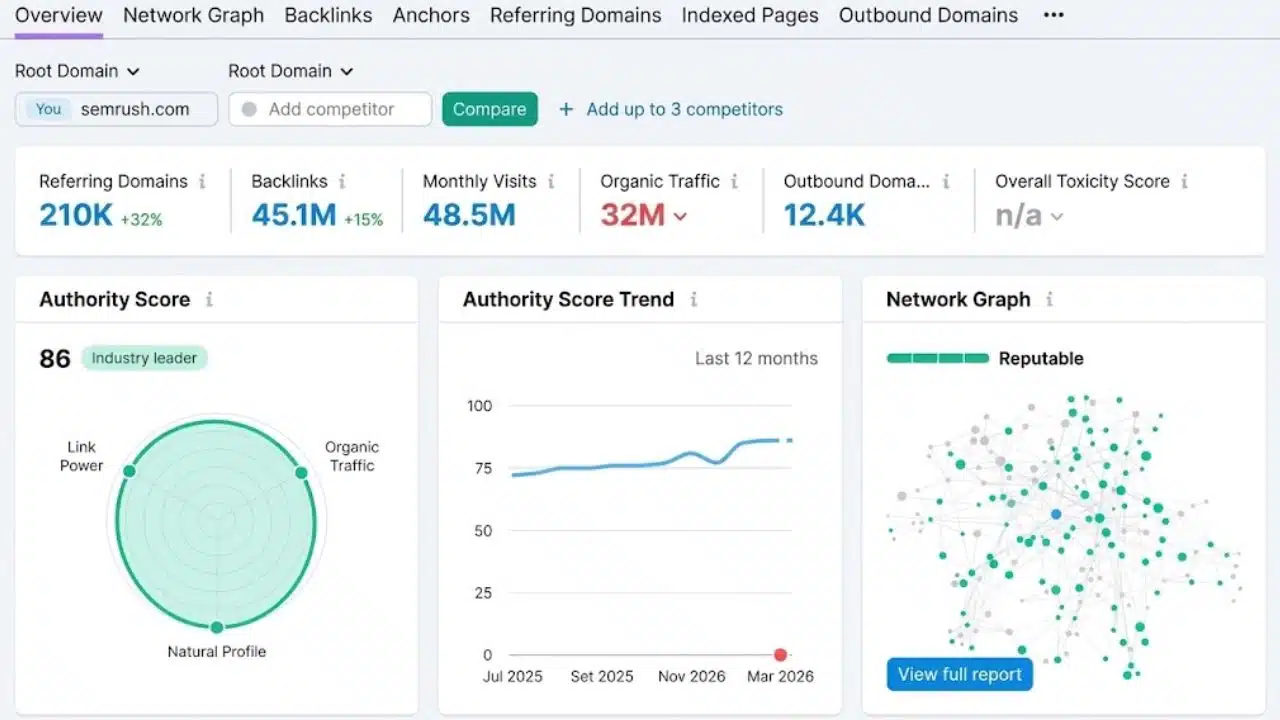
Track qualified prospects, replies, earned placements, new referring domains, links to priority pages, and referral visits. These figures show whether the campaign is producing useful coverage rather than merely increasing an export count.
Organic impressions, rankings, and traffic can be monitored over time, but backlinks should not receive credit for every movement. Content updates, internal links, technical changes, competitors, and search-system updates may affect the same results.
Use the same backlink provider for recurring comparisons when possible. Switching indexes can create apparent gains or losses caused by different coverage.
When This Analysis Is Not the First Priority
Link prospecting will not repair serious indexing problems, weak core pages, or a site with nothing credible to cite. A backlink audit may be more urgent after a manual action, a migration, widespread URL changes, or the loss of valuable links.
For a small local business, accurate listings, relevant association memberships, customer reviews, and genuine local coverage may deserve attention before a large international outreach campaign.
Final Thoughts
A link gap analysis is valuable because it replaces random prospecting with evidence. It shows which websites link within your market, what persuaded them to link, and where your site lacks a suitable resource.
Start small. Compare a few genuine search competitors, inspect the first group of results manually, and pursue only the opportunities that fit your audience and content. The quality of those decisions matters far more than the size of the exported list.
Frequently Asked Questions (FAQs)
Can a link gap analysis be done for free?
Only on a limited scale. Google Search Console provides information about your own backlinks but does not compare your site with competitors. Free backlink tools may reveal a sample, while a meaningful comparison usually requires access to a third-party backlink index.
Should nofollow links be removed from the prospect list?
Not automatically. A relevant nofollow link may still send referral visitors and place the brand in front of a useful audience. Keep it when the publication and placement have real business value, but do not assume it will provide a ranking benefit.
How often should the analysis be repeated?
A quarterly review is sufficient for many established sites. Teams running active digital PR or outreach campaigns may examine priority competitors monthly. Repeat it sooner after launching a major content section or entering a new search market.
Should the same competitors be used every time?
No. Keep competitors that continue to overlap with your important search topics, but review the actual results pages periodically. New publishers, products, or specialist sites may become more relevant than the brands originally selected.