
Many shippers fear their boxes end up as plastic waste. Companies now use biodegradable, recyclable, and reusable packaging to fight plastic waste. We list seven eco-friendly ideas, like fungal inserts, algae mailers, and smart boxes with RFID tags, to cut waste and join a circular economy.
Read on.
Key Takeaways
- Mushroom- and seaweed-based packaging cuts waste and carbon. MycoComposite by Ecovative Design uses mycelium and farm waste. Dell and IKEA pack electronics in it. It breaks down in weeks into rich soil and cuts landfill mass. Seaweed films meet EPR rules, dissolve in soil or water, and lower ocean plastic and emissions.
- Plantable and reusable solutions close the loop. Botanical PaperWorks seed paper holds wildflower seeds you plant and watch grow in days. Hipli and Bigblue mailers in Europe return to hubs for reuse. The Ellen MacArthur Foundation says reuse could cut global plastic waste by 20%.
- Smart tags and optimized design save money and carbon. RFID chips, QR codes, sensors, and blockchain track each box in real time to reduce loss and theft. CAD and 3D tools right-size boxes and CNC inserts banish loose fillers. Brands like Who Gives A Crap use 100% recycled fibers. Nesting boxes and uniform sizes cut shipping costs and scrap.
- Robots and automation speed up packing while cutting waste. Fanuc arms and vision systems stack up to 25 loads per minute. They cut errors by 90% and labor by 30%. Live data on conveyors and feeders raises efficiency by 20% and supports circular-economy goals.
What is mushroom-based packaging and how is it used in logistics?
Mycelium and farm waste grow into firm packaging parts. This sustainable, compostable packaging breaks down into rich soil in weeks. Ecovative Design names its product MycoComposite.
Dell and IKEA pack electronics in these blocks.
Logistics teams handle these parts like regular foam cushions. These biodegradable packaging cut landfill waste, a small win in the fight against climate change. Supply chains gain a boost in waste reduction and lower environmental impact.
A life cycle assessment shows fewer greenhouse gas emissions and less landfill mass. Compost from old blocks feeds fields, closing the circular economy loop.
How does seaweed-based packaging benefit the environment and supply chains?
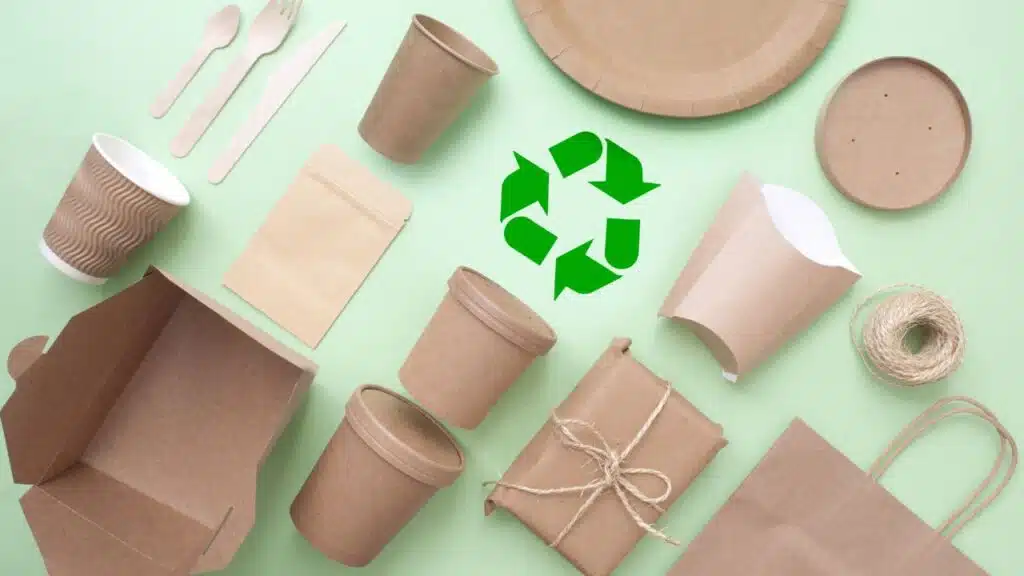
Marine-derived packaging breaks down in soil or water, so it cuts ocean pollution. Such biodegradable packaging shrinks plastic waste. Many brands swap non-biodegradable wraps for these compostable plastics.
Producers tap renewable seaweed biomass, not fossil fuels. Brands can claim greener life cycle assessments (LCAs), for a lower carbon footprint. Stakeholders spot strong corporate responsibility in circular economy moves.
Flexible sheets wrap snacks, seafood, lotions and coffee beans. Zoégas Coffee could use them for brew bags, for example. That versatility slashes SKU complexity in warehouses. Lighter loads pack pallets tighter, boosting logistics efficiency and supply chain optimization.
Faster loading times link to lower fuel use, fewer trips, reduced carbon emissions. Regulatory teams mark high praise, since these films meet extended producer responsibility (EPR) standards.
Shoppers spot eco-friendly packaging on shelves and choose green brands.
What are plantable packaging solutions and how do they work?
A sample pack from Botanical PaperWorks holds hidden wildflower seeds. You tear it, plant it in moist soil, water gently. The paper breaks down, seeds sprout after days. Home growers just need a small pot or garden tray.
This seed-paper design adds greenery right at home.
Brands tap into eco-friendly packaging and circular economy goals with plantable packaging. The compostable materials form biodegradable packaging that shrinks waste and cuts carbon footprint.
Supply chain gains come from lighter, plantable packs. Gardeners cheer when they dig into these living boxes.
How do reusable packaging systems improve sustainability in logistics?
Hipli’s reusable mailers soar across Europe, then skip back to the hub for the next order. Bigblue’s returnable packaging services do the same trick for e-commerce goods. The Ellen MacArthur Foundation says we could clip global plastic waste by 20%.
That jump feeds the circular economy, cuts disposal fees, and slashes demand for virgin plastic in sustainable packaging runs. Workers sort and scan each pack, so nothing ends up in municipal solid waste heaps.
Teams tag crates with RFID sensors and link them to dashboards that show each trip. That practice trims scope 3 emissions from fresh corrugated runs and boosts the use of recycled materials.
Firms then invest savings into carbon offset funds or scale up plant-based plastics in food packaging. It feels like racing past plastic waste.
Smart Packaging with Tracking Capabilities
Teams use radio tags and distributed ledgers to watch freight in real time, tweaking routes on the fly. Networked sensors on crates ping updates to a cloud dashboard, slashing blind spots and wasted miles.
How does smart packaging enhance shipment tracking?
Smart packaging uses radio tags, matrix codes, and detectors to track each box in real time. Radio tags monitor stock levels and map every move in the warehouse. Matrix codes pop up product details in a flash.
Detectors sense shocks or temp changes. It feels like a digital watchdog on each pallet. This mix slashes loss, theft, damage, and boosts logistics efficiency.
IoT devices feed data to a blockchain ledger. That ledger locks in every scan, stamp, and update. Managers spot delays at once and adjust routes. This smart mix drives supply chain optimization.
It links to circular economy goals and cuts carbon in transit.
What technologies power smart packaging in logistics?
RFID chips and QR codes tag every shipment, giving teams real time location updates on recyclable materials and standard goods. Tiny sensors measure temperature and humidity, protecting perishable goods on long hauls.
Carriers scan codes at each stop, feeding data into cloud ledgers and boosting logistics efficiency.
Blockchain-integrated smart packaging creates a tamper proof trail from factory to door. It cuts delays, slashes waste and speeds up supply chain optimization. Brands combine this tech with active packaging, sustainable packaging and recycled materials, tracking freshness and steering firms toward a circular economy.
Optimized Packaging Design for Reduced Waste
CAD software slims down package blueprints, it cuts scrap to a minimum. Material optimization software drives the circular economy, it lowers cost and landfill loads.
What design strategies reduce packaging waste?
Good design cuts waste and saves cash. It also helps the circular economy.
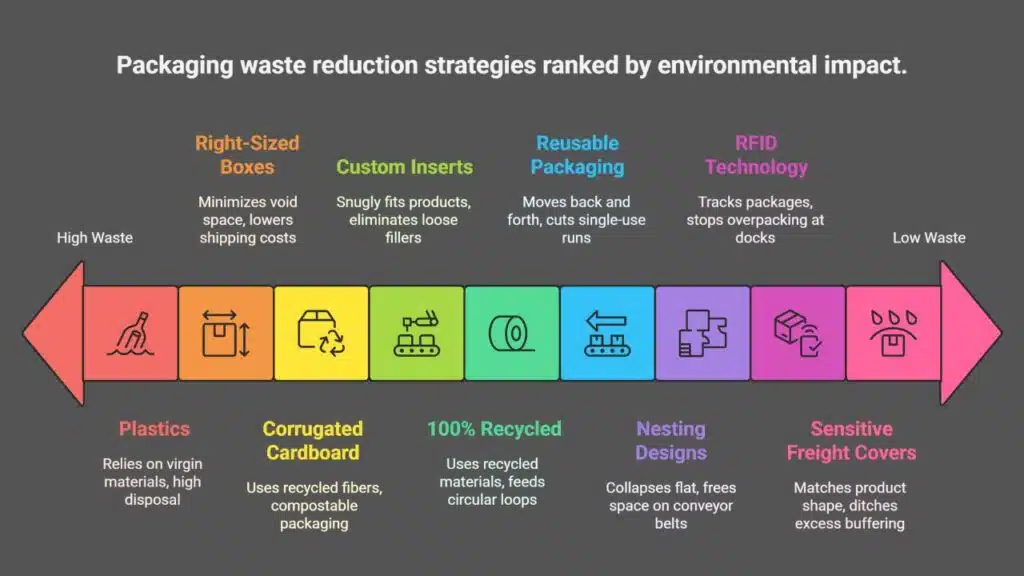
- We use packaging design software and 3D scanners to right-size boxes. That cuts void space. It lowers shipping costs and trims cardboard use.
- Swapping plastics for corrugated cardboard from recycled fibers replaces single-use plastics. It taps into compostable packaging. It shrinks plastic waste.
- Custom inserts come from CNC machining to fit products snugly. They banish loose fillers. They stop extra bulk.
- Companies like Who Gives A Crap use 100% recycled cardboard and paper tape. They drop disposal costs. They feed circular economy loops.
- Reusable packaging systems move back and forth in supply chains. They cut single-use run. They slash waste and cost.
- Nesting designs let pallets and boxes collapse flat. They free space on conveyor belts. They boost warehouse efficiency.
- RFID technology and barcodes track each package in real time. They stop overpacking at docks. They save materials.
- Sensitive freight covers match each product shape. They ditch excess buffering. They keep items safe with less bulk.
How can optimized packaging lower shipping costs?
Uniform box sizes pack tightly on pallets. This cuts wasted space and lowers freight expenses. Firms use stackable plastic containers in food and retail to boost space utilization.
Corrugated packaging often uses recycled materials and supports sustainable packaging goals. It fits pallets without wasted gaps.
Streamlined handling cuts labor hours and speeds loading and unloading. Teams load pallets in half the time. Software like dimensional weight calculators and 3D box design tools help pick slimmed-down package sizes.
Supply chain optimization lifts logistics efficiency and drives a circular economy.
Automated Packaging Systems for Efficiency
Robots, sensors, and imaging tools speed up box packing, cutting errors, and saving time.
Material handling gear, paired with control hardware, slashes delays, boosting logistics efficiency.
How do automated systems speed up packaging processes?
Systems scan boxes on packaging conveyors. Vision units read barcodes at high speed. Cartesian robots sort items to correct lanes. Tape applicators pack cases using cardboard and recycled materials.
These machines cut manual tasks by half and boost logistics efficiency.
Palletizing machines stack cases with precision. They use Fanuc arms and vision systems to spot edges. These units handle up to 25 loads per minute. They reduce errors by ninety percent and protect workers from heavy lifts.
They support the circular economy and sustainable packaging by cutting damaged goods and waste.
What are the benefits of automation in packaging logistics?
Automation helps firms pack fast and right.
Robotic systems slash errors in every box.
- Machines speed up packing lines, boosting logistics efficiency and accuracy. Belt conveyors and guided transport vehicles sort 500 units per hour.
- Staff limit manual steps, which cuts labor by 30 percent. Automated feeders swap packaging materials like corrugated boards in seconds.
- Risks fall. Articulated robots handle cartons in tight aisles, boosting worker safety with no heavy lifts.
- Planners access live data to tune schedules, which raises operational efficiency by 20 percent and cuts idle time.
Takeaways
Green freight needs new ideas. Mushroom and seaweed materials cut trash. Plantable wraps and reusable bins save energy. RFID tags, scannable codes, sensors, and digital ledger boost chain transparency.
Brands gain lower costs and happier clients. Logistics teams adopt circular economy plans with ease.
FAQs
1. What is compostable packaging?
Compostable packaging is material you can toss in soil, like paper-based packaging solutions and plant-based plastics. It uses compostable materials that break down fast. It cuts plastic waste, boosts environmental sustainability, and turns into natural fertilizers.
2. How does biodegradable packaging fight plastic waste?
Biodegradable packaging uses biodegradable alternatives that fall apart in months, not centuries. It trims plastic waste, saves energy in waste handling, and feeds the earth as it decays. This upcycling process helps mitigate climate change.
3. How do reusable packaging systems boost logistics efficiency?
A packaging firm swaps single-use boxes with reusable packaging. These crates travel the route again and again. They cut costs, slash waste, speed up e-commerce packaging, and drive supply chain optimization.
4. Why are seaweed packaging and mushroom packaging top packaging innovations?
A coffee label ditched plastic for seaweed-based packaging made from agricultural waste, and sales grew. Mushroom packaging, aka mycelium packaging, grows strong shapes from fungi. Both curb plastic waste and shine in eco-friendly packaging trends.
5. What is plantable packaging, and does it aid the circular economy?
Plantable packaging hides seeds in the box walls. A food maker plants the box after use, and fresh herbs or flowers sprout. It closes the loop in a circular economy, reuses materials, and regenerates soil like a boomerang.
6. How do blockchain-integrated smart packaging and intelligent packaging aid supply chain optimization?
Smart packaging talks to your phone to track each box from factory to shelf. Add blockchain, and you get a tamper-proof log of every step. This reduces losses, speeds delivery, makes e-commerce packaging more transparent, and lowers environmental impact.