


Hey there, are you worried about climate change and how it’s messing up our planet? Did you know over 20 million people get displaced every year because of crazy weather events linked to global warming? Well, I’ve got some easy eco-friendly habits that can shrink your carbon footprint and help save the earth.
Stick around, let’s make a difference!
Key Takeaways
- Start reducing waste by recycling; the UK produces 1.5 million tons of electrical waste yearly.
- Save energy with LED bulbs, cutting carbon emissions by up to 40 kilograms each year.
- Switch to solar panels to save about one tonne of carbon annually for the average UK household.
- Cut water waste by fixing leaks; American families use over 300 gallons daily per the EPA.
- Reduce food waste; UK households tossed out 9.5 million tonnes in 2018, causing 25 million tonnes of greenhouse gas emissions.
Reduce, Reuse, and Recycle
Let’s talk about making a real difference with eco-friendly habits. Small steps in reducing, reusing, and recycling can shrink your carbon footprint fast!
- First off, embrace the mantra of reduce, reuse, recycle to cut down on waste. This means thinking twice before tossing stuff out. In the UK, folks produce a staggering 1.5 million tons of electrical waste each year. Sorting and recycling at home, school, or the office keeps junk out of landfills and slashes greenhouse gas emissions. It’s like giving the planet a high-five!
- Next up, tackle textile waste by reusing old clothes or donating them. Did you know the UK churns out 1 million tons of textile garbage annually? Much of this takes ages to break down, polluting the earth. Turn an old shirt into a cleaning rag, or pass it on. You’re fighting fast fashion and keeping air quality cleaner.
- Also, grab canvas bags for shopping trips instead of plastic ones. Plastic bags add to the heap of trash that harms our environment. Using sturdy, reusable totes cuts down on this mess and supports sustainable living. It’s a simple switch with a big impact on reducing waste.
- Don’t forget to sort your trash for recycling programs in your area. Separate paper, glass, and plastics to help manage resources better. This habit lowers CO2 emissions and boosts environmental preservation. Think of it as a small chore for a greener tomorrow.
- Finally, get creative with items before they hit the bin. Got an old jar? Use it to store leftovers or as a quirky planter. Reusing stuff like this stops unnecessary buying and curbs energy consumption. You’re not just saving money; you’re aiding decarbonization efforts too!
Conserve Energy at Home
Saving energy at home is a fantastic way to cut costs and shrink your carbon footprint, folks. Think of it as giving Mother Earth a big, warm hug. Start small by swapping out old light bulbs for LED ones.
These little champs use 80 to 90 percent less energy and last up to 12 times longer than the traditional kind. Plus, making this switch can slash your carbon emissions by up to 40 kilograms every year.
How cool is that?
Another smart move is grabbing energy-efficient appliances, especially boilers with an “A” rating. They boost energy efficiency by a whopping 25 percent. Also, try installing smart thermostats to manage your energy consumption.
These gadgets can save around 16.5 percent on energy usage compared to homes without them. So, take these steps for conserving energy, and watch your bills drop while helping the planet stay green with sustainable living.
Switch to Renewable Energy Sources
Hey there, let’s chat about powering up with renewable energy. Switching to sources like solar panels can slash your carbon footprint big time. In fact, for the average UK household, solar panels save about one tonne of carbon each year.
That’s a hefty dent in fighting climate change, right from your own roof.
Now, think about solar thermal systems or heat pumps for even more energy savings. Solar thermal setups can cut your energy costs by at least £50 every year while lowering emissions.
Heat pumps, on the flip side, hit an amazing 200-600% efficiency and shrink your carbon impact too. Plus, UK grants can help cover solar panel installation costs, making this green living switch a whole lot easier on your wallet.
Save Water in Daily Activities
Saving water is a simple way to help our planet. Let’s make small changes in our daily habits to cut down on waste.
- First up, turn off the tap while brushing your teeth. It’s a tiny step, but it stops gallons from just flowing away. Did you know the average American family uses over 300 gallons of water daily, per the EPA? That’s a ton to save with one quick flick of the wrist!
- Next, fix those pesky leaks around your home. A dripping faucet might seem like no big deal, but it adds up fast. Check pipes, toilets, and sinks often to keep water conservation a top goal.
- Try shorter showers to lower your water use. Set a timer for five minutes, and challenge yourself to beat the clock. It’s like a game, and you’re winning for the environment with every drop you don’t use.
- Use a broom instead of a hose to clean driveways or sidewalks. Hosing down eats up water like a hungry beast. Sweep away dirt, and you’re already living a sustainable lifestyle without much effort.
- Only run full loads in your dishwasher or washing machine. Half-empty loads waste water and spike your energy consumption too. Wait till it’s packed, and you’ll help in conserving water big time.
- Collect rainwater in barrels for your garden or lawn. It’s free, natural, and cuts your tap water needs. Just set up a container under a gutter, and watch how this eco-friendly habit pays off.
- Finally, install low-flow showerheads and faucets. These gadgets slash water flow without losing pressure. They’re a smart pick for anyone aiming to conserve water and build a greener tomorrow.
Embrace Sustainable Transportation Options
Join us, everyone, for a smarter way to get around. Choosing sustainable transportation can significantly reduce your carbon footprint. Did you know diesel and petrol cars accounted for 91% of road vehicle emissions in the UK in 2019? That’s a massive amount of pollution we can decrease.
Switch from gas-guzzlers to options like electric vehicles, which operate cleanly and quietly. They’re a transformative choice for our planet.
Consider public transit as well, since it’s an excellent method to cut down on car pollution. Buses and trains transport many people at once, lowering the number of vehicles on the road.
Or pick up a bike for short distances; it’s beneficial for both you and the air. Even walking is incredibly effective for nearby tasks. With emissions in high-income cities projected to double by 2050, every move toward sustainable living matters.
Let’s embrace greener options, like carpooling or electric scooters, to protect our environment.
Practice Mindful and Minimalist Shopping
Hey there, let’s chat about smart shopping for a sustainable lifestyle. Mindful buying means thinking hard before you grab that shiny new thing. Ask yourself, do I really need this? Focus on quality over quantity, and you’ll cut down on clutter and waste.
It’s like picking a sturdy tool over a cheap toy; the good stuff lasts longer.
Now, consider minimalist habits to shrink your carbon footprint. Opt for reusable lunch boxes and electronic devices to slash paper use. Swap single-use plastics for stainless steel or glass containers.
These small shifts help reduce waste and keep our planet cleaner. Think of it as planting seeds for a greener tomorrow, one purchase at a time.
Choose Eco-Friendly and Biodegradable Products
Switching to eco-friendly products is a simple step for a greener life. Many usual cleaning items have harsh chemicals that harm our rivers and lakes. Instead, whip up your own natural cleaners with stuff like vinegar and lemon juice.
It’s like giving Mother Nature a high-five, and it saves you cash too.
Go for biodegradable household goods to cut your carbon footprint. Grab items like bamboo toothbrushes or recycled toilet paper. These green products break down easily and don’t pile up in landfills.
Plus, did you know many conventional products pollute waterways? Making this swap is a small act with a big impact for sustainable living.
Adopt a Plant-Based or Low-Meat Diet
Cutting back on meat can make a big difference for the planet, folks. Meat and dairy production pump out huge amounts of greenhouse gases, like methane and nitrous oxide. These gases trap heat and fuel climate change, worsening your carbon footprint.
So, opting for a plant-based or low-meat diet is a solid step toward sustainable living.
Try swapping out beef for beans or lentils a few times a week. It’s an easy way to lower greenhouse gas emissions and still eat tasty food. Plus, you’ll save cash, since plant-based meals often cost less.
Let’s face it, helping the environment while keeping your wallet happy is a win-win. Stick with this eco-friendly habit, and you’re on track for a greener tomorrow.
Limit Food Waste with Better Planning
Hey there, let’s tackle a big issue together. Food waste adds to climate change, and we can stop it with smart planning.
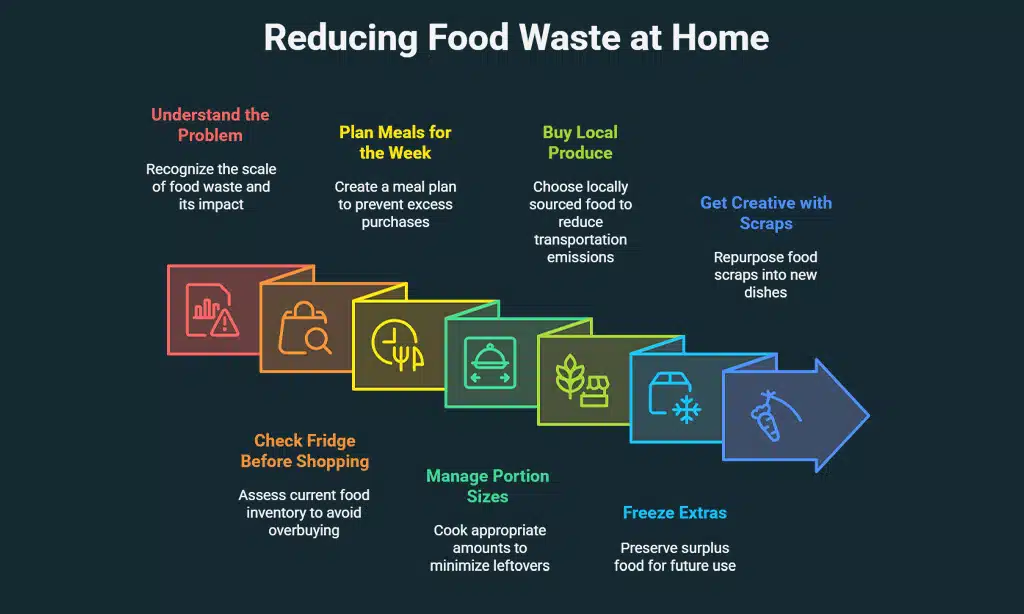
- First up, know the shocking numbers; UK households tossed out 9.5 million tonnes of food waste in 2018, leading to 25 million tonnes of greenhouse gas emissions. That’s a huge carbon footprint we can shrink by being mindful. Start by checking your fridge before shopping. Only buy what you’ll eat soon.
- Next, plan your meals for the week. Jot down a quick list of dishes to avoid overbuying. This cuts down on extra stuff that might spoil. It’s like mapping a route to save gas, but for food.
- Also, pay attention to portion sizes. Cook just enough for your crew. If you’ve got leftovers, store them right in the fridge. Use clear containers so you spot them fast and eat them before they go bad.
- Think about the journey food takes. The average fresh item travels 1,500 miles, pumping out carbon from transport. Buy local when you can to lower that impact. Plus, it supports nearby farmers, which feels good.
- Another tip is to freeze extras. Got too much soup or bread? Pop it in the freezer for later. This trick keeps food from turning into waste and saves you time on busy days.
- Lastly, get creative with scraps. Those veggie peels or stale bread bits aren’t trash. Turn them into broth or crumbs for a dish. It’s a win for your plate and the planet with less food waste piling up.
Start Composting Organic Waste
Let’s talk trash, folks, the kind you can turn into treasure. Composting organic waste is a simple step for a sustainable lifestyle that cuts down your carbon footprint.
- First off, grab those food scraps like veggie peels, coffee grounds, and fruit leftovers from your kitchen. Don’t toss them in the bin; they’re gold for your compost pile. Starting compost piles for food scraps, as many are doing, helps reduce landfill waste. This easy habit supports environmental preservation by keeping junk out of dumps.
- Next up, find a spot in your yard or even a small bin for indoors. It doesn’t need to be fancy, just a place to mix your scraps with some dirt. Add in garden waste like grass clippings or leaves to balance it out. This mix helps create rich soil for a greener tomorrow.
- Stir your pile every few days to keep air flowing through it. Think of it as giving your compost a little workout. Good air flow speeds up the process, turning waste into usable dirt faster. It’s a key part of sustainable living.
- Keep it damp, but not soggy, kinda like a wrung-out sponge. Too much water slows things down, so watch the moisture. Conserving water while you do this is a bonus for an eco-friendly lifestyle. Just a sprinkle here and there does the trick.
- Avoid meat or dairy in your pile since they attract pests. Stick to plant-based stuff for a clean, green composting setup. This ties into a low-meat diet mindset, reducing your impact on climate change. It’s a small shift with big results.
- Wait a few weeks, and you’ll see nature work its magic. Your scraps morph into dark, crumbly soil perfect for gardening. Using this for plants boosts energy efficiency in your home ecosystem. Plus, it feels like a win for the planet.
- Finally, use that compost to grow your own veggies or flowers. Spread it in your garden to feed the earth naturally. This cuts reliance on chemical fertilizers, aligning with eco-friendly habits. You’re basically a superhero for Mother Nature now.
Support Local and Sustainable Businesses
Hey there, folks, wanna make a real difference for our planet? Start by supporting local and sustainable businesses right in your neighborhood. These shops and services often focus on eco-friendly habits, cutting down on carbon footprint with every purchase you make.
Plus, they help reduce litter in your community, keeping streets clean and green.
Dig into this cool fact: over $8.7 trillion is managed through socially responsible investments worldwide. And get this, UK pension funds hold a whopping £2 trillion in assets. Switching to eco-friendly funds can slash emissions by 19 tonnes each year.
So, pick local spots with a sustainable lifestyle in mind, maybe even ones with Green Key certification for sticking to strict environmental rules. Your wallet can push for a greener tomorrow, how neat is that?
Takeaways
Wrapping up, let’s make a real difference for our planet. Start small with these eco-friendly habits, and watch the impact grow. Picture your carbon footprint shrinking as you switch to solar panels or cut down on meat.
Isn’t it neat to think a tiny step today can build a greener tomorrow? So, jump in, and let’s save the Earth together!
FAQs
1. What are some easy eco-friendly habits I can start today to fight climate change?
Hey, let’s kick things off with small steps that pack a punch for environmental preservation. Swap out plastic water bottles for reusable ones, and commit to the reduce, reuse, recycle mantra. You’ll shrink your carbon footprint faster than a melting ice cube on a hot day!
2. How can I cut down on energy consumption at home for a sustainable lifestyle?
Listen up, switching to energy-efficient appliances or installing smart thermostats can slash your bills and boost energy conservation. It’s like giving fossil fuels the cold shoulder while warming up to a greener tomorrow.
3. Why should I ditch fast fashion for a more eco-friendly lifestyle?
Well, fast fashion’s a real planet-killer, churning out waste and guzzling resources. Opt for green products or sustainably made clothes instead, and you’re stitching together a better future with every purchase.
4. Can switching to public transit really help with decarbonisation?
Absolutely, hopping on a bus or train cuts your reliance on gas-guzzling cars. It’s a straight-up win for reducing emissions and supporting sustainable fuels like biodiesel or hydrogen fuel. Plus, you get to skip traffic, which is sweeter than pie!
5. What’s the deal with solar panels, and how do they fit into sustainable living?
Alright, solar PV systems or solar photovoltaic setups are game-changers, pulling power from renewable sources. They can juice up your hot water system or store energy with battery storage for later. It’s like having the sun as your personal electrician, paving the way for a sustainable lifestyle.
6. How can I start conserving water for a greener home?
Yo, water conservation is simpler than you think, just turn off taps tight and fix leaks quick. Try low-flow showerheads or reuse gray water for plants as ways to conserve water. You’re not just saving drops; you’re building an eco-friendly legacy with every splash!































