Does your house feel too hot in summer or chilly in winter, no matter how much you mess with the thermostat? You try to get comfy, but each adjustment bumps up your energy bills and carbon footprint.
It can be tough watching money slip away while worrying about climate change at the same time.
Here is one simple fact: Smart thermostats cut down on wasted power by only heating or cooling when you need it. These gadgets do not just save you cash—they help lower greenhouse gas emissions from home energy use.
In this post, I will show you easy ways to pick a smart thermostat that makes your heater and air conditioner work smarter, not harder. Ready to see which thermostats give both comfort and big savings? Keep reading!
Key Takeaways
- Smart thermostats like Ecobee, Nest, Mysa, and Amazon can cut heating and cooling bills by 8% to 26% every year. (U.S. Department of Energy)
- These devices use tools like geofencing and scheduling to stop wasted energy when you are not home.
- Most smart thermostats need a C-wire or adapter kit for easy setup in old or new homes.
- Some models work best with special systems: Mysa is good for electric heaters; Honeywell T10 Pro+ is strong for big houses with many rooms.
- Using smart thermostats helps lower your home’s carbon footprint by using less power and making heating and cooling more efficient.
Factors to Consider When Choosing a Smart Thermostat

Picking a smart thermostat isn’t as simple as grabbing the first one you spot; different homes, gadgets, and heating setups matter. Think about what makes sense for your air conditioning and heat equipment and which home tech will truly help shrink those energy bills.
Energy efficiency and carbon footprint reduction
Smart thermostats make it easy to save energy at home. Studies show you can cut heating and cooling bills by 8% to 26% each year, just by using these devices. The U.S. Department of Energy says turning your thermostat back 7 to 10 degrees for eight hours a day saves up to 10% on yearly costs.
That adds up—less wasted power from heaters or air conditioners means less carbon dioxide released into the air.
Set schedules on programmable thermostats or use geofencing technology with smart home devices like Google Nest Learning Thermostat or Ecobee Smart Thermostat Premium. Your HVAC system works only when needed, which helps reduce both your energy use and your home’s carbon footprint.
These tools work quietly in the background helping conserve energy—making them a friend to both your wallet and the planet.
HVAC system compatibility
Not all heating and cooling systems work with every smart thermostat. Some need a common wire, called a C-wire, to power up. Most new programmable thermostats like Ecobee Smart Thermostat Premium or Google Nest Learning Thermostat need this C-wire or an adapter kit for installation.
Older homes may not have it, so you might want to check your hvac system before you shop.
Mysa Smart Thermostat stands out for electric baseboard heaters and high-voltage systems—think 120/240V setups. It supports up to 3,800 watts across several heaters at once. This feature gives more options for homeowners who heat rooms differently.
Always look into what type of hvac equipment runs in your home—heat pumps, gas furnaces, air conditioning units—or even district heating if you’re lucky enough! Some devices play nice with almost any setup; others stick to just one kind of energy device or voltage level.
Matching the right smart thermostat with your current system can lead straight to smooth energy savings and less hassle during installation.
Smart home integration
Smart thermostats work with smart home devices like Amazon Echo Dot, Google Home, and Samsung SmartThings. Use voice commands through Alexa or Siri to adjust your heating and cooling.
Ecobee Smart Thermostat Premium has a built-in speaker that supports both Alexa and Siri. The Amazon Smart Thermostat teams up well with Alexa Hunches for more energy savings. Nest Learning Thermostat connects fast to other Google Assistant devices.
You can link these wi-fi thermostats with solar panels, distributed solar power systems, or microgrids at home for better energy conservation. Many programmable thermostats help automate routines using geofencing technology too.
Once set up, they talk to lights, sensors, or space heating equipment in your house for extra comfort and lower carbon dioxide-equivalent emissions from the grid.
Geofencing and automation features
Geofencing uses your phone’s location, so your smart thermostat knows if you are home or away. Head out for groceries, and the thermostat turns off heating or cooling to save energy.
Step back in the door, it switches on again for comfort, no sweat—energy bills may drop without much effort from you. Many programmable thermostats offer this feature through Google Assistant or Samsung SmartThings apps.
Automation kicks into gear with eco modes and smart recovery tools. Eco mode changes settings at certain times to help reduce energy consumption and greenhouse gas emissions. Smart recovery learns how long it takes to heat or cool your space—no more blasting air just because someone got chilly early! Home thermostats can then maintain conditioned air while cutting down unnecessary HVAC system use, helping reach net zero buildings goals and chip away at fuel consumption bit by bit.
Installation requirements
Most smart thermostats need a C-wire. This wire gives steady power to your unit. If you do not see a C-wire, many brands toss in an adapter kit as a fix-it tool. You can use these adapters for easy setup.
Most models also walk you through installation step by step on their app. No toolbox panic needed.
Some options, like Mysa, work with high-voltage systems at 120 or 240 volts, perfect for electric baseboards and such—no guesswork here, just check your heating and cooling system first.
Grab the right tools and always turn off the circuit breaker before starting any install job to stay safe and keep things simple. App-guided setups help make this process smooth—even for beginners—and get you back to saving energy faster than you think!
Best Overall: Ecobee Smart Thermostat Premium
The Ecobee Smart Thermostat Premium keeps your heating and air conditioning working smarter, not harder. With voice assistants like Alexa built in, and smooth smart home device support, it brings energy efficiency and simple comfort to your day.
Features & Description (Ecobee Smart Thermostat Premium)
Control the Ecobee Smart Thermostat Premium with your voice using Alexa or Siri. Adjust settings from anywhere, even your couch or the grocery store, thanks to its phone app and smart home integration.
It comes with a Remote SmartSensor that helps keep every room comfy and saves on energy bills. The built-in speaker lets you play music while checking your heating and cooling stats—no need for another gadget.
This smart thermostat also checks air quality inside your house. Get alerts if things get stuffy or dusty. Works well with most HVAC systems and connects smoothly to other smart devices like Google Assistant or Samsung SmartThings.
Great for folks who want to lower their carbon footprint without fussing over big changes in their ductwork or space heating setup.
Pros & Cons (Ecobee Smart Thermostat Premium)
The Ecobee Smart Thermostat Premium stands out in energy conservation. It packs powerful features for saving on heating and cooling bills.
- Saves up to 26% on energy bills using smart schedules and sensors.
- Smart Recovery feature learns your routine, keeping rooms comfy without wasting energy.
- Works with many HVAC system types, including gas, electric, dual fuel, and heat pumps.
- Bluetooth and Wi-Fi support makes it easy to connect with smart home devices like Amazon Alexa, Google Assistant, Apple HomeKit, and Samsung SmartThings.
- Built-in air quality monitor gives real-time updates and suggests steps for cleaner air.
- Offers best-in-class privacy controls so your data stays safe from prying eyes.
- Voice assistant lets you control temperature hands-free through a smart speaker or phone app.
- Touchscreen is easy to read, even from across the room or in low light.
- Setup process guides users step by step through smart thermostat installation.
- Price tag sits higher than most programmable thermostats or budget smart thermostats.
- Voice recognition may struggle with background noise or heavy accents, which can be frustrating for some users.
- Alexa notifications might need manual changes to match personal preferences for alerts.
Best for User-Friendly Design: Google Nest Learning Thermostat (4th Gen)
If you want something easy, the Nest Learning Thermostat makes heating and cooling feel like a walk in the park, even for grandma. With Google Assistant built-in, changing the temperature is as simple as saying, “turn it down,” from your favorite armchair.
Features & Description (Google Nest Learning Thermostat)
Google Nest Learning Thermostat feels smart right away. It recognizes your habits in about a week, thanks to AI-driven energy optimization. Just turn the nest thermostat up or down for a few days, and this little genius remembers your favorite settings—no need to fuss each time you pass by.
The sleek design fits any room like it was born there, with its round look and bright display.
This device connects easily with Google Assistant for voice control and works well with most HVAC systems. Use monthly energy reports on your smartphone to see how much power you save, so tracking energy efficiency gets very simple.
Add external sensors in different rooms if you want every corner cozy or cool without overworking your air conditioning systems. It uses geofencing technology too; leave home and heating or cooling slips into low-power mode—helping cut grid emissions factors while saving cash.
Pros & Cons (Google Nest Learning Thermostat)
This thermostat stands out for its smart features and easy use. People with busy lives love how it learns from them and helps save energy.
- Learns your schedule using AI, then sets the best temperature to help cut down energy consumption.
- Shows a green leaf symbol when you pick a setting that saves power, which feels like a high five from your HVAC system.
- Connects with smart home devices such as Google Assistant and Samsung SmartThings for quick voice control of heating or cooling.
- Monthly email reports break down your savings with clear numbers, so you see how much less carbon you use.
- Sleek round design looks sharp on any wall and fits many homes, even old ones with wires that belong in a museum.
- Compatible with many different programmable thermostats systems, making upgrades from older models simple for most users.
- Uses geofencing technology to know if people are home or away, helping reduce energy waste when no one is around.
- May need a C-wire for smart thermostat installation, which might mean calling in an expert if your setup is missing one.
- Touchscreen interface can be less friendly for people who want big buttons or have trouble seeing small details.
- Needs manual adjustments sometimes since it may not always get comfort right without feedback from sensors nearby.
People who want to save money on energy bills while lowering their carbon footprint often start here. This smart choice has helped raise the bar for building automation systems worldwide since 2011, changing how we think about space heating and cooling forever.
Best Budget Option: Amazon Smart Thermostat
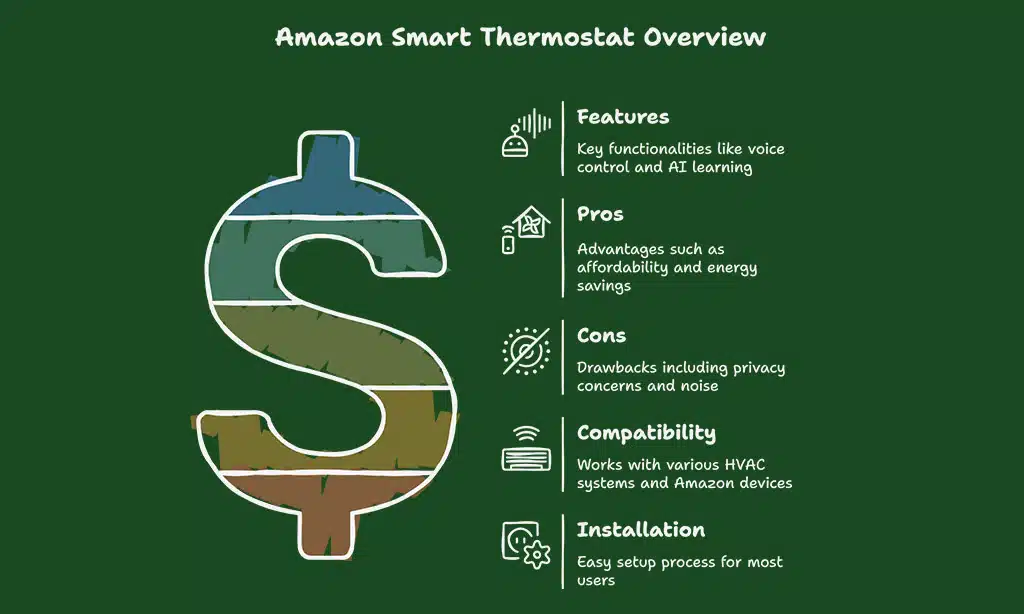
If pinching pennies matters, the Amazon Smart Thermostat keeps things cool without emptying your wallet. This little energy-saving gadget links up with Alexa, making smart home upgrades a breeze for everyone—no need to break out the piggy bank.
Features & Description (Amazon Smart Thermostat)
Amazon Smart Thermostat works smoothly with Alexa, which helps you control your heating and cooling by voice. It learns your habits using basic AI learning, so you save energy without thinking much about it.
You can use an Echo Dot as a remote temperature sensor for better room comfort. The thermostat is easy to set up in most homes and supports many HVAC systems.
You get smart home integration at a budget price point, making energy savings available for more people. Any user looking to cut down on their carbon footprint will enjoy its simple operation and clear display.
Pairing this thermostat with other Amazon smart home devices makes daily life easier while improving energy efficiency in real time.
Pros & Cons (Amazon Smart Thermostat)
This budget-friendly device helps lower your carbon footprint. It offers smart home integration and energy savings, with a few drawbacks.
- Priced low, this thermostat makes energy conservation affordable for more households.
- Works well with many HVAC system types, so you can use it in different homes.
- Links up with Echo Dot and Alexa for easy voice controls and automation.
- Designed for simple installation, most users set it up in less than 30 minutes.
- Geofencing technology is not included, but it lets you program heating and cooling schedules.
- Uses Amazon’s data systems, which can raise privacy concerns because of Alexa data collection.
- Ticks out loud during operation—a sound that some find distracting during quiet nights.
- Appearance looks plain next to programmable thermostats like Ecobee Smart Thermostat Premium or Google Nest Learning Thermostat.
- Connects with Energy Star programs to qualify for rebates or tax credits under the Inflation Reduction Act, helping offset cost even more.
- Helps manage energy demand, encourages reduced energy consumption and supports cleaner energy through distributed energy networks.
Best for Electric Heating: Mysa Smart Thermostat (v2)
Electric baseboards can eat up a mountain of energy, but Mysa’s little box makes them play nice. Plug it in, sync to your phone, and watch those kilowatt-hours drop faster than kids running from chores.
Features & Description (Mysa Smart Thermostat)
Mysa Smart Thermostat (v2) fits homes with high-voltage electric heating, like baseboard heaters. Mysa helps save up to 26% on your energy bills. The device uses geofencing to tell if you are home or away and changes the temperature for energy savings.
Mysa has scheduling, so it heats or cools only when needed.
It connects with Google Assistant, Amazon Alexa, Apple HomeKit, and Samsung SmartThings. You can control it from your phone using its app. The display is simple and bright enough for dark hallways or crawlspaces.
Turn on Eco Mode to cut back even more on power use while still staying comfy during winter chills.
Pros & Cons (Mysa Smart Thermostat)
This smart thermostat fits homes that use electric heat. It helps save energy, which means it can help you lower your carbon footprint.
- Simple display makes it easy for anyone to read and set temperatures with just a few taps.
- Works well with Google Assistant, Alexa, and Samsung SmartThings to fit into many smart home systems.
- Geofencing technology learns your routine. The system turns heating up or down when you come and go.
- Helps cut energy use by up to 26 percent, according to real-world energy audits.
- Installation can be tricky if you are not used to wiring or have an older electric baseboard system.
- Only works with high-voltage heaters like baseboards or fan-forced units. Not good for gas or oil furnaces.
- Can control each room alone, but each space usually needs its own unit—this gets costly fast for bigger houses.
- App provides clear charts of your energy savings. You see the benefits in both energy conservation and billing each month.
- No C-wire needed for installation in most cases, making it easier for quick setup in modern homes.
Best for Whole-Home Control: Honeywell Home T10 Pro+ Smart Thermostat
If you want to command your entire house’s heating and cooling, this device steps up with sensors for every room. It teams nicely with Google Assistant, Amazon Alexa, and Samsung SmartThings—so your gadgets work together like peanut butter and jelly.
Features & Description (Honeywell Home T10 Pro+)
The Honeywell Home T10 Pro+ Smart Thermostat helps you cut down your energy use. It comes with Energy Star certification for better energy savings and efficiency. Satellite sensors measure the temperature in different rooms, so your whole home stays comfortable without wasting power.
Humidity tracking is also included to stop mold and keep air healthy.
You can control this smart thermostat from anywhere using a remote app on your phone or tablet—no need to run to the wall every time someone feels chilly. The T10 Pro+ works with many HVAC system types.
It links up with Google Assistant, Amazon Alexa, Samsung SmartThings, and even geofencing technology for hands-free automation. Save money by making each room match your needs while reducing your carbon footprint at the same time.
Pros & Cons (Honeywell Home T10 Pro+)
This model stands out for whole-home control and straight-up ease. It helps you increase energy savings with features built for big spaces and smart homes.
Pros:
- Tracks humidity, making A/C more efficient and keeping your home comfy.
- Comes with satellite sensors, so it checks temps in different rooms for balanced heating and cooling.
- Works with smart home devices like Google Assistant, Alexa, and Samsung SmartThings for better automation.
- Supports geofencing technology to sense when people come or go—saves energy without you lifting a finger.
- Compatible with many HVAC system types, including advanced ones found in large homes or offices.
Cons:
- Costs more than other programmable thermostats; the price can be steep if you’re on a budget.
- Smart thermostat installation may call for a pro—so add those dollars to your bottom line.
Smart Thermostat FAQs
Questions are as common as coffee spills when picking smart thermostats. Scroll on, see if your burning question got caught in our quick answers.
Are smart thermostats really worth it for reducing emissions?
Heating and cooling systems pump out about 60% of the carbon pollution in your house. Plugging in a smart thermostat like an Ecobee or a Nest cuts down waste fast. These programmable thermostats can trim at least 8%, sometimes up to 26%, from heating and cooling bills every year.
That means less energy used, so fewer emissions go into the air.
Smart thermostats use tools like geofencing technology, motion sensors, and schedules. They learn your routine, turning off heat or AC when you leave and making sure it feels just right when you get back.
Homes that add these devices see big drops in wasted power—good news for families who want to help slow climate change without huge changes to their habits. Compared with regular manual controls, upgrading to smart home devices makes conserving energy much easier day by day.
Can a smart thermostat save you money on energy bills?
Smart thermostats can shrink your energy bills fast. These devices learn your habits and adjust heating and cooling without you thinking about it. The U.S. Department of Energy says setting back the temperature by 7 to 10 degrees for just eight hours a day can save as much as 10 percent each year on heating and cooling costs.
Some folks have even reported savings up to 26 percent with smart thermostats.
Geofencing technology lets these little wonders know if you are home or away, so they never waste energy when no one is around. Easy-to-use programmable settings help cut down extra use, too.
Brands like Ecobee Smart Thermostat Premium, Nest thermostats, Amazon Smart Thermostat, Mysa, and Honeywell all offer ways to boost energy efficiency while making life simpler. Save money while getting comfy—now that’s a win-win!
Do you need a C-wire to install a smart thermostat?
Most programmable thermostats and smart home devices want that C-wire, or common wire, to work. The C-wire gives steady power for features like Wi-Fi, screens, and voice control with Google Assistant or Samsung SmartThings.
Many heating and cooling systems built before 2010 may not have a C-wire at all. If your HVAC system is older, you might need an adapter kit instead of new wiring.
DIY setup guides often walk users through steps for both wired and non-wired options. Models like the Ecobee Smart Thermostat Premium include a Power Extender Kit in the box for homes without a dedicated common wire.
Amazon Smart Thermostat and Honeywell T10 Pro+ also support add-on kits if you lack that extra blue (C) wire hiding behind your wall plate. No need to stress over wires—most brands aim for easy smart thermostat installation right out of the box!
How secure are smart thermostats?
Smart thermostats collect and use your data. Ecobee keeps your info private and does not share it with outside companies. You can turn geofencing off if you do not like your phone’s location being tracked.
Nest gathers your IP address, phone spot, and other details for smart home integration but allows you to choose what info they keep. Amazon saves personal data and voice recordings; privacy settings help limit this.
Security is a big deal for energy efficiency devices because they link to Wi-Fi, Google Assistant, or Samsung SmartThings. Hackers could try to mess with heating and cooling systems through gaps in security settings.
Always update software fast, set strong passwords, and check privacy controls on smart thermostats from brands such as Ecobee or Amazon Smart Thermostat to help protect yourself at home while using HVAC system automation features.
Takeaways
Picking the right programmable thermostat really does help cut down your carbon footprint. Small changes, like setting up a new Ecobee or Nest, can mean huge energy savings for both your wallet and the planet.
These smart home devices, from Mysa to Honeywell, make heating and cooling simple and efficient. Saving energy today means more clean air tomorrow—no rocket science needed. Give one a try; even little steps spark big change!
FAQs
1. How do smart thermostats help with energy savings and energy efficiency?
Smart thermostats use sensors and learning tools to adjust your heating and cooling. They cut down on wasted power, so you save money while using less energy.
2. Which smart home devices work well with a smart thermostat?
Most smart thermostats connect with popular systems like Google Assistant, Samsung SmartThings, or other programmable thermostats. This makes it easy to control your HVAC system from one spot.
3. Can installing a smart thermostat really reduce my carbon footprint?
Yes, switching to a smart thermostat helps lower the amount of power you use for climate control at home. Less energy means less pollution from power plants, which can help mitigate climate change.
4. What features make the Ecobee Smart Thermostat Premium stand out in this competitive market?
The Ecobee model offers geofencing technology that senses when you’re home or away. It works well with many other devices for full smart home integration—plus it’s good at spotting ways to boost energy conservation.
5. Are there any tax credits or co-benefits if I install a new programmable thermostat?
Some areas offer tax credits for adding efficient gear like a new Amazon Smart Thermostat or similar products that support better energy storage and duct sealing too.
6. Do these gadgets play any part in bigger goals like boosting gross domestic product or helping electric vehicles grow?
Energy-efficient homes mean folks spend less cash on bills and have more left over—which can lift GDP per capita over time—and as more people use green tech at home, demand grows for things like solar hot water panels, onshore wind projects, even concentrated solar power setups recommended by groups such as the Intergovernmental Panel on Climate Change.