
Money moves fast in South Korea, but staying ahead is tough. Maybe you’ve worried about payment security, struggled to get a loan, or found banking apps confusing. Many people feel left out of new financial technology.
Here’s one eye-opener: AI-powered robo-advisors now guide over 3 million users in South Korea. They beat human advisors by twelve percent in recent tests.
This blog shows how artificial intelligence (AI) changes FinTech across banking, payments, and insurance. We’ll cover real examples like smarter fraud detection and personalized financial advice using machine learning models.
Find out how these changes help businesses and regular people save money, worry less about fraud, and have more control over their finances.
Stick around if you want faster payments and fewer headaches!
Enhanced Financial Inclusion
AI tools are changing finance for many people in Korea. These new programs help those who may not have had access before, opening doors to banking services and support.
AI-powered microfinance tools
AI-powered microfinance tools open doors for people who once had no access to loans. In Korea, machine learning algorithms and neural networks read digital behaviors like mobile payments or social media activity.
These tools do not just stare at your past credit score. They scan all sorts of data points: payment history, online shopping, even daily app use. This helps build a new financial identity that looks beyond old rules.
Mobile-first users enjoy services right from their phones. “You are more than your last bank statement,” goes the saying in today’s FinTech circles. AI automates much of the loan approval process, making it faster and friendlier for small-business owners and gig workers without fancy paperwork.
Financial institutions can now help thousands skipped by legacy banks, using predictive analytics and computer vision for both risk analysis and customer engagement.
“AI-driven lending lets underdogs get off the bench.”
Expanding access to underserved populations
Over 1.4 billion adults across the globe still have no formal bank account. Many live in rural areas or crowded cities, often far from traditional banks or branches. South Korea uses artificial intelligence to break down old barriers in financial technology.
Machine learning models look at alternative data like phone usage, utility payments, and social habits for credit scoring. These predictive analytics tools help people without regular payslips get a shot at small loans and microfinance.
Success stories shine bright elsewhere too; Nubank in Brazil and MoniePoint in Nigeria use AI-powered fintech platforms to serve groups that big banks missed for years. Natural language processing helps build simple apps with local languages so users feel right at home while managing money.
Digital transformation also shrinks costs, letting companies reach unbanked folks even in distant towns through their phones, not just brick buildings.
Smarter Fraud Detection & Risk Management

Fraud is a big problem. AI helps financial companies find and stop it faster.
Machine learning spots unusual patterns in transactions. This keeps people’s money safe and sound.
Machine learning for anomaly detection
Machine learning models spot strange patterns in huge volumes of transaction data. These smart systems learn from real-life financial activities in Korea. Over time, they catch new tricks used by fraudsters and make fewer mistakes with false alarms.
Artificial intelligence tools like Keras or PyTorch handle billions of actions a day for banks and fintech companies such as KakaoBank and Shinhan Bank. Data scientists feed these models lots of examples, so the systems improve on their own.
In 2023, local fintechs used explainable AI to help workers understand why certain activity looked risky as part of digital transformation efforts. A manager at Hana Financial Group once said, “The more data we add; the sharper our radar gets.” Machine learning lets teams adapt so fast that fraud prevention rarely misses a beat anymore.
Real-time fraud prevention keeps money safer every second—next up is how instant detection works in daily banking.
Real-time fraud prevention systems
Real-time fraud prevention systems work fast. They use AI tools to spot fraud right away. These systems analyze data quickly. This helps financial institutions catch bad activities before they cause harm.
Continuous analysis is key in these systems. They look at patterns in transactions to find unusual behavior. About 73% of organizational data goes unused, which hurts detection efforts.
By using all available data, these systems can beat even the smartest criminals and keep money safe for customers.
Personalized Banking & Wealth Management
AI is changing how banks and financial firms serve their clients. With smart tools, they can learn about customer behavior quickly. This means people get better financial advice that fits their needs.
AI-driven chatbots offer personalized tips right when you need them. It’s like having a friendly advisor in your pocket!
AI-driven customer insights
AI-driven customer insights help banks and financial firms understand their clients better. These tools analyze customer behavior and preferences. They gather data from past transactions, creating a clear picture of spending habits.
With this information, companies can offer personalized financial advice. Chatbots like Erica from Bank of America use these insights for 24/7 support. They answer questions quickly and accurately, making the customer experience smoother.
Using AI in this way boosts satisfaction and builds trust between customers and financial institutions.
Robo-advisors for tailored financial planning
Robo-advisors change how people invest their money. These tools offer cost-effective, algorithm-driven services to help individuals and businesses manage their finances. They analyze big data to find the best strategies for each user.
Users share their risk tolerances and goals, and robo-advisors tailor plans just for them.
The rise of robo-advisors makes financial advice more accessible to everyone. People from different backgrounds can now get investment help at a lower cost. Still, there are challenges like keeping data safe and following rules in this space.
Transparency about algorithms is also key to gaining users’ trust in these financial technologies.
AI-Powered Lending & Credit Scoring
AI is changing how lending and credit scoring work. It uses smart data analysis to check if someone can pay back a loan. This makes getting loans faster and fairer for everyone. Many people, who once felt left out, now have better chances to secure funds they need.
Predictive analytics for creditworthiness
Predictive analytics plays a key role in credit scoring. These tools help financial institutions check if someone is likely to pay back a loan. They do this by looking at many different data points, not just the usual credit history.
This can include things like income, spending habits, and even social media activity.
AI models learn from new information constantly. This makes them better at assessing risk as market conditions change. The ability to use alternative datasets leads to fairer access to loans for underserved populations.
With AI-driven credit scoring, more people can get the financial support they need, enhancing financial inclusion in South Korea and beyond.
Automated loan approval processes
Automated loan approval processes speed things up for everyone. Companies like Akulaku in Indonesia use AI to make quick decisions. They can turn loan approvals from days into seconds, helping customers get money when needed.
This fast process helps more people access credit easily.
AI tools analyze data to check if a person is a good risk for loans. These systems help banks and other financial institutions meet customer needs better than before. Now let’s look at how blockchain and AI work together for smart contracts next.
Blockchain & AI-Driven Smart Contracts
Blockchain and AI work together to make smart contracts better. These digital agreements run on blockchain, which helps verify transactions fast and safely. When AI is added, it can boost trust in these deals by checking terms automatically.
This means less hassle for everyone involved!
Streamlining transaction verification
Smart contracts make it easy to verify transactions. They work on blockchain technology. This means that they can quickly check and confirm deals without any delays. Fraudulent activities are reduced, as every transaction is recorded securely.
Using AI with these contracts boosts security and efficiency for payments in the gig economy.
When people send money, smart contracts speed up the process. Instant transactions happen when conditions are met automatically. Users enjoy safer and faster transfers thanks to this blend of AI and blockchain.
With each step checked clearly, trust grows in digital agreements across financial landscapes.
Enhancing transparency and trust in digital agreements
Streamlining transaction verification leads to a stronger focus on digital agreements. Blockchain technology plays a big role here. It builds trust through clear and secure records.
Transactions are fast and easy to track, which cuts costs, especially in sending money.
Smart contracts also add value. They automate processes that usually take longer. With these contracts, no middlemen are needed, making everything simpler and faster. Both blockchain and smart contracts work together to create transparency in financial deals.
This helps users feel safe when they make transactions online.
AI in Payments & Remittances
AI is changing how we send and receive money. Smart systems can route payments quickly, cutting costs and delays. These tools make transactions easier for everyone. They help businesses and people stay on track with their finances.
Intelligent payment routing systems
Intelligent payment routing systems help businesses process payments smartly. They use data to make transactions smoother. By using AI technologies, these systems can find the best path for each payment.
This drives revenue optimization and cuts down on delays.
These systems also lower transaction costs. They enrich data, retry failed transactions dynamically, and filter options to improve success rates. With better assessments based on big data, false declines drop significantly.
Happy customers come back for more due to this reliable service.
Reducing transaction costs and delays
AI tools help cut down transaction costs and delays in payments. They make processing faster and more accurate. With machine learning, systems analyze data quickly to spot patterns.
This leads to smoother transactions with less confusion.
Early users of AI report big savings on operational costs. These technologies are changing how financial services operate. Businesses can now process payments almost instantly, leading to a better user experience for everyone involved.
Regulatory Technology (RegTech)
RegTech helps banks and financial firms meet rules. It uses smart tools to watch over their actions and report back quickly. This keeps companies safe from fines and trouble. With AI, these systems can check data in real-time.
They spot issues before they grow bigger. By automating tasks, RegTech saves time and cuts costs too!
AI for compliance monitoring
AI helps companies keep track of rules and laws. It watches for patterns in large amounts of data. This means it can find problems before they become big issues. With AI, firms can spot compliance risks early on.
Many businesses use AI tools to automate reporting processes. These tools save time and reduce mistakes. The technology makes regulatory tasks easier, allowing businesses to focus on growth instead of paperwork.
By working together, tech providers and companies can make the best use of AI in compliance monitoring.
Automating regulatory reporting processes
AI changes how companies handle regulatory reporting. It decreases the time needed to gather data. Errors drop too, making reports more accurate. Costs also fall with automation in place.
Real-time monitoring is a big advantage of AI-driven RegTech. This helps find compliance problems faster, especially those linked to fraud patterns. It supports financial institutions by keeping them on track with regulations efficiently and effectively.
AI in Insurance (InsurTech)
AI is changing insurance in big ways. Insurers use smart models to check risks better and speed up claims.
Risk assessment using AI models
AI models help assess risk in insurance and finance. These tools analyze large data sets quickly. They can predict future claims based on past information. This makes underwriting more accurate.
Using AI also improves credit scoring. Traditional methods often miss key details about a person or business’s financial health. AI considers alternative data, giving a clearer picture of creditworthiness.
Companies like Zest AI use machine learning for better evaluations, leading to smarter decisions in lending.
Next, let’s explore how automation streamlines claims management with advanced technology in insurance (InsurTech).
Streamlined claims management with automation
Claims processing is simpler with automation. AI handles many tasks like verification and assessment. This speeds up payouts, making it easier for everyone involved. Fewer human errors mean a smoother experience for customers.
AI analyzes data from various sources to spot fraud quickly. It streamlines claim verification using advanced analysis methods. Insurance companies can trust the process more now, boosting transparency in digital agreements.
Automated claims management transforms how insurance works today.
Challenges of AI in Korean FinTech
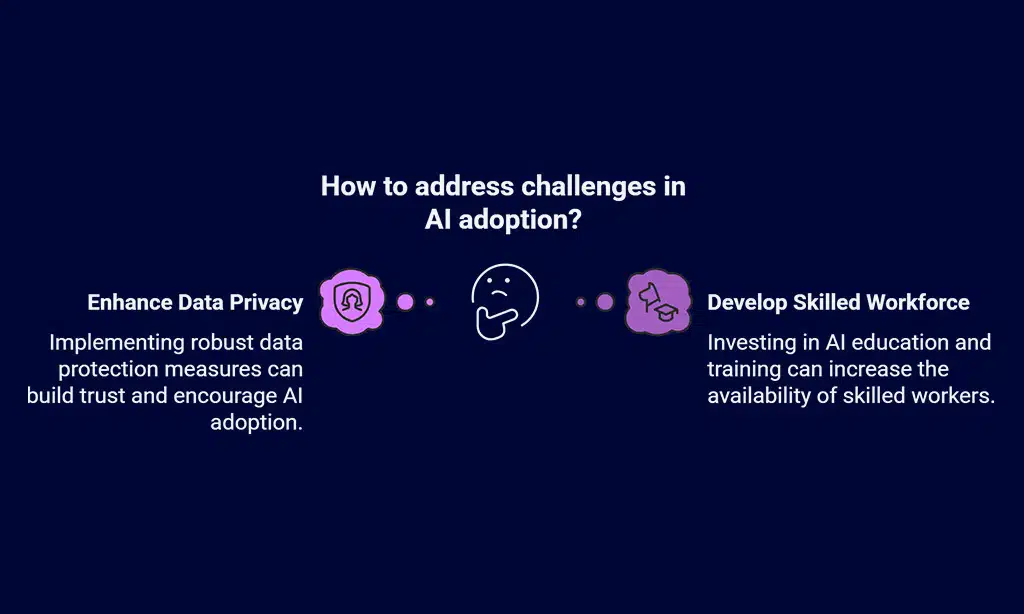
AI in Korean FinTech faces some tricky problems. Data privacy is a big worry for many people, while finding skilled workers in AI is hard.
Data privacy and security concerns
Data privacy and security are major worries in fintech. Stringent laws, like China’s PIPL and Singapore’s PDPA, put pressure on companies. They must handle personal data carefully.
Failure to do so can lead to severe penalties.
Cybersecurity risks also rise with digital transactions. Cybercriminals often target financial data for quick gains. This makes it vital for firms to improve their defenses against attacks.
Protecting customer information should be a top priority. Now let’s look into the ethical challenges in algorithmic decision-making that come with using AI in finance.
Ethical challenges in algorithmic decision-making
Algorithmic decision-making faces serious ethical challenges. These issues can lead to bias, especially in loans or insurance pricing. For instance, if AI systems rely on historical data that is unfair, they might favor some groups over others.
This could mean higher costs for those already at a disadvantage.
Transparency is key for building trust with consumers. If people don’t understand how the algorithms work, they may feel uneasy about outcomes like fraud detection or credit scoring.
Creating accountable frameworks becomes necessary to handle mistakes made by AI models. These frameworks raise questions about who is responsible when errors occur and how these impacts affect people’s lives.
The next step will explore the talent shortage in AI expertise and its impact on Korean FinTech.
Talent shortage in AI expertise
Korea has a big problem with finding skilled people in AI. Many jobs need AI skills, but there aren’t enough experts to fill them. This shortage slows down progress in artificial intelligence technology.
Companies struggle to build strong teams and meet demands. Without enough talent, the growth of FinTech could slow significantly.
Investing in education and training is crucial now more than ever. Schools must prepare students for this growing field. New programs can help shape a brighter future for Korea’s tech scene.
With better planning, the country can close this gap and boost its FinTech industry even further. Next up is exploring how AI enhances financial services like fraud detection and risk management!
Future of AI in Korean FinTech
AI is set to reshape Korean FinTech in exciting ways. Imagine smart tools like AI chatbots and advanced algorithms that offer financial advice just for you. These innovations will make banking easier and more personal than ever before.
Integration of generative AI into financial applications
Generative AI is a game changer for financial applications. It helps create better and smarter tools for customers. For example, chatbots can answer questions quickly and provide personalized financial advice.
This improves customer experiences like never before.
Generative AI can also boost revenue by 10-30% for businesses in three years. Financial institutions benefit from advanced analytics that spot market trends and risks. Goldman Sachs predicts this technology could add $7 trillion to global GDP over the next decade.
By using machine learning models, banks enhance their risk assessment efforts too.
Expanding AI capabilities in cross-border services
AI makes cross-border services easier. It helps banking and financial firms connect with customers around the world. This technology uses smart algorithms to analyze data from different markets.
With AI, companies can offer personalized solutions to clients no matter where they are.
With tools like cloud computing, businesses can streamline operations across countries. They reduce costs and delays in money transfers. These systems also keep data secure, which builds trust with users.
As AI evolves, it enhances operational efficiency and regulatory compliance for financial institutions globally.
Takeaways
AI is changing FinTech in Korea for the better. We talked about how AI helps with fraud detection, personalized banking, and faster loan approvals. These tools make it easier for people to access financial services.
Think about how you can use these methods in your own life or business. Embracing these changes can lead to greater success and a brighter financial future! So, are you ready to take this leap into the new age of finance?