
The digital marketing landscape has reached its definitive end of history. For nearly three decades, the fundamental goal of every brand, every publisher, and every digital strategist was to secure a position on the first page of a search engine results page. We spent billions of dollars on a quest for the blue link. We optimized for keywords, we chased backlinks, and we built sprawling websites designed to lure users through a digital front door. This era was defined by a simple, transactional relationship. A user had a question, a search engine provided a list of destinations, and the user clicked a link to find the answer. The search engine was a portal, a mere middleman in the flow of information.
As we move deeper into 2026, that portal has transformed into a final destination. The search bar is no longer a gateway to the internet. It has become an intelligence interface that synthesizes, summarizes, and serves the answer directly on the screen. We have entered the era of the zero-click reality. If you are still measuring your success by the volume of people clicking through to your website, you are fighting over scraps in a digital graveyard. The legacy metrics of ranking and click volume are dying. In this new landscape, your website is no longer a destination to be visited. It is a data source to be harvested.
The goal for survival is no longer about being the top result in a list. It is about becoming a trusted, indispensable part of the artificial intelligence’s internal model of truth. You must shift your focus toward a rigorous AI Citation Strategy. If an AI does not mention your brand name in its synthesized answer, if it does not cite your specific expertise as a foundational source, you effectively do not exist in the 2026 economy. This is a scorched-earth revolution that demands the total abandonment of legacy digital marketing philosophies.
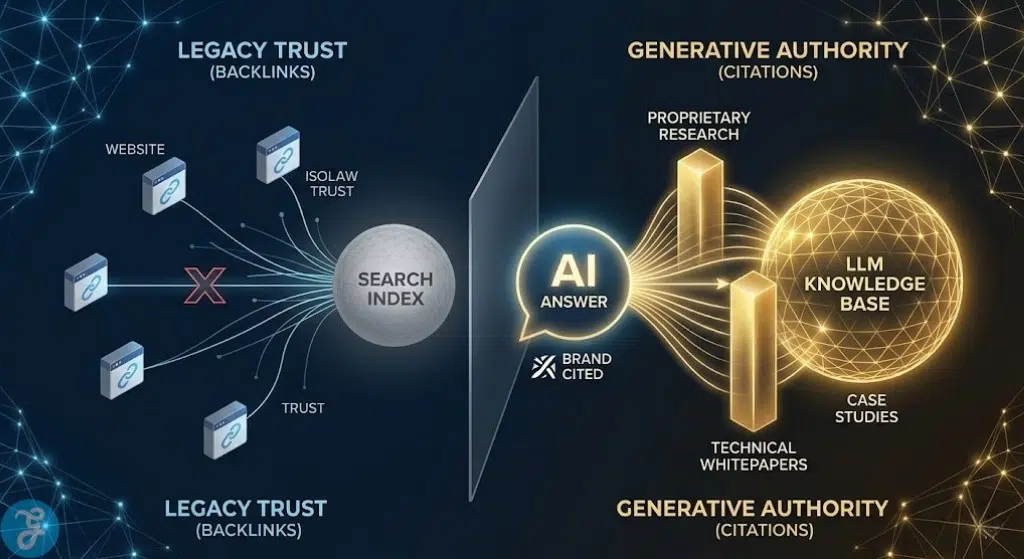
To survive this shift, we must analyze the collapse of the traditional search funnel, the rise of generative engine optimization, and the technical mechanics of becoming a cited authority in an era of silicon-driven answers.
The Extinction of the Blue Link and the Death of Destination
The primary reason legacy search strategies are failing is the fundamental shift in user behavior. Users no longer want to browse a list of ten possible answers. They want the answer. They want a synthesized, accurate, and concise response that saves them the cognitive load of clicking, reading, and evaluating multiple sources. Google, OpenAI, and a dozen other major players have realized that their primary value is no longer in discovery, but in synthesis.
This has led to the absolute dominance of zero-click searches. When a user asks a question, the generative engine processes the entire web in milliseconds and presents a coherent paragraph. The “Blue Link” has been relegated to a footnote or a small citation bubble at the end of a block of text. For most users, these links are invisible. They have already received the value they were looking for without ever leaving the search interface.
This represents the death of the website as a destination. For years, we viewed our websites as digital stores or magazines where we could capture user attention and convert it into value. In 2026, the website has been demoted to a server-side repository. It is a feed of structured data meant for machines to consume so that they can represent your brand to the user. If your entire business model depends on people arriving at your homepage to see your ads or products, your model is structurally broken. You must adapt to a world where your influence happens outside of your own domain.
The table below illustrates the collapse of the traditional search model against the new generative reality.
| Operational Factor | The Legacy Search Era (Ranking) | The Generative Era (Citation) |
| Primary Objective | Secure a top-three position in a list of blue links. | Become the primary cited source in a synthesized answer. |
| User Flow | Click-through to a external website for information. | Zero-click consumption directly within the AI interface. |
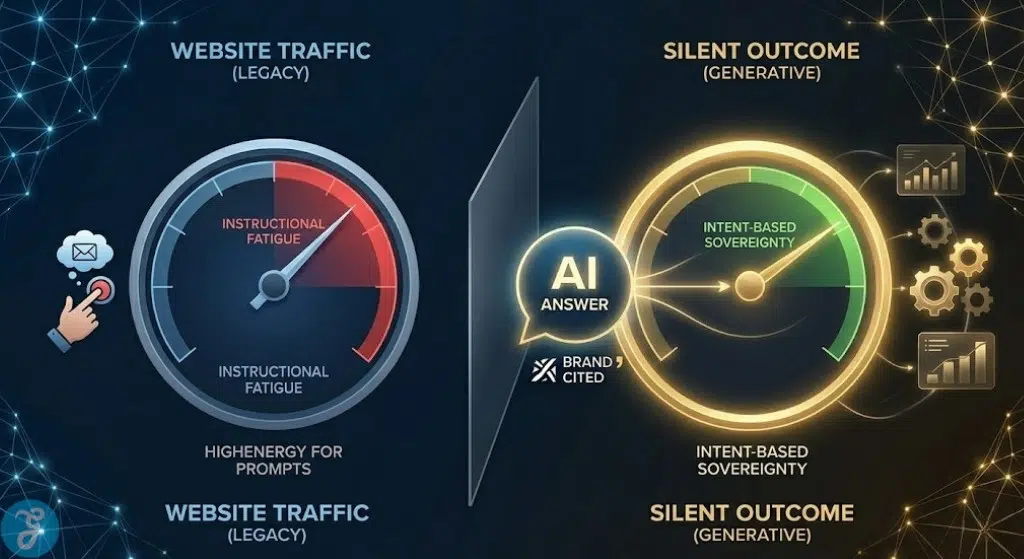
| Metric of Success | Volume of site visits and click-through rates. | Frequency of brand mentions and source citations by AI. |
| Content Role | A destination designed to capture and hold attention. | A data substrate designed for AI ingestion and trust. |
The Mechanics of a Defined AI Citation Strategy
The question for every modern executive is no longer how to rank, but how to get mentioned. To achieve this, a brand must implement a highly technical and semantically sound AI Citation Strategy. This is not about tricks or shortcuts. It is about becoming a pillar of the AI’s training and retrieval ecosystem.
AI models do not select their sources at random. They prioritize entities that demonstrate a high degree of “Semantic Authority.” They look for sources that are consistently referenced by other high-authority entities, sources that provide structured data that is easy to digest, and sources that offer original, unverifiable data that cannot be found elsewhere. If you are merely repeating what everyone else is saying, the AI has no reason to cite you. It will simply summarize the general consensus without a brand mention.
To be cited, you must provide the “Seed Data.” This means your content must contain original research, proprietary statistics, unique case studies, or profound technical insights that the AI needs to make its answer credible. When the AI uses your specific data point, it is programmed to attribute that data to you. This is the new front line of digital visibility. You are no longer competing for a spot in a list; you are competing to be the footnote that proves the AI’s answer is correct.
The breakdown below outlines the core components of a functional citation strategy in the current landscape.
| Component | Strategic Requirement | Impact on AI Modeling |
| Proprietary Data | Original research, surveys, and unique industry metrics. | Forces the AI to reference your specific brand as the origin. |
| Structured Entity Markup | Use of advanced Schema and JSON-LD for entity clarity. | Allows the AI to instantly identify your brand as an expert. |
| Semantic Density | Deep, multi-layered coverage of a specific topical niche. | Establishes your site as a primary cluster in the LLM’s world. |
| Expert Validation | Content authored and verified by recognized human experts. | Triggers the AI’s trust filters for high-stakes information. |
The Emergence of Generative Engine Optimization
We are witnessing the birth of a new discipline: Generative Engine Optimization or GEO. This is the successor to traditional optimization. While the old way focused on keyword density and technical site speed, the new way focuses on “Semantic Connectivity” and “Brand Salience.”
GEO is about ensuring that your brand is inextricably linked to specific concepts in the latent space of a large language model. If an AI is asked about “Enterprise AI Video Production,” your brand should be the first entity that the model associates with that concept. This is achieved through a consistent presence across the high-authority datasets that AI models use for training and real-time retrieval.
This includes academic papers, major industry publications, authoritative news outlets, and high-quality open-source repositories. If your brand only exists on your own blog, the AI will likely ignore you. To survive, you must permeate the entire ecosystem of authority. You must be cited in the places that the AI already trusts. The goal of GEO is to build a web of associations so strong that the AI cannot answer a question about your industry without mentioning your name.
This shift requires a total reallocation of resources. Stop spending money on low-quality backlinks from irrelevant blogs. Start spending money on conducting massive, original research projects that major news outlets will quote. Stop trying to “hack” the algorithm and start trying to influence the dataset.
The grid below explores the difference between the legacy optimization mindset and the modern generative approach.
| Optimization Domain | Legacy Mindset (SEO) | Generative Mindset (GEO) |
| Keyword Strategy | Targeting high-volume, low-competition keywords. | Targeting specific entities and conceptual relationships. |
| Link Building | Quantity and domain authority of inbound links. | Quality and relevance of citations in trusted datasets. |
| Content Depth | 1,500 words with specific keyword placements. | Deep, technical accuracy and original data points. |
| Technical Focus | Core Web Vitals and mobile-friendly layouts. | Structured data, API accessibility, and entity clarity. |
Entity Authority over Keyword Density
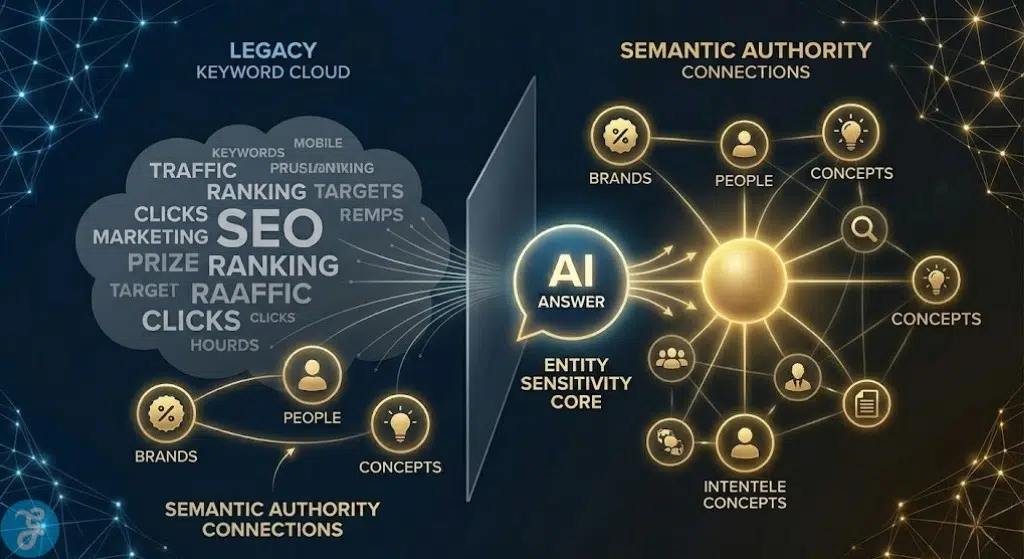
The most profound change in the search bar is the shift from words to entities. In the old days, Google was a librarian matching words on a page. In 2026, the search engine is a historian mapping relationships between people, places, things, and concepts. It understands that “Editorialge” is a publisher, that “Abiad Bin Hasib” is an editor, and that “Digital Strategy” is a topic.
This is what we call Entity SEO. The AI models prioritize “Authority,” which is a measure of how much a specific entity can be trusted on a given topic. This authority is built through a consistent, long-term history of being correct, being cited by others, and maintaining a clear, unambiguous identity across the internet.
When you implement a robust AI Citation Strategy, you are effectively building your “Entity Passport.” You are telling the AI who you are, what you know, and why you should be the one to speak on behalf of a certain subject. If your brand identity is fragmented, if you write about everything and nothing, or if your expertise is not validated by other trusted entities, the AI will view you as a low-confidence source. It might use your information, but it will never give you the credit. It will treat your content as part of the “general background noise” of the internet.
This is the ultimate danger of the current era. If you are not an authority, you are just training data for someone else’s success. You are providing the information that the AI will use to build its answer, but someone else who has higher entity authority will get the citation. You are effectively working for free for your competitors.
The table below outlines how entity authority is constructed and maintained in the generative age.
| Authority Pillar | Description | Actionable Step |
| Uniqueness | Providing a perspective or data point that is entirely new. | Invest in proprietary analysis and primary research. |
| Verification | Having your claims backed up by other high-authority sources. | Engage in high-level PR and academic collaborations. |
| Consistency | Maintaining a narrow, deep focus on a specific topical domain. | Eliminate content that does not align with your core expertise. |
| Identity | Ensuring your brand entity is clearly defined across the web. | Use consistent naming, schema, and structured profiles. |
The Final Sovereignty of the Trusted Source
The transition from “ranking” to “citing” is a move toward a more honest and brutal digital economy. In the old world, a clever marketer could use a few tricks to get a low-quality page to the top of a search result. They could manipulate the system. In the world of AI citations, manipulation is significantly harder. An AI is looking for the most truthful, most credible, and most useful information to protect its own reputation for accuracy.
If an AI consistently provides wrong answers, users will stop using it. Therefore, the AI is incentivized to find the most authoritative sources possible. This means that the only way to survive in 2026 is to actually be the best in your field. There is no longer a place for the “average” content producer. There is no longer a place for the brand that just “does SEO.”
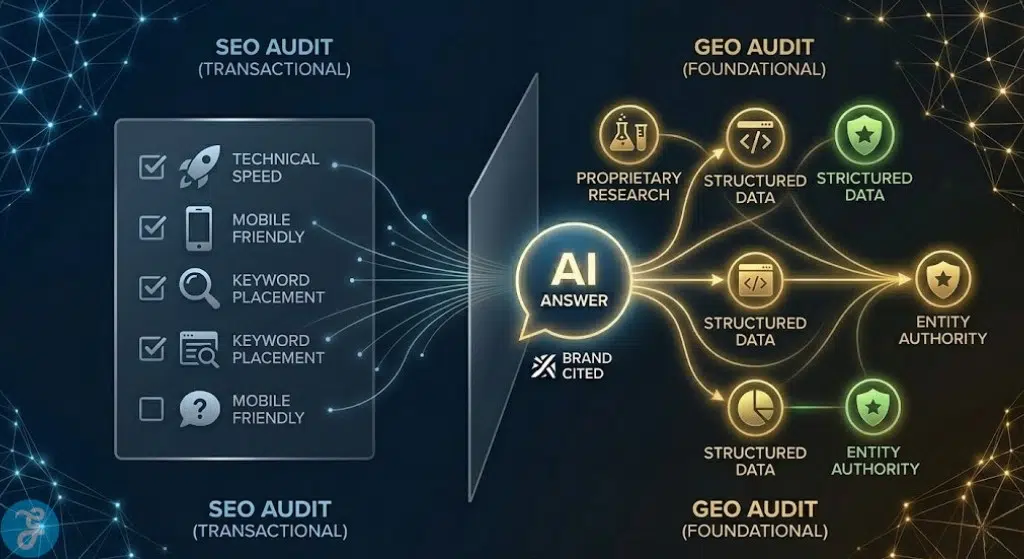
You must decide whether you want to be the one who provides the answer or the one who is forgotten in the summary. This requires a radical rethink of why you produce content in the first place. You are not writing for users. You are writing for the most sophisticated, most critical readers in human history: the large language models.
If your content cannot pass their tests for accuracy, originality, and authority, it will never be seen by a human eye. The search bar has evolved into a judge. It is the gatekeeper of truth. Being cited is the only form of digital currency that still has value. The click is gone, but the influence is greater than ever for those who can prove they deserve to be mentioned.
The final index below summarizes the path toward sovereignty in the era of Generative Engine Optimization.
| Strategic Phase | Focus Area | Goal |
| Phase 1: Auditing | Identifying existing entity authority and gaps. | Understand how AI currently views your brand. |
| Phase 2: Seeding | Producing high-stakes original research and data. | Force the model to recognize your specific expertise. |
| Phase 3: Structuring | Implementing advanced technical and semantic data. | Make your expertise machine-readable and clear. |
| Phase 4: Permeating | Securing mentions in external, high-authority datasets. | Build a web of citations that proves your authority. |
The End of Search and the Birth of Synthesis
The search engine as we once knew it is a relic of the past. We must stop mourning the loss of our site visits and start celebrating the opportunity to become the factual bedrock of the next generation of intelligence. The brands that will dominate the next decade are those that realize they are no longer in the business of attracting clicks. They are in the business of building an undeniable reputation within the latent space of the silicon mind.
If you embrace a comprehensive AI Citation Strategy, you are not just surviving a technological shift. You are claiming a seat at the table of truth. You are ensuring that when the world asks a question, it is your voice that the machine uses to answer. This is the highest form of brand authority ever created. The blue links are dead. Long live the citation.