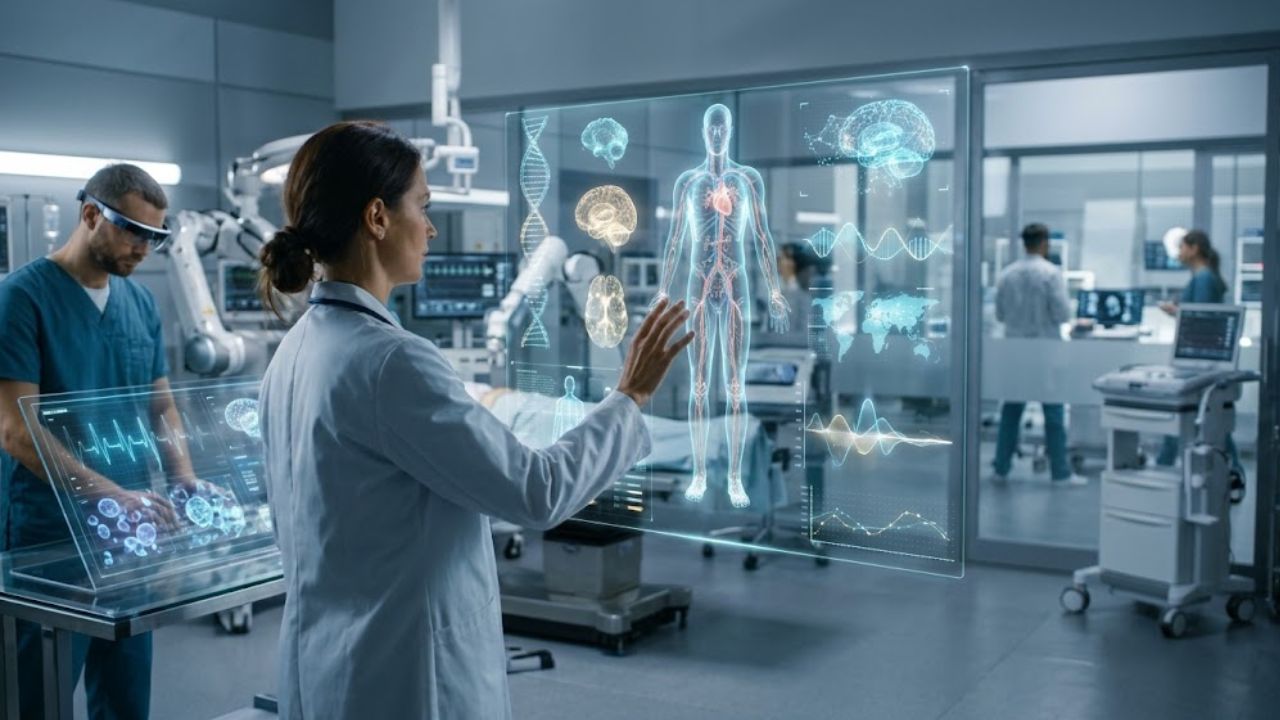
Health Technology Trends in 2026 include clinical AI for imaging and documentation, wearable monitoring, virtual care, hospital-at-home programs, genomic medicine, robotic procedures, connected health records, and stronger cybersecurity. These developments are appearing in health systems, but their availability and evidence vary by country and use.
The key question is whether each tool improves care without adding risk or extra work for patients and clinicians. This guide examines 10 Health Technology Trends shaping care in 2026, explains where each may help, and identifies limitations. Examples are global, with U.S. and UK policy details noted for patients, professionals, and general readers.
1. AI helps clinicians review medical images
AI software can flag or measure findings in medical images so clinicians can review them. The U.S. Food and Drug Administration (FDA) reported more than 1,600 AI-enabled medical devices authorized for marketing in the United States by September 2026. Its list is not comprehensive, and the number does not show how widely each device is used or how well it performs in every hospital.
This is one of the more established Health Technology Trends in 2026. The sensible use is as decision support: a clinician checks the result alongside symptoms, history, and other tests. Before adopting a system, hospitals need to confirm what the device is authorized to do and whether its evidence applies to their patients.
2. Ambient AI drafts clinical notes
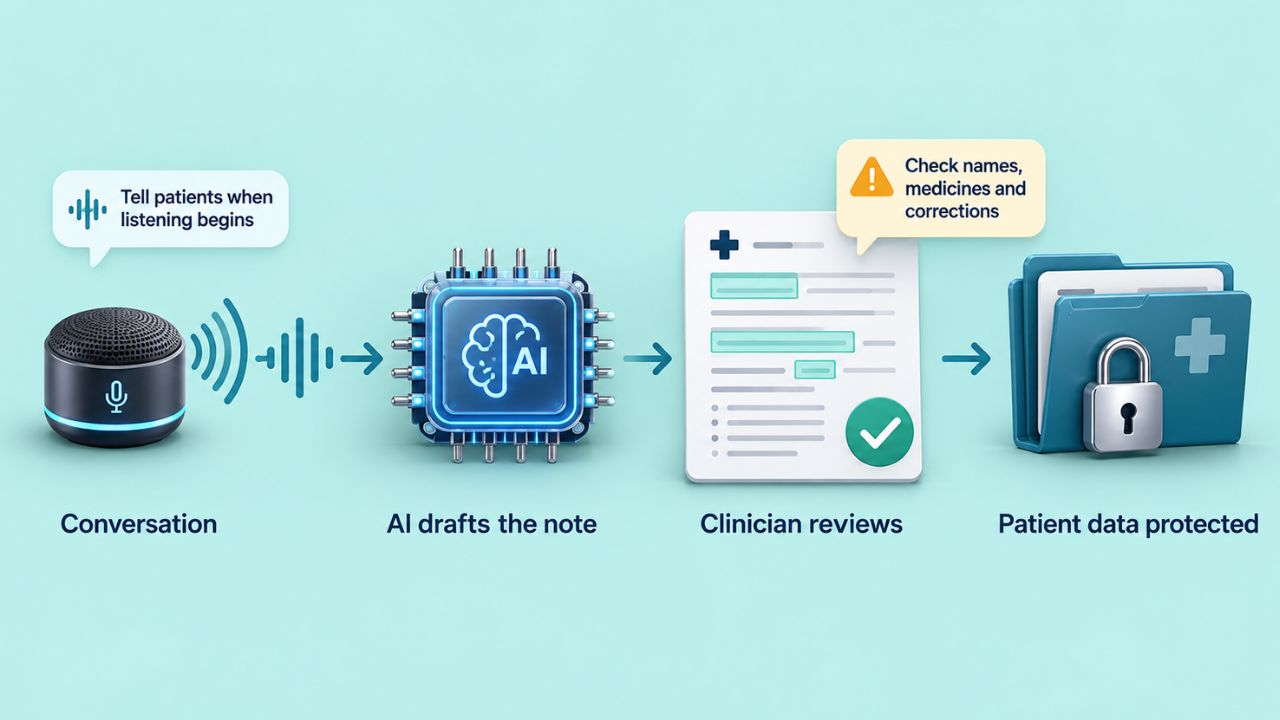
Ambient scribing tools use AI to turn clinician-patient conversations into draft notes. NHS England published guidance on these products in April 2025 and updated it in July 2026.
The value is straightforward: a clinician may spend less time typing during or after a visit. But the draft still needs careful review. A tool can mishear a medicine name, miss a correction, or put an inaccurate detail into the medical record. Patients should know when the system is listening and how recordings or transcripts are stored.
3. Clinical decision-support AI faces closer scrutiny
Some software helps clinicians review evidence, identify possible risks, or consider care options. Its regulatory status depends on what it is designed to do and how it presents recommendations. In January 2026, the FDA issued final guidance clarifying its approach to clinical decision-support software. Some functions may fall outside the definition of a medical device; others remain subject to digital health oversight.
A polished answer is not necessarily a reliable one. Clinicians need enough information to assess the reasoning behind a recommendation, and health systems should monitor how the software performs in actual use. Patients should not treat a chatbot response as a diagnosis or change treatment without professional advice. This is among the Health Technology Trends in 2026 where accountability matters as much as capability.
4. Wearables feed remote monitoring programs
Smartwatches, patches, and connected blood-pressure cuffs can collect measurements outside a clinic. A care team may use selected readings to follow a condition or decide whether to contact a patient.
The device is only one part of the service. Alerts can generate unnecessary work, readings may be inconsistent, and data can go unread if nobody is assigned to review them. A 2025 review found variation across wearable-monitoring studies and limited evidence for clinical effectiveness in some applications.
For patients, the useful question is not simply whether a device records a measurement. Ask which readings the care team monitors, who reviews them, and what action follows an alert. A consumer wearable is not automatically a medical-grade monitor. These Health Technology Trends in 2026 will matter most when they connect measurement to a clear care plan.
5. Virtual care links online and in-person services
Virtual care now includes video visits, messaging, remote measurements, and follow-up. It can save a difficult trip when a physical examination is unnecessary. It cannot replace every appointment.
Access remains a problem for people without reliable internet, a private place to talk, language support, or confidence using an app. WHO reporting has highlighted digital access and usability barriers for people with higher health needs and language barriers.
The stronger model gives patients a clear route between online and in-person care, with a non-digital option when needed.
6. Hospital-level care moves into the home
Hospital-at-home programs provide selected patients with some forms of acute care at home, supported by clinical teams and monitoring or communication systems. In the United States, CMS confirms that its Acute Hospital Care at Home initiative was extended by the Consolidated Appropriations Act of 2026. Eligibility and participation depend on clinical circumstances and the program.
Technology can help coordinate care, but it cannot make every home suitable for inpatient-level treatment. Staffing, caregiver support, reliable communication, and a plan for urgent escalation matter just as much. Patients should ask who will monitor them and how quickly help can arrive. This Health Technology Trends in 2026 example is a care model, not simply a device delivered to the front door.
7. Genomics informs selected treatment decisions
Precision medicine uses information about a person’s genes, environment, and lifestyle to help guide prevention, diagnosis, or treatment. Pharmacogenomics may help clinicians assess how a person could respond to a medicine or whether a different dose may be appropriate. It cannot guarantee that a test will identify the right treatment for everyone.
Genomic testing is most useful when it answers a specific clinical question. Before taking a test, patients can ask how results will be interpreted, who will have access to the data, and what follow-up is available. A consumer DNA report is not a substitute for clinical testing or genetic counseling.
8. Robotic systems assist with selected procedures
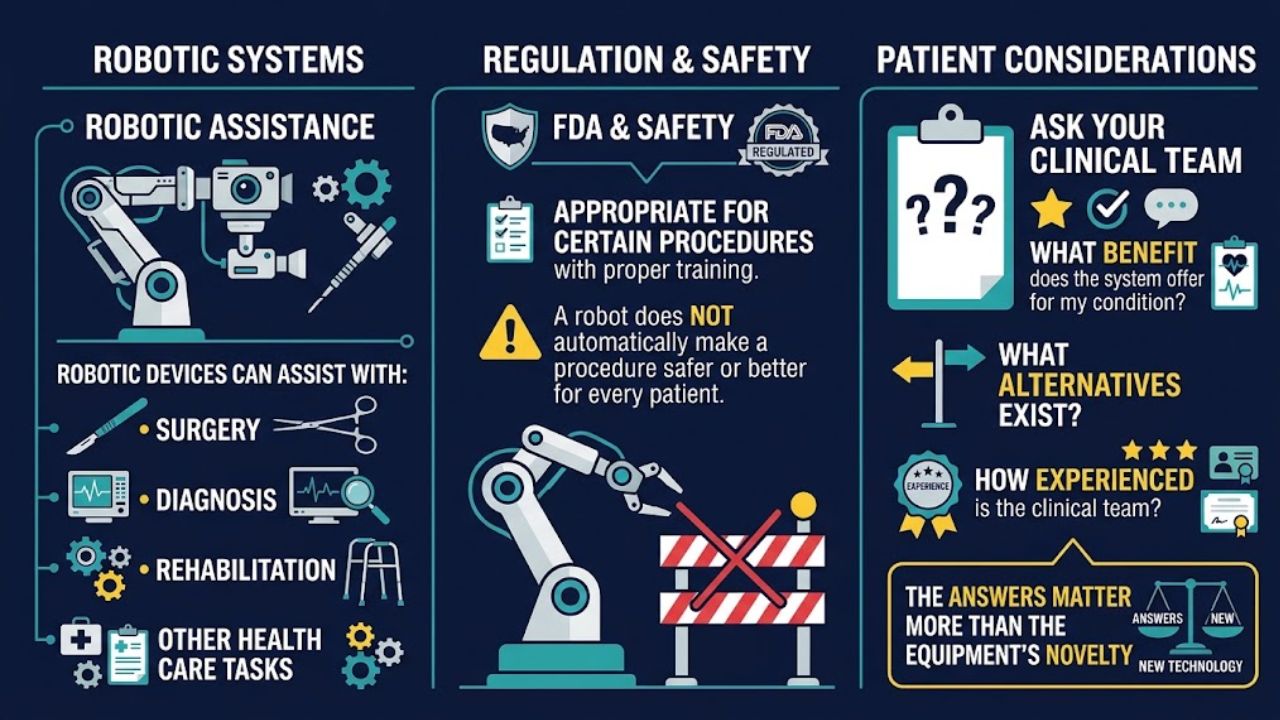
Robotic devices can assist with surgery, diagnosis, rehabilitation, and other health care tasks. The FDA regulates these devices in the United States. It says robotically assisted surgery is appropriate for certain procedures when used with proper training; a robot does not automatically make a procedure safer or better for every patient.
Patients considering a robotic procedure should ask what benefit the system may offer for their condition, what alternatives exist, and how experienced the clinical team is with that procedure. The answers matter more than the equipment’s novelty.
9. Health records need to work across systems
When a patient moves between a clinic, hospital, and laboratory, disconnected records can mean repeated paperwork and missing context. Interoperability efforts use shared standards and application programming interfaces (APIs) to help systems exchange data.
In the United States, ASTP/ONC’s HTI-5 rule proposes a future foundation for FHIR-based APIs. It remains a proposed rule, not a final requirement. Better exchange also needs appropriate access controls, consent, and ways to correct inaccurate records. These Health Technology Trends in 2026 will be useful only if information reaches the right professional in a form they can act on.
10. Cybersecurity becomes part of product quality
Medical devices and digital health systems handle sensitive information and can support essential services. A security weakness can put privacy at risk and, in some circumstances, disrupt care.
The FDA’s digital health guidance includes cybersecurity considerations for medical devices. In 2026, the agency also sought feedback on regulating generative AI-enabled medical devices, including risk assessment and post-market monitoring.
Health organizations should ask vendors how they handle software updates, vulnerability reports, data protection, and long-term support. AI tools need ongoing monitoring too, since performance can shift as patient populations, data, or workflows change. Cybersecurity is not a feature to check once at purchase; it is part of maintaining a product safely.
Final Thoughts
The most useful Health Technology Trends in 2026 will solve a defined care problem without adding avoidable risk or workload. Before adopting a tool, ask what it is designed to do, who checks its output, how patient data are handled, and what happens when it fails. That is a better starting point than choosing technology because it is new.
Frequently Asked Questions (FAQs) About Health Technology Trends
Authorization depends on the country and the tool’s intended use. In the United States, patients and clinicians can search FDA resources, but the FDA’s AI-device list is not comprehensive. Ask the provider what the tool is cleared or authorized to do.
Can a smartwatch replace a prescribed medical monitor?
Do not assume so. A consumer wearable may track general health measures, but a prescribed monitor may be intended for a specific clinical purpose. Check with the clinician who recommended the monitoring.
What should patients ask before sharing health data with an app?
Ask what information the app collects, who can access it, how long it is retained, and whether the app’s clinical claims are supported. If the answers are unclear, avoid entering sensitive information until they are.