
The fence is six inches over the line. Or the neighbor’s pine tree is dumping needles into your pool. Or you just found out that the strip of lawn you’ve been mowing for ten years technically belongs to the house next door. Neighbor property disputes are equal parts legal question and emotional minefield, and most people start Googling only after things have already gotten tense.
A surprising amount of the information you need is free online. The catch is knowing where to look, and just as importantly, what each source is actually good for. A legal article won’t tell you where your boundary sits. A parcel map won’t tell you what the law says about the tree hanging over it. Here are eight online resources that each cover a different piece of the puzzle, and how to use them without making the situation worse.
1. Nolo’s Neighbor Law Guides
Nolo has been publishing plain-English legal self-help since 1971, and neighbor disputes are one of its signature topics. Its long-running Neighbor Law guide covers fences, boundary trees, trespass, noise, and blocked views, and the website carries dozens of free articles drawn from the same research.
This is the place to understand what the law actually says. Not the forum-comment version, the real thing: who owns a tree that straddles the line, what a spite fence is, how encroachment arguments usually get resolved.
One thing to watch: property law is state law. Nolo handles this better than most sources by flagging state differences, but always check whether the article you’re reading covers your state or speaks in generalities.
2. FindLaw’s Neighbor Dispute Section
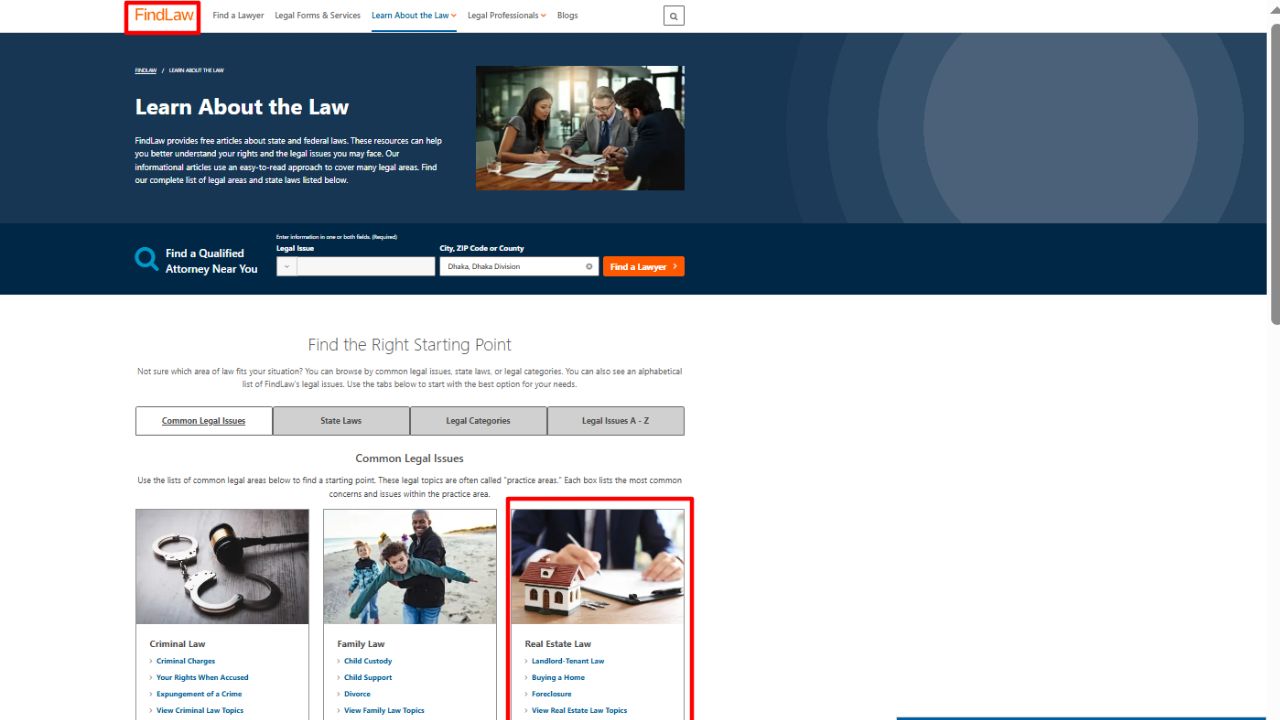
FindLaw, part of Thomson Reuters, maintains a dedicated section on neighbor disputes covering property lines, fences, trees, animals, and noise. Where Nolo goes deep, FindLaw is faster: short overviews that hand you the vocabulary (encroachment, easement, adverse possession) before you go any further.
Use it as your first stop when you don’t yet know what your problem is called. You can’t research a dispute you can’t name.
3. Your County’s GIS Parcel Viewer
Almost every county in the U.S. runs a free online GIS or assessor’s map showing parcel boundaries, lot dimensions, and ownership records. Search for your county’s name plus “parcel viewer” or “GIS map,” and it usually turns up in one click.
This is where you check what the official record says before you accuse anyone of anything. It’s also where people get their first shock: the fence everyone assumed was on the line often isn’t, at least not according to the recorded plat.
The caveat here matters enough to repeat twice. GIS lines are approximations drawn from recorded plats, not surveys. They’re routinely off by a few feet. A parcel map can tell you there’s a question worth asking; only a licensed surveyor can tell you where the line actually is. Mobile apps like LandGlide pull the same parcel data with GPS location, which is handy when you’re standing on the property itself.
4. Avvo and Justia (Yes, They’re Different Companies)
These two get confused constantly, so let’s settle it up front. Avvo is a lawyer directory and Q&A platform owned by Internet Brands. Justia is an independent company focused on free legal information, including case law, statutes, and plain-language guides, plus its own lawyer directory.
Used together, they cover two different needs. Avvo’s free Q&A lets you post a question that practicing attorneys may answer publicly, which is genuinely useful for the “is this even a legal issue?” stage. Justia’s guides help you understand the doctrine behind the answer, and its directory helps you find local counsel when it’s time to talk to an actual human.
Neither replaces a lawyer. But both are free, and both will tell you quickly whether your situation is routine or genuinely weird.
5. Law Firm Blogs That Actually Cover This
Plenty of law firm blogs are thin marketing content. But a number of firms publish genuinely practical explainers on boundary and neighbor disputes, and the good ones are often the best free source of state-specific information you’ll find.
A few examples of the genre done well: RST Legal’s overview of boundary disputes explains the everyday version of the problem, where neighbors plant trees, run fences, or clear shrubs on land that isn’t theirs, and why “I thought the line was there” doesn’t hold up. In California, the Estavillo Law firm has written about how neighbor disputes can drag down property value, which is the angle most homeowners never think about until they’re trying to sell. And Texas community association firm RMWBH has published on the rise of neighbor-to-neighbor disputes in HOA communities, including when a property owners association should step in and when getting involved is a mistake.
The catch with firm blogs: they’re written to win clients, so they’re better at describing problems than solving them. Still, the good ones are written by attorneys who handle these cases every week, and it shows.
6. HOA and Community Association Resources
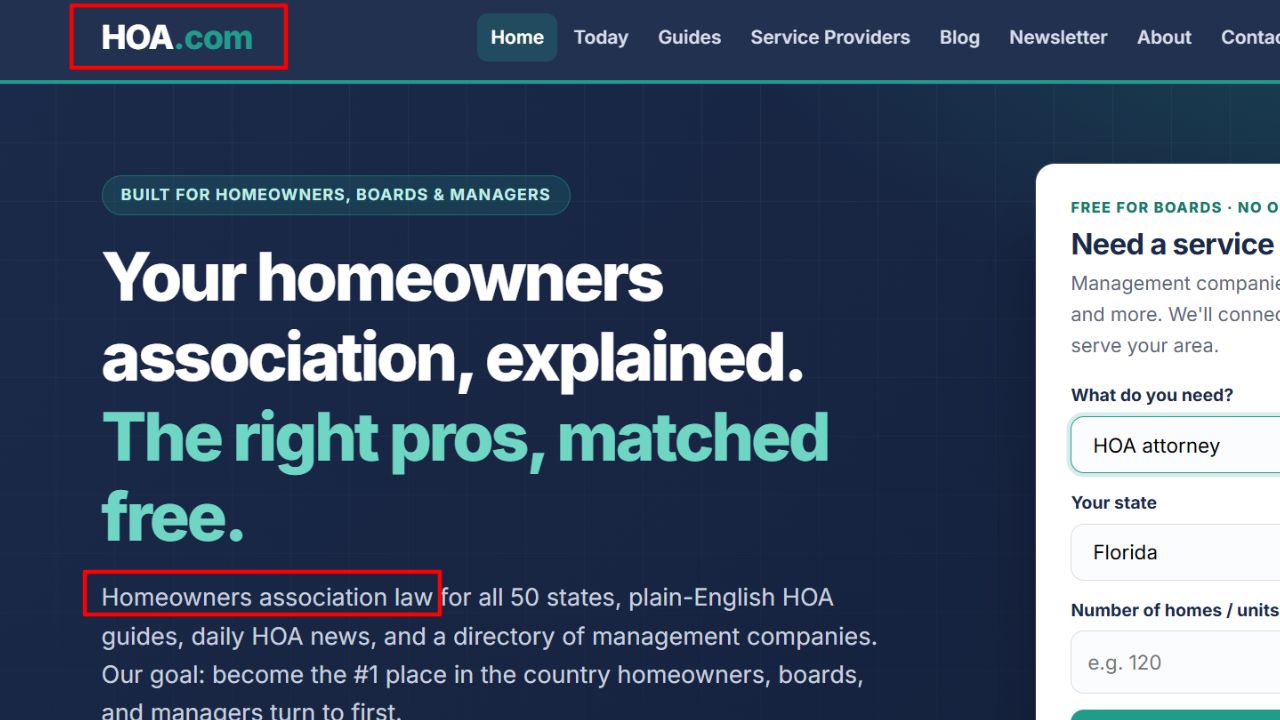
If your neighborhood has an HOA, your dispute has a second track: the association’s rules and governing documents. And the association itself may have obligations you’d never guess from the outside.
Property management company Tidewater’s blog covers when an HOA is responsible for stepping into neighbor-to-neighbor disputes, including harassment situations where federal fair housing expectations come into play. Association management companies publish similar guidance on using the HOA’s own process as a first step in conflict resolution. The consistent theme across these sources: the HOA isn’t a judge, but skipping the association’s process can cost you options later.
Read your CC&Rs before any of this. Half of the neighbor disputes inside associations are really covenant enforcement questions in disguise.
7. Your State Bar’s Lawyer Referral Service
Every state bar runs a lawyer referral service, and most now operate online: you enter your zip code and your issue, and get matched with a licensed attorney, usually with a reduced-fee first consultation (often $25 to $50 for half an hour).
Why use it instead of searching for a property lawyer near you? The bar verifies the license, and referral panels are organized by practice area, so you’re less likely to end up in front of a personal injury firm that dabbles in real estate. Many services also arrange pro bono referrals if cost is the barrier.
8. Community Mediation Centers
The most overlooked resource on this list. Many counties and courts fund community dispute resolution centers that mediate neighbor conflicts for free or on a sliding scale, and courts in many places now refer small civil disputes to mediation before they ever reach a courtroom.
Mediation works best while the dispute is live but not yet hostile: the noise, the fence height, the shared driveway repair bill. Once someone has hired a lawyer or called code enforcement, the window narrows fast. It’s voluntary, so it only works if both neighbors show up. But when it works, you keep a neighbor you still have to wave to for the next twenty years.
How These Fit Together
A rough order of operations that saves people a lot of grief:
- Name the problem. Fifteen minutes on FindLaw or Nolo so you know what you’re actually arguing about.
- Check the record. County GIS first, then decide whether the discrepancy is big enough to matter.
- Ask a cheap question. Avvo’s Q&A, or a firm blog written for your state.
- Check the HOA track, if you have one. Read the CC&Rs, then the association resources above.
- Try mediation before positions harden.
- Get a lawyer for the real stuff. State bar referral service, and a survey if the boundary itself is in question.
Before You Do Anything Else
Two warnings that come up in almost every one of these disputes.
First, don’t self-help. Cutting down a tree that’s technically on your side, removing a section of fence, moving a boundary marker. These moves can turn a winnable position into a lawsuit you lose, and in some states into criminal trespass. The law is far less forgiving of people who took matters into their own hands, even when the underlying position was right.
Second, mind the clock. In most states, land that’s been used openly and without permission for long enough can ripen into an adverse possession claim, and that cuts both ways: the neighbor’s shed sitting on your lot is a problem, but so is the strip of your lawn you’ve been quietly mowing on theirs. Time is a legal fact in boundary disputes, which is exactly why “we’ll sort it out later” is the most expensive sentence in this whole area of law.