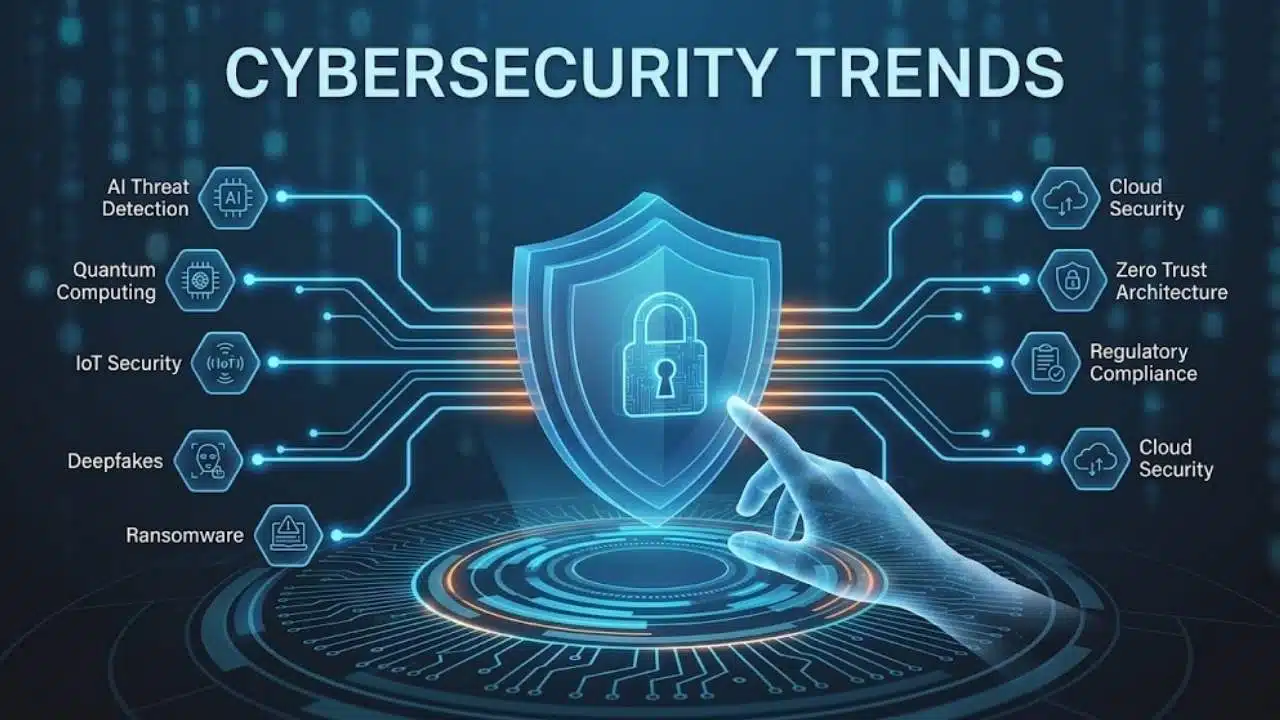
Navigating modern cybersecurity trends requires balancing budget constraints with long-term risk management. Enterprise security leaders face a critical choice: fund emerging AI defenses, modernize identity controls, transition to post-quantum cryptography, or double down on cyber resilience and recovery.
The primary cybersecurity trends shaping enterprise defense through 2031 focus on strengthening governance across existing systems, identities, and supply chains. Rather than chasing every technical innovation, organizations achieve optimal protection by aligning zero-trust access, continuous threat exposure management, and automated incident response against high-breadth enterprise risks.
What Most Cybersecurity Trend Reports Miss
Trend planning can become a convenient distraction from routine security work. An enterprise gains little from an AI-assisted security platform if it cannot identify its internet-facing systems, remove obsolete accounts, or restore a critical service. New attack methods continue to benefit from exposed applications, excessive permissions, stolen credentials, neglected service accounts, and weak cloud configurations.
The cybersecurity trends that matter most will change how familiar controls are applied. Identity must cover software and AI agents as well as employees. Vulnerability management must reflect genuine exposure, not only severity scores. Recovery plans must prove that business services can return.
Cybersecurity Trends Reshaping Enterprise Defense
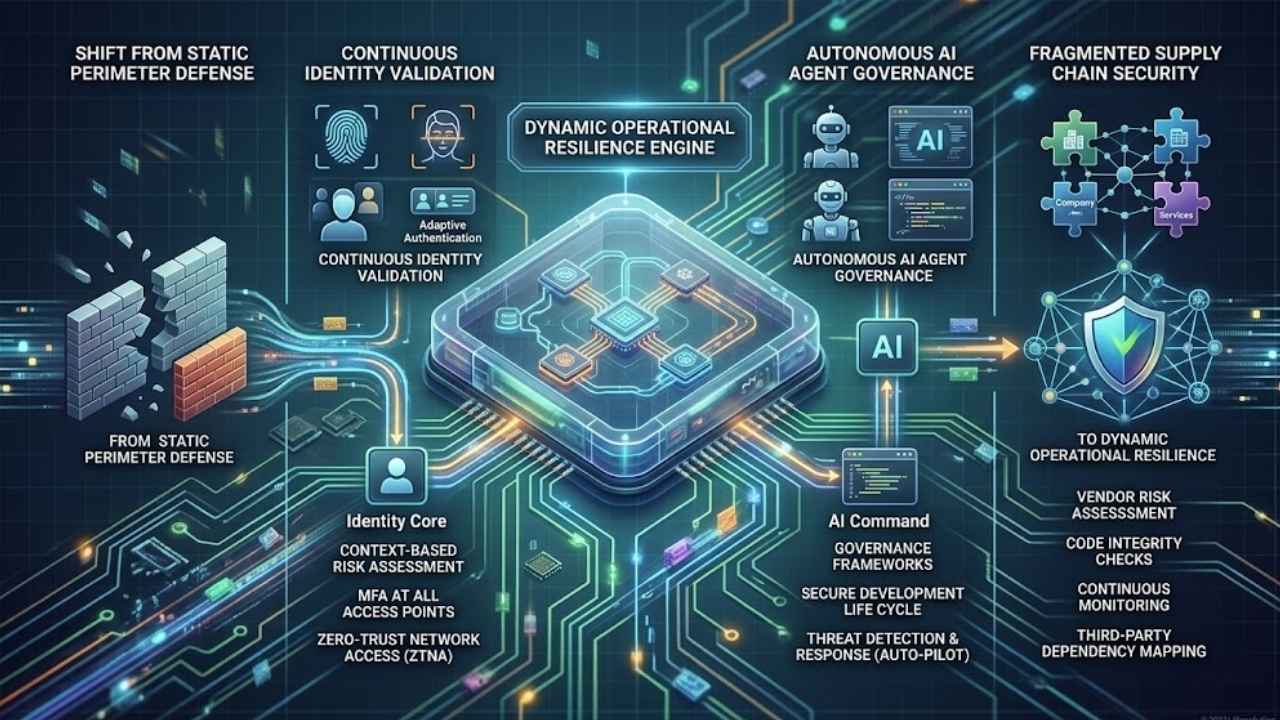
Next-generation cybersecurity trends are shifting enterprise priority from static perimeter defense to dynamic operational resilience. Modern threat landscapes require security architectures that continuously validate digital identities, govern autonomous AI agents, and secure fragmented supply chains. Organizations that align their defense models with these systemic shifts will effectively mitigate machine-speed risks while maintaining operational continuity.
1. AI Creates Three Different Security Responsibilities
Artificial intelligence is entering security from three directions: attackers are using it, defenders are adopting it, and enterprises are building AI systems that need protection.
AI can reduce the effort involved in reconnaissance, drafting credible lures, analyzing code, and automating repetitive attack preparation. Defensive teams can use the same broad capability to summarize alerts, search security data, review configurations, and support investigations. Neither side gains perfect automation. AI still produces errors, and attackers still need a weakness they can exploit.
The less familiar problem is securing the AI system itself. An enterprise application may expose sensitive data, accept manipulated instructions, depend on untrusted components, or receive more access than its purpose justifies.
AI agents deserve particular caution because they can connect to email, databases, repositories, ticketing systems, and administrative APIs. Before an agent is allowed to take action, it should have:
- Its own managed identity
- Narrow, task-specific permissions
- Short-lived credentials where possible
- Approved data and tool connections
- Logs covering tool calls and material actions
- Human approval for high-impact changes
- A tested way to revoke its access
NIST’s Cyber AI Profile and agent-identity work remain under development. They are useful direction, not final compliance standards. Vendors promising autonomous remediation should be able to explain authorization, rollback, logging, and accountability in detail. A polished demonstration is not enough.
2. Identity Security Expands Beyond Employees
Phishing-resistant authentication is becoming the more credible standard for important access. NIST’s current digital identity guidance incorporates synced passkeys and makes a useful distinction between authentication assurance levels. Services operating at Authentication Assurance Level 2 must offer a phishing-resistant option. Level 3 requires phishing-resistant authentication with a non-exportable key, which means synced passkeys are not suitable for that higher level. NIST also requires federal staff, contractors, and partners to use phishing-resistant authentication when accessing federal systems.
Those requirements do not automatically bind private companies or organizations outside the United States. They still provide a practical benchmark. One-time codes can be captured through phishing, while FIDO-based methods bind authentication to the legitimate service.
Privileged administrators, remote-access users, developers, help-desk staff, and employees handling sensitive data should usually come before a company-wide migration.
Human accounts are only part of the work. Service accounts, workloads, API tokens, automation scripts, containers, and AI agents also need an owner, a documented purpose, narrow permissions, and a review or expiration process. A forgotten service account with broad access can be just as useful to an attacker as a compromised employee account.
3. Post-Quantum Migration Becomes an Enterprise Project
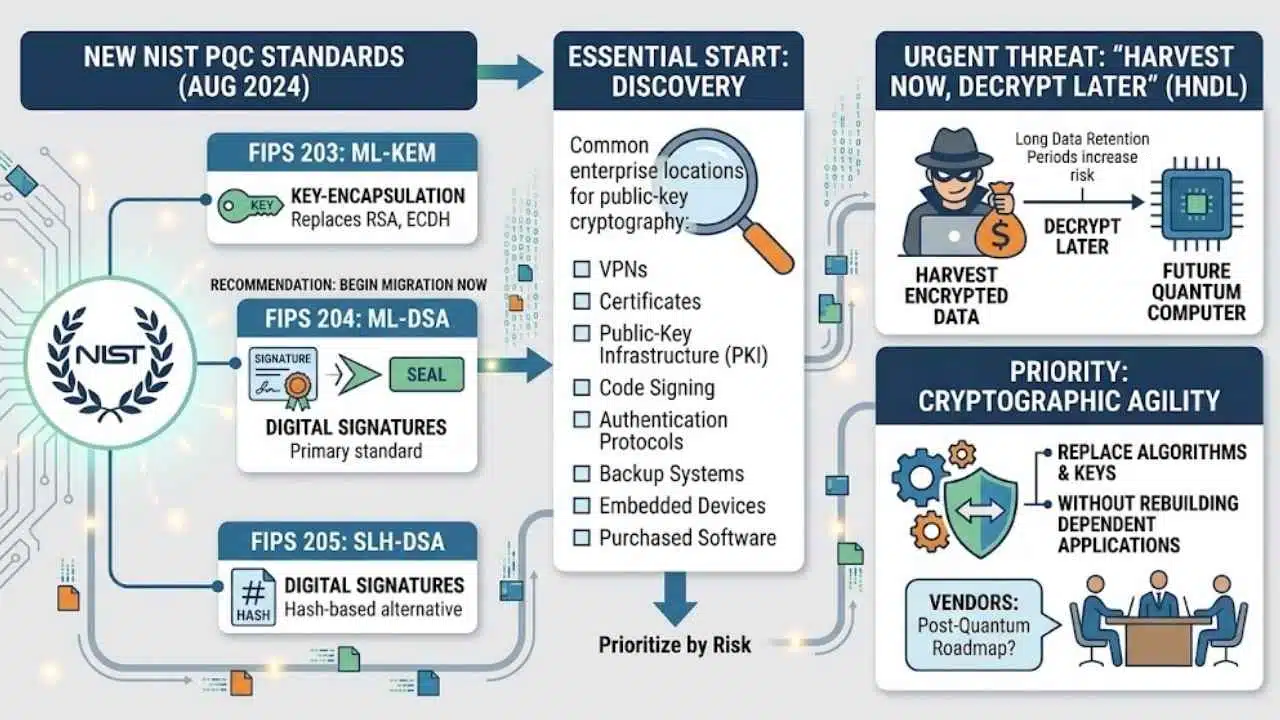
Post-quantum cryptography sounds distant until a security team tries to identify every place public-key cryptography is used. NIST released its first three principal post-quantum standards in August 2024: FIPS 203 for the ML-KEM key-encapsulation mechanism, and FIPS 204 and FIPS 205 for ML-DSA and SLH-DSA digital signatures. NIST now recommends beginning migration to quantum-resistant cryptography.
That recommendation is not a demand to replace every cryptographic system immediately. The sensible first step is discovery. Enterprises need to find vulnerable algorithms in certificates, VPNs, public-key infrastructure, code signing, authentication protocols, backup systems, embedded devices, and purchased software.
Data-retention periods also matter. Information that must remain confidential for many years faces greater risk from “harvest now, decrypt later” attacks, in which encrypted material is collected and stored for possible future decryption.
Procurement teams should start asking vendors about post-quantum support and migration roadmaps. The most valuable capability is cryptographic agility: the ability to replace algorithms and keys without rebuilding every dependent application.
4. Ransomware Defense Shifts Toward Operational Resilience
A ransomware incident may involve encryption, data theft, service disruption, compromised identities, and pressure to make decisions before the organization knows the full extent of the breach.
Backups solve only part of that problem. They cannot retrieve exfiltrated files or remove disclosure, contractual, and reputational consequences.
Recovery planning should begin with business services rather than individual servers. A customer portal, for example, may depend on DNS, identity services, certificates, databases, cloud administration, network management, and third-party APIs. Restoring the web server alone does not restore the service.
Offline or otherwise protected backups remain necessary, but restoration must be tested under realistic conditions. A completed backup job proves that data was copied. It does not prove that the organization can rebuild a service within the recovery time promised to the business.
Ransomware exercises should include unavailable identity infrastructure, damaged management tools, stolen data, supplier outages, and senior decision-makers working with incomplete forensic information.
5. Software Supply-Chain Evidence Becomes Part of Procurement
A supplier questionnaire filled with broad claims about “industry-standard security” offers limited assurance. Buyers increasingly need evidence about secure development, component tracking, default security settings, vulnerability disclosure, logging, support periods, and incident notification. CISA published updated minimum elements for software bills of materials in July 2026, expanding the information an SBOM should contain.
Regulation adds a harder deadline. Under the EU Cyber Resilience Act, reporting obligations for actively exploited vulnerabilities and severe security incidents are scheduled to apply from September 11, 2026. The main product-security requirements are scheduled for December 11, 2027. These rules matter to manufacturers placing products with digital elements on the EU market, including companies based outside Europe.
An SBOM is useful evidence, but it is not a security certificate. A long component list accomplishes little if no one can determine whether an affected library is deployed, reachable, or owned by a team that can fix it.
Procurement teams should ask how a vendor creates, maintains, and uses its SBOM. They should also check how quickly the supplier investigates affected components and how customers will be notified.
6. Vulnerability Management Prioritizes Real Exposure
A vulnerability backlog sorted only by severity score does not show what an attacker is most likely to exploit. A remotely accessible flaw on an identity system may need faster action than a higher-scoring vulnerability on an isolated test server. Serious prioritization considers active exploitation, internet exposure, available privileges, business importance, attack paths, and existing containment controls.
CISA’s Known Exploited Vulnerabilities Catalog is valuable because it identifies vulnerabilities with evidence of exploitation. Its 2026 risk-based vulnerability directive also moves US federal civilian agencies away from treating every update identically.
Other enterprises can use the same reasoning without copying the federal process. The KEV Catalog is an input, not a complete vulnerability program. Security teams still need to identify risks specific to their architecture and determine whether exploitation occurred before a patch was applied.
7. Cloud and SaaS Security Becomes Continuous Configuration Work
A cloud provider may secure the underlying service while the customer accidentally grants an external account administrative access. Both statements can be true.
Responsibility varies by provider and service model, but customers generally retain control over identities, permissions, data access, many configurations, and some of the logging required for investigation. Hybrid and multi-cloud environments make consistency harder because similar resources may receive different controls depending on the platform, account, region, or deployment team.
SaaS products add their own friction. Audit logs, retention periods, administrative roles, authentication options, and security settings can vary by vendor and subscription. A company may have strong controls in its cloud infrastructure while leaving a widely used business application poorly configured.
Cloud defense increasingly requires continuous review of public exposure, privileged roles, API authorization, tokens, encryption, configuration baselines, and log coverage. NIST’s cloud-native API guidance highlights persistent problems such as incomplete API inventories and weak authentication or authorization.
A consolidated cloud-security platform can improve visibility. It cannot decide who owns a risky setting, whether the business still needs it, or how quickly it must be corrected.
8. OT Cybersecurity Joins Safety and Reliability Engineering
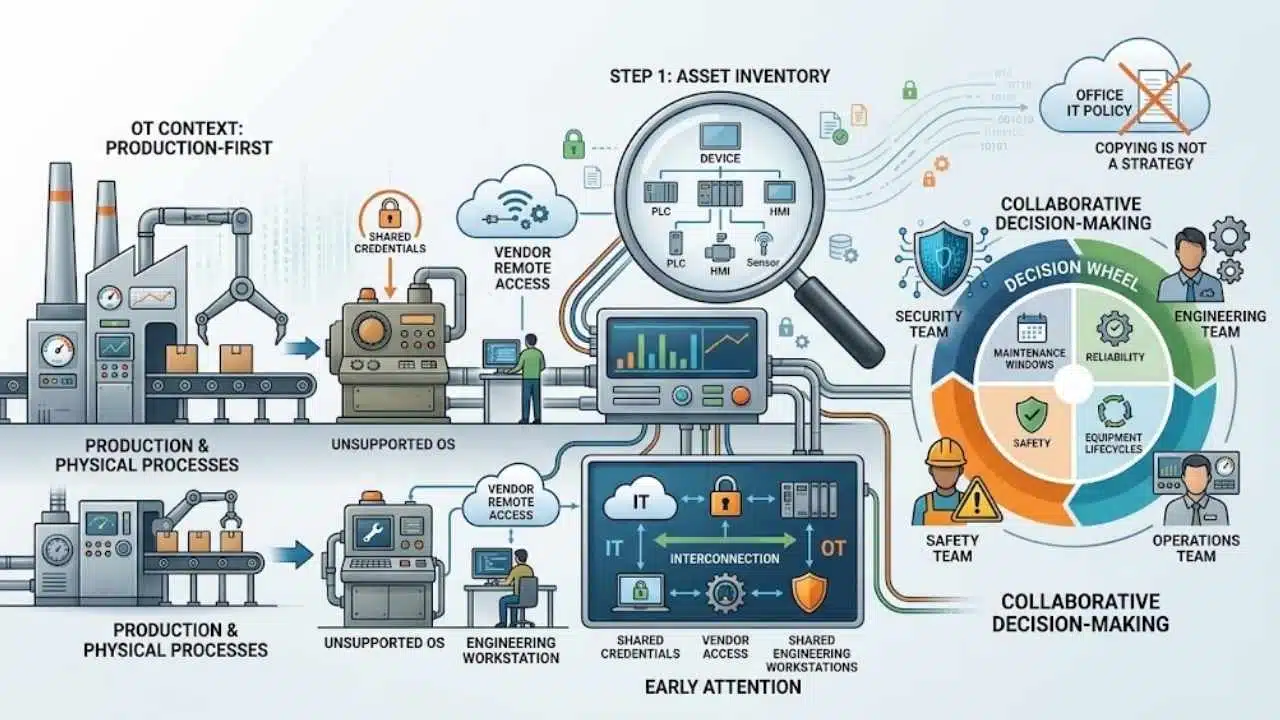
Operational technology cannot always follow normal IT patching and scanning practices. An untested update, aggressive scan, or incompatible endpoint agent may interrupt production or affect a physical process.
That does not justify leaving OT unchanged. It means controls must respect maintenance windows, equipment lifecycles, reliability, and safety.
Asset inventory comes first. Teams cannot segment, monitor, or plan upgrades for devices they cannot identify. Vendor remote access, engineering workstations, shared credentials, unsupported operating systems, and connections between IT and OT deserve early attention.
Manufacturers, utilities, transport operators, healthcare facilities, and building owners need security, engineering, operations, and safety teams to make these decisions together. Copying an office-IT patching policy into a production environment is not an OT security strategy.
9. Cybersecurity Governance Becomes Measurable and Auditable
NIST’s Cybersecurity Framework 2.0 added Govern as a core function. Strategy, roles, oversight, policy, and supply-chain risk now sit alongside protection, detection, response, and recovery.
Regulation is reinforcing that shift. The EU Digital Operational Resilience Act has applied to covered financial entities since January 17, 2025. It addresses ICT risk management, resilience testing, incident reporting, third-party risk, and oversight of critical ICT providers.
Boards need evidence of business exposure, not monthly totals of blocked emails and closed alerts. Better measures include recovery tests completed for critical services, privileged access covered by phishing-resistant authentication, known exploited vulnerabilities remediated within policy, unmanaged internet-facing assets, essential suppliers without alternatives, and security exceptions that have passed their review dates.
This is not the most fashionable of these cybersecurity trends. It may be the most decisive because weak ownership can turn every other initiative into a disconnected technology purchase.
The Practical Takeaway
Most enterprises should begin with identity and recovery rather than the newest security platform. Select three critical business services. Map their privileged identities, software dependencies, cryptographic components, cloud controls, suppliers, and recovery requirements. Then test one assumption in each area: restore a service, revoke a workload identity, trace a vulnerable component, and confirm that an AI agent cannot exceed its intended authority.
These cybersecurity trends will continue to change, but enterprises that understand their dependencies, restrict access, and recover under pressure will have a stronger base for whatever comes next.
FAQs
Is zero trust still relevant if it is not one of the nine trends?
Yes. Zero trust now makes more sense as an architectural principle than a separate trend. Its practical value appears in identity-based access, device checks, service authentication, segmentation, and narrow permissions. Buying a zero-trust product without correcting excessive access does not solve the underlying problem.
What should an enterprise do in the first 90 days?
Choose three critical services and review their privileged identities, internet exposure, exploited vulnerabilities, major suppliers, and recovery dependencies. Strengthen administrator authentication and run one restoration exercise. That small scope will reveal more useful gaps than launching nine transformation projects at once.
How should security leaders budget for these changes?
Budget around shared capabilities. Identity engineering, asset discovery, recovery testing, cloud configuration management, secure software acquisition, and cryptographic discovery each support several trends. Leave room for integration, training, migration, and testing; the license price is rarely the full cost of a security control.