
Common keyword research mistakes—like targeting high-volume terms without assessing difficulty, ignoring search intent, or ignoring intent overlap—waste time and produce content that fails to rank. When keyword selection focuses strictly on metrics rather than audience needs, traffic suffers.
Avoiding critical keyword research mistakes requires looking past raw search volume. Beginners frequently target unreachable terms, create duplicate pages that cause keyword cannibalization, or build content that misses the user’s explicit goal.
To turn keyword lists into actual search visibility, marketers must analyze live search engine results pages (SERPs), align content formats with user intent, and target attainable topics built for long-term organic growth.
Data Problem Behind Keyword Research Mistakes
Keyword platforms provide estimates, classifications and predictions. They do not provide a complete record of everything people search for.
Google Keyword Planner was designed for paid search planning. Google Trends uses sampled and normalized information. Ahrefs, Semrush and other SEO platforms maintain their own databases and formulas. Differences between tools are therefore expected.
The numbers are useful for comparison. They become unreliable when treated as final instructions.
1. Opening a Keyword Tool Before Defining the Audience
A keyword tool can expand a topic. It cannot decide whether that topic belongs on the website.
Imagine a company selling accounting software to independent retailers. Beginning with “accounting” could produce suggestions about degrees, salaries, professional standards and basic definitions. Those phrases may receive searches, but most have little connection to the product or the people likely to buy it.
Begin with questions grounded in the business:
- What problems bring customers to the company?
- Which questions appear during sales or support conversations?
- What language do customers use?
- What decisions happen before a purchase?
- Which problems remain after the customer buys?
Product pages, support requests, customer emails, internal site searches, industry communities and Search Console queries can all provide seed ideas. A new website will not have every source, but it should still have a defined audience and offering.
A keyword deserves attention when the site has a credible reason to cover it. If its relevance requires a long explanation, it probably should not be a priority.
2. Treating Search Volume as an Exact Demand Forecast
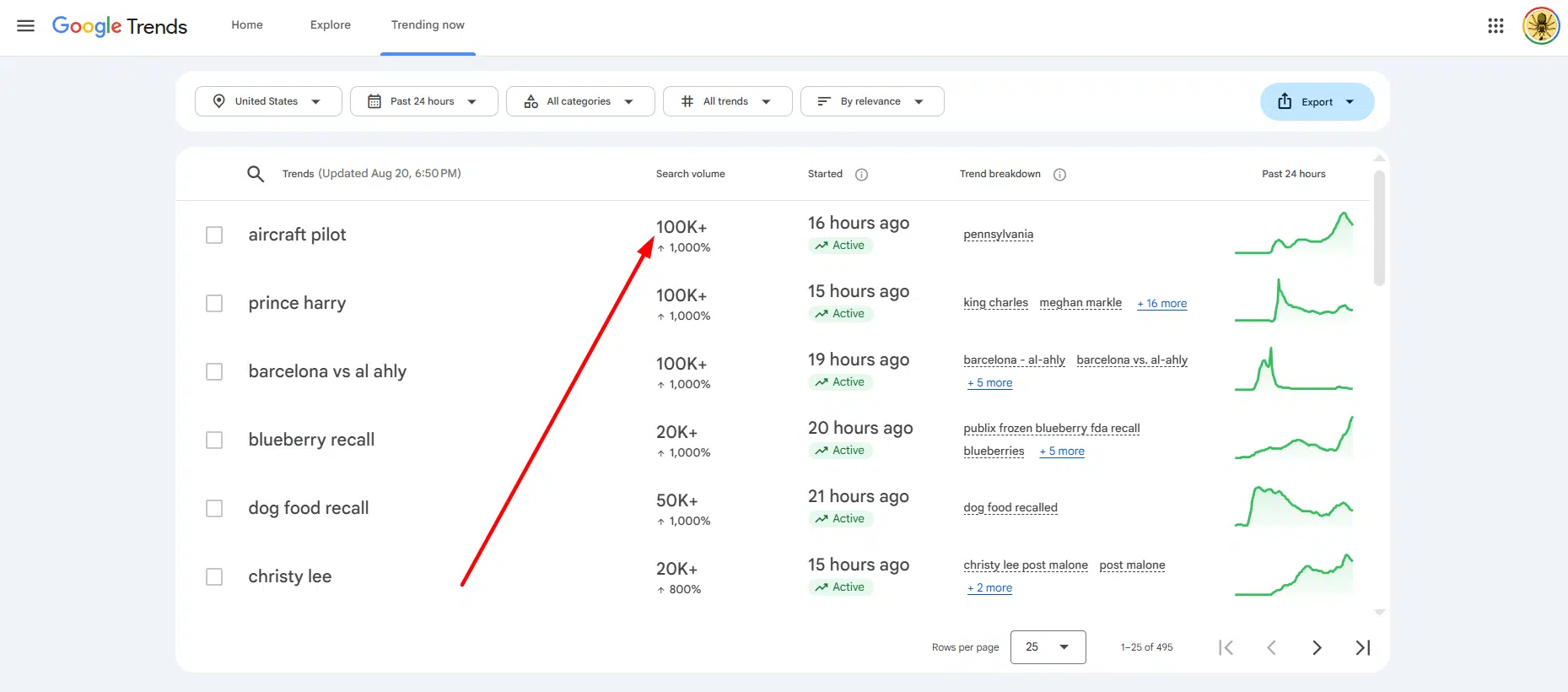
Search-volume figures look precise, which makes them easy to overtrust. A tool may display a monthly number, but that figure is an estimate shaped by its database, target country, language, date range and treatment of related terms.
Monthly averages can also hide seasonality. A query connected to tax deadlines, examinations, holidays or annual events may receive most of its interest during a short period. Publishing from the average alone can mean arriving after the demand has peaked.
Google Trends requires a different interpretation. Its 0-to-100 scale measures relative interest within the selected place and period. A score of 100 marks the peak in that comparison; it does not mean 100 searches or a fixed level of popularity. Google also notes that low-volume terms may appear as zero.
That last point matters. A narrow business-to-business query or specific local-service search may attract relatively few people while describing a valuable and immediate need.
Before approving or rejecting a term, consider:
- Relevance to the audience
- Country and language
- Seasonality
- Likely action after the search
- Available organic space on the results page
- The resources needed to answer it credibly
Search volume can help compare demand. It cannot predict exact traffic, leads or revenue.
3. Skipping the Live Search Results
One of the most common keyword research mistakes is assigning a page from a tool’s intent label alone. Categories such as informational, commercial and transactional are helpful shortcuts, but real search results are often less tidy.
Search the term in the target market and study what currently appears. Are the leading results guides, category pages, product pages, videos or local listings? Do they offer a quick answer, an in-depth comparison or a tool? Are smaller specialist websites present, or do established brands dominate?
The format offers a clue about what searchers expect. If the results are mostly product-category pages, a long educational article may serve a different need. When maps and nearby businesses occupy much of the page, a general blog post is unlikely to compete for the same attention.
Mixed results require judgment. A query showing tutorials, products and discussions may have several plausible interpretations. Choose the one that fits the site instead of building an unfocused page for every possible reader.
Search results vary by location, device, language and time. A manual review is a current market check, not a permanent verdict.
4. Choosing Traffic Potential Over Business Value
A large keyword can attract visitors who have no reason to buy, subscribe or return. A smaller phrase may reach fewer people while matching the business far more closely.
Compare “project management” with “project planning software for construction teams.” The broad term could attract students, researchers, job seekers and managers looking for a definition. The specific phrase suggests a clearer user, setting and possible next step.
Informational content still has a place. It can answer pre-purchase questions, support customers and build useful topical coverage. It simply needs a defensible connection to the audience.
Cost-per-click data should not decide the matter either. Expensive advertising may suggest commercial competition, but it does not guarantee that organic visitors will convert.
A useful plan balances direct commercial opportunities with comparisons, practical education and post-purchase support. Traffic without audience fit is usually an expensive distraction.
5. Treating Keyword Difficulty as a Verdict
Keyword difficulty is not an official Google metric. SEO platforms estimate how hard it may be to rank using their own databases and calculations. Ahrefs and Semrush both describe difficulty as an estimate, but their methods are not identical.
This is why one keyword can receive different scores across different tools.
Difficulty is useful for filtering a long list. It should not replace a manual review. Look at the actual results and ask:
- Do the ranking pages satisfy the same intent?
- Are specialist websites present?
- Is the existing content genuinely strong?
- Does the subject require evidence or expertise the team lacks?
- Do maps, shopping results or direct answers limit potential clicks?
A low score does not guarantee an easy ranking. The query may require a product page when the site can only publish an article, or the available data may be limited. A high score may still deserve long-term investment when the topic is central to the business.
Use difficulty to estimate effort, not to make the editorial decision.
6. Creating a Page for Every Keyword Variation
“Best CRM for small businesses,” “best small business CRM” and “top CRM software for small business” use different wording but may represent the same task. Publishing separate articles for each variation can leave a site with repetitive pages serving nearly identical readers.
The maintenance cost appears later. Editors must update several URLs, internal links become confusing and search engines may need to select one representative page from a group of similar content.
Group terms by meaning and intent before assigning URLs. When substantially the same pages rank for several variations, one well-planned page may be sufficient. Use the primary phrase naturally in the title and heading, then cover close variations without forcing them into every paragraph.
Do not combine everything merely because the terms share a broad subject. “CRM pricing,” “CRM implementation” and “CRM data migration” answer different questions and may justify separate pages.
Canonical tags can help search engines handle duplicate or highly similar URLs. They cannot turn unnecessary articles into a sensible content plan.
7. Copying Competitor Keywords Without Questioning Them
Competitor research can expose useful vocabulary, page formats and neglected questions. It becomes unreliable when another site’s rankings are copied directly into your publishing calendar.
The competitor may sell a different product, target another country or possess years of authority in topics where your site has little credibility. Its most visited article may also contribute almost nothing to its commercial performance.
Use competitor data to ask better questions:
- Is the topic relevant to your audience?
- Can your site cover it with genuine depth?
- Is the competing page excellent, or are the alternatives weak?
- What would justify publishing another result?
- Does the topic support a product, service or wider editorial area?
A worthwhile difference might be regional guidance, clearer selection criteria, original examples, a useful calculator, stronger visuals or honest treatment of limitations. Rewriting the leading pages in different words is not a meaningful strategy.
Competitor research should reveal opportunities for better work, not instructions for imitation.
8. Treating Keyword Research as a One-Time Task
A keyword plan starts aging once it is completed. Search behaviour changes, competitors improve their pages, products acquire new terminology and search-result layouts shift.
Published content also creates evidence that keyword databases cannot provide. Google Search Console reports queries, impressions, clicks, click-through rate and average position, with filters for pages, countries and devices. Its query table is not complete: some searches are omitted for privacy, and reporting limits affect the rows shown. Even with those gaps, it remains one of the most useful research sources for an existing website.
Review performance by page as well as by query. A page may appear for a relevant phrase that was absent from its original brief. That could justify adding a missing section, clarifying the title or planning another page when the new query serves a different intent.
Look for pages gaining impressions without many clicks, several URLs appearing for the same topic and seasonal articles updated after interest has already risen. Sustained declines deserve investigation; daily movement usually does not.
Google recommends focusing more on trends in clicks and impressions than on average position alone. Compare meaningful periods, account for seasonality and identify a likely cause before making large changes.
Final Thoughts
Avoiding keyword research mistakes starts with one disciplined decision: do not approve a topic from a metric alone. Define the audience, inspect the search results and confirm that the site can offer something genuinely useful.
Before creating a new URL, check whether an existing page can serve the same need. After publishing, review real performance and revise the original assumptions. A focused keyword plan with clear reasoning will outperform a larger spreadsheet that nobody has properly examined.