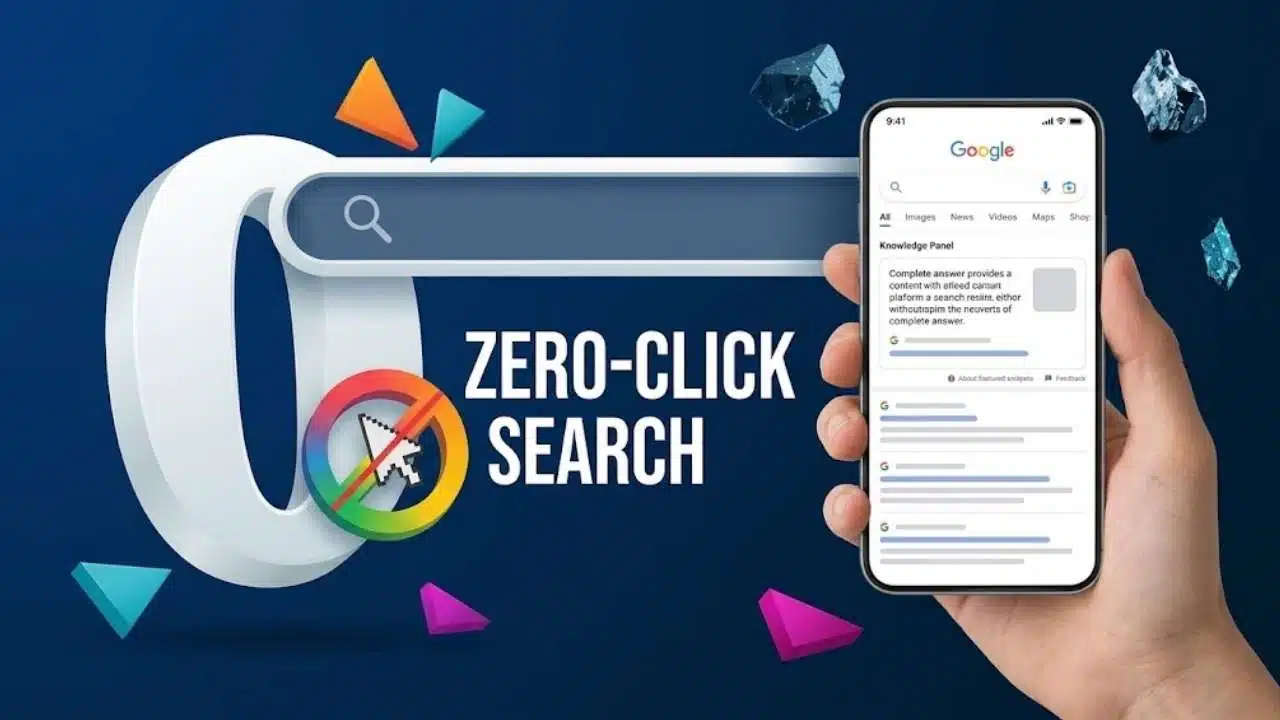
Zero-Click Search occurs when Google answers a user’s query directly on the Search Engine Results Page (SERP), eliminating the need to click through to a website. Driven by featured snippets, knowledge panels, and AI Overviews, this shift means rankings can hold steady while organic traffic slips.
For digital strategists, surviving zero-click search requires pivoting from basic answers to high-value insights. While search engines easily summarize simple facts, they cannot replicate proprietary data, original research, or distinct brand experiences. To thrive, focus on optimizing for visibility within SERP features, targeting intent-rich informational queries, and building direct audience relationships that turn zero-click impressions into long-term brand authority.
What Zero-Click Search Actually Means
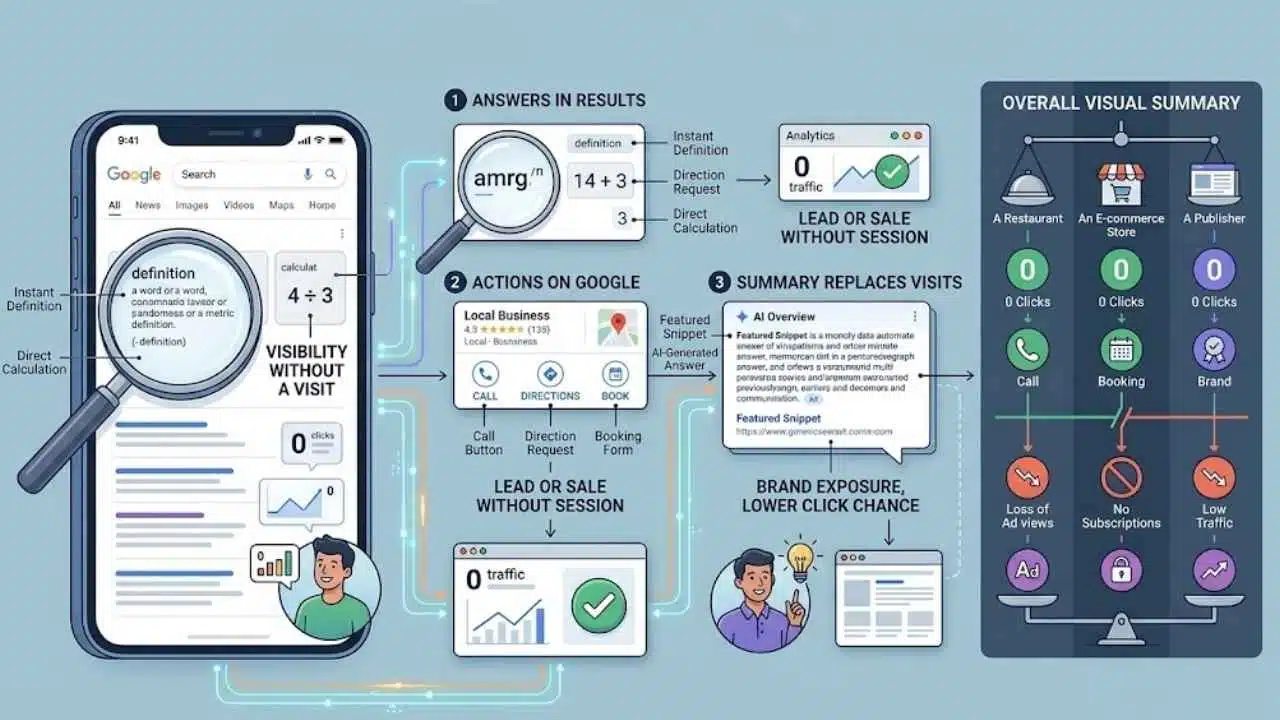
A zero-click search ends without the user visiting an external website. There is no single measurement standard. Some studies count only searches where the user leaves Google without selecting anything. Others include query reformulations, such as changing a broad search into a more specific one.
Actions inside Google make the definition less tidy. Someone might call a business, request directions, compare products, or begin a booking without creating a website session. Analytics records no visitor, but the search may still have produced a useful business outcome.
| Search Behavior | Example | Likely Effect |
| The answer is read in the results | A calculation, date, definition, or short fact | Visibility without a visit |
| An action happens on Google | A call, direction request, booking, or product interaction | A possible lead or sale without a session |
| A summary replaces the first visit | A featured snippet or AI-generated answer | Brand exposure with a lower chance of a click |
| The user changes the query | A broad search followed by a narrower one | The journey continues, but the first result receives no visit |
| The user leaves search | The answer was sufficient or the results were unhelpful | Usually no measurable outcome |
A site-wide zero-click rate therefore says little on its own. A restaurant receiving more calls and direction requests has a different problem from a publisher losing the article visits that support advertising or subscriptions.
Zero-Click Search Did Not Start With AI
Google has gradually turned search-result pages into places where people can complete tasks. Weather forecasts, currency conversions, sports scores, maps, opening hours, and featured snippets can satisfy intent without another page loading.
AI Overviews and AI Mode extend that pattern. Google says these systems may use query fan-out, running several related searches across subtopics to develop an answer and find supporting pages. A searcher can receive a synthesis of information that previously required several visits. The effect on click behavior is measurable, although the available figures require context.
A 2024 SparkToro and Datos analysis estimated that 58.5% of US Google searches and 59.7% of EU searches ended without a click. In that report, searchers either ended their session or changed the query. The figures came from third-party clickstream panels, and the report acknowledges that panel composition affects the results. They should not be treated as a current global average or as a benchmark for every website.
Pew Research Center later analyzed browsing activity from 900 US adults. On Google pages containing an AI summary, users clicked a traditional result during 8% of visits. The rate was 15% on pages without a summary. Links inside the AI summaries received clicks during only 1% of visits.
The Pew research covered March 2025 behavior in the United States, and the result pages were reconstructed separately because AI summaries can change. It offers useful evidence of a wider pattern, not a prediction for every market, industry, or query.
Not Every Lost Click Deserves Recovery
Some searches have little reason to produce a valuable website visit. A user looking for a basic conversion, a company’s phone number, or a short factual answer may be satisfied immediately.
The more useful distinction is between three types of query.
- Low-value answer queries ask for one fact and require little explanation. Recovering these clicks rarely deserves substantial effort unless the business earns money from page views.
- On-SERP conversion queries can produce calls, directions, bookings, or product actions inside Google. Website traffic may fall while business outcomes remain healthy.
- Click-dependent queries require a detailed comparison, original analysis, tool, transaction, or trusted recommendation. Losing these visits can directly affect revenue, leads, subscriptions, and advertising income.
Map important pages and queries to these groups before changing strategy. Otherwise, a falling click-through rate can trigger unnecessary rewrites while commercially important losses receive less attention.
How to Survive Zero-Click Search
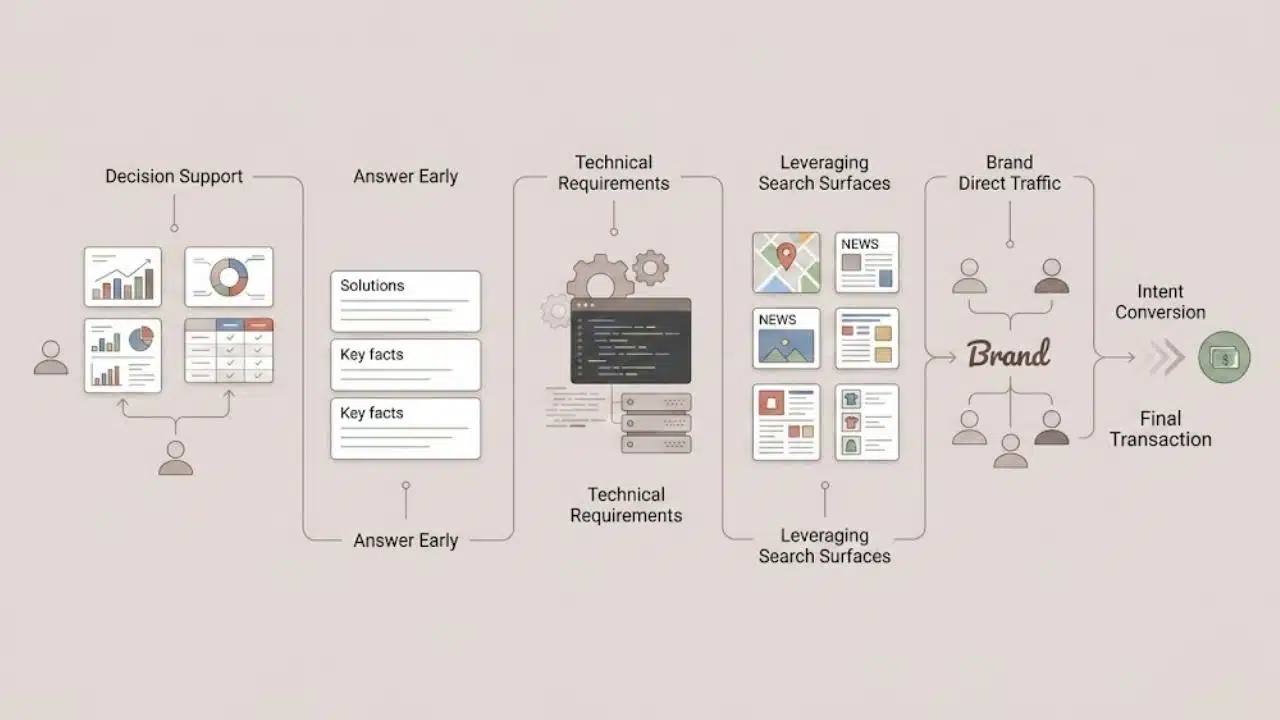
Surviving zero-click search requires more than protecting rankings. Focus on creating pages that support real decisions, earn qualified visits, and provide value that a search summary cannot fully replace.
Replace Commodity Answers With Decision Support
A page that restates a familiar definition, lists generic benefits, and closes with predictable advice is easy to summarize. Making it longer does not make it more defensible.
Strong pages provide something beyond the basic answer:
- Original data or documented research
- A clear expert argument supported by evidence
- Detailed examples and unusual edge cases
- Buying criteria tied to real decisions
- Templates, calculators, or checklists
- Regional and industry-specific limitations
- Failure conditions and troubleshooting instructions
A page about canonical tags should define the tag quickly. Its real value lies in explaining conflicting signals, showing implementation examples, identifying common CMS problems, and outlining how to investigate a canonical selected by Google. Another 800 words explaining why canonicalization matters would add length, not depth.
Give the Answer Early, Then Earn the Rest of the Visit
Removing the direct answer to make content harder to summarize usually leaves the page less useful. It may also make its relevance less obvious. State the core answer near the beginning. Use the space below it for evidence, exceptions, decision criteria, implementation details, and realistic examples.
People who do click should not have to dismiss a full-screen signup form and scroll through five introductory paragraphs to reach the promised information. Earning the visit is already harder. Do not waste it.
Keep the Technical Entry Requirements in Place
Google does not require special markup for inclusion in AI Overviews or AI Mode. A supporting page must be indexed, eligible to appear with a snippet, and compliant with the normal requirements for Google Search.
The familiar checks still matter:
- Googlebot can access important pages and resources.
- Internal links make valuable content discoverable.
- Canonical signals are consistent.
- Essential information is available as readable text.
- Pages work properly on mobile devices.
- Structured data matches the visible content.
- Useful images and videos remain accessible.
Google currently says that llms.txt does not affect visibility or rankings in Google Search. Other AI services may choose to use it, so this should not be read as a universal rule.
Creating thin pages for every imagined query fan-out is not a better answer. Google specifically warns against publishing large numbers of pages primarily to manipulate rankings or generative responses.
Treat Search Features as Business Surfaces
Structured data can help Google understand a page and make it eligible for supported rich results. It cannot guarantee an enhanced result, and Google requires no separate AI schema.
Use markup only when it accurately describes visible content. Product and offer data may support merchant listings, while other supported types can help eligible recipes, events, reviews, and similar pages.
Local and ecommerce businesses should also keep Google Business Profile and Merchant Center information accurate. Opening hours, prices, availability, contact details, shipping information, and return policies may appear before the searcher reaches the site.
Information shown in the results can reduce clicks and still help the business. Incorrect information does the opposite. A stale price or wrong opening time can turn useful visibility into a poor customer experience.
Build Around Decisions, Constraints, and Consequences
Definitions are easy to summarize. Difficult decisions need context. Useful content explains what fails during implementation, what a switch will cost, which integrations are missing, and when the popular choice is a poor fit. It should also account for differences across countries, industries, budgets, and team sizes.
A generic list of the “best CRM platforms” can be condensed into several recommendations. A guide to migrating a sales team without losing custom fields, ownership history, and reporting continuity has a stronger reason to earn a visit.
Give Readers a Reason to Return Without Google
Unbranded search remains useful for discovery, but it leaves a publisher dependent on how Google presents the answer. Recognizable brands have other routes. Searchers may choose a familiar result, look for the company by name, subscribe to its newsletter, save a useful tool, or return directly.
That recognition comes from distinctive work: original reporting, reliable research, memorable tools, strong products, and useful communities. Purchased mentions and mass-produced guest posts are poor substitutes.
Email lists, repeat visitors, customer communities, and direct traffic will not remove search risk. They make a business less exposed to one distribution channel.
Improve the Value of the Clicks That Remain
Match the next action to the search intent. An informational guide might lead to a relevant checklist or newsletter. A comparison page could point to a buying guide, pricing explanation, or product demonstration. A local service page should make contacting the business straightforward.
Track conversion rate and lead quality by landing page. A traffic decline with stable qualified leads requires a different response from one accompanied by falling revenue.
Be Careful Before Limiting AI and Search Previews
Google supports several controls:
- nosnippet prevents a text snippet or video preview and stops page content from being used as direct input for AI Overviews and AI Mode.
- max-snippet limits the text Google may use in previews and as direct input for those features.
- data-nosnippet excludes selected text inside supported div, span, or section elements.
- noindex prevents a page from appearing in Google Search after the directive is processed.
These controls may suit paywalled, licensed, proprietary, or commercially sensitive material. Applying them across an entire site can also weaken conventional listings or remove opportunities to appear in AI features.
At the time of writing, Google is rolling out a property-level Search generative AI control in Search Console. Where available, verified owners can exclude a site’s links and content from supported generative Search features without that choice acting as a ranking signal elsewhere in Search. Exclusion also means giving up impressions, supporting links, and possible traffic from those features.
Availability and coverage may change. Check the current Search Console settings and documentation before acting. For most sites, exclusion should follow a measured business case, not frustration with a falling CTR.
Measure Exposure, Visits, and Outcomes Separately
Website analytics cannot record someone who never arrives. Measuring zero-click search therefore requires several views.
- Search exposure: Review impressions, clicks, CTR, queries, pages, countries, and devices in Google Search Console.
- Generative visibility: Google is rolling out a separate Generative AI performance report to a subset of Search Console properties. Its current version reports impressions from AI Overviews and AI Mode, grouped by page, country, device, and date. It does not provide a complete AI-specific click or CTR report.
- Business outcomes: Track qualified leads, subscriptions, purchases, revenue, and other meaningful conversions in the appropriate analytics and business systems.
- On-Google activity: Where supported, review Business Profile calls, direction requests, bookings, and website clicks. Ecommerce teams should also examine merchant and shopping performance.
Compare equivalent periods and check seasonality, ranking movement, indexing problems, demand changes, site migrations, and altered result layouts before blaming AI. Impressions are not visits, and an AI citation is not a conversion. Visibility can help, but it still needs a credible connection to business results.
Reactions That Usually Make the Problem Worse
Avoid responding to falling clicks by:
- Publishing thin pages for every possible query variation
- Adding unsupported schema promoted as an AI shortcut
- Blocking snippets or generative features without a defined business case
- Removing concise answers from otherwise useful pages
- Treating every organic decline as an AI Overview problem
- Reporting rankings and impressions while ignoring conversions
A site can spend months defending visits that never helped the business. Commercial pages and valuable reader journeys deserve attention first.
Final Thoughts
Zero-click search changes where information is consumed, but it does not make every lost visit equally damaging. Start with the landing pages that influence leads, sales, subscriptions, or other meaningful outcomes. Identify which ones are losing clicks, check whether rankings and demand also changed, and improve the pages that still have a strong reason to be visited. The safest response is not more content. It is better evidence, clearer decisions, stronger landing experiences, and less dependence on Google for every return visit.