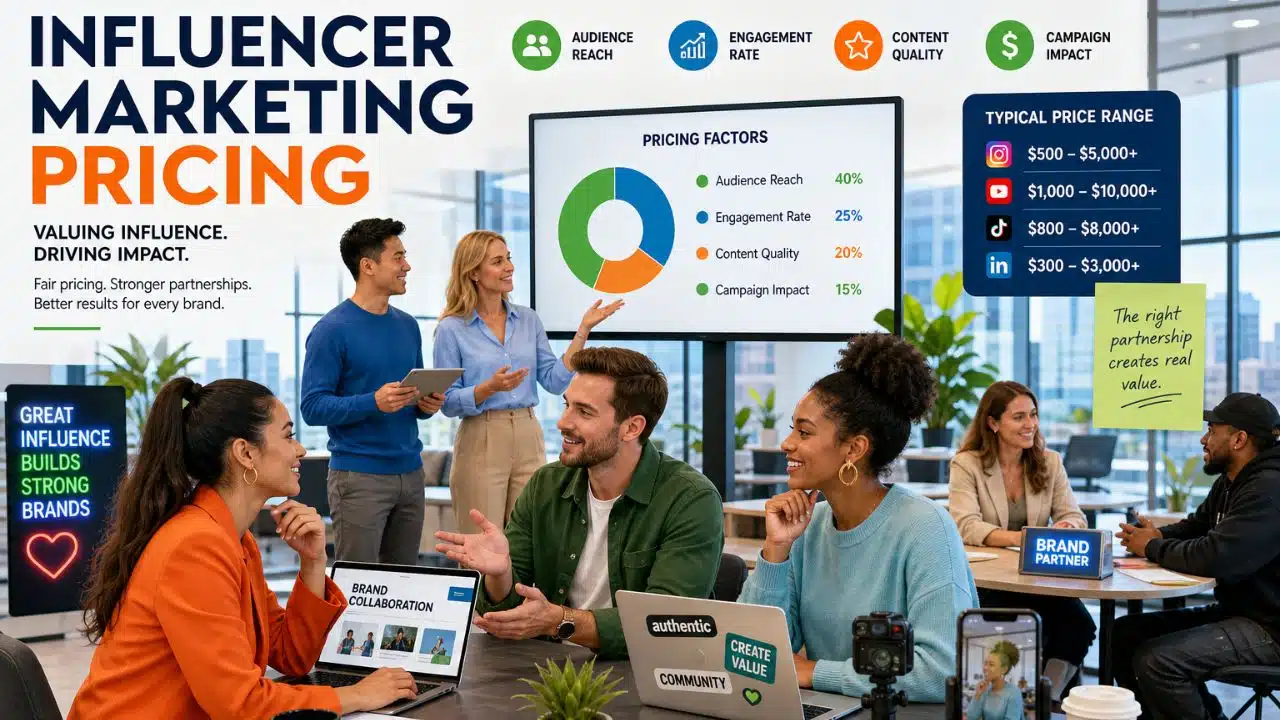
Have you ever asked an influencer for their rates and felt your jaw hit the floor? You find a creator who seems perfect for your brand. Then the rate card arrives, and the numbers make no sense. Influencer marketing pricing can feel confusing and hard to pin down. One creator charges $500 for a post. Another wants $50,000. What gives?
Here’s the thing I’ve learned after watching hundreds of these deals: influencer pricing isn’t random. It follows real rules based on real factors. Follower count matters. Engagement rate matters. The social media platform matters, and so does the type of content you’re asking for.
Rates can run anywhere from $10 to over $100,000 per post depending on these factors. That’s a huge range, but it makes sense once you see what drives the numbers.
Nano-influencers with smaller audiences charge less. Mega-influencers with millions of followers charge much more. Mid-tier influencers land somewhere in between. TikTok pricing differs from Instagram, and YouTube differs from both.
In this guide, I’ll walk you through what affects influencer rates, the pricing models brands and creators use, how engagement metrics change the math, why usage rights add costs, and negotiation strategies that actually work.
Why Influencer Marketing Pricing Varies
Influencer rates swing wildly because follower count and engagement metrics tell very different stories. A creator with ten thousand highly active followers might charge more than someone with one hundred thousand silent watchers. Brands care about real interaction, not vanity numbers.
Your marketing budget also stretches differently depending on the platform, the content type, and the audience you want to reach. An Instagram macro-influencer charges a different price than a TikTok creator or a LinkedIn professional, because each platform moves money and attention in its own way.
Audience size and engagement rates
Audience size pushes pricing up, but engagement rates tell the real story. A creator with 500,000 followers who barely gets likes sits in a different league than someone with 50,000 followers whose audience hangs on every word.
Brands pay for results, not just follower counts.

| Influencer Category | Follower Range | Typical Pricing Per Post | Engagement Impact |
|---|---|---|---|
| Nano | 1,000 to 10,000 | $100 to $1,000 | High engagement rates, loyal audiences |
| Micro | 10,001 to 100,000 | $1,000 to $10,000 | Strong engagement, niche communities |
| Mid-tier | 100,001 to 500,000 | $10,000 to $50,000 | Moderate engagement, broader appeal |
| Macro | 501,000 to 1,000,000 | $50,000 to $100,000 | Lower engagement rates, mass reach |
| Mega | 1,000,000+ | $100,000+ | Variable engagement, celebrity status |
Most creators start with a simple formula: about $100 for every 1,000 followers. By that math, someone with 100,000 followers would earn around $10,000 per post. Treat it as a starting point, nothing more.
Real data shows the gap between theory and practice. Instagram creators with 100,000 to 150,000 followers actually earn between $501 and $1,000 per post. Brands pay for who actually sees and responds to content, not the raw number on a profile.
A closer look at creator rate cards across Instagram, TikTok, and YouTube shows how often engagement wins out over follower count. In one analysis of 40 rate cards, creators with 80,000 to 120,000 followers quoted $700 to $1,200 per static post. Meanwhile, creators with just 20,000 to 35,000 followers but higher engagement commanded $900 to $1,500. The median per-post price landed at $950 despite a median follower count of only 45,000. Creators with comment rates above 4% charged engagement-adjusted rates that ran 30% higher than standard follower-based pricing. In these real-world cases, engagement beat raw follower math more than half the time.
Engagement metrics shift everything. High comment rates, shares, and saves signal an audience that pays attention. Low numbers signal people scrolling past without stopping. Brands notice, and they reward creators whose followers take action.
Social media platform and content type
Different platforms carry different price tags. Where you post shapes what you’ll pay. Here’s what the market charges across the major social media platforms.

| Platform | Content Type | Nano-Influencers | Micro-Influencers | Mid-Tier Influencers | Macro-Influencers | Mega-Influencers |
|---|---|---|---|---|---|---|
| YouTube | Long-Form Integrations | $200 – $1,000 | $1,000 – $10,000 | $9,000 – $25,000 | $10,000 – $50,000 | $20,000+ |
| YouTube Shorts | $150 – $800 | $800 – $8,000 | $7,000 – $20,000 | $8,000 – $40,000 | $15,000+ | |
| Static Posts | $100 – $500 | $500 – $2,500 | $2,500 – $10,000 | $10,000 – $30,000 | $20,000+ | |
| Reels | $150 – $800 | $800 – $4,000 | $4,000 – $15,000 | $15,000 – $40,000 | $30,000+ | |
| Instagram Stories | Stories (US Market) | $500 – $2,000 | $2,000 – $8,000 | $8,000 – $20,000 | $20,000 – $30,000 | $30,000+ |
| TikTok | Video Content | $5 – $200 | $200 – $1,200 | $1,200 – $5,000 | $5,000 – $15,000 | $7,000+ |
| Posts & Video | $25 – $250 | $250 – $1,250 | $1,250 – $12,500 | $12,500 – $25,000 | $25,000+ | |
| X (Twitter) | Tweets & Threads | $2 per 1K followers | $20 – $100 | $100 – $1,000 | $1,000 – $2,000 | $2,000+ |
YouTube commands the highest rates across every creator tier. Long-form integrations take serious production time, so creators charge accordingly. Mega-influencers on YouTube can ask for $20,000 or more for a single integration.
Niche and industry-specific factors
Your niche shapes your price tag. Beauty and fashion influencers pull in 10 to 15 dollars per engagement, while general lifestyle creators earn 5 to 8 dollars per engagement.
Why the gap? Brands pay more for audiences that match their products. A beauty influencer’s followers actually want cosmetics, so brands see real value. Tech influencers on X attract finance and B2B audiences hungry for specific information.
These niche communities convert better, so brands invest more upfront.
Content type matters just as much as follower count. Unboxing videos and try-on hauls perform exceptionally well for e-commerce businesses, and their sales power earns them mid-range pricing. Beauty creators film “get ready with me” videos to show cosmetic products in action, proof that engagement rates matter more than raw numbers. TikTok beauty content pulls in a CPM of 10 to 20 dollars, well above general content rates.
The Licia Young case shows this principle in action. Her toilet-paper-themed earrings gained serious visibility after Britney Spears endorsed them, showing that long-term audience engagement beats one-time viral moments.
Facebook Groups offer niche community access that drives higher engagement than regular posts. Influencer marketing hub data and tools like Modash, Social Blade, and Traackr help brands and content creators find the right pricing fit for their audience demographics and conversion rates.
Common Influencer Pricing Models
Influencers charge money in different ways, and brands pick the model that fits their goals. Some creators want flat fees per post. Others prefer performance-based deals that reward actual sales or clicks.
Flat fee per post
Flat fee pricing is the most straightforward approach in the creator economy. Brands pay a set amount for each piece of sponsored content, whether that’s a feed post, Story, Reel, or video.
This model works well for one-off deals, but it usually costs more than long-term partnerships. According to Influence.co data, Instagram influencers with 100,000 to 150,000 followers earn between $501 and $1,000 per post with this structure.
Here’s how flat fees typically break down by tier:
- Nano-influencers: $25 to $150 per post
- Micro creators: $250 to $5,000
- Mid-tier creators: $1,600 to $10,000
- Macro-influencers: $5,000 to $25,000
- Mega creators: $10,000 to $50,000 or more
The exact rate depends on follower count, engagement rates, and the platform itself.
Rate cards spell out costs for different content types and often include extra charges for usage rights and exclusivity agreements. Add up every potential extra before signing so you stay within budget.
A feed post might cost less than a Reel on the same channel. Stories carry their own rates too: CPM pricing for Instagram Stories in certain markets run 25 to 45, rarely climbing above 35. Reels operate at 10 to 50 CPM. Niche influencers may charge more because they reach targeted audiences. Marketing agencies and platforms like CreatorIQ help brands find creators and negotiate these fees without overspending.
Performance-based pricing (CPA or affiliate models)
Performance-based pricing, also called cost-per-action or affiliate marketing, appeals to brands because it shifts risk away from the company. You pay influencers only when specific results happen, like sales or sign-ups.
This model shines for campaigns with clear, direct sales goals. Three-fifths of brands pay influencers between 10% and 14% per sale under these performance models. The rest pay 15% or more. That range matches broader industry benchmarks: per Shopify’s 2026 Affiliate Commission Guide and 2026 benchmarks from affiliate platforms like Levanta and ReferralCandy, standard commissions for DTC and e-commerce brands start at 10-15% per sale, with physical goods like fashion, home, and beauty generally falling in the 5-15% range. Knowing those numbers gives you a solid anchor before you negotiate a commission deal.
Run the math before you commit, though. A $10,000 flat fee could actually cost less than a 15% commission on $50,000 in sales, depending on how the campaign performs.
Established influencers frequently reject commission-only payments. Many brands respond with hybrid deals: a lower fixed fee plus performance bonuses. The creator gets guaranteed money, and the brand keeps costs tied to results.
Predicting revenue from influencers stays uncertain, so performance-based payments may not always deliver the best outcome. Affiliate marketing platforms and tools help track transactions and measure return on investment accurately.
Brands on Instagram, TikTok, and Snapchat often blend performance metrics with content creation standards. The association of national advertisers reports that these blended payment structures show up frequently across brand partnerships. Both sides win when they agree on realistic sales targets and commission rates upfront.
Product-only collaborations
Product-only collaborations work differently than paid partnerships. Brands send products to influencers instead of paying cash, and the products themselves are the compensation.
This model splits into two types:
- No-strings-attached gifting: Brands send products with no guarantee of social posts or promotion.
- Barter deals: The influencer creates content in exchange for the products they receive.
Smaller influencers often accept products as payment and may promote items multiple times across different posts. Established or high-profile influencers rarely take product-only deals anymore.
Think about shipping and packaging costs before choosing this route. Product-only collaborations work best for items that are light and easy to ship. High-ticket products or bulky items create problems because shipping costs eat into your ROI.
This pricing model stays highly negotiable and depends on what the influencer prefers. Brands with limited budgets find product-only collaborations attractive for brand awareness campaigns. And this approach is growing fast: per Influee’s 2026 influencer marketing statistics roundup, product seeding campaigns made up 31% of all influencer campaigns in 2025, up from 20% the year before. That jump suggests gifting has become a real strategy, not just a fallback for tight budgets.
Key Factors Affecting Influencer Marketing Pricing
A few specific things move the needle on what brands actually pay influencers. Here’s what really drives those numbers.
Usage rights and exclusivity agreements
Usage rights let brands repurpose influencer content across their own marketing channels, and that power comes with a price tag. Most brands ask for one to three months of usage rights, which typically costs 25% to 100% of the influencer’s base fee on top of the initial payment.

Those premiums also scale with creator size. According to 2026 industry guides from Modash and Lumanu on influencer whitelisting and usage-rights pricing, micro-influencers (15K-75K followers) typically charge 25-75% of their base rate for a month of usage, mid-tier creators (75K-250K) charge 40-100%, and macro-influencers (250K-1M) charge 50-125%. Knowing your target tier’s range helps you budget before the first call.
Think of it like buying a house. You pay for the building, then you pay extra for the right to renovate and rent it out.
Clarify the exact scope of usage rights by spelling out the platform, duration, and region to avoid surprise fees later. Exclusivity clauses add another layer of cost, since they stop influencers from working with competing brands during the campaign. These extra fees appear on influencer rate cards, so smart marketers budget for them from day one.
A small e-commerce brand recently experienced this cost structure firsthand while negotiating an Instagram Reel. The initial flat fee sat at $1,000 for a single Reel with one month of platform-only rights. When the brand requested 12-month cross-platform rights plus a two-week exclusivity window, the creator raised the fee to $2,400. The breakdown showed a base content fee of $1,000, a 12-month usage premium of $900, and a two-week exclusivity premium of $500. Brands accepting 6-month usage terms in similar scenarios saw an average premium of 60% over the base fee. Asking for extended cross-platform rights can more than double the initial price.
Negotiating usage rights is standard practice in influencer partnerships. Content used in paid ads deserves special attention because brands want to stretch their return on investment across multiple channels.
Influenceflow and similar platforms help brands track these agreements so both sides know what content can go where. Extended usage rights or broader exclusivity can make campaigns much more expensive, so weigh the cost against your goals. Mauricio Abascal and other industry experts stress that clear contracts prevent disputes down the road. Have the usage rights conversation early, during rate negotiation, so everyone knows what they’re paying for.
Frequency of posts and campaign scope
How often you post and how big your campaign is will make a huge difference in what you pay influencers.

| Factor | Impact on Pricing | Key Takeaway |
|---|---|---|
| Single Posts vs. Multiple Posts | One-off posts cost more per piece. Bundled content packages with multiple deliverables drop prices by 10% to 30%. Brands save money when they order in bulk. | Request several posts together instead of spreading them out over time. Your per-post rate drops fast. |
| Content Type and Format | Instagram Reels and TikToks work great for bundling. Similar formats mean less work for influencers. They can create multiple videos in one shoot session, so they charge less per video. | Bundle Reels and TikToks together. You get better rates on these short-form videos. |
| Campaign Length and Duration | Short campaigns cost more overall. Long-term partnerships lower the per-post cost. In 2024, 75% of influencer marketers ran more long-term partnerships. For 2025, 84% planned more extended collaborations. | Commit to longer deals. You pay less per post and build real relationships with creators. |
| Number of Posts in Your Package | Your budget and content types determine how many posts fit into one package. Bundling content keeps costs down. Brands negotiate discounts when they order more posts at once. | Mix different content types in one package. Propose 4 to 6 posts instead of 1 or 2. |
| Long-Term Collaboration Benefits | Extended partnerships allow better content planning. Authenticity grows over time. Influencers value your brand more after working together for months. This value reduces negotiation friction and per-post rates. | Three to six month deals beat one-time posts. Influencers give you better pricing when you stick around. |
| Scope and Scale | Small campaigns with few posts cost more per piece. Large-scale campaigns across multiple influencers or months drop unit costs. Influencers price bundles lower because their effort stays roughly the same. | Expand your campaign scope. More posts, more months, more creators all lead to lower per-post rates. |
Posting frequency shapes your entire influencer budget. Creators charge less when you request multiple posts in one package compared to scattered one-offs. A three-month partnership with twelve posts costs far less per post than a single standalone post. The math works in your favor when you think bigger.
Long-term thinking changes the pricing game. Brands that commit to ongoing relationships get better rates and stronger content. In 2024, three quarters of influencer marketers shifted toward longer partnerships, and 84% said they planned to deepen those collaborations in 2025.
Final Words
Influencer marketing pricing works like a puzzle with many moving pieces. Audience size, engagement rates, platform choice, and content type all shape what brands pay. Micro-influencers might charge $500 to $3,000 per Instagram Story, while mega-influencers demand $30,000 or more.
You get what you pay for.
Smart brands focus on ROI rather than just picking the cheapest option. Start with your goals, then match them to the right influencer tier and pricing model for your campaign.