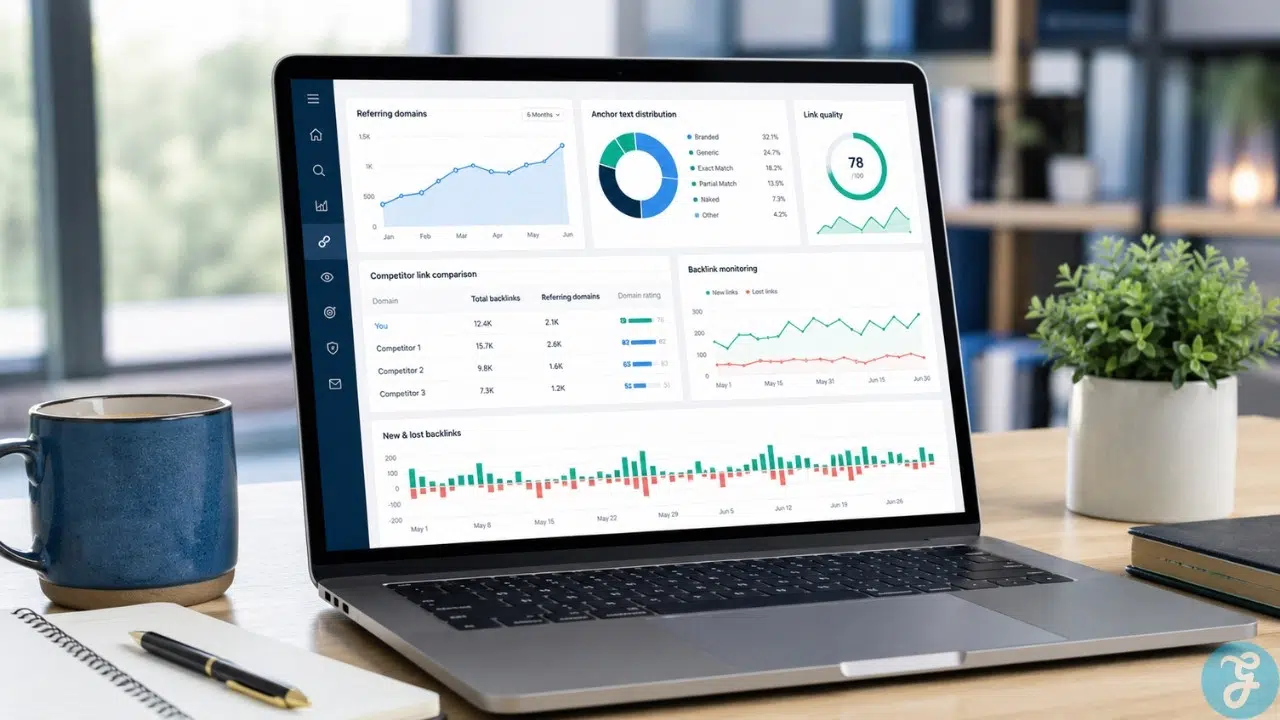
Backlinks are still one of the clearest signs of online authority, but they are also one of the easiest SEO signals to misunderstand. A site can have thousands of links and still be weak. Another site can have fewer links but stronger referring domains, cleaner anchors, better topical relevance, and far more trust. That is why the Best Backlink Analysis Tools matter.
The right tool helps you understand who links to you, who links to your competitors, which pages attract authority, which links disappeared, and which backlinks may be risky. This comparison ranks the top backlink tools for agencies, SEO teams, link builders, publishers, SaaS companies, bloggers, and businesses that want better link analysis software without wasting money on the wrong platform.
Our Selection Criteria
A backlink tool should do more than count links. Raw backlink volume can be misleading if you do not understand link quality, referring domains, anchor text, topical relevance, lost links, toxic patterns, and competitor gaps.
| Criteria | What We Looked For |
|---|---|
| Backlink database depth | Ability to find referring domains, backlinks, new links, lost links, anchors, and top linked pages |
| Link quality metrics | Domain strength, page strength, trust signals, spam signals, authority metrics, and relevance indicators |
| Competitor research | Whether the tool helps reveal competitor link sources and realistic outreach opportunities |
| Link monitoring | Ability to track gained, lost, broken, changed, and potentially risky backlinks |
| Reporting workflow | Exports, filters, dashboards, agency reporting, and client-friendly backlink summaries |
| Best-fit user | Whether the tool suits agencies, enterprise SEO teams, beginners, freelancers, or small businesses |
The ranking below focuses on practical SEO use, not just who has the loudest brand name. Some tools are better for deep link intelligence, while others are better for everyday audits, competitor research, or budget-friendly backlink checks.
Whom This Is For
This guide is for SEO professionals, link builders, agencies, content marketers, affiliate publishers, SaaS teams, ecommerce brands, and business owners who need to understand link authority more clearly. It is especially useful if you are comparing backlink checker tools before investing in paid software.
If you only need to check a few links once, a free checker may be enough. But if backlinks affect your revenue, rankings, digital PR, outreach, or client reports, you need link analysis software that can help you make stronger decisions over time.
7 Best Backlink Analysis Tools for SEO, Audits, and Competitor Research
Before choosing a tool, remember that backlink data will always vary between platforms. Each tool crawls the web differently, updates data differently, and uses its own authority metrics. The smartest approach is to choose the tool that fits your workflow, then use its data consistently.
1. Ahrefs
Ahrefs is one of the strongest backlink analysis tools for SEO professionals who need deep competitor research and link profile intelligence. Its Site Explorer is widely used for analyzing referring domains, backlinks, anchors, top linked pages, link growth, and competitor authority. The platform is especially useful when you want to understand why a competitor ranks, which pages attract links, and where your own link gaps may be. It ranks first because backlink research is still one of Ahrefs’ clearest strengths.
Best Feature/For:
- Best for deep competitor backlink research and serious SEO teams.
- Strong for agencies, link builders, affiliate teams, and content-led SEO campaigns.
Why We Chose It:
- Excellent for studying competitor backlink profiles and linkable assets.
- Strong Site Explorer workflow for backlinks, referring domains, anchors, and top pages.
- Useful for finding link gaps and understanding authority differences.
- Works well alongside keyword research, content research, rank tracking, and site audits.
Things to consider:
- It can be expensive if backlink analysis is your only need.
- Beginners may need time to understand the full depth of the platform.
2. Semrush Backlink Analytics
Semrush Backlink Analytics is a strong choice for teams that want backlink analysis inside a broader SEO and marketing suite. It helps users check backlinks, referring domains, Authority Score, anchor text, follow/nofollow status, new and lost links, and competitor link opportunities. Semrush is especially useful when backlink data needs to connect with keyword research, site audits, content strategy, rank tracking, and reporting. It ranks second because it is one of the most complete all-in-one options for SEO teams that do more than link analysis.
Best Feature/For:
- Best for agencies and marketing teams that want backlink research inside a full SEO platform.
- Strong for competitor comparison, link monitoring, and campaign reporting.
Why We Chose It:
- Combines backlink analysis with keyword, content, audit, and visibility workflows.
- Helpful for tracking new and lost links over time.
- Good for comparing link profiles between your site and competitors.
- Backlink Audit adds extra value for reviewing potentially risky links.
Things to consider:
- It may feel complex if you only want a simple backlink checker.
- Some deeper data and reporting features depend on plan limits.
3. Majestic
Majestic is one of the most specialized top backlink tools, built heavily around link intelligence rather than general SEO dashboards. Its well-known Trust Flow and Citation Flow metrics help users evaluate link quality and link quantity signals. Majestic is especially useful for link builders, domain researchers, digital PR teams, and SEOs who want a backlink-focused platform without unrelated content or PPC tools. It ranks third because it remains one of the best dedicated options for serious link profile investigation.
Best Feature/For:
- Best for backlink specialists, link builders, and domain-level link intelligence.
- Strong for Trust Flow, Citation Flow, topical link analysis, and backlink context.
Why We Chose It:
- Focuses deeply on backlink data instead of trying to be everything.
- Useful quality metrics help evaluate link strength and trust signals.
- Good for competitor link audits, domain research, and link prospect evaluation.
- Strong fit for users who care more about link intelligence than general SEO features.
Things to consider:
- It is less useful if you also need keyword research, content optimization, and rank tracking in one tool.
- The interface and metrics may take time for beginners to understand.
4. Moz Link Explorer
Moz Link Explorer is a strong option for users who want backlink analysis with familiar authority metrics like Domain Authority, Page Authority, and Spam Score. It is especially approachable for beginners, small businesses, and marketers who want link data without feeling buried in advanced filters. Moz is also useful for evaluating linking domains, anchor text, inbound links, top pages, and competitive link gaps. It ranks fourth because it balances accessible link analysis with widely recognized SEO metrics.
Best Feature/For:
- Best for beginners, small teams, and marketers who want readable authority metrics.
- Strong for Domain Authority, Page Authority, Spam Score, and basic competitor link checks.
Why We Chose It:
- Easier to understand than some advanced backlink platforms.
- Authority metrics are familiar to many marketers and clients.
- Useful for quick backlink checks and link quality conversations.
- Good fit for small businesses and teams already using Moz Pro.
Things to consider:
- Advanced link builders may want deeper filtering and faster competitive workflows.
- It may not match Ahrefs or Majestic for specialist backlink investigation.
5. SE Ranking Backlink Checker
SE Ranking Backlink Checker is a practical choice for freelancers, small agencies, and in-house SEO teams that want backlink analysis inside a value-focused SEO suite. It provides backlink and referring domain data, domain and page trust metrics, anchor data, linked pages, and backlink monitoring options. The platform is especially useful if you also need rank tracking, website audits, competitor research, and client reporting. It ranks fifth because it gives growing teams a strong backlink workflow without the highest enterprise-level cost.
Best Feature/For:
- Best for freelancers, small agencies, and growing SEO teams.
- Strong for backlink checking, monitoring, reporting, and broader SEO workflows.
Why We Chose It:
- Good balance between backlink data and overall SEO functionality.
- Useful backlink monitoring helps track valuable links over time.
- Works well for client reporting and recurring SEO checks.
- Strong value for teams that need more than one SEO tool.
Things to consider:
- Deep backlink specialists may still prefer Ahrefs or Majestic.
- Some advanced monitoring or reporting options may depend on plan level.
6. Serpstat Backlink Analysis
Serpstat Backlink Analysis is a useful option for teams that want backlink checking within a broader SEO platform at a more accessible level. It helps users analyze referring domains, backlink counts, domain trust, redirecting domains, anchor text, toxic backlinks, and competitor link profiles. Serpstat makes sense for smaller agencies, startup marketers, and SEO teams that need keyword research, rank tracking, site audits, and backlink data in one place. It ranks sixth because it is practical and affordable, though not as dominant in backlink depth as the top specialist tools.
Best Feature/For:
- Best for budget-conscious teams that want backlinks inside an all-in-one SEO platform.
- Strong for backlink overviews, competitor checks, and toxic link detection.
Why We Chose It:
- Covers backlink analysis alongside keyword research, audits, and rank tracking.
- Useful for identifying toxic backlinks and competitor link patterns.
- Good option for smaller teams that cannot justify multiple premium tools.
- More approachable than some enterprise-level link analysis software.
Things to consider:
- It may not be the first choice for heavy-duty link builders.
- Larger agencies may want deeper backlink filtering and reporting depth.
7. Mangools LinkMiner
Mangools LinkMiner is one of the most beginner-friendly backlink checker tools for users who want simple competitor backlink analysis. It helps users find competitor backlinks, review new and lost links, evaluate link strength, filter backlink opportunities, and preview linking pages. LinkMiner is especially useful for bloggers, niche site owners, freelancers, and small businesses that want backlink ideas without the complexity of a large SEO suite. It ranks seventh because it is not the deepest tool, but it is one of the easiest to use.
Best Feature/For:
- Best for beginners, bloggers, niche sites, and simple link prospecting.
- Strong for finding competitor backlinks that may be realistic to replicate.
Why We Chose It:
- Clean and approachable interface for backlink beginners.
- Useful for finding competitor links and saving potential prospects.
- Works well with the wider Mangools toolkit.
- Good choice for users who want affordable link analysis without heavy complexity.
Things to consider:
- It is not ideal for enterprise-scale backlink auditing.
- Advanced agencies may outgrow its depth and reporting options.
A Quick Overview
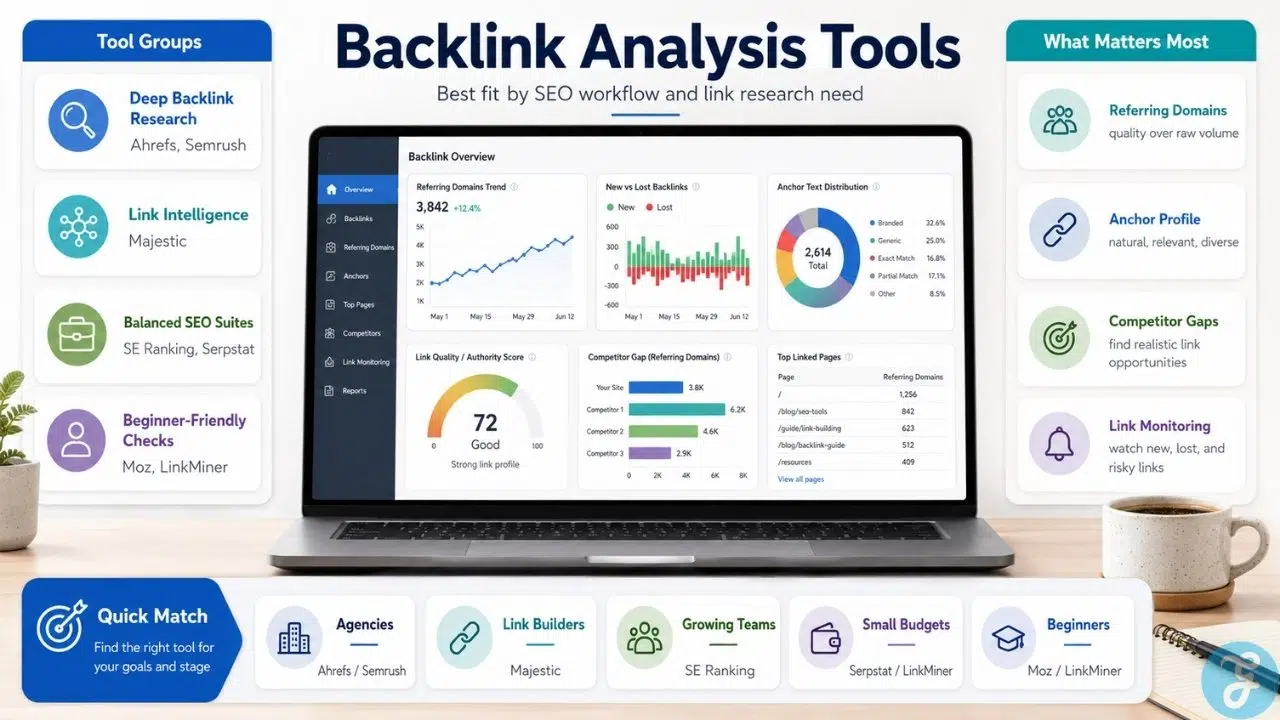
The best backlink tool depends on how serious your link work is. If backlinks are central to your SEO strategy, Ahrefs, Semrush, and Majestic are the strongest options. If you need good link data inside a more affordable SEO toolkit, SE Ranking, Serpstat, and Mangools may be more practical.
Here is a faster way to compare the tools by practical fit instead of just feature lists.
| Rank | Tool | Best For | Main Strength | Biggest Limitation |
| 1 | Ahrefs | SEO professionals and agencies | Deep competitor backlink research | Higher cost for casual users |
| 2 | Semrush Backlink Analytics | Agencies and marketing teams | Backlink data inside a full SEO suite | Can feel complex |
| 3 | Majestic | Link builders and backlink specialists | Trust Flow, Citation Flow, and link intelligence | Less all-in-one SEO functionality |
| 4 | Moz Link Explorer | Beginners and small teams | Familiar authority and spam metrics | Less specialist depth |
| 5 | SE Ranking Backlink Checker | Freelancers and small agencies | Strong value plus monitoring | Less advanced than top backlink platforms |
| 6 | Serpstat Backlink Analysis | Budget SEO teams | Backlinks plus broader SEO tools | Less dominant for deep link research |
| 7 | Mangools LinkMiner | Bloggers and beginners | Simple competitor backlink prospecting | Limited for enterprise audits |
The key difference is not whether these tools can show backlinks. They all can. The real question is whether they help you turn link data into smarter SEO decisions.
Our Top 3 Picks and Why?
A top-three view is useful here because backlink tools vary sharply by user type. The best option for a link-building agency may not be the best choice for a small publisher.
| Pick | Best Match | Why It Stands Out |
| Ahrefs | Best overall backlink research tool | Strong competitor analysis, link profile depth, and SEO workflow support |
| Semrush Backlink Analytics | Best all-in-one SEO suite option | Connects backlinks with audits, keywords, visibility, and reporting |
| Majestic | Best dedicated link intelligence tool | Deep backlink focus with Trust Flow, Citation Flow, and link context |
Ahrefs is the safest pick if backlink research is a major part of your SEO work. Semrush is better if backlinks are one part of a broader marketing workflow. Majestic is the stronger choice if you want a backlink-first platform built around link intelligence.
How to Choose the Right Backlink Analysis Tool for Your SEO Workflow
Choosing backlink software starts with a simple question: what decision do you need the data to support? Some users need competitor link opportunities. Others need link audits, lost link recovery, agency reports, domain research, or basic authority checks.
The Selection Framework
- Start with your link goal: Choose Ahrefs or Majestic for serious link research, Semrush for all-in-one SEO workflows, or Mangools for simple competitor link prospecting.
- Check link quality metrics: Look for authority, trust, spam, anchor text, referring domain quality, link placement, and topical relevance.
- Review monitoring features: If you run outreach or digital PR, you need to know when links are gained, lost, changed, or removed.
- Match tool depth to your budget: Premium tools make sense when backlinks directly affect rankings, revenue, client work, or link-building decisions.
A smart backlink stack may use more than one source. For example, an agency might use Ahrefs for competitor research, Semrush for reporting and audits, and Google Search Console to confirm links Google has discovered for its own verified properties.
The Final Checklist
Before choosing from this list of Best Backlink Analysis Tools, run through these five checks:
- Does the tool show referring domains, backlinks, anchors, new links, lost links, and top linked pages?
- Can it help you judge link quality instead of only link quantity?
- Does it reveal competitor backlink sources you can realistically pursue?
- Can it monitor important backlinks and alert you when they change or disappear?
- Does the price make sense for how often you perform link audits, outreach, or reporting?
If a tool only gives you a giant export and no clear next step, it is not enough. Backlink analysis should help you prioritize action, not just collect rows of URLs.
The Hard Truth About Backlink Data
The uncomfortable truth is that no backlink tool sees the web exactly the way Google sees it. Every platform has its own crawler, database, refresh schedule, and authority metrics. That means backlink counts will differ between Ahrefs, Semrush, Majestic, Moz, SE Ranking, Serpstat, and LinkMiner.
That does not make these tools useless. It means you should use them for patterns, comparisons, and decisions instead of treating every number as divine truth. A tool can help you spot competitor link gaps, lost links, suspicious anchors, and strong referring domains. It cannot guarantee that every listed link helps your rankings.
My practical view is simple: choose one primary backlink platform and use it consistently. Then judge your link strategy by quality, relevance, traffic potential, topical fit, and business value. The future of link analysis will not reward people who chase the biggest backlink count. It will reward teams that understand which links are worth earning and which links are better left alone.
Frequently Asked Questions (FAQs) About Best Backlink Analysis Tools
What are the Best Backlink Analysis Tools for SEO agencies?
Answer: Ahrefs, Semrush, Majestic, and SE Ranking are strong choices for agencies. They offer useful backlink data, competitor research, reporting, monitoring, and broader SEO workflow support.
Are backlink checker tools accurate?
Answer: Backlink checker tools are useful, but they are not identical because each platform crawls and refreshes the web differently. Use them to identify patterns, compare competitors, and guide decisions rather than obsessing over exact link counts.
Which backlink tool is best for beginners?
Answer: Moz Link Explorer and Mangools LinkMiner are more beginner-friendly than many advanced backlink platforms. They provide easier workflows for checking link authority, reviewing competitors, and finding simple link opportunities.
What is the difference between backlink analysis and link building?
Answer: Backlink analysis is the process of studying existing backlinks, competitor links, anchors, referring domains, and link quality. Link building is the active process of earning or acquiring new backlinks through outreach, digital PR, content, partnerships, and other methods.
Do I need paid link analysis software?
Answer: Small sites can start with free backlink checker tools, but paid link analysis software becomes more useful when SEO revenue, outreach campaigns, competitor research, or client reporting depends on backlink data. Paid tools usually offer deeper data, better filters, exports, monitoring, and historical insights.