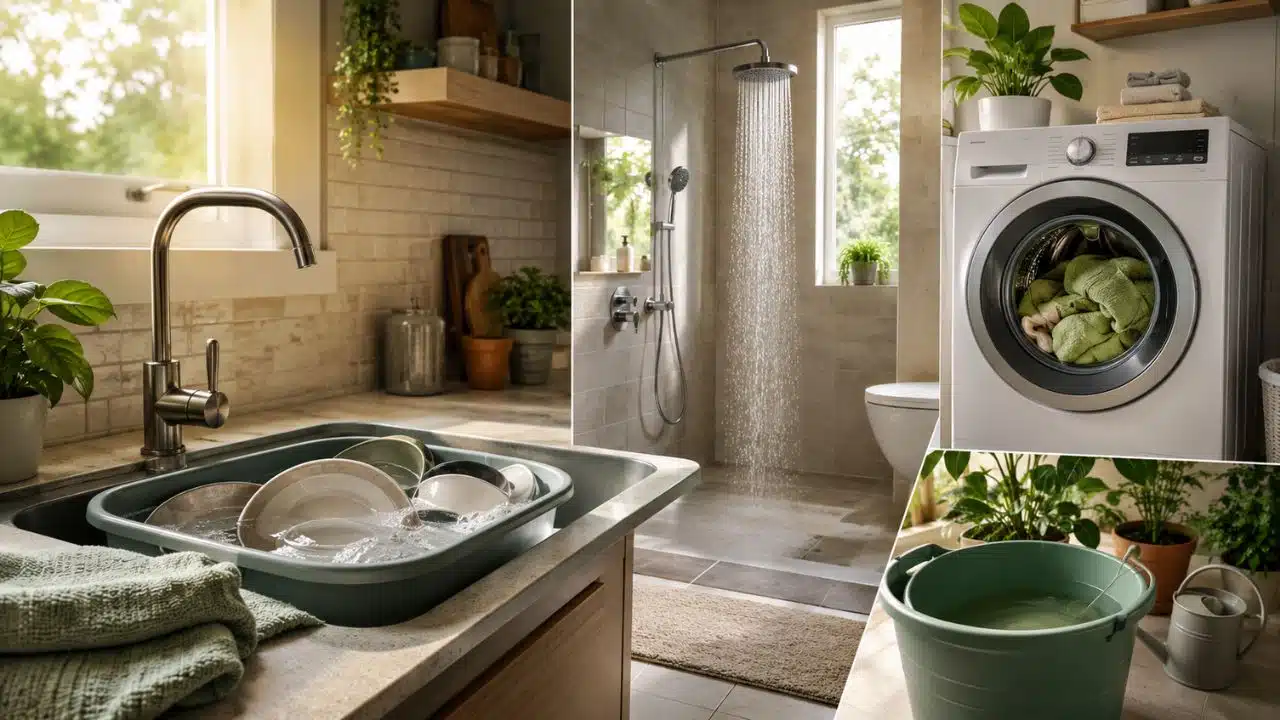
Water waste at home usually hides inside normal routines. A tap runs while vegetables are being sorted. A shower stays on while someone reaches for shampoo. A toilet tank refills quietly after everyone has left the bathroom. A washing machine starts with only a few clothes because waiting feels inconvenient.
None of this looks serious in the moment. That is why it adds up.
The most effective Ways to Reduce Water Wastage in Daily Household Chores are not extreme rules. They are small decisions placed in the right spots: the sink, shower, toilet, washing machine, mop bucket, and garden hose. Some cost nothing. Some involve a cheap part. A few are worth considering only when an old fixture or appliance is already due for replacement.
The point is not to make the home uncomfortable. Use water where it protects health, hygiene, food, and cleanliness. Stop using it where it is only running down the drain.
Check for Leaks Before Changing Everyone’s Habits
A household can shorten showers, reuse vegetable-rinse water, and run fuller laundry loads, yet still waste water through one faulty toilet. That is why leak checks should come first.
The usual suspects are not hard to find:
| Area | Common Problem | First Check |
|---|---|---|
| Toilet tank | Worn flapper, loose chain, fill-valve issue | Listen for refilling after the toilet has already been flushed |
| Bathroom faucet | Drip after shutoff | Check washers, gaskets, handle tightness, or the cartridge |
| Showerhead | Slow drip or leak at the pipe connection | Inspect the washer or O-ring |
| Under-sink pipes | Damp cabinet or mineral stains | Dry the area and check again later |
| Outdoor hose | Leaky connector or broken spray nozzle | Replace the rubber washer or nozzle before replacing the hose |
For toilets, try a simple dye test. Add a few drops of food coloring to the tank, wait about 10 minutes, and do not flush. If color appears in the bowl, water is leaking from the tank into the bowl.
If the home has a water meter, turn off taps and water-using appliances, then check whether the meter moves. In apartments without meter access, listen for refilling sounds, look for damp patches, and watch for sudden bill changes.
This is not the most exciting water-saving advice, but it is usually the most sensible place to start. A leak wastes water whether the household is paying attention or not.
Ways to Reduce Water Wastage in Daily Household Chores Start With Repetition
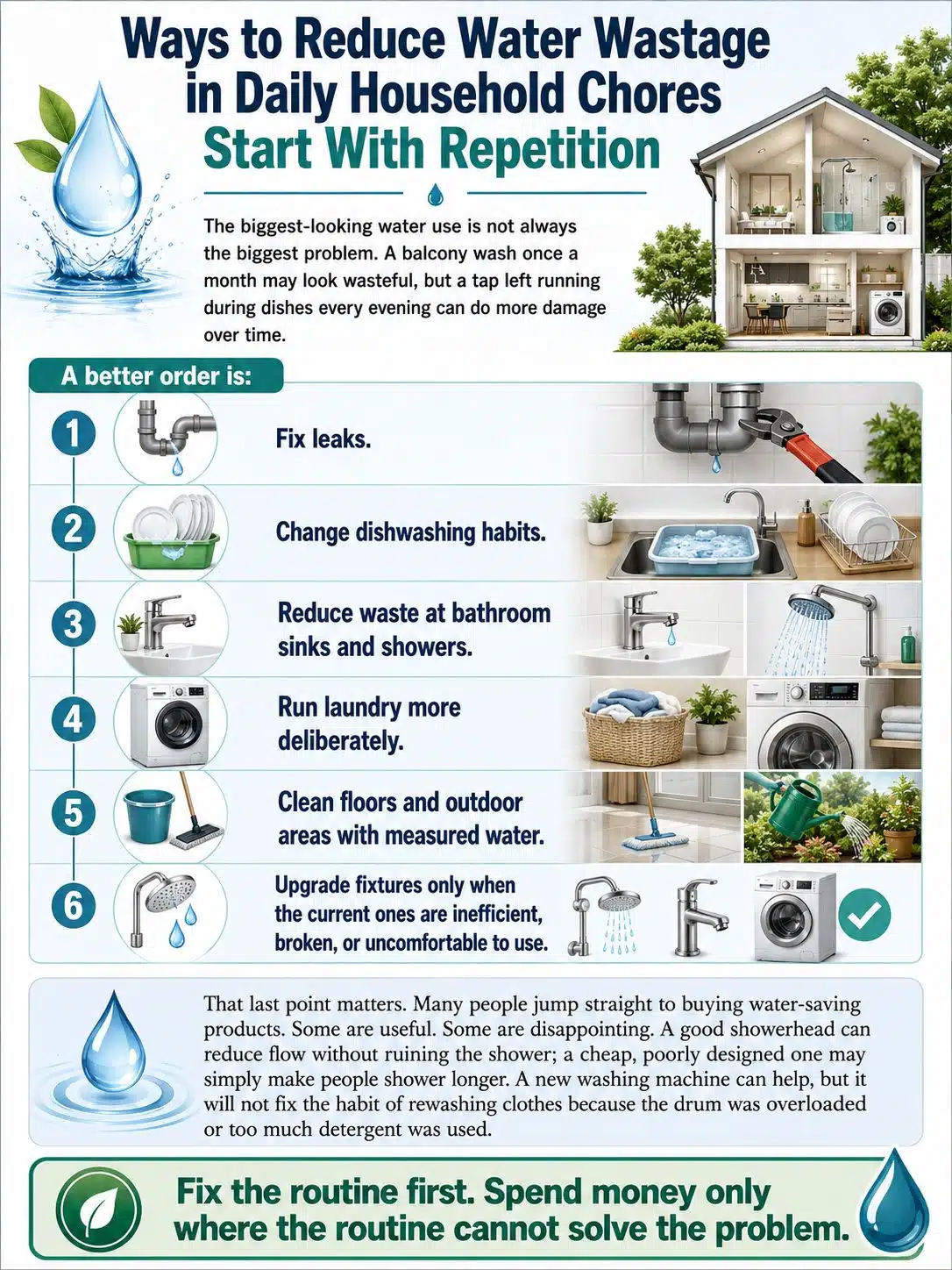
The biggest-looking water use is not always the biggest problem. A balcony wash once a month may look wasteful, but a tap left running during dishes every evening can do more damage over time.
A better order is:
- Fix leaks.
- Change dishwashing habits.
- Reduce waste at bathroom sinks and showers.
- Run laundry more deliberately.
- Clean floors and outdoor areas with measured water.
- Upgrade fixtures only when the current ones are inefficient, broken, or uncomfortable to use.
That last point matters. Many people jump straight to buying “water-saving” products. Some are useful. Some are disappointing. A good showerhead can reduce flow without ruining the shower; a cheap, poorly designed one may simply make people shower longer. A new washing machine can help, but it will not fix the habit of rewashing clothes because the drum was overloaded or too much detergent was used.
Fix the routine first. Spend money only where the routine cannot solve the problem.
Make the Kitchen Tap Work in Batches
Kitchen water waste often happens between actions. The tap is open, but nobody is actively using the water.
Wash vegetables in a bowl instead of under a constant stream. Scrub potatoes, carrots, and leafy greens in standing water first, then give them a short final rinse if needed. If that water has no salt, oil, soap, or spoiled food residue, it can often be used for outdoor plants.
Defrost frozen food in the refrigerator instead of under running water. It takes planning, but it avoids wasting clean tap water and is usually better for food safety and texture. Keeping a covered jug of drinking water in the fridge also helps in homes where people let the tap run until the water feels cool.
Cooking needs the same kind of attention. Use the amount of water the food actually needs. A small portion of vegetables, a few eggs, or a single serving of pasta does not require a large pot filled to the top. If plain vegetable-boiling water is left over, let it cool and use it for plants if it has no salt, oil, or seasoning.
The kitchen rule is plain: turn water on when it is doing a job. Turn it off when it is waiting for you.
Dishwashing: Scrape More, Rinse Less
Dishwashing is one of the easiest daily chores to improve because the waste is usually visible. The tap runs. Plates are rinsed before being washed. Pots are scrubbed while water flows beside them.
For homes with a modern dishwasher, scraping plates is usually better than pre-rinsing them. Remove large food pieces, load the machine properly, and run it when it is reasonably full. Modern dishwashers and detergents are designed to clean normal food residue, so rinsing every plate first often wastes water and energy.
There are exceptions. Burnt pans, dried rice, sticky oatmeal, and food that has hardened overnight may need soaking or a quick pre-clean. That is different from rinsing every spoon and plate by habit.
For handwashing, avoid washing each item separately under a running tap. Use a basin, a large bowl, or one side of the sink with soapy water. Wash cleaner items first: glasses, cups, and lightly used plates. Leave greasy pans for the end. Rinse with short bursts of water or a second basin.
Do not overload the dishwasher to prove a point. If spray arms are blocked and dishes come out dirty, the second cycle cancels the saving. A good load is full, not jammed.
Laundry: Fewer Loads, Better Loads
Laundry waste usually comes from three habits: washing too often, running small loads, and using too much detergent.
Wait for a full load when practical, but do not stuff the drum. Clothes need room to move. An overloaded washer can leave detergent residue, trap dirt, and make clothes smell musty. That leads to rewashing, which wastes both water and time.
Sort by soil level, not only by color. Lightly worn shirts do not need the same cycle as muddy trousers, towels, baby clothes, or sweaty sportswear. Quick or eco settings can be useful for lightly soiled items, but heavily soiled laundry still needs a proper wash.
Measure detergent instead of pouring by habit. Too much detergent can create excess suds and residue, especially in high-efficiency washers that use less water. If clothes feel stiff, smell odd, or need an extra rinse, detergent amount may be part of the problem.
Before replacing a washer, improve how the current one is used. If the machine is failing or already due for replacement, compare certified efficient models available in your country. ENERGY STAR is useful in the U.S.; other regions use different appliance labels and testing systems. The principle is the same: check verified efficiency information, not only marketing language on the box.
Bathroom Water Saving Should Not Feel Punishing
Bathroom advice often becomes unrealistic. People still need to shower properly, wash hands, shave, bathe children, and clean surfaces safely. Conservation should remove waste, not basic hygiene.
Start with the simple habits. Turn off the tap while brushing teeth. Turn it off while shaving between rinses. Do the same while applying soap or shampoo in the shower.
If hot water takes time to arrive, collect the first cold water in a bucket. Use it later for flushing, mopping, or watering suitable plants. This is one of the least annoying water-saving habits because it does not change the shower itself.
Showerheads need judgment. A well-designed efficient showerhead can reduce flow while keeping decent coverage and pressure. A bad one feels weak, and people either remove it or shower longer. If a local water-efficiency label exists, use that as a guide. In the U.S., WaterSense-labeled showerheads must meet flow and performance criteria; other countries may have different labels.
Bathroom faucet aerators are also worth checking. They attach to many faucet tips and reduce flow while keeping the stream usable for handwashing. Renters should keep the original part and check lease rules before changing fixtures.
Small note: do not make children, older adults, or anyone with health needs struggle with water-saving routines that make hygiene harder. The home still has to work for the people living in it.
Toilets Are Easy to Ignore Until They Waste Water
Toilets do not look like a daily chore, but they are used constantly. A quiet toilet leak can waste water all day without creating much mess.
Watch for these signs:
- The tank refills when nobody has flushed.
- The handle needs jiggling.
- Water ripples slightly in the bowl.
- The flush is weak or inconsistent.
- There is a faint running sound after the tank should be full.
A worn flapper is a common cause, but it is not the only one. The chain may be too tight or too loose. The fill valve may need adjustment. The tank water level may be set too high.
If replacing a flapper, match the part to the toilet. Take a photo of the inside of the tank or check the model before buying. If the setup is unfamiliar, a plumber or building maintenance worker can usually handle it quickly.
When an old toilet is already due for replacement, an efficient model may make sense. Do not choose only by the lowest flush number. Check performance too. A toilet that clogs often or needs double flushing is not efficient in real life.
And stop using the toilet as a trash bin. Flushing wipes, cotton pads, hair, tissues, insects, or small trash wastes water and may cause plumbing trouble. Even products marketed as flushable can be risky in some systems.
Clean Floors With Less Water and Less Mess
Many homes waste water during cleaning because water is used as a broom. That is backwards.
Sweep first. Remove dust, hair, crumbs, leaves, and grit while they are dry. Then mop with a measured bucket. For bathrooms, wet the surface, turn the water off while scrubbing, and rinse only where needed.
Balconies, driveways, and outdoor steps often get the hose treatment because it feels fast. A broom is usually better for dust and leaves. Spot-clean stains. Use water for the final rinse only if the surface actually needs it.
Apartment residents should be especially careful. Too much water on balconies can run into lower floors, stain walls, or overload drains. Water-saving cleaning is not only about the bill. It is also about keeping the building easier to live in.
Reuse Water, But Do Not Treat All Used Water as Safe
Water reuse sounds simple until the water contains detergent, bleach, grease, salt, or food residue.
Some reuse is low-risk. Collected shower warm-up water can usually be used for flushing, mopping, or watering suitable plants. Water from rinsing vegetables may be fine for outdoor plants if it is free of soap, oil, salt, and spoiled food matter. Leftover drinking water from glasses can go into a plant pot instead of the sink.
Be cautious with greywater from laundry, dishwashing, and bathroom cleaning. It may contain detergents, disinfectants, oils, dirt, or residues that can harm plants, attract pests, create odor, or raise hygiene concerns. Local rules may also restrict greywater reuse, especially when it involves plumbing changes or irrigation systems.
Do not store used water for long in open buckets, especially in warm climates. Stagnant water can smell, grow bacteria, or attract mosquitoes. Reuse should stay simple, clean, and short-term unless the home has a properly designed system.
Outdoor Watering: Aim at Roots, Not Pavement
Outdoor water use varies widely. A renter with five balcony pots has a different problem from a homeowner with a lawn in a dry region. The waste patterns are still familiar: watering at the hottest time, spraying paths, watering too fast, and ignoring runoff.
Water early in the morning when possible. Evaporation is usually lower, and plants get moisture before the hottest part of the day. Evening can work when mornings are not realistic, but avoid leaving foliage wet overnight if fungal disease is a common problem in your climate.
Water the soil around the roots, not the leaves, wall, path, or driveway. If water pools or runs off, stop and let it soak in. Shorter watering sessions with breaks can work better than one long session on compacted soil or slopes.
Mulch helps soil hold moisture. Larger pots dry out more slowly than tiny ones. Grouping plants with similar water needs prevents one thirsty plant from forcing overwatering of everything nearby.
A hose nozzle with a shutoff trigger is a small upgrade that solves a real problem: water running while you move between plants. For garden beds, drip irrigation or soaker hoses may be more efficient than spraying from above. For hard surfaces, sweep first and rinse only if needed.
What Not to Cut
There is a line between saving water and making the home less healthy. Do not cross it.
Do not reduce handwashing. Do not skip rinsing surfaces that have been cleaned with chemicals. Do not reuse dirty water in ways that could spread germs. Do not modify plumbing or appliance settings in ways that go against manufacturer instructions. Do not block toilet mechanisms to force a smaller flush.
A household can save water and stay clean. Those two goals should work together.
A Practical One-Week Reset
A short reset is more useful than a vague promise to “use less water.”
Day 1: Check leaks. Listen to toilets, inspect faucets, and look under sinks.
Day 2: Change dishwashing. Scrape plates, stop unnecessary rinsing, and use full dishwasher loads or a basin for handwashing.
Day 3: Fix kitchen prep. Wash vegetables in a bowl, defrost food in the fridge, and keep cold drinking water ready.
Day 4: Improve bathroom habits. Turn off water while soaping, brushing, or shaving. Check whether aerators or a better showerhead make sense.
Day 5: Reset laundry. Wash full but not overloaded loads. Measure detergent.
Day 6: Clean differently. Sweep before mopping. Use a bucket instead of running water.
Day 7: Review outdoor use. Water early, stop runoff, and sweep hard surfaces before rinsing.
By the end of the week, the household should know where the biggest waste is happening. That is more useful than collecting dozens of tips and following none of them.
Final Thoughts
The most effective Ways to Reduce Water Wastage in Daily Household Chores are practical, repeatable, and easy to notice once you start looking. Fix leaks first. Stop running taps between tasks. Wash dishes and clothes in smarter loads. Choose efficient fixtures when they genuinely improve the home. Reuse water carefully, not casually.
A water-wise home does not need to feel strict. It should feel better managed. Before turning on the tap, pause for one second and ask whether that water is about to do real work. If not, it can wait.
FAQs on Ways to Reduce Water Wastage in Daily Household Chores
Is a dishwasher always better than handwashing for saving water?
Not always. A modern efficient dishwasher used properly can be very water-efficient, especially when dishes are scraped instead of pre-rinsed and the machine is run with a full, well-loaded cycle. Handwashing can still be efficient if you use a basin and avoid leaving the tap open.
What is the cheapest water-saving upgrade for renters?
A faucet aerator is often the easiest low-cost upgrade if the faucet supports one. A better showerhead may also help, but renters should keep the original parts and check lease rules before making changes.
Can I use laundry water for plants?
Be careful. Laundry water may contain detergent, bleach, fabric softener, dirt, or other residues that can harm plants or create hygiene problems. Simple reuse, such as collecting clean shower warm-up water, is usually safer than reusing laundry water without checking local guidance.