


The integration of artificial intelligence into the classroom is no longer a distant theoretical concept; it is an active, daily reality for millions of students. However, simply handing a student a generic, open-access chatbot often leads to academic dishonesty and shallow learning. For institutions serious about improving student outcomes, identifying the right AI Tutoring Assistant Solutions means partnering with specialized developers who understand pedagogy. By bypassing massive tech conglomerates and focusing on independent American SMEs, educational organizations gain access to “guardrailed” AI that employs the Socratic method, prioritizes data privacy, and genuinely coaches students rather than just handing them the answers.
Establishing a reliable digital foundation requires a strict evaluation process to ensure these intelligent systems meet rigorous academic and technical standards.
How We Selected Our 15 Best AI Tutoring Assistant Solutions
Identifying the most effective artificial intelligence platforms required strict filtering to separate genuine educational innovators from companies simply reselling standard, unmoderated language models. We focused entirely on independent American studios that adapt rapidly to the changing pedagogical demands of modern school districts and universities.
-
Geographic Baseline: Operated and headquartered strictly within the United States as independent entities.
-
Independence: Verified as independent SMEs or specialized non-profits to guarantee agile customer support and transparent data policies.
-
Pedagogical Architecture: Proven inclusion of specialized teaching frameworks, such as mastery-based learning, Socratic questioning, and step-by-step error correction.
-
Data Security: Complete adherence to FERPA and COPPA regulations, ensuring student conversational data is heavily encrypted and never utilized to train external commercial models.
Understanding these core requirements helps identify exactly which organizations are equipped to handle the rigorous daily demands of personalized learning.
Evaluating the Top AI Tutoring Assistant Solutions in USA
The following independent studios and specialized organizations are actively reshaping how academic institutions deliver personalized, one-on-one instruction. Here is our curated breakdown of the standout developers driving the artificial pedagogy movement today.
Starting with platforms that provide comprehensive, multi-subject support allows institutions to deploy a single solution across multiple departments.
1. StudyFetch
Operating out of Los Angeles, California, StudyFetch provides a highly versatile AI learning platform centered around its digital tutor, Spark.E. The platform specializes in multimodal ingestion; students can upload PDFs, slide decks, or even raw lecture audio, and the system automatically generates highly structured notes, interactive flashcards, and practice tests. The AI tutor then uses this specific course material to answer student questions, ensuring the assistance remains strictly tethered to the actual syllabus.
Best for:
-
University students and high school seniors needing a comprehensive, multimodal study tool that adapts entirely to their specific uploaded materials.
Why We Chose It:
-
It completely eliminates the “hallucination” risk of generic AI by strictly referencing the documents and lecture notes uploaded by the user.
-
The platform features a live lecture mode that actively listens to the professor and builds a study guide in real-time.
Things to consider:
-
The effectiveness of the AI tutor is entirely dependent on the quality and comprehensiveness of the materials the student uploads.
The 2026 Edge:
-
Advanced personalized scheduling algorithms that automatically break down a massive syllabus into daily, AI-monitored study milestones.
When guiding younger learners, conversational AI must be programmed to act as a coach rather than an answer key.
2. Khan Academy
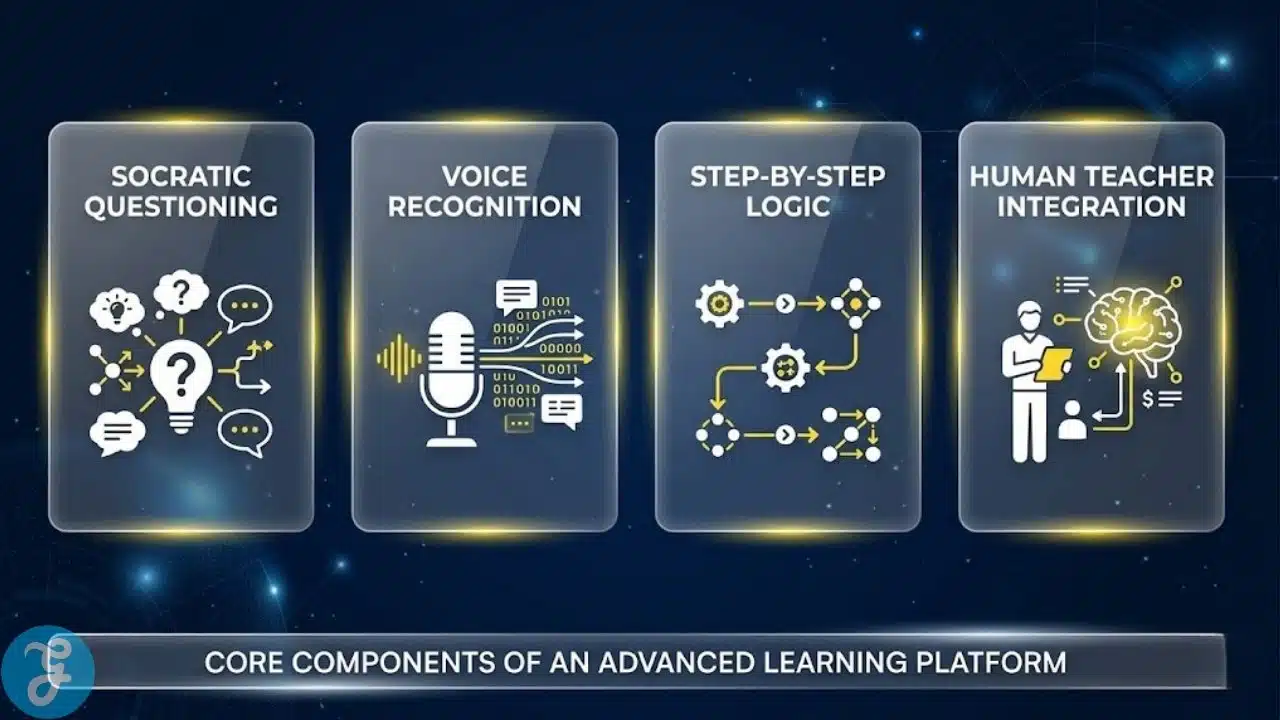
Headquartered in Mountain View, California, Khan Academy is an educational non-profit SME that developed Khanmigo, one of the most rigorously tested AI tutoring assistants in the world. Instead of simply providing the answer to a math problem or writing an essay for the student, Khanmigo utilizes strict Socratic questioning. It forces the student to explain their reasoning, gently guiding them toward the correct conclusion through strategic hints.
Best for:
-
K-12 school districts seeking a heavily guardrailed, deeply pedagogical AI tutor that integrates seamlessly with a massive library of existing lessons.
Why We Chose It:
-
It is universally recognized as the gold standard for “ethical AI” in the classroom, specifically programmed to prevent cheating.
-
The platform provides teachers with detailed transcripts of the student’s conversation with the AI, highlighting specific areas where the student struggled.
Things to consider:
-
Students looking for a quick shortcut will find the platform frustrating, as it stubbornly refuses to do the work for them.
The 2026 Edge:
-
Integrated co-teaching features that allow the AI to silently suggest lesson plan adjustments to the human teacher based on real-time classroom data.
Early childhood literacy requires specialized voice-recognition models tuned specifically to developing vocal cords.
3. Amira Learning
Based in San Francisco, California, Amira Learning developed the first intelligent reading assistant that actually listens to young students read out loud. Using advanced speech recognition trained specifically on children’s voices, the AI tracks reading fluency in real-time. When a child struggles with a word, the digital tutor intervenes with evidence-based micro-interventions, such as providing a rhyming clue or pronouncing the specific phoneme.
Best for:
-
Elementary schools and early literacy programs needing scalable, one-on-one reading interventions to improve fluency and combat dyslexia.
Why We Chose It:
-
The speech recognition engine vastly outperforms generic voice assistants by accurately understanding young children, various regional accents, and speech impediments.
-
It automatically administers dyslexia risk screenings while the child reads, providing educators with critical early-warning data.
Things to consider:
-
The platform requires a relatively quiet classroom environment and functional headsets for the voice recognition to operate flawlessly.
The 2026 Edge:
-
Bilingual tutoring modes that fluidly switch between English and Spanish to support English Language Learners during the same reading session.
Teaching conversational language skills to children requires highly engaging, character-driven interfaces.
4. Buddy.ai
Operating from San Francisco, California, Buddy.ai utilizes a fully interactive, voice-based digital avatar named “Buddy the Robot” to teach conversational English to children. The app gamifies the learning process, allowing kids to practice speaking, vocabulary, and pronunciation through interactive stories and games. It operates as a tireless conversational partner for students learning English as a foreign language.
Best for:
-
Early childhood ESL (English as a Second Language) programs and parents seeking an affordable, interactive conversational partner for their children.
Why We Chose It:
-
It completely removes the intimidation factor of practicing a new language by utilizing a friendly, non-judgmental cartoon robot.
-
The AI model is heavily optimized for child speech, allowing it to accurately grade pronunciation and vocabulary usage in real-time.
Things to consider:
-
The platform is hyper-focused on early childhood language acquisition and is not suitable for middle or high school academic tutoring.
The 2026 Edge:
-
Expanded subject matter capabilities that utilize the same voice-avatar framework to teach foundational early-childhood mathematics.
Complex STEM subjects require platforms capable of evaluating logic and mathematical processes step-by-step.
5. Querium
Located in Austin, Texas, Querium provides an AI tutoring solution powered by its proprietary StepWise technology. Designed specifically for complex STEM subjects, the platform allows students to write out their math or science problems step-by-step. The AI evaluates every single line of the student’s work, identifying exactly where the logic broke down and offering immediate, targeted feedback.
Best for:
-
High school and university mathematics departments needing an AI tutor that evaluates the process, not just the final answer.
Why We Chose It:
-
It perfectly replicates the experience of a master teacher looking over a student’s shoulder, correcting the exact mathematical misstep in real-time.
-
The system significantly reduces the frustration associated with traditional digital homework that marks an entire problem wrong due to a minor arithmetic error.
Things to consider:
-
The interface focuses heavily on functional mathematical input and lacks the gamified social features of younger educational apps.
The 2026 Edge:
-
Enhanced digital scratchpads that allow students to physically handwrite their equations on a tablet, with the AI instantly reading and evaluating the ink.
Blending the efficiency of artificial intelligence with the empathy of a human educator yields the highest student outcomes.
6. Thinkster Math
Headquartered in Kendall Park, New Jersey, Thinkster Math combines a patented AI coaching system with dedicated human tutors. The platform uses AI to map a student’s specific knowledge gaps down to the granular concept level, creating a highly visible “Mastery Map.” The AI handles the daily practice and instant feedback, while a human tutor uses the AI’s data to lead highly focused, weekly intervention sessions.
Best for:
-
Parents and independent tutoring centers looking for a blended approach that maximizes the strengths of both AI and human instructors.
Why We Chose It:
-
The “explainable AI” ensures that parents and human tutors understand exactly why the system is recommending a specific practice module.
-
It completely eliminates the wasted time of generic tutoring by ensuring the human instructor only focuses on the exact concepts the AI flagged as deficient.
Things to consider:
-
The inclusion of a dedicated human tutor makes this solution more expensive than a purely automated software subscription.
The 2026 Edge:
-
Predictive confidence scoring that tracks how quickly and decisively a student answers, flagging students who guess correctly but lack true mastery.
Fostering deep conceptual understanding in mathematics requires digital teachers that can guide collaborative problem-solving.
7. Synthesis
Based in Los Angeles, California, Synthesis operates an advanced mathematical platform called Synthesis Tutor. This app utilizes an interactive digital teacher that pushes students to solve complex, multi-step mathematical puzzles rather than simple rote memorization. The AI acts as a facilitator, challenging the student’s assumptions and encouraging them to approach problems from entirely different angles.
Best for:
-
Gifted and talented programs aiming to develop elite critical thinking and advanced problem-solving skills in young mathematicians.
Why We Chose It:
-
It moves completely beyond standard common-core worksheets, focusing on the mental models required for advanced physics and engineering.
-
The digital tutor adapts its tone and complexity based on the student’s frustration levels, ensuring they remain in the optimal zone of proximal development.
Things to consider:
-
The heavy focus on abstract problem-solving can be overwhelming for students who are currently struggling with basic foundational arithmetic.
The 2026 Edge:
-
Advanced interactive physics simulations seamlessly integrated into the math curriculum, allowing the AI tutor to demonstrate real-world applications of abstract formulas.
Turning raw district data into actionable classroom interventions requires an integrated intelligence platform.
8. Edia
Operating out of San Francisco, California, Edia provides an AI math tutor that connects directly to a massive district intelligence platform. While the student-facing AI provides personalized, adaptive mathematical interventions, the backend aggregates this data alongside attendance and behavioral records. This allows the AI to alert counselors when a student’s sudden drop in math performance correlates with rising absenteeism.
Best for:
-
Large public school districts that need to tie their AI tutoring initiatives directly to chronic absenteeism and holistic student wellness metrics.
Why We Chose It:
-
It breaks down the silos between academic tutoring and administrative intervention, treating the student as a whole person.
-
The platform has a proven, data-backed track record of simultaneously improving state math scores and increasing daily attendance.
Things to consider:
-
To achieve maximum effectiveness, the platform requires deep integration with the district’s existing Student Information System (SIS).
The 2026 Edge:
-
Automated multilingual family outreach that uses AI to text parents positive updates regarding their child’s specific tutoring milestones.
Improving writing skills requires an AI capable of evaluating tone, structure, and intellectual depth.
9. Packback
Located in Chicago, Illinois, Packback utilizes instructional AI to coach students on critical thinking and academic writing. Initially famous for its AI-moderated discussion boards, the platform now provides a digital writing assistant that gives students real-time, line-by-line feedback on their essays before they submit them to the professor. It coaches students on utilizing credible sources and maintaining an academic voice.
Best for:
-
University humanities departments and high school English classes needing a tireless digital writing coach.
Why We Chose It:
-
It fundamentally changes the grading dynamic; instead of professors spending hours correcting grammar, they receive polished essays and can focus on grading the actual ideas.
-
The AI strictly coaches the student on how to improve their own writing, rather than generating the text for them.
Things to consider:
-
The AI focuses heavily on argumentation and structural mechanics, meaning it cannot fact-check highly obscure historical claims.
The 2026 Edge:
-
Integrated source-quality algorithms that automatically warn students if they are citing a highly biased or academically unverified website in their drafts.
Grading open-ended questions at scale requires advanced natural language processing.
10. Cognii
Headquartered in San Francisco, California, Cognii provides a conversational AI tutoring assistant designed to evaluate short-essay answers and open-ended responses. Instead of relying on multiple-choice tests, the AI engages the student in a dialogue, prompting them to elaborate or clarify their written answers until they demonstrate complete conceptual mastery.
Best for:
-
Corporate training programs and higher education institutions wanting to scale qualitative, short-answer assessments securely.
Why We Chose It:
-
It forces active recall by requiring students to construct their own answers, which drastically improves long-term knowledge retention.
-
The platform provides highly accurate, automated grading for complex written responses, saving instructors thousands of hours per semester.
Things to consider:
-
Building the initial rubrics and acceptable answer parameters requires upfront collaboration between the faculty and the software.
The 2026 Edge:
-
Context-aware conversational branching that adjusts the difficulty of follow-up questions based on the vocabulary the student uses in their initial response.
Video-based instruction becomes infinitely more powerful when the video can respond to the student.
11. Kyron Learning
Based in San Francisco, California, Kyron Learning provides a unique platform centered on interactive video tutoring. The software utilizes AI to guide a conversation between a pre-recorded human instructor and the learner. The AI analyzes the student’s spoken or typed responses and seamlessly plays the exact video clip of the instructor addressing that specific misconception, creating the illusion of a live, one-on-one video call.
Best for:
-
Online universities and asynchronous learning environments that want to maintain a high level of human-led engagement.
Why We Chose It:
-
It brilliantly bridges the gap between the scalability of pre-recorded video and the personalization of live, interactive tutoring.
-
The platform drastically reduces the isolation of asynchronous digital learning by maintaining consistent “eye contact” and conversational flow with a human face.
Things to consider:
-
Creating a course requires instructors to record numerous video variations addressing every possible student misconception.
The 2026 Edge:
-
Automated course generation tools that can instantly synthesize a complete interactive video lesson from a standard text document.
Generating high-quality instructional content from scratch requires specialized generative platforms.
12. Prof Jim
Operating out of Sunnyvale, California, Prof Jim is a generative AI platform that transforms standard textbooks and static PDFs into highly interactive, video-based tutoring lessons. The software automatically generates digital avatars, dynamic presentation slides, and embedded assessments, creating a complete, personalized digital tutor from existing raw materials.
Best for:
-
Textbook publishers and university instructional designers needing to rapidly convert static materials into interactive, video-driven courses.
Why We Chose It:
-
It completely removes the massive production costs associated with filming, editing, and updating traditional video lectures.
-
The platform automatically injects formative assessments into the generated videos, ensuring students are actively engaging with the AI avatars.
Things to consider:
-
While the AI avatars are highly advanced, they still exhibit slight visual artifacts that distinguish them from a real human instructor.
The 2026 Edge:
-
Real-time translation avatars that can deliver the exact same interactive video lesson in fifty different languages with perfect lip-syncing.
Navigating the complex bureaucracy of higher education requires specialized behavioral intelligence.
13. Mainstay
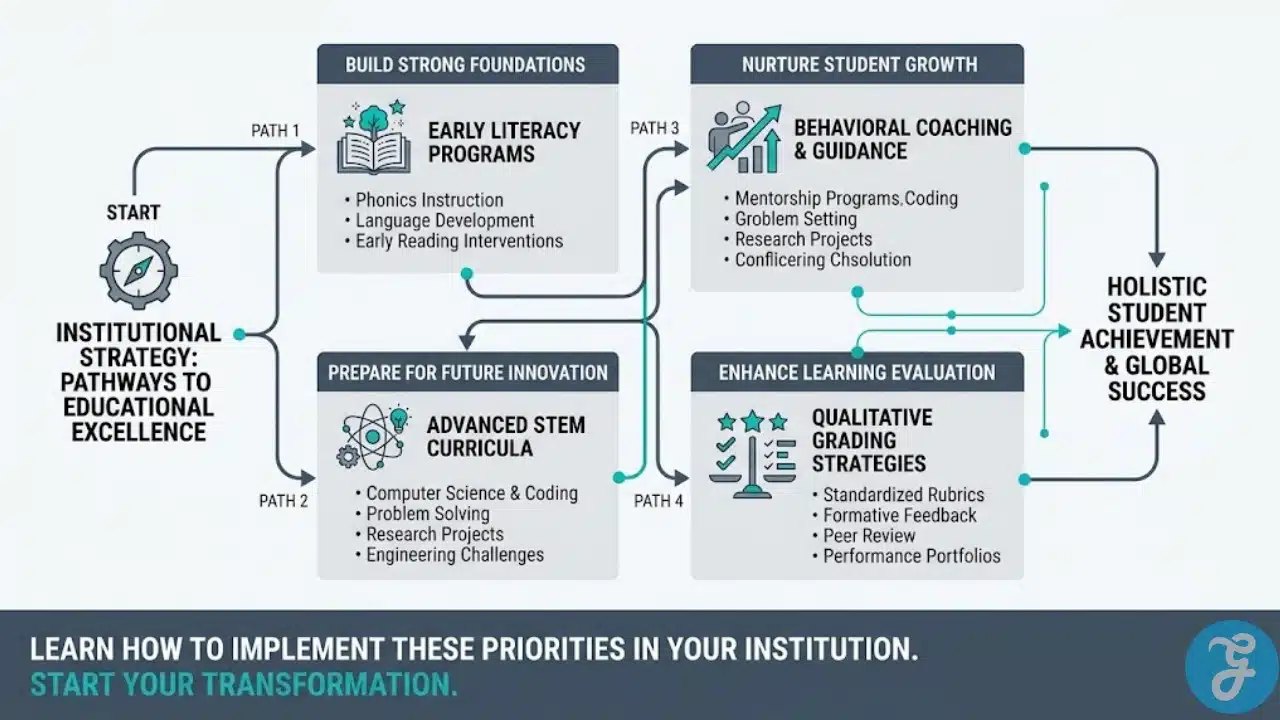
Located in Boston, Massachusetts, Mainstay (formerly AdmitHub) provides AI chatbots powered by behavioral intelligence to support college students outside the classroom. While not a traditional academic tutor, this AI assistant coaches students through the complex logistics of financial aid, course registration, and campus life, functioning as an essential digital advisor for student success and retention.
Best for:
-
University enrollment management and student success departments seeking to drastically reduce summer melt and college dropout rates.
Why We Chose It:
-
The AI uses evidence-based behavioral nudges to gently push students toward completing critical administrative tasks on time.
-
It provides massive universities with the ability to offer 24/7, personalized advising support to tens of thousands of students simultaneously.
Things to consider:
-
It is an administrative and behavioral coaching tool, not a subject-matter academic tutor for passing midterm exams.
The 2026 Edge:
-
Advanced sentiment analysis that scans student text messages for signs of acute mental distress, instantly routing them to live human crisis counselors.
Deploying high-impact tutoring to underserved districts requires platforms that amplify human labor.
14. Saga Education
Headquartered in Newton, Massachusetts, Saga Education is a specialized non-profit SME that focuses on high-impact tutoring for underserved school districts. They utilize their proprietary AI platform, Saga Coach, to train, monitor, and assist human tutors. The AI acts as a “tutor for the tutor,” analyzing live sessions and providing real-time feedback to ensure the human instructor is adhering to evidence-based pedagogical practices.
Best for:
-
Public school districts aiming to implement massive, high-impact tutoring programs without sacrificing instructional quality control.
Why We Chose It:
-
It perfectly solves the quality assurance problem of scaling human tutoring programs across hundreds of different schools.
-
The organization has arguably the strongest, most rigorously peer-reviewed data proving their model significantly accelerates student math outcomes.
Things to consider:
-
The platform is built strictly to facilitate their specific high-impact tutoring model rather than functioning as a standalone, direct-to-student app.
The 2026 Edge:
-
Live audio analysis that measures the “talk-time ratio” during a session, alerting the human tutor if they are lecturing too much and not letting the student speak.
Empowering the physical classroom requires AI assistants that act as a digital co-teacher.
15. Merlyn Mind
Based in New York City, Merlyn Mind provides an AI assistant built specifically for the physical classroom. Operated via a secure remote control or voice commands, the AI (“Merlyn”) allows teachers to untether from their desks. Teachers can verbally instruct the AI to launch presentations, start timers, or pull up specific educational resources on the interactive whiteboard while they walk around the room tutoring individual students.
Best for:
-
K-12 educators who want to eliminate the administrative friction of managing classroom technology during live instruction.
Why We Chose It:
-
It is one of the only AI solutions explicitly designed to improve the physical, in-person teaching experience rather than just the digital one.
-
The platform utilizes a highly secure, education-specific large language model that actively filters out inappropriate content.
Things to consider:
-
It requires the installation of specific hardware hubs and microphones in the physical classroom to operate efficiently.
The 2026 Edge:
-
Ambient classroom listening that automatically generates a summary of the teacher’s physical lecture and uploads it to the student portal.
Reviewing these varied digital environments side-by-side helps administrators clarify their institutional priorities.
An Overview Of AI Tutoring Assistant Solutions
Examining these distinct providers collectively provides a clear perspective on the digital infrastructure available to modern educators. The following data points highlight the primary functional differences between these independent providers.
Overview Comparison Table
Comparing these specific metrics highlights the structural differences between conversational coaches and grading algorithms.
| SME Developer | Headquarter Location | Core Focus Area | Primary Function |
| StudyFetch | Los Angeles, CA | Multimodal Ingestion | Document-Tethered AI Tutor |
| Khan Academy | Mountain View, CA | Socratic Pedagogy | Guardrailed AI Coaching |
| Amira Learning | San Francisco, CA | Early Literacy | Voice-Recognition Reading |
| Buddy.ai | San Francisco, CA | Language Acquisition | Interactive Voice Avatar |
| Querium | Austin, TX | STEM Evaluation | Step-by-Step Math Logic |
| Thinkster Math | Kendall Park, NJ | Blended Coaching | AI Gap Analysis + Human |
| Synthesis | Los Angeles, CA | Advanced Problem Solving | Interactive Digital Teacher |
| Edia | San Francisco, CA | District Analytics | Math Tutor & Absenteeism |
| Packback | Chicago, IL | Academic Writing | Real-Time Composition Coach |
| Cognii | San Francisco, CA | Qualitative Grading | Short-Essay Conversational AI |
| Kyron Learning | San Francisco, CA | Interactive Video | AI-Guided Video Tutoring |
| Prof Jim | Sunnyvale, CA | Content Generation | AI Video Avatar Creation |
| Mainstay | Boston, MA | Institutional Success | Behavioral Student Advising |
| Saga Education | Newton, MA | High-Impact Tutoring | AI Coaching for Human Tutors |
| Merlyn Mind | New York, NY | Classroom Orchestration | Voice-Activated Co-Teacher |
Evaluating these diverse administrative tools naturally leads to our primary recommendations for specific institutional use cases.
Our Top 3 Picks and Why?
Narrowing down the field highlights three developers making exceptional contributions to the artificial intelligence landscape. Khan Academy remains the absolute gold standard for safety and pedagogy, utilizing its Khanmigo platform to ensure students are guided to the answer rather than simply handed the solution. Amira Learning provides an unparalleled tool for early childhood development, utilizing flawless voice recognition to deliver life-changing reading interventions at scale. Finally, Querium stands out in the highly complex STEM sector by doing the impossible: accurately evaluating a student’s step-by-step mathematical logic to correct the exact point of failure.
Selecting the right digital infrastructure requires balancing the technical capabilities of the software with the actual needs of the teaching staff.
How to Choose the Right AI Tutoring Assistant Solutions by Yourself?
Implementing a new artificial intelligence environment successfully means finding a platform that aligns with your specific pedagogical philosophy and privacy constraints.
-
Verify the AI Guardrails. Ensure the platform explicitly utilizes the Socratic method and cannot be easily “jailbroken” by students looking for a quick answer to their homework.
-
Check the Training Data Policy. Require the developer to provide a legally binding agreement stating that your students’ conversational data will never be used to train their commercial large language models.
-
Evaluate the Modality. Determine if your students need a text-based chatbot, a voice-activated avatar for reading practice, or a mathematical scratchpad that evaluates handwritten logic.
-
Analyze Faculty Dashboards. Confirm that the software provides human teachers with actionable alerts when a student becomes frustrated or consistently fails a specific learning module.
Applying this framework directly to your specific campus needs allows you to match the right developer to your university.
The Final Checklist
Running through this quick verification process guarantees you are adopting a secure, scalable platform.
-
Verify the developer complies entirely with federal regulations regarding student privacy, specifically COPPA for users under thirteen.
-
Ensure the platform allows administrators to review the raw transcripts of student-AI conversations if an academic integrity issue arises.
-
Test the platform’s ability to handle highly specific local curriculum by uploading a custom document and checking the AI’s response accuracy.
-
Confirm the developer provides dedicated onboarding training to help human teachers integrate the AI into their existing daily workflows.
-
Check that the software includes built-in bias mitigation protocols to ensure the AI interacts equitably with students from all cultural backgrounds.
Implementing these systems successfully requires a deep understanding of what artificial intelligence actually represents in education.
The Future of Artificial Pedagogy
The sudden explosion of generative software has created a false belief that artificial intelligence will eventually replace the human educator. The uncomfortable truth is that treating an AI Tutoring Assistant Solutions platform as a replacement for human empathy is a fundamentally flawed strategy. As districts race to cut costs by automating instruction, they risk isolating students in a sterile, algorithmic loop.
The future of educational intelligence does not rely on building more autonomous chatbots to eliminate the teacher. It relies on utilizing these tireles digital coaches to eliminate the administrative friction of grading and endless remediation, thereby freeing up the human educator to build genuine, trusting relationships with their students. True digital learning happens when institutions stop viewing AI as a robotic teacher, and start recognizing it as the ultimate collaborative tool designed to amplify human mentorship.
To further clarify the implementation of these digital systems, addressing common technical concerns is essential.
Frequently Asked Questions (FAQs) About AI Tutoring Assistant Solutions
How do these AI tutors prevent students from simply cheating?
Reputable educational AI platforms are “guardrailed” using specific prompt engineering. Instead of functioning like open-access commercial chatbots that provide direct answers, these educational models are locked into a Socratic framework. They are programmed to ask clarifying questions, provide strategic hints, and force the student to demonstrate the required cognitive work.
Are student conversations with the AI kept private?
Yes, independent SMEs operating within the US educational sector must strictly adhere to FERPA and COPPA privacy laws. The conversational data is heavily encrypted, stored securely, and most importantly, is legally prohibited from being sold to data brokers or used to train external, public-facing language models.
Can AI tutors accurately grade essays and short-answer questions?
Advanced educational platforms utilize highly tuned natural language processing to grade qualitative work. By collaborating with faculty to establish clear rubrics and acceptable parameter boundaries, the AI can evaluate argument structure, syntax, and conceptual accuracy with a high degree of reliability, flagging only borderline cases for human review.
How does an AI tutor help a student who doesn’t know how to type?
Many platforms designed for early childhood and elementary education are entirely voice-activated. These systems utilize specialized speech-recognition engines trained specifically on the unique cadences, mispronunciations, and diverse accents of young children, allowing them to interact naturally without touching a keyboard.
Will human teachers be able to see what the student is doing with the AI?
Absolutely. The core function of a professional tutoring assistant is to act as a data-gathering tool for the primary educator. Teachers have access to comprehensive dashboards that provide engagement scores, highlight specific knowledge gaps, and offer full transcripts of the student’s interaction with the AI for complete transparency.






















