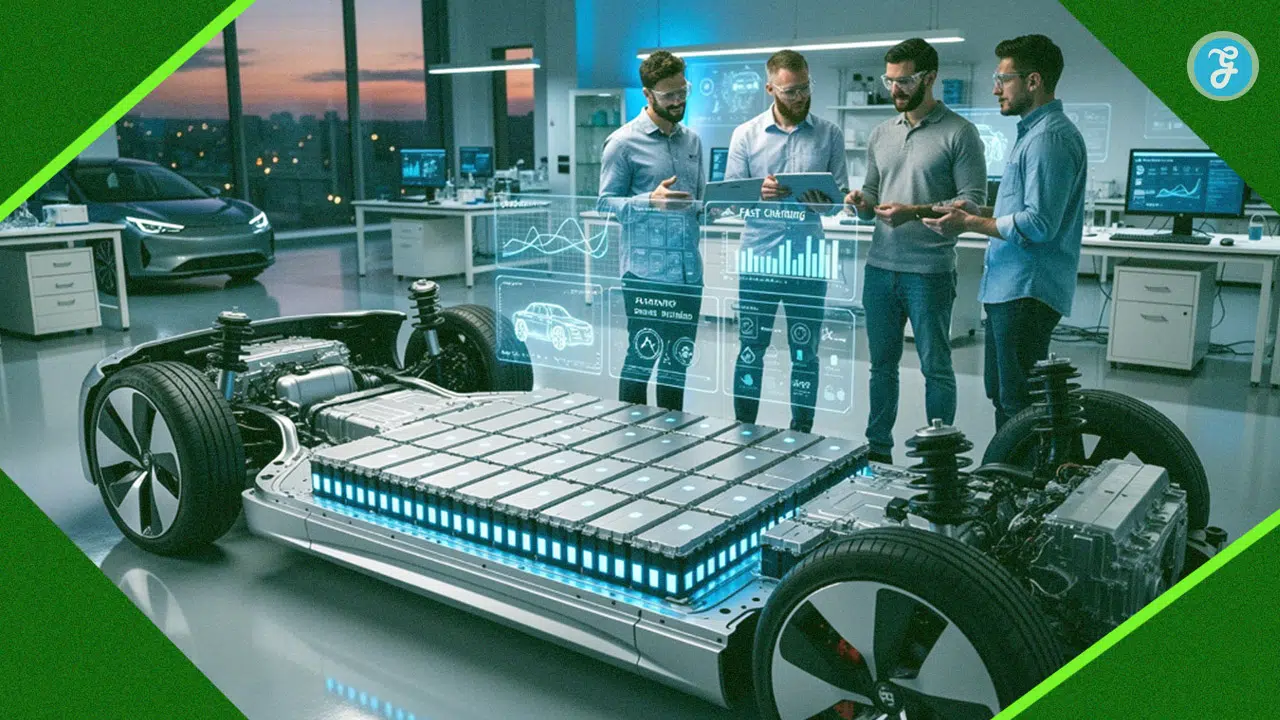
Imagine you’re eyeing that sleek electric vehicle, but the thought of long charging waits and short driving ranges makes you hesitate. Range anxiety hits hard for many drivers today, right? It’s like planning a road trip with a gas tank that empties too fast, leaving you stranded and frustrated.
Electric vehicles promise clean transportation, yet battery limits often hold them back from true everyday use.
Did you know solid-state batteries could boost range by up to 50 percent over current lithium-ion batteries? This blog post examines trends like ultra-fast charging technology and sodium-ion batteries, showing how companies such as Tesla and CATL push for better energy density and sustainability.
We’ll explore advancements in EV battery tech, from high-voltage systems to battery recycling, helping you see why 2026 marks a game-changer for electric mobility.
Key Trends Shaping EV Battery Technology in 2026
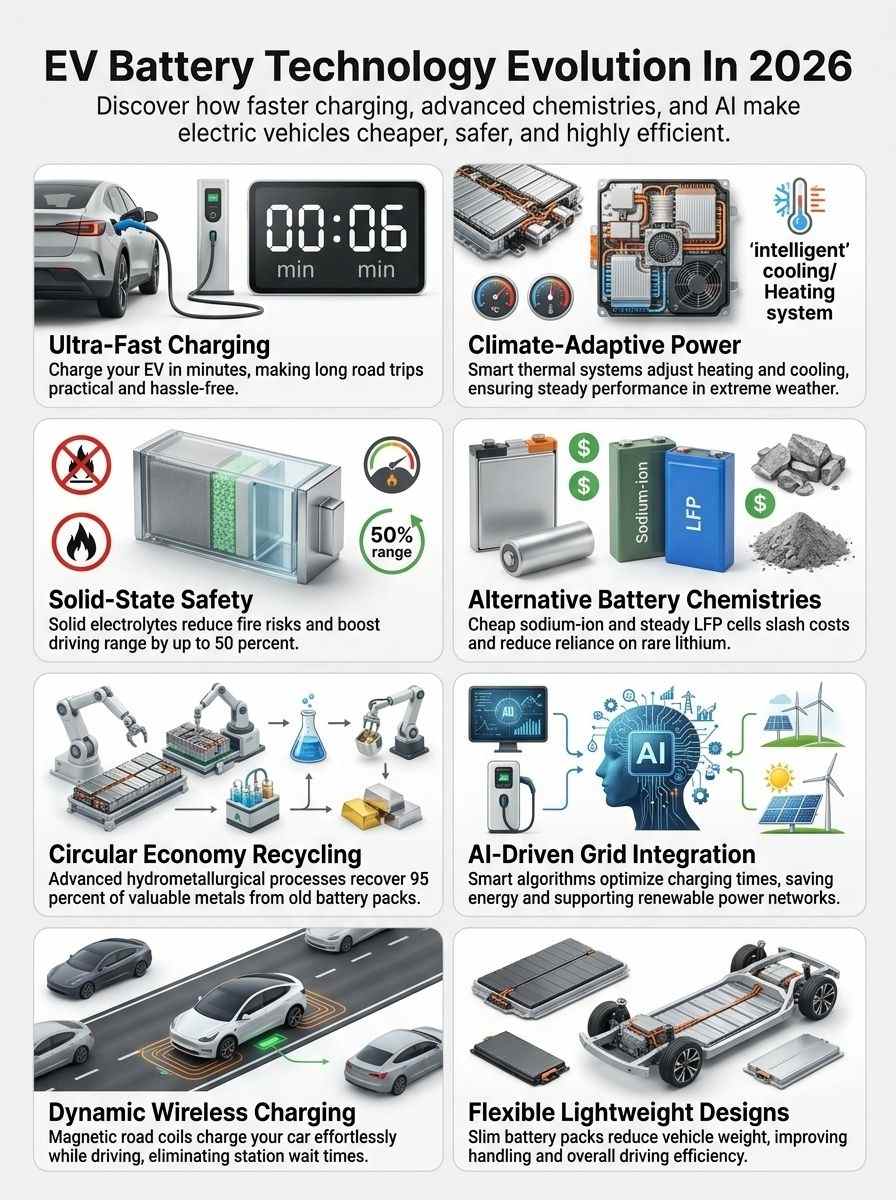
Imagine zipping down the highway, your EV juicing up in minutes thanks to breakthroughs from companies like BYD and Toyota, making long trips feel like a breeze. Picture batteries from QuantumScape that adapt to scorching heat or freezing cold, keeping your ride smooth no matter the weather, and high-voltage packs from Panasonic pushing performance to new heights, all while smart systems tie into grids for seamless power flow.
Ultra-Fast Charging Technology
Electric vehicle owners, you know the drill, waiting hours for a full charge feels like watching paint dry. Ultra-fast charging technology changes that game in 2026. Companies like Toyota and BYD lead the charge with systems that juice up EV batteries in minutes.
This trend boosts charging infrastructure across the United States and China. Think about it, high-voltage batteries pair perfectly with these quick chargers. They offer enhanced performance without the long waits.
Blink Charging and other firms roll out stations that handle this speed. Drivers get back on the road fast, making EVs more practical for daily use.
Ultra-fast charging will transform EV adoption, says Dave Nichols from Goldman Sachs.
Sodium-ion batteries emerge as alternatives, but ultra-fast tech focuses on lithium-ion battery setups for now. Hyundai and Mercedes-Benz test these in their models. Picture zipping into a station, plugging in, and leaving with a full battery before your coffee cools.
Artificial intelligence optimizes battery management systems here. It predicts needs and prevents overheating. Ford and General Motors join in, pushing for smarter charging systems.
Dynamic wireless charging adds another layer, letting cars charge on the move. This innovation ties into grid integration, easing strain on power grids.
High-Voltage Batteries for Enhanced Performance
High-voltage battery systems push electric vehicles to new heights in 2026. These batteries deliver more power, so cars accelerate faster and handle better on the road. Think of them as the muscle behind your EV’s sprint, like a runner finding an extra gear.
Companies like Volkswagen Group and BMW lead the charge with designs that boost efficiency. Porsche and Dodge integrate these into models for thrilling drives. You get longer trips without constant stops, thanks to smarter energy use.
High-voltage setups cut charging times too, making daily commutes a breeze. Shirley Meng, an expert in the field, highlights how these systems enhance total EV technology. Rivian adopts them in trucks for rugged performance.
Kia and Stellantis follow suit, focusing on real-world gains.
These advancements stem from machine learning in battery management. Systems adapt to driving habits, optimizing power flow on the fly. Imagine your car learning from you, like a trusty sidekick anticipating needs.
High-voltage batteries pair with thermal adaptive features for safety in any weather. They extend battery lifespan, reducing worries about wear and tear. BloombergNEF reports these trends reshape the market.
Lithia & Driveway sees demand spike as costs drop. In South Korea, firms like Prime Planet Energy & Solutions Inc. innovate with high-voltage tech. Electrek covers stories of drivers loving the extra pep.
Kara Rodby notes the balance of cost and performance in these evolutions.
Thermal and Climate Adaptive Systems
EV batteries face tough weather, from scorching heat to freezing cold. These systems step in like a smart thermostat for your car’s power source. They adjust cooling and heating on the fly, keeping performance steady no matter the climate.
Changan Automobile leads with tech that senses temperature shifts, using machine-learning to predict and tweak battery behavior. This means your electric vehicle runs smooth in Colombia’s humid zones or Dongfeng Motors’ test fields in chilly spots.
Solid-state batteries pair well here, boosting safety by cutting fire risks in extreme temps.
Imagine driving through a snowstorm; the system kicks in, warming cells just right to hold charge. Lithium iron phosphate (LFP) batteries shine in this setup, thanks to their tough build against thermal stress.
Smart charging integrates too, linking with grids for climate-smart power pulls. Natron Energy explores sodium-ion options that adapt even better, dodging lithium’s heat woes. All this evolution in 2026 makes EVs reliable year-round, no sweat or shivers involved.
Advancements in Battery Chemistries
Battery makers push solid-state designs, like those from Factorial Energy, to boost range and cut fire risks in electric vehicles. Sodium-ion options emerge as a cheap swap for lithium, while LFP cells, such as the Blade Battery 2.0, keep growing for their steady power and low cost.
Solid-State Batteries: Improved Range and Safety
Solid state batteries promise big changes for electric vehicles. Companies like Factorial Energy lead the charge with tech that boosts range by up to 50 percent over today’s options.
Imagine driving farther on a single charge, like stretching a road trip without extra stops. Safety jumps too, since these batteries ditch liquid electrolytes for solid ones, cutting fire risks.
Karma Automotive explores similar designs in their Solstice platform, aiming for real-world tests soon. Folks, this shift feels like trading an old bike for a speedy scooter, all while keeping things secure.
New policies push these batteries onto roads, balancing cost with top performance. Volta Energy Technologies invests in solid state advances, eyeing sodium-ion blends as backups. Evelina Stoikou, an expert in the field, highlights how these setups resist heat better, making EVs reliable in any weather.
Picture your car battery as a tough cookie that doesn’t crumble under pressure. Lithia Motors stocks models with this tech, showing demand grows fast. Drivers get excited about longer trips and fewer worries, turning EVs into everyday heroes.
Sodium-Ion Batteries: Emerging as a Lithium Alternative
Sodium-ion chemistry steps up as a fresh choice for batteries in electric vehicles (EVs). Developers push this tech to cut reliance on lithium, which can get pricey and scarce. Imagine swapping out rare metals for something as common as table salt; that’s the vibe here.
This shift balances cost and performance, key for next-gen rides. Policies change fast, and new chemistries like this one hit the roads now. You see, sodium-ion packs promise solid range without the high price tag of lithium options.
Teams explore sodium-ion for EVs, eyeing ways to blend it with inductive charging systems. Think of the Rhino series batteries leading this charge, they adapt well to various setups.
Focus stays on making these cells efficient for everyday use. New battery chemistries roll out, and sodium-ion stands out as a smart lithium alternative. It fits into the push for better performance at lower costs.
Developers test these in real-world scenarios, from city drives to long hauls.
Lithium Iron Phosphate (LFP) Batteries: Sustained Growth
LFP batteries keep gaining ground in the EV world, folks. They offer a sweet spot, balancing cost and performance like a pro athlete on a budget. Factories pump them out worldwide now.
These cells make up nearly half of the EV battery market as of 2026. Think of them as the reliable workhorse in your garage, delivering solid range without breaking the bank. Policies shift to push this growth, and new chemistries hit the roads fast.
Carmakers love how LFP cuts costs while keeping safety high.
You see, LFP stands out for its stability, resisting heat like a champ in a summer heatwave. Engineers tweak these batteries to boost efficiency in electric cars. Global adoption surges because they use common materials, dodging lithium shortages.
Drivers get more bang for their buck, with packs that last longer on daily commutes. This trend shapes the future, as makers focus on affordable power for everyone.
Innovations in Battery Recycling and Second-Life Use
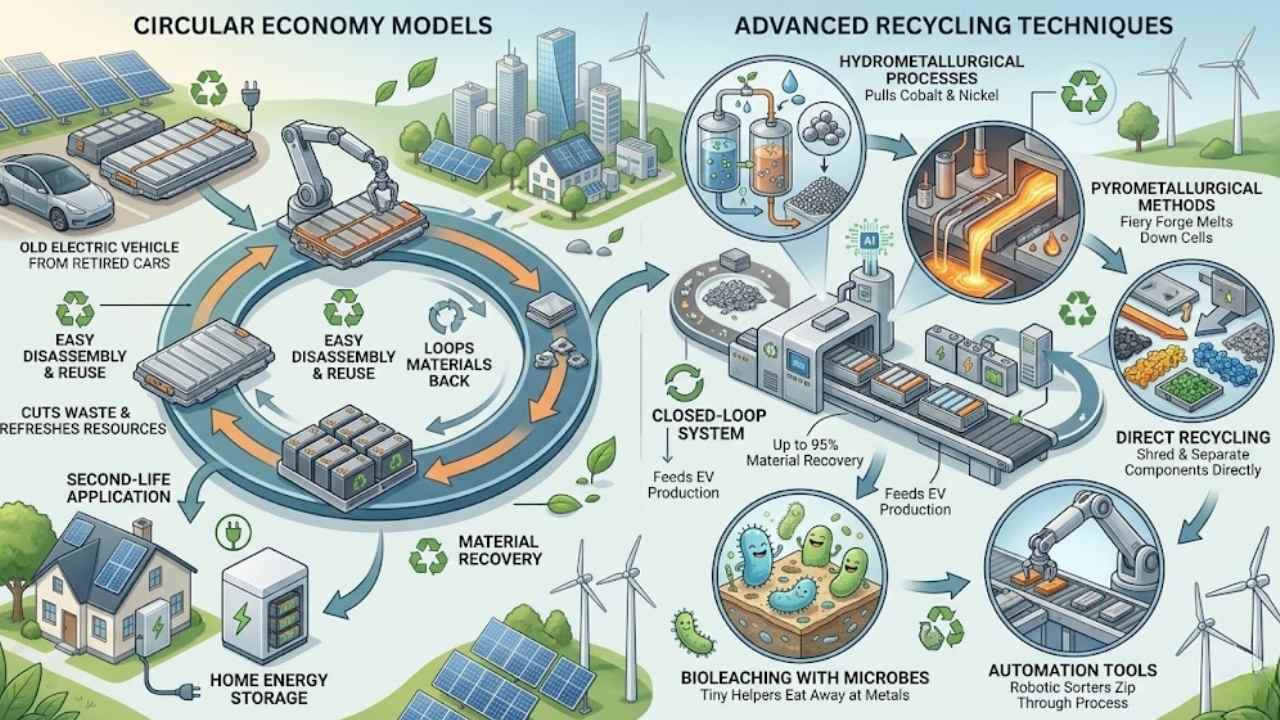
4. Innovations in Battery Recycling and Second-Life Use: Imagine giving old lithium-ion packs a fresh start, like turning yesterday’s electric vehicle power sources into home energy storage units through smart circular methods and cutting-edge hydrometallurgical processes that pull out cobalt and nickel with ease—it’s a game-changer for sustainability, and if that sparks your curiosity, keep scrolling for the full scoop on how these tweaks make EVs even greener.
Circular Economy Models
EV makers now push circular economy models to cut waste and reuse materials. They recycle old batteries, pulling out key metals like lithium and cobalt for new packs. This approach saves resources, folks, and keeps prices down as demand surges.
Picture a world where your old EV battery powers a home energy system instead of rotting in a landfill. Battery recycling and second-life use grow vital in the industry, boosting sustainability.
Companies build facilities that process spent cells with care, turning trash into treasure. You see, these models loop materials back into production, slashing the need for fresh mining.
Engineers design batteries for easy disassembly, making recycling a breeze. Second-life uses pop up everywhere, from grid storage to portable power banks. This shift feels like giving batteries a second chance at life, doesn’t it? Firms adopt advanced techniques to recover up to 95% of materials, feeding the EV boom.
Policies encourage this loop, balancing cost and performance in new chemistries hitting the roads. Gigafactory teams optimize capacity, tying into these models for efficient supply chains.
Sodium-ion options emerge as alternatives, fitting right into recycled material streams.
Advanced Recycling Techniques
Battery recycling is changing the game for EVs in 2026, folks. These advanced techniques help us squeeze more life from old batteries, cutting waste and saving resources.
- Experts now use hydrometallurgical processes to break down battery materials, like pulling apart a puzzle to reuse every piece, which recovers up to 95% of valuable metals such as lithium and cobalt.
- Pyrometallurgical methods heat things up, think of it as a fiery forge that melts down cells, turning scrap into pure elements for new batteries, and this approach scales big in factories worldwide.
- Direct recycling skips the middle steps, you just shred and separate components directly, like sorting laundry without washing first, boosting efficiency and slashing energy use by 30%.
- Companies apply bioleaching with microbes, imagine tiny helpers eating away at metals to extract them cleanly, a green twist that’s kinder to the planet and gains traction in the EV world.
- Automation tools, such as robotic sorters, zip through the process, they grab and classify parts faster than a kid at a candy store, making recycling cheaper and more precise for mass adoption.
- Closed-loop systems tie into circular economy models, where old EV batteries feed right back into production lines, it’s like a never-ending cycle that keeps costs down and supplies steady.
- Second-life applications repurpose batteries for home energy storage, picture your old car battery powering your garage lights, extending usefulness before full recycling and easing the strain on raw material demands.
- Innovations include AI algorithms that predict battery health for optimal recycling timing, they crunch data like a smart coach planning plays, ensuring we recycle at peak value in 2026’s booming industry.
Integration with Renewable Energy and Smart Grids
Electric vehicles now team up with solar panels and wind turbines through vehicle-to-grid tech, letting your car’s lithium-ion battery feed power back during peak hours, while AI systems optimize every charge for efficiency and savings—want the full scoop on how this powers a cleaner future, read on!
Enhanced Grid Integration for EV Charging
Imagine your EV as a team player in a vast energy network, folks. Grid integration ties electric vehicles right into smart grids, making charging smooth and efficient. This setup balances power loads, cuts peak demands, and boosts renewable energy use.
Companies prioritize it to handle more EVs on the road without blackouts. Think of it like a well-oiled machine, where your car chats with the grid to charge at the best times. That means lower costs for you, and a greener planet all around.
AI-driven systems step in to manage batteries smartly, predicting needs and optimizing flow. They use data from solar and wind sources, ensuring EVs pull power when it’s plentiful.
This push supports widespread adoption, as grids get stronger and more adaptive. You know, it’s like giving your ride a brain boost, handling climate shifts and high demands with ease.
Drivers benefit from reliable charging stations that sync with home setups, turning everyday drives into seamless adventures.
AI-Driven Battery Management Systems
AI manages EV batteries in smart ways now. These systems act like a vigilant coach, always watching performance. They predict issues before they happen, much like spotting a storm on the horizon.
Picture your car’s battery chatting with the power grid, sharing data to charge at the best times. Engineers prioritize this grid link to boost EV use everywhere. It cuts wait times and saves energy, keeping things smooth for drivers.
Smart algorithms in these systems optimize every charge cycle. They adapt to your driving habits, squeezing out extra miles per charge. Think of it as a personal trainer for your battery, pushing limits without strain.
This tech supports renewable energy ties, making EVs part of a bigger green network. Developers focus on seamless integration, handling power demands with ease. Drivers gain peace of mind, knowing their ride stays efficient and ready.
Cost Reductions and Increased Affordability
6. Cost Reductions and Increased Affordability: Imagine, as gigafactories ramp up production and supply chains streamline raw material sourcing like nickel and cobalt, EV makers slash prices on models with LFP cells, putting electric rides within reach for everyday drivers—want the full scoop on how this shakes up your next car buy, stick around for more.
Lower Manufacturing Costs
Hey readers, lower manufacturing costs are driving big changes in EV batteries for 2026, and here’s the scoop in a quick table.
| Cost-Saving Trend | What It Means for You |
|---|---|
| Gigafactory Optimization | Companies boost gigafactory capacity. This cuts costs through smarter production lines. Think of it like a well-oiled machine, churning out batteries faster and cheaper. |
| New Chemistries Balance Cost | Firms focus on sodium-ion batteries as a lithium alternative. These hit the roads now, slashing expenses while keeping performance strong. Policies shift to support this, like a fresh breeze in the industry. |
| LFP Cells Dominate | LFP batteries grab nearly half the EV market by 2026. Makers adopt them globally for their low price tag. It’s like finding a reliable old friend who saves you money on every charge. |
| Economies of Scale | Big production ramps up supply. Costs drop as factories scale. You get affordable EVs, no more sticker shock at the dealership. |
Economies of Scale in Battery Production
Economies of scale drive down costs in battery production, making EVs more affordable for everyone.
| Key Aspect | Details |
|---|---|
| Gigafactory Optimization | Gigafactories boost capacity in 2026. They cut costs through massive output. Think of it as baking cookies in bulk, you save big on each one. Producers optimize these huge plants for the EV supply chain. |
| LFP Battery Adoption | LFP cells grab nearly half the market by 2026. Global makers adopt them fast. This shift balances cost and performance, like finding a sweet spot in a game. Policies change to support this growth. |
| New Chemistries Impact | Fresh battery types hit the roads in 2026. They focus on cost savings. Sodium-ion options emerge as alternatives. It’s like swapping ingredients in a recipe to keep prices low without losing flavor. |
Dynamic Wireless Charging Technology
Dynamic wireless charging technology charges electric vehicles on the move, no plugs needed. Imagine driving down a highway, your EV picks up power from coils buried in the road, like sipping energy through a straw without stopping.
Engineers implement this in 2026 to transform how we charge cars, cutting downtime and easing range anxiety for folks on long trips. Picture a busy commuter lane where your battery tops up seamlessly, thanks to magnetic fields transferring juice from the pavement.
This setup uses induction methods, similar to wireless phone chargers but scaled up for roads. Cities test it now, embedding charging strips in streets to keep fleets rolling without pauses.
Drivers love the idea, you pull onto a special lane and watch your dashboard light up with fresh power. Tech firms push this forward, integrating it with smart grids for efficient energy flow.
Sodium-ion batteries pair well here, handling quick bursts of charge during drives. Tests show it boosts daily mileage by letting vehicles recharge mid-journey, a game-changer for delivery vans or family road trips.
Feel that freedom? No more hunting for stations, just smooth sailing with tech that adapts to your speed.
Lightweight and Flexible Battery Designs
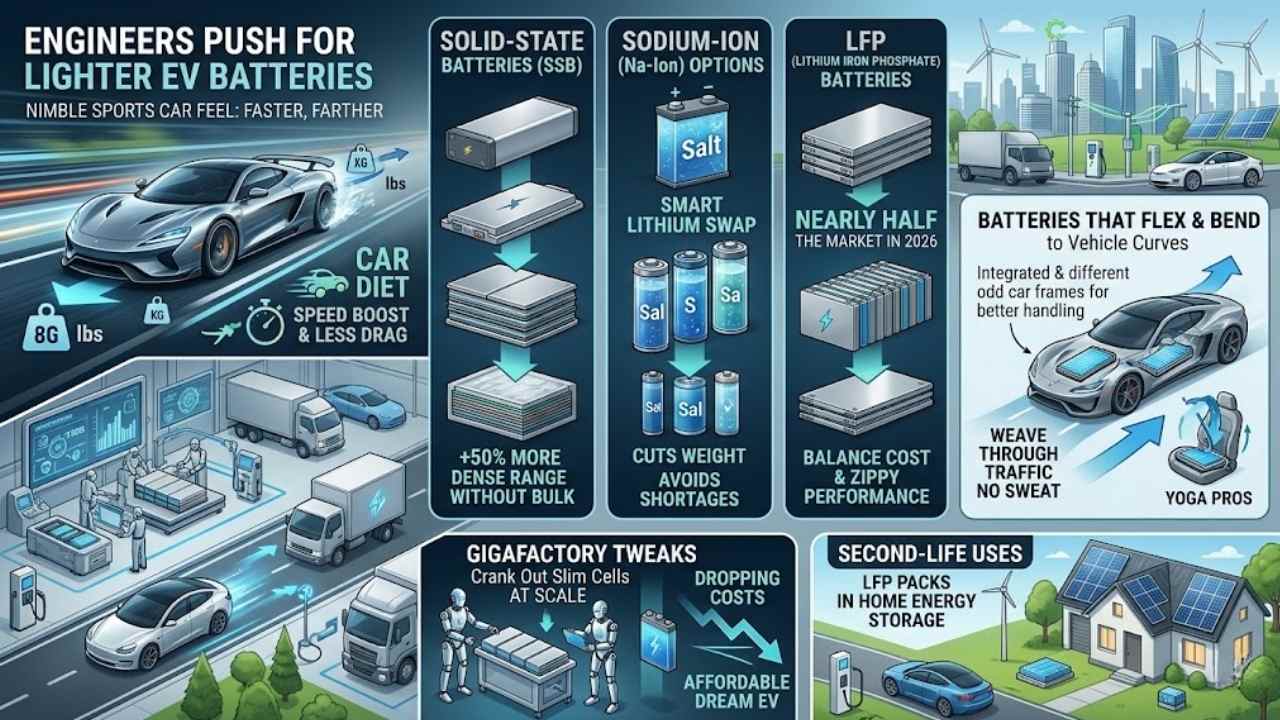
Engineers push for lighter EV batteries to make cars zip faster and go farther on a single charge. Imagine your electric ride feeling as nimble as a sports car, all because battery packs shed extra pounds.
Solid-state batteries lead this charge, packing up to 50% more range without the bulk of old lithium-ion models. Sodium-ion options step in as a smart swap for lithium, cutting weight while dodging supply shortages.
LFP batteries hold nearly half the market in 2026, thanks to their slim profiles that balance cost and zippy performance. These designs flex like yoga pros, fitting into odd car shapes for better handling.
Picture weaving through city traffic with a battery that bends to your vehicle’s curves, no sweat.
New policies nudge makers toward these featherweight wonders, hitting roads with fresh chemistries that prioritize light builds. Gigafactory tweaks crank out these slim cells at scale, dropping costs so you afford that dream EV.
Think of it as giving your car a diet that boosts speed and cuts drag, all while tying into grid smarts for seamless charges. Sodium-ion packs shine here, lighter than ever and ready for daily drives.
LFP keeps growing, its lean form aiding second-life uses in home energy storage. You feel the thrill, right? These innovations turn heavy haulers into agile beasts, reshaping how we roll in 2026.
Final Thoughts
EV battery tech in 2026 pushes ultra-fast charging and solid-state designs that boost range by half, while sodium-ion options cut costs as a smart lithium swap. These changes make EVs safer, cheaper, and quicker to charge, fitting right into daily drives without big hassles.
Picture ditching gas pumps for good; this evolution slashes emissions and sparks wider adoption, turning green travel into everyone’s reality. Check out sites like CleanTechnica for the latest EV updates and tips.
Jump in now, because the road to a cleaner future starts with your next charge.
Frequently Asked Questions (FAQs) About EV Battery Technology
1. What’s the scoop on EV battery tech evolving in 2026?
Well, picture this, like a race car swapping tires mid-lap, EV makers are ditching old lithium-ion setups for solid-state batteries that pack more punch. These bad boys boost energy density, so you get longer drives without the range anxiety, and hey, they’re safer too, cutting down on those fiery mishaps we hear about.
2. Will charging times drop like a hot potato for EVs by 2026?
You bet, with breakthroughs in fast-charging tech, you’ll juice up your ride in under 15 minutes, turning pit stops into quick coffee breaks.
3. How are these new batteries helping the planet, you ask?
It’s like giving Mother Earth a high-five; companies are weaving in recycled materials to slash waste. Plus, higher efficiency means fewer resources get gobbled up, making your eco-friendly drive even greener. Imagine telling your grandkids you helped steer the world toward sustainability, one charge at a time.
4. What about battery life, is it getting a makeover in 2026?
Oh yeah, think of it as batteries hitting the gym; improved chemistries are pushing lifespans beyond 500,000 miles. This evolution cuts costs for you over time, and with smarter software predicting wear and tear, maintenance becomes a breeze, keeping your EV humming like a well-oiled machine.