
You dream of launching a tech startup, but Latin America throws curveballs that make it tough. Imagine you’re excited about your app idea, yet bureaucracy slows you down, funding feels out of reach, and spotty internet in some spots kills your progress. Many entrepreneurs face these hurdles when building a tech business in Latin America, feeling stuck before they even start. It’s like trying to run a race with one shoe missing, frustrating and exhausting.
Did you know that Latin America’s tech sector grew by 20 percent last year, despite economic ups and downs? This blog post breaks down those challenges, from talent hunts to smart location picks, and shares real strategies to push through.
We’ll spotlight success stories too, so you see what’s possible. Stick around for the insights.
Overview of the Tech Ecosystem in Latin America
Tech scenes across Latin America pulse with fresh energy, as entrepreneurs chase bold ideas in bustling cities. Picture startups in places like Mexico City, where fintech dreams turn into real deals, sparking curiosity about what’s next in this vibrant space.
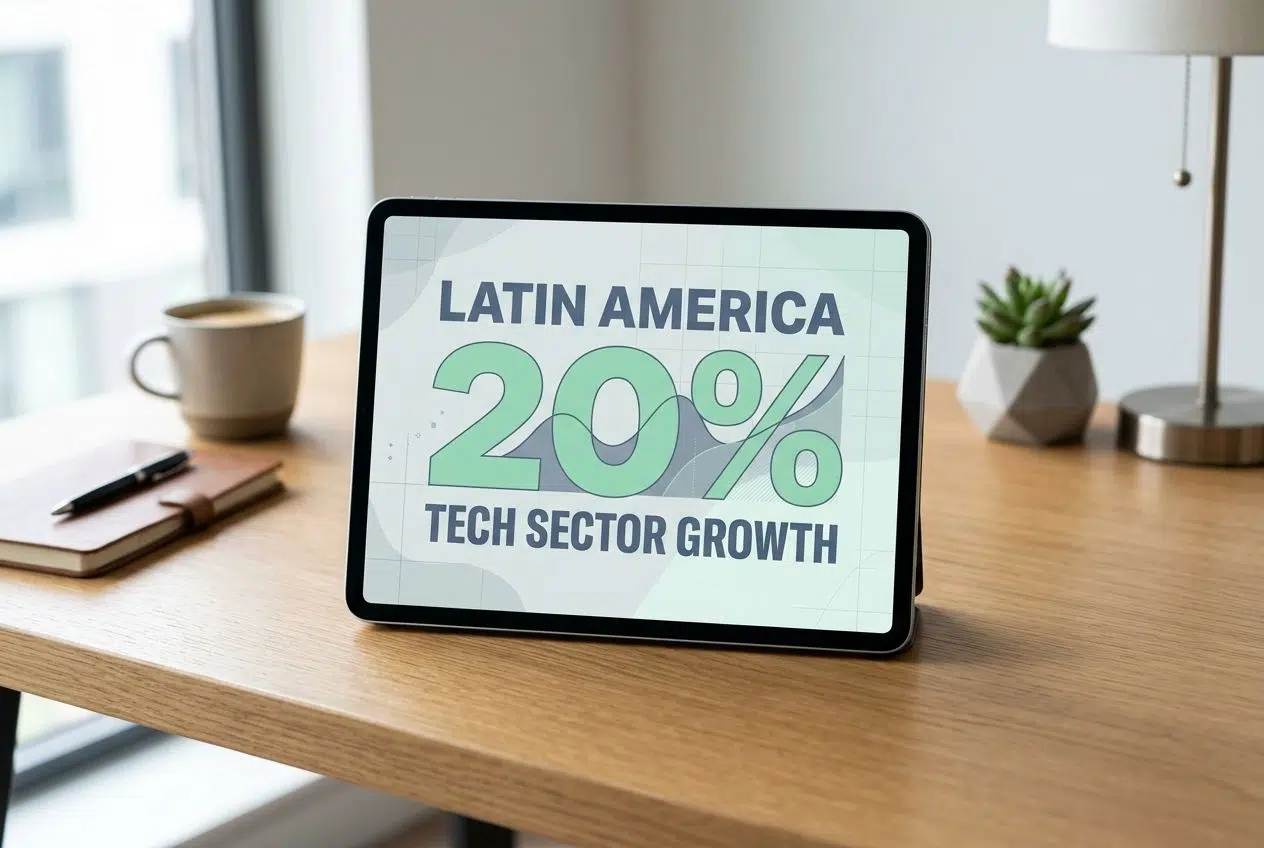
Growth of tech hubs in the region
Latin America’s tech scene bursts with energy these days. Cities like São Paulo and Mexico City lead as major startup ecosystems. They draw entrepreneurs who chase innovation in fintech and e-commerce.
Venture capital flows in, hitting $15 billion in 2021 alone. This surge creates jobs and sparks digital transformation across the region. Picture a bustling market where ideas turn into thriving businesses overnight.
Latin America is the next big frontier for tech investment, says Nubank founder David Vélez.
Investors spot huge potential here. Startups tackle market barriers with clever solutions. Economic landscapes shift, but hubs in Buenos Aires and Bogotá grow fast. They focus on scalability and talent acquisition.
Entrepreneurs build networks that boost financing and overcome regulatory issues.
The rise of AI, fintech, and e-commerce industries
These tech hubs spark exciting growth in specific fields. AI leads the charge, with startups in Mexico and Brazil using machine learning to solve real-world problems, like improving healthcare through predictive tools.
Fintech booms too, as companies in Argentina and Colombia offer mobile banking to millions without traditional accounts, drawing over $10 billion in venture capital last year alone.
E-commerce surges forward, with platforms like Mercado Libre in Brazil handling billions in sales and creating jobs across the region. Imagine: a small entrepreneur in Peru launches an online store, taps into digital transformation, and scales up fast thanks to better internet access.
Innovation thrives amid this rise, but startups face financing hurdles in the ecosystem. Entrepreneurs push boundaries in AI, building apps that personalize shopping for e-commerce users.
Fintech firms innovate with blockchain for secure payments, bridging the talent gap by training local developers. Regulatory frameworks evolve to support this growth, yet market barriers linger in some spots.
You see, these industries open doors to underserved areas, fueling entrepreneurship and attracting global investment strategies.
Unique Challenges of Building a Tech Business in Latin America
Picture launching your startup in a place where rules shift like sand dunes, and you chase funding that feels like a mirage. Hey, if you’ve ever juggled economic twists that hit like a sudden storm, you know these hurdles test your grit, so keep reading to see how founders push through.
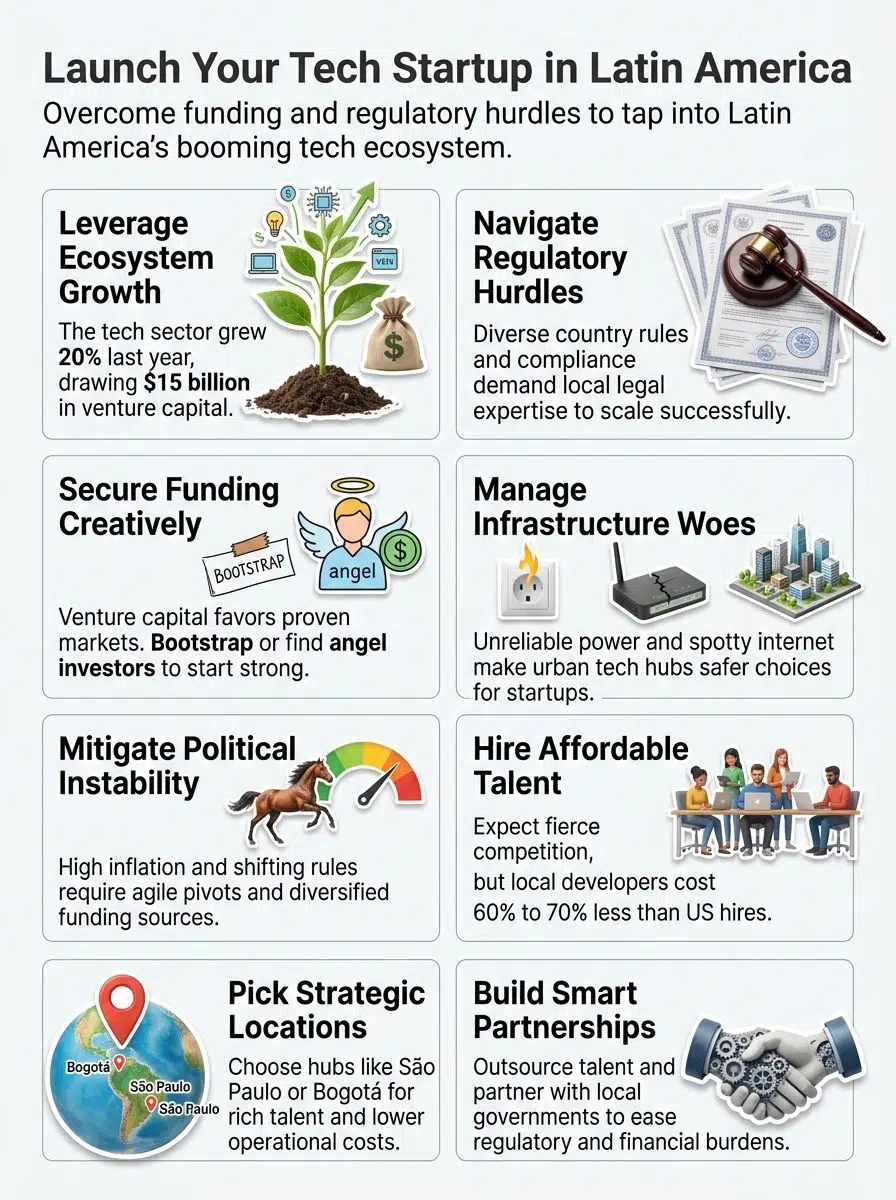
Regulatory and legal complexities
Latin America’s tech scene buzzes with energy, but startups often hit snags from diverse rules across countries. Think about Brazil’s strict data privacy laws, like the LGPD, which mirror Europe’s GDPR and demand tight compliance for any digital transformation push.
Entrepreneurs juggle varying tax codes, too, say in Mexico, where fintech firms face heavy oversight from the CNBV to curb fraud. These hurdles slow down innovation, forcing founders to hire local lawyers early on.
Costs add up fast, especially for small teams chasing venture capital. One founder shared a tale of pivoting plans mid-launch due to sudden policy shifts in Argentina.
Regulations here feel like a moving target, but adapting builds resilience in our startup ecosystem, says Maria Gonzalez, CEO of a Bogotá-based AI firm.
Economic ups and downs amplify these issues, yet smart strategies like partnering with regional experts help smooth the path for scaling. Talent gaps widen when rules limit hiring foreign developers, pushing businesses to invest in local training for long-term wins.
Financing gets tricky amid unstable currencies, but spotting market access opportunities keeps the entrepreneurial spirit alive.
Access to funding and venture capital
Beyond those tangled rules and laws, tech founders in Latin America often hit a wall with funding. Startups here chase venture capital like kids after an ice cream truck, but options feel slim.
Investors from abroad eye the region with caution due to economic ups and downs. Local funds exist, yet they pump out far less cash than Silicon Valley giants. Think about it, in 2022, Latin American startups pulled in about $15 billion in venture capital, a drop from prior years but still a sign of growth.
Entrepreneurs juggle this by pitching bold ideas in fintech or e-commerce, where innovation shines bright. They build networks at events like Startup Grind to snag those crucial dollars.
Financing hurdles test even the toughest business minds, pushing them to get creative. Venture capital firms favor proven markets, so many founders bootstrap or seek angel investors first.
Costs run lower here than in the US, making it tempting for global players to dip in. Yet, the talent gap widens when cash stays tight, forcing teams to stretch thin. Picture a startup in São Paulo hustling for seed money amid inflation spikes; they adapt by partnering with accelerators like 500 Startups.
This ecosystem demands grit, but it rewards those who master the financing game with scalable success in digital transformation.
Infrastructure limitations in certain regions
Latin America’s tech scene buzzes with energy, but spotty infrastructure throws curveballs at startups. Think about unreliable power grids in rural spots; they cause downtime that kills productivity.
Internet speeds lag in places like parts of Bolivia and Paraguay, where broadband covers only about 50% of folks. Entrepreneurs face dropped calls during key pitches or apps that load like molasses.
This hits digital transformation hard, as businesses chase innovation in a spotty setup. Imagine coding your next big fintech idea, only to lose hours to blackouts. Infrastructure woes make scaling tough for these ventures.
Many founders adapt by picking urban hubs with better setups, yet gaps persist in remote areas. Poor roads slow hardware deliveries, delaying launches for e-commerce players. Floods or storms knock out services, testing any startup’s grit.
These barriers limit market access, especially for those eyeing underserved spots. Costs soar when you add backup generators or satellite links to stay online. Talent gaps widen, too, as skilled workers flock to stable zones. Political and economic instability adds another layer to these hurdles.
Political and economic instability
Political shifts in Latin America can shake up your tech startup like a sudden storm. Governments change often, and that brings new rules overnight. Inflation spikes hit hard in places like Argentina, where it topped 100% in 2023.
Currency swings make financing tough for entrepreneurs chasing digital transformation. You might plan a big launch, only to face economic dips that scare off venture capital. Startups in Venezuela deal with hyperinflation, forcing quick pivots to survive.
Economic ups and downs create market barriers that test your innovation skills. Brazil’s economy wobbled in 2022, slowing investment strategies for tech ecosystems. Power outages from unstable grids add to infrastructure woes.
Yet, savvy founders build resilience by diversifying funding sources. They turn instability into a chance for agile entrepreneurship, spotting gaps in the startup ecosystem.
Talent Acquisition and Retention
Talent Acquisition and Retention: Finding top developers in Latin America feels like hunting for gold in a bustling mine, where fierce competition drives up the chase, yet labor costs stay way lower than in the US, and smart training programs help close that nagging skills gap fast.
Competition for skilled developers
Latin America’s tech scene buzzes with startups hungry for top talent, but snagging skilled developers feels like chasing a unicorn in a crowded market. You face fierce competition from global giants and local players alike, all vying for the same pool of coders who drive innovation in fintech and AI.
Imagine: a developer in São Paulo gets offers from five firms in a week, thanks to the talent gap that leaves many roles unfilled. Entrepreneurs must get creative, perhaps by offering remote work perks or equity shares to stand out.
Costs play a big role too; developers in the region earn about 30-50% less than in the US, making Latin America appealing for financing tight budgets. Yet, this edge sparks even more rivalry as venture capital flows in, fueling the startup ecosystem.
Build strong networks, folks, like partnering with universities in Bogotá to scout fresh graduates early. That way, you turn the hunt into a smart game, not a headache.
Comparing tech labor costs: LATAM vs the US
You know, saving on labor costs can make or break your tech startup, so check out this comparison between Latin America and the US.
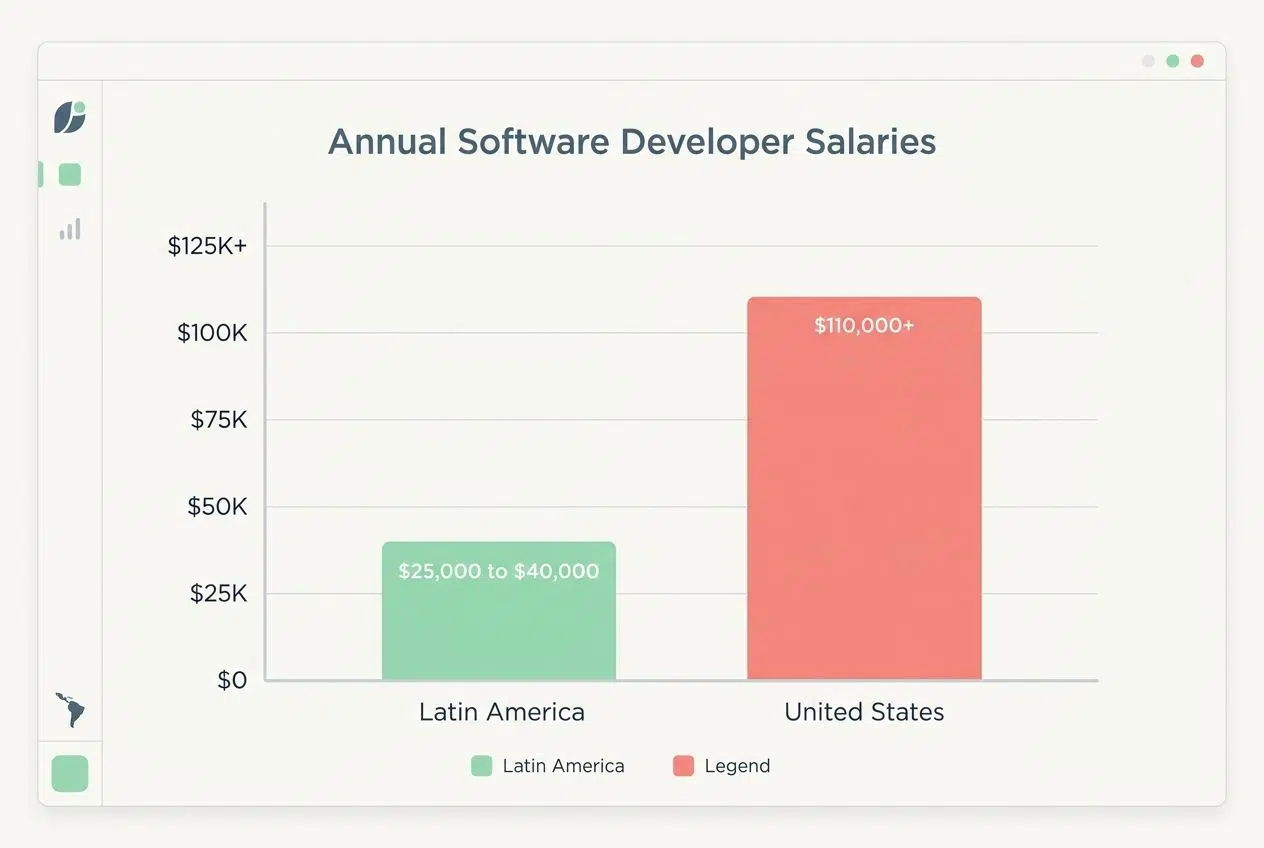
| Aspect | Latin America | United States |
|---|---|---|
| Average annual salary for software developers | Developers earn about $25,000 to $40,000 a year in places like Brazil or Mexico, keeping your budget in check. | Expect to pay around $110,000 or more per developer, which adds up fast for a growing team. |
| Cost savings potential | Hire top talent at 60% to 70% less than US rates, freeing up cash for innovation. | High costs mean you juggle tighter budgets, often skimping on other areas. |
| Benefits and taxes | Factor in 20% to 30% extra for benefits and taxes, still a steal compared to elsewhere. | Add 30% to 40% on top of salaries for benefits and taxes, eating into profits. |
| Real-world example | A fintech firm in Argentina pays $30,000 per engineer, scaling quickly without breaking the bank. | US companies like Google shell out over $150,000 per role, pushing them to outsource. |
| What this means for you | Stretch your funding further, hire more folks, and build that app you’ve dreamed about. | Compete hard for talent, or consider Latin American options to cut costs. |
Bridging the skills gap through education and training initiatives
Latin America has a real talent gap in tech skills that hurts startups and innovation. Smart education and training programs can fix this, boosting the startup ecosystem and digital transformation.
- Governments and companies team up for bootcamps that teach coding and AI basics, like Brazil’s free online courses that trained over 50,000 people last year, helping entrepreneurs find ready workers.
- Universities add tech degrees focused on fintech and e-commerce, such as Mexico’s programs that partner with global firms, cutting the talent gap by linking classroom learning to real jobs.
- Private firms run mentorship schemes where pros guide new talent, for instance, in Argentina, where startups offer paid internships that build skills and keep workers from leaving for the US.
- Online platforms provide cheap courses in Spanish and Portuguese, reaching remote areas with poor infrastructure, and they’ve upskilled thousands, making entrepreneurship easier in tough regulatory spots.
- Incubators tie training to venture capital, like Chile’s funds that invest in grads from their programs, sparking innovation and helping businesses scale despite economic ups and downs.
- Non-profits push STEM education in schools, targeting girls and underserved groups, with Colombia’s efforts adding 10,000 trained devs yearly, strengthening the tech ecosystem against market barriers.
- Cross-border exchanges let Latin pros learn from Silicon Valley, then return home, as seen in Peru where returnees start firms, improving financing access and digital transformation.
With talent sorted, think about where to set up shop for your tech venture.
Choosing the Right Location for Your Tech Business
Pick a spot in Latin America that fits your startup’s vibe, like a bustling city with smart folks and low costs, and you’ll dodge a lot of headaches right from the start. Imagine setting up shop where talent flows like coffee in the morning, sparking ideas that turn your tech dream into gold. Curious about the hot spots?
Top tech hubs: São Paulo, Buenos Aires, Bogotá, Lima, and San José
Let’s check out these top tech hubs in Latin America, where innovation meets opportunity in exciting ways.
| City | Key Strengths | Notable Facts |
|---|---|---|
| São Paulo, Brazil | Fintech dominates here. Startups thrive in a massive market. E-commerce booms too. | Home to over 2,500 startups. Attracts big investments from global VCs. Hosts events like Campus Party for tech enthusiasts. |
| Buenos Aires, Argentina | Software development shines bright. Creative talent fuels app innovations. Tech education runs strong. | Boasts low operational costs. Features companies like Mercado Libre. Grows with over 1,000 tech firms active now. |
| Bogotá, Colombia | AI and software lead the charge. Entrepreneurs tackle local problems with smart solutions. Collaboration sparks ideas. | Supports 800+ startups. Gains from government incentives. Draws talent from nearby universities. |
| Lima, Peru | The emerging scene focuses on digital services. E-commerce expands fast. Logistics tech solves real issues. | Sees rising VC funding. Includes players like Culqi for payments. Benefits from a young, eager workforce. |
| San José, Costa Rica | Outsourcing excels in IT services. Green tech initiatives add appeal. A stable environment helps growth. | Hosts multinationals like Intel. Offers tax breaks for tech. Counts over 300 software companies. |
Now think about factors like cost of operations, market size, and talent availability when you pick your spot.
Factors to consider: cost of operations, market size, and talent availability
You face big choices when setting up a tech business in Latin America, so weigh these factors for top hubs like São Paulo, Buenos Aires, Bogotá, Lima, and San José.
| Tech Hub | Cost of Operations | Market Size | Talent Availability |
|---|---|---|---|
| São Paulo | High rents and taxes eat into budgets, but you get solid infrastructure. | Brazil’s giant economy offers a market of over 200 million people, ripe for fintech growth. | Plenty of skilled coders, with universities pumping out grads yearly. |
| Buenos Aires | Lower office costs than the US, yet inflation can spike expenses unexpectedly. | Argentina’s 45 million folks create demand for e-commerce and apps. | Strong pool of engineers, though many eye jobs abroad for better pay. |
| Bogotá | Affordable setup, with co-working spaces under $200 per month per desk. | Colombia’s 50 million population drives AI and software markets. | Growing talent from tech schools, but competition heats up for top devs. |
| Lima | Budget-friendly ops, like low utility bills in business districts. | Peru’s 33 million users boost demand for digital services. | Emerging devs scene, with training programs filling gaps fast. |
| San José | Higher costs due to tech parks, but tax breaks help startups. | Costa Rica’s 5 million base links to Central American markets. | Bilingual talent abounds, thanks to English programs in schools. |
Strategies to Overcome Challenges
Picture a tech founder dodging economic storms in Latin America, teaming up with local governments for smoother sailing. Smart moves like outsourcing talent and sparking R&D hubs turn those rough waves into exciting rides, so keep reading for the full playbook.
Leveraging tech recruitment and outsourcing models
Tech startups in Latin America often struggle with the talent gap. You can tackle this by leveraging tech recruitment models. Firms like BairesDev and Globant help connect you with skilled developers across the region.
They cut costs and speed up hiring. Outsourcing lets you tap into lower labor rates, say in Colombia or Argentina, compared to the US. This boosts your innovation and scalability without breaking the bank.
Imagine building a fintech app; you outsource coding to experts in Bogotá, freeing your team for core entrepreneurship tasks.
Outsourcing also aids digital transformation for your business. It provides access to diverse skills in AI and software. Many entrepreneurs use platforms like Upwork for quick wins.
This strategy eases regulatory hurdles by partnering with local talent who know the ecosystem. You save on financing, too, as remote teams reduce overhead. Building partnerships with local businesses and governments takes this further.
Building partnerships with local businesses and governments
Partnerships with local businesses and governments can supercharge your tech startup in Latin America. They help you handle regulatory issues and tap into the startup ecosystem for better innovation and financing.
- Local businesses offer market access that feels like finding a hidden shortcut in a maze, letting your startup dodge common barriers in the economic landscape. You team up with established firms in places like São Paulo to share resources, which boosts scalability for fintech ventures. This setup often leads to joint ventures where you co-create solutions, blending your tech know-how with their local insights on digital transformation. Envision chatting with a coffee exporter in Bogotá who needs your AI tools; that connection turns into a pilot project, expanding your reach without massive upfront costs.
- Governments in Latin America provide grants and incentives, acting as a safety net during political ups and downs. In countries like Brazil, you apply for innovation funds that support R&D in emerging tech, helping bridge the talent gap through sponsored training programs. These partnerships might include tax breaks for startups focused on infrastructure improvements, making your operations more cost-effective. Envision a quick meeting with officials in Lima that secures you a spot in a government-backed accelerator, where you gain venture capital leads and regulatory guidance all in one go.
- Building these ties fosters entrepreneurship by creating networks that feel like a lively family reunion, full of shared stories and mutual support. You collaborate on projects that address market barriers, such as improving digital access in rural areas through joint edge computing initiatives. A funny thing happens: what starts as a formal handshake in Buenos Aires evolves into ongoing dialogues that spark new ideas, turning potential rivals into allies for long-term growth. This approach enhances your investment strategies and positions your business as a key player in the region’s technology ecosystem.
- Empathy plays a big role here, as you listen to local concerns about economic instability and adjust your pitches accordingly. Partner with government bodies in San José to launch initiatives that train developers, directly tackling the talent gap while building goodwill. These efforts often result in policy changes that favor startups, like streamlined regulations for e-commerce firms. Think of it as planting seeds in fertile soil; with time, you harvest stronger financing options and a stronger presence in the innovation scene.
Fostering innovation through R&D centers
Partnerships with local businesses and governments open doors, but they also set the stage for deeper innovation. Tech entrepreneurs in Latin America foster this through R&D centers that drive startups forward.
These hubs spark fresh ideas in the startup ecosystem, turning concepts into real products. Imagine a team in São Paulo tinkering with fintech tools; they cut through market barriers with focused research.
Innovation thrives here, as R&D spots pull in talent and boost digital transformation. Costs stay low compared to the US, yet output soars.
Companies like Nubank show how R&D centers conquer regulatory issues and fuel growth. They invest in local talent, bridging the talent gap with hands-on projects. Entrepreneurs build these centers to tackle infrastructure woes, creating scalable tech.
Think of it as planting seeds in fertile soil; the economic landscape shifts, inviting more venture capital. Startups gain market access, pushing boundaries in emerging tech. This approach keeps the innovation engine humming, even amid instability.
Opportunities in Latin America’s Tech Sector
Latin America’s tech scene bursts with chances to tap underserved markets, where folks crave simple digital tools that solve real daily headaches. Jump on the wave of 5G and edge computing, as these techs promise quick growth and let startups create solutions that feel like a breath of fresh air in crowded fields.
Expanding access to underserved markets
Tech startups in Latin America spot big chances in underserved markets. They reach remote areas with poor internet or banking access. Think of fintech firms that bring mobile payments to rural farmers.
This boosts economic growth and cuts market barriers. Entrepreneurs use digital transformation to connect these spots. Investment strategies focus on low-cost tech like apps for small businesses.
Innovation thrives when companies tap into these gaps. Scalability comes easy with the right ecosystem. Picture a startup in Bogotá offering e-commerce to isolated villages. They face regulatory issues but gain loyal users fast.
Financing from venture capital helps scale up. This creates jobs and drives the technology ecosystem forward.
Growth potential in emerging technologies like 5G and edge computing
Beyond opening doors to underserved markets, Latin America’s tech scene bursts with promise in cutting-edge fields like 5G and edge computing. Startups here tap into this wave, driving innovation that could reshape the digital transformation across the region.
Picture a fintech firm in Bogotá using edge computing to process data right at the source, cutting delays and boosting speed for rural users. Entrepreneurs face market barriers, sure, but the economic landscape favors bold moves in these technologies.
Investment strategies from venture capital firms pour in, with over $2 billion funneled into 5G projects last year alone.
Edge computing pairs perfectly with 5G, letting businesses handle huge data loads without relying on distant servers. This setup aids scalability, especially in spots with spotty infrastructure.
A startup in São Paulo, for instance, built an edge network that slashed costs by 40% for e-commerce giants. The technology ecosystem thrives on such advances, closing the talent gap through local training programs.
Financing options grow too, as global investors eye the region’s potential for explosive growth in these areas.

Examples of Successful Tech Businesses in Latin America
Nubank storms São Paulo’s fintech scene, flipping traditional banking on its head with slick digital tools that hook millions of users. Rappi charges ahead in Bogotá, mixing AI smarts with super-fast delivery to dominate e-commerce and show what grit can build in a bustling market.
São Paulo’s thriving fintech ecosystem
São Paulo leads Latin America’s fintech scene with bold startups that shake up banking. Imagine: the city buzzes with innovation, drawing venture capital like a magnet. Companies here tackle digital transformation head-on, offering easy loans and payments to millions.
Entrepreneurs flock to this ecosystem, fueled by a mix of local talent and global investment. They push boundaries in financing, turning economic challenges into smart solutions.
Investors pour money into São Paulo’s startups, spotting huge growth in underserved markets. The regulatory framework supports this boom, though hurdles like talent gaps pop up. Still, firms innovate with apps that simplify money matters for everyday folks.
This hub fosters entrepreneurship, blending tech with real-world needs for lasting impact.
Bogotá’s innovation in AI and software development
Shifting gears from São Paulo’s fintech buzz, Bogotá steps up as a powerhouse for AI and software development in Latin America’s startup ecosystem. This Colombian capital draws entrepreneurs with its vibrant innovation hubs, where startups tackle real-world problems through cutting-edge tech.
Picture local teams coding AI tools that boost healthcare and logistics, turning market barriers into growth opportunities. Companies like Rappi, born right here, show how digital transformation fuels scalability, with over 50,000 jobs created in the sector since 2015.
Bogotá’s tech scene thrives on a mix of talent and investment strategies, despite regulatory issues. Developers here cost about 30% less than in the US, making it a hot spot for software firms eyeing economic landscape advantages.
Innovation blooms through partnerships, like those with universities pumping out skilled coders each year. Startups tap into venture capital from funds like SoftBank, pushing AI projects that address talent gaps and drive the region’s technology ecosystem forward.
Final Thoughts
We’ve explored Latin America’s tech growth, from bustling hubs to challenges like regulations and funding shortages. These strategies prove simple and effective for any entrepreneur.
What steps will you take to build your business here? Tackling these issues opens doors to real success in a dynamic market. Join local tech forums for more tips and connections. Jump in now, your ideas can spark change across the region.
FAQs on Tech Business In Latin America
1. What makes building a tech business in Latin America so tough?
Building a tech business in Latin America often feels like navigating a maze, you know, with shaky internet in some spots and power outages that hit at the worst times. Talent is out there, but finding skilled workers can be like searching for a needle in a haystack because education systems vary wildly across countries. Add in market ups and downs, and it’s no walk in the park, but hey, that’s what makes the wins feel extra sweet.
2. How does red tape slow down tech startups in Latin America?
Red tape in Latin America can tie your hands, with rules that change faster than you can keep up. It drags out the time to get permits or approvals, turning simple steps into marathons.
3. Why is getting money a big hurdle for tech firms in Latin America?
Investors often shy away from Latin America tech ventures due to economic swings that scare them off. Local banks might not offer easy loans either, leaving you to bootstrap or hunt for foreign cash, which isn’t always a sure bet. Picture it like trying to fill a leaky bucket; every drop counts, but leaks make it frustrating.
4. What talent issues do tech businesses face in Latin America?
Tech businesses in Latin America struggle to snag top talent because many skilled folks head abroad for better pay. Training locals takes time and cash, and competition from global giants adds pressure.