Selling digital services like online courses or digital downloads globally can be challenging without the right platform. Many creators face high transaction fees, limited international reach, or cumbersome tools that slow down sales.
Hours spent developing coaching programs or email templates can be wasted if payment options like Stripe or PayPal create friction for buyers.
Fortunately, there are multiple options for selling digital products, with over 20 solid platforms available worldwide. Top choices such as Shopify and Podia can generate recurring revenue to support a full-time business.
This guide breaks down the best platforms for selling digital services, from Gumroad to Fiverr, highlighting pros, cons, and marketing integrations like Mailchimp and Zapier. Key factors include secure delivery, affiliate marketing support, and tools to optimize the sales funnel.
Explore these platforms to maximize reach, streamline sales, and grow digital service revenue efficiently.
Key Factors to Consider When Choosing a Platform
Picking the right spot to sell your digital services can feel like finding a needle in a haystack, but hey, it all boils down to what fits your vibe and goals. Think about how platforms like Etsy or Lemon Squeezy handle global buyers, or how they mesh with tools like Klaviyo for emails, and you’ll see why these choices can make or break your sales game—stick around to dive deeper into the details.
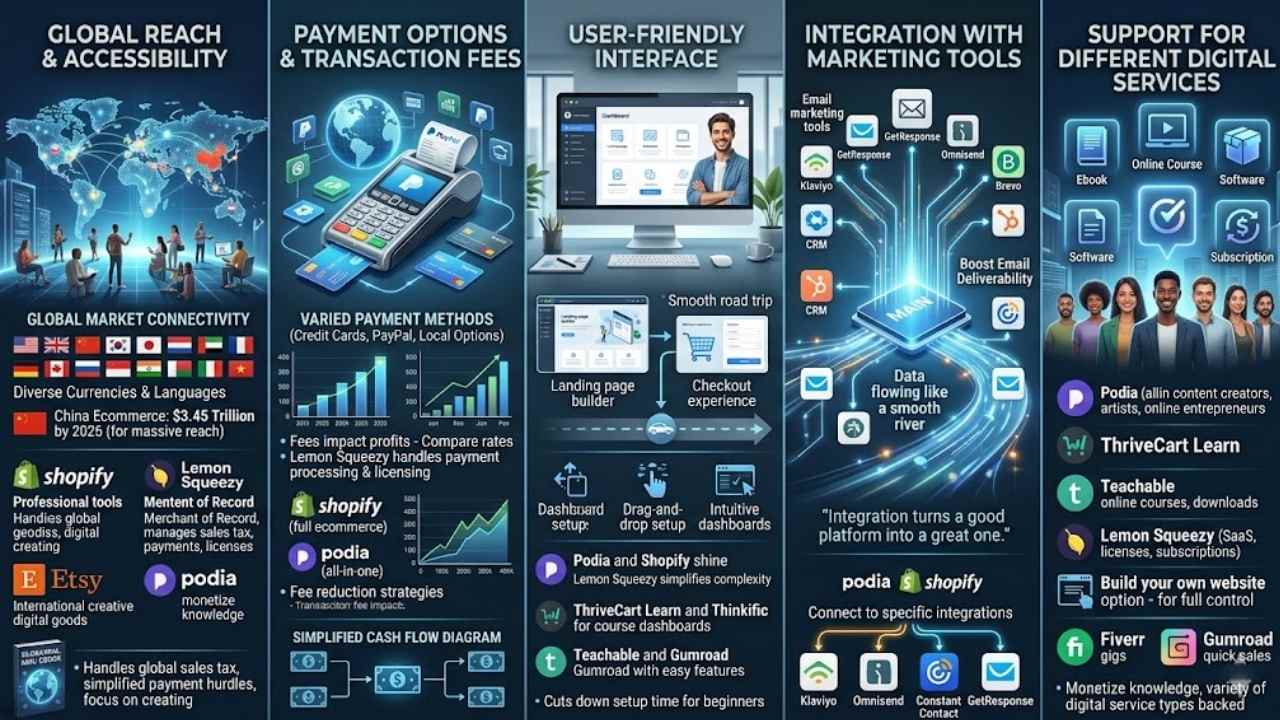
Global reach and accessibility (Key Factors)
You want a platform that connects you to buyers worldwide, right? Think about China’s massive ecommerce scene, hitting $3.45 trillion in sales by 2026. Platforms like Amazon, Alibaba, Taobao, Pinduoduo, JD.com, and Temu lead the pack, serving global markets with ease.
They handle diverse currencies and languages, making sales flow without borders. Over 20 viable options exist for selling digital goods, from marketplaces to specialized sites. Shopify stands out as the top pick for established creators, offering professional tools for broad reach.
Accessibility matters too, especially with global sales tax and payment hurdles. Lemon Squeezy acts as a merchant of record, simplifying these for SaaS founders and developers. It manages transactions, licenses, and even transactional emails, so you focus on creating.
Etsy draws in international crowds for creative digital goods, while Podia helps content creators monetize their knowledge across borders. Bigcommerce and Squarespace integrate well for custom sites, boosting your global presence.
Imagine your mini-ebooks reaching buyers in Europe or Asia, no sweat.
Payment options and transaction fees (Key Factors)
Payment options and transaction fees play a big role in picking the right platform for selling digital services globally.
| Key Aspect | Details and Tips |
|---|---|
| Global Payment Reach | Platforms like Amazon, Alibaba, Taobao, Pinduoduo, JD.com, and Temu serve massive global markets. China leads with $3.45 trillion in ecommerce sales by 2026. Pick ones that accept payments from anywhere to boost your sales. |
| Varied Payment Methods | Look for support of credit cards, PayPal, and local options. Lemon Squeezy handles payment processing and licensing management. It simplifies sales for SaaS founders and developers selling licenses, subscriptions, and digital tools. |
| Transaction Fees Impact | Fees can eat into profits, so compare rates. Shopify stands out for established creators needing full-featured ecommerce solutions. Over 20 platforms exist worldwide, and even a few top ones can lead to full-time income. |
| Integration Ease | Podia works as an all-in-one spot for content creators, artists, and online entrepreneurs. ThriveCart Learn, Teachable, and Thinkific shine for digital products. Building your own website stays a strong choice too. |
| Fee Reduction Strategies | Choose platforms with low fees for different digital services. Payhip, Sellfy, Gumroad, and Teachable offer varied options. Fiverr fits for gigs. Aim for tools that cut costs and speed up global transactions. |
User-friendly interface (Key Factors)
A user-friendly interface makes all the difference when you sell digital services on ecommerce platforms. Think of it like a smooth road trip, no bumps or detours to frustrate you.
Platforms such as Podia and Shopify shine here, with clean designs that let creators set up shops fast. You get easy tools for landing page builders, plus seamless checkout experiences that keep buyers happy.
Lemon Squeezy simplifies things even more for SaaS founders, handling payments and licenses without the hassle. ThriveCart Learn and Thinkific offer intuitive dashboards, so you focus on your work, not tech woes.
Imagine juggling notions or activecampaign integrations, but the platform feels like a helpful buddy. Teachable and Gumroad provide drag-and-drop features that suit beginners, cutting down setup time.
Appsumo deals often highlight these tools for their ease, while hubspot or brevo can tie in for marketing without complexity. Easy digital downloads fit right in for quick sales, and even creative market or adobe stock users praise the simple navigation.
This setup boosts your global reach, letting you sell to places like China, where ecommerce hits $3.45 trillion by 2026.
Integration with marketing tools (Key Factors)
Pick a platform that links well with tools like GetResponse, Omnisend, Constant Contact, and EmailOctopus. These boost your email deliverability and CRM efforts. Imagine your sales flowing like a smooth river, no dams in sight.
Platforms such as Podia and Shopify shine here. They connect creators to global audiences, much like Amazon KDP Select does for books. Lemon Squeezy handles merchant-of-record tasks, freeing you for marketing magic.
Think of it as your business sidekick, always ready. Tools like Flodesk add that personal touch, turning browsers into buyers.
Integration turns a good platform into a great one, says a top digital seller on Medium.
ThriveCart Learn integrates with Facebook Marketplace for quick reach. It supports sellers on Udemy or Teachers Pay Teachers too. You gain from seamless ties to Creative Fabrica for design services.
China leads with $3.45 trillion in ecommerce by 2026, platforms like Alibaba show why links matter. Build your own site? Add Sotion or BuddyPro for custom flows. This setup maximizes sales without hassle.
Support for different types of digital services (Key Factors)
Platforms vary in how they back different digital services, from ebooks and courses to software licenses and subscriptions. Podia stands out as an all-in-one spot for content creators, artists, and online entrepreneurs.
They monetize their work with ease. ThriveCart Learn, Teachable, and Thinkific shine for online courses and digital downloads. Lemon Squeezy helps SaaS founders and developers sell licenses, subscriptions, and tools.
It handles payments and licensing to keep things smooth. You can even build your own website for full control over your digital sales.
Think about global giants like Amazon, Alibaba, Taobao, Pinduoduo, JD.com, and Temu. They serve massive markets, with China leading at $3.45 trillion in ecommerce sales by 2026. Over 20 viable platforms exist worldwide, and just a few top picks can fuel full-time income.
Shopify fits established creators who need pro ecommerce features. Imagine turning your hazel paradise of ideas into real cash flow. Pick a platform that matches your service type, like Fiverr for gigs or Gumroad for quick digital sales.
Engagement builds from there.
Top Platforms to Sell Digital Services Globally
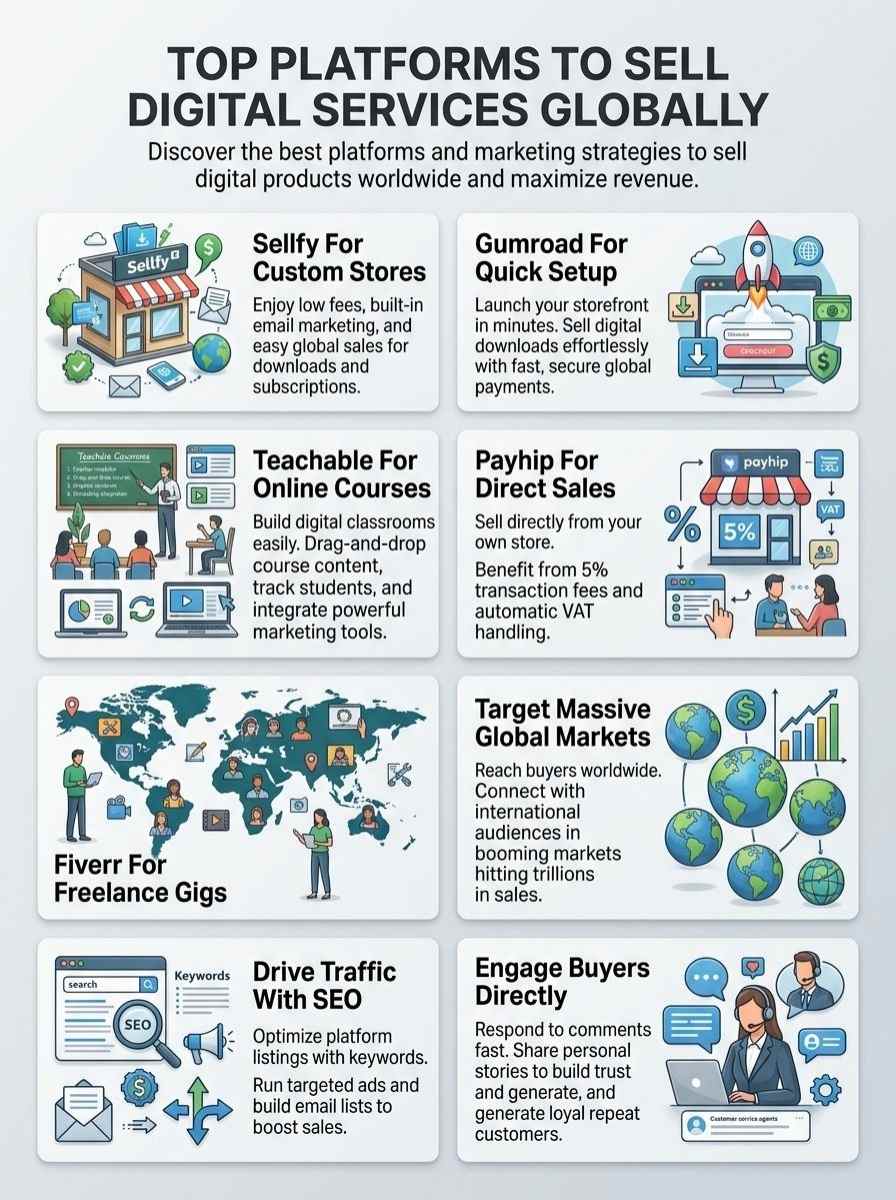
Sellfy
Sellfy acts as your online store for digital goods like ebooks, videos, and music files, with built-in tools for custom storefronts and email campaigns that help creators sell worldwide.
It shines with low fees and easy setup, though you might miss advanced analytics if your business grows fast—want tips on making it work for you?
Overview of features (Sellfy)
Sellfy stands out as a user-friendly platform for creators who want to sell digital services without hassle. It lets you set up shop quickly, much like opening a lemonade stand on a busy street, drawing in global buyers with ease.
- Sellfy offers built-in tools for selling digital downloads, subscriptions, and even physical items, making it versatile for content creators and artists just like Podia, which is designed for online entrepreneurs to monetize their work.
- You get unlimited bandwidth and storage, so you can upload as many files as you need without worrying about limits, perfect if you’re dealing with large video courses or software tools similar to what Lemon Squeezy provides for SaaS founders and developers handling licenses and subscriptions.
- The platform includes email marketing features, letting you send newsletters and promotions directly to your customers, boosting engagement in a market where China leads with $3.45 trillion in ecommerce sales by 2026.
- Sellfy supports multiple payment options like PayPal and Stripe, with low transaction fees that help you keep more profits, especially when compared to giants like Amazon, Alibaba, Taobao, Pinduoduo, JD.com, and Temu that dominate global markets.
- It provides customizable storefronts, so you can brand your page to match your style, an option that’s great for established creators who might also consider Shopify as a top choice for professional ecommerce solutions.
- Analytics tools track your sales and visitor data, giving insights to grow your business, much like how platforms such as ThriveCart Learn, Teachable, and Thinkific help with selling digital products online.
- Sellfy handles secure file delivery and piracy protection, ensuring your digital services stay safe, which simplifies things for sellers who could otherwise build their own website as a viable alternative.
- You can integrate with social media and other marketing tools, expanding your reach globally, in a landscape where over 20 viable platforms exist for selling digital products and even a small selection can lead to full-time income.
Pros & cons (Sellfy)
Let’s check out the pros and cons of Sellfy, a platform that helps you sell digital services with ease.
| Pros | Cons |
|---|---|
|
|
Gumroad
Gumroad lets creators sell digital downloads, memberships, and courses with ease, handling everything from file hosting to email marketing. Imagine: you set up a storefront in minutes, then watch payments roll in via Stripe or PayPal, minus just a small fee per sale.
Overview of features (Gumroad)
Gumroad stands out as a simple way for creators to sell digital goods online. It helps you turn your skills into cash without much hassle.
- Creators use Gumroad to set up quick storefronts for ebooks, courses, and software, much like how Shopify powers big businesses but on a smaller scale.
- The platform handles payments smoothly, similar to how Lemon Squeezy manages licensing for SaaS tools, letting you focus on your work.
- You get built-in email marketing tools, which integrate well with strategies that boost sales, echoing the all-in-one vibe of Podia for artists and entrepreneurs.
- Gumroad supports subscriptions and one-time buys, a nod to how even a few top platforms can lead to full-time income, as sources note over 20 options exist globally.
- File hosting comes included, so you avoid extra costs, kind of like building your own site but with less tech headaches.
- Analytics show who buys what, helping you engage audiences, just as China’s massive $3.45 trillion ecommerce market in 2026 drives global platforms like Alibaba and Amazon.
- Custom domains let your brand shine, comparable to Teachable or Thinkific for online courses, making it feel professional.
- Low fees start at 10% plus processing, which beats some rivals, and it fits right in with ThriveCart Learn for digital product sales.
- Mobile-friendly design means buyers shop anywhere, tying into how Temu and JD.com serve huge markets worldwide.
- Easy embeds for products on your site or social media amp up marketing, like using SEO to maximize sales on platforms such as Payhip or Fiverr.
Pros & cons (Gumroad)
Let’s talk about the good and bad sides of Gumroad, a spot where creators sell digital goods like ebooks or courses.
| Pros | Cons |
|---|---|
| Gumroad offers easy setup for sellers, much like Podia helps content creators monetize work. | Fees can add up fast, unlike some spots with lower costs for global sales. |
| Creators love its simple tools for subscriptions, similar to how Lemon Squeezy manages licenses for developers. | Limited marketing features mean you might need extra help, not as built-in as Shopify for big businesses. |
| It supports global reach, tapping into markets where China leads with $3.45 trillion in ecommerce by 2026. | Customer support falls short at times, especially compared to all-in-one options like Teachable or Thinkific. |
| Sellers earn full-time income from just a few top choices, and Gumroad fits that bill for digital services. | No strong integration with giants like Amazon or Alibaba, which dominate global markets. |
| Think of it as a quick storefront, easier than building your own website, yet effective for entrepreneurs. | Competition from over 20 platforms, including ThriveCart Learn, can make standing out tough. |
| Payment options work well for digital tools, echoing how Lemon Squeezy simplifies sales for SaaS founders. | Less focus on massive scales, unlike JD.com or Temu serving huge audiences. |
| You get direct audience engagement, boosting sales like a chat with fans over coffee. | Design options feel basic, not as pro as Shopify for established creators. |
Teachable
Teachable lets creators build and sell online courses with easy tools for videos, quizzes, and student tracking, like a digital classroom in your pocket. It shines for educators who want low fees and strong marketing integrations, but watch out for limited customization if you crave a fully branded site—curious about the full scoop?
Overview of features (Teachable)
Teachable stands out as a key player for creators who want to sell online courses and digital services. It fits right in with platforms like ThriveCart Learn and Thinkific, helping you turn knowledge into income without much hassle.
- Creators love Teachable for its easy course-building tools, where you drag and drop content like videos and quizzes to craft engaging lessons, much like building a puzzle that fits your style perfectly.
- This platform supports global sales, tying into the fact that over 20 options exist worldwide for digital products, and even a small pick like Teachable can lead to full-time entrepreneurship earnings.
- Teachable integrates with marketing tools seamlessly, letting you connect email lists and analytics, so you boost visibility in a market where China leads with $3.45 trillion in ecommerce sales by 2026.
- You get flexible payment options here, handling subscriptions and one-time buys, which echoes how big players like Amazon and Alibaba manage transactions across borders.
- The all-in-one setup on Teachable mirrors Podia for content creators, artists, and entrepreneurs, allowing you to host communities and memberships alongside your digital services.
- Teachable offers strong support for various digital types, from coaching sessions to downloads, similar to how Shopify serves established businesses with pro ecommerce features.
- Building your own site remains an option, but Teachable simplifies it by providing built-in hosting, freeing you from tech headaches like those on platforms such as JD.com or Temu.
- For SaaS folks, Teachable’s licensing tools feel akin to Lemon Squeezy, which handles payments and subscriptions for developers selling tools and digital licenses.
- Teachable shines in user analytics, giving insights on student progress, a bit like how Payhip or Gumroad track sales, but with a focus on education metrics to refine your offerings.
- It pairs well with other tools, think of it as a sidekick to ThriveCart Learn, where you create and sell without juggling multiple apps, keeping things smooth for global reach.
Pros & cons (Teachable)
You spot Teachable as a top pick for creators selling online courses and digital lessons. Creators build and monetize content with ease on this site. It supports global sales, fitting right in with over 20 viable platforms out there. Pair it with a few others, and you could earn enough for full-time work, just like the facts show. The setup feels simple, almost like chatting with an old friend over coffee. Integrates smoothly with tools for marketing, boosting your reach without extra sweat.
Fees can bite into profits, though, especially on smaller sales. Customization stays basic, so if you crave full control, think about your own site instead. Stacks up against ThriveCart Learn and Thinkific, but some folks miss advanced features for complex services. Global giants like Amazon or Shopify might outshine it for bigger operations. Still, many sellers stick with it for straightforward digital gigs.
Payhip
Payhip stands out as a straightforward e-commerce site for creators who sell ebooks, courses, and software downloads right from their own stores. Imagine skipping the middleman, with built-in tools like PDF stamping to protect your files, and low fees that keep more cash in your pocket—want to learn its full upsides and downsides?
Overview of features (Payhip)
Payhip stands out as a solid choice for creators who want to sell digital services without the hassle of complex setups. It fits right into the mix of over 20 viable platforms globally, letting you turn a small selection into full-time income, much like Podia does for content creators, artists, and online entrepreneurs.
- Payhip offers easy storefront creation, where you upload digital products like ebooks or courses, and it handles sales directly, similar to how Lemon Squeezy simplifies things for SaaS founders and developers by managing payments and licenses.
- Creators love its built-in payment options, including Stripe and PayPal, which keep transaction fees low, echoing the global reach seen in big players like Amazon, Alibaba, Taobao, Pinduoduo, JD.com, and Temu that drive China’s $3.45 trillion in ecommerce sales by 2026.
- The platform supports various digital services, from subscriptions to one-time downloads, making it a breeze for entrepreneurs, just as ThriveCart Learn, Teachable, and Thinkific shine for online courses and products.
- You get marketing tools integrated right in, like email lists and discount codes, which help boost sales without needing extra apps, kinda like building your own website but with less tech headaches.
- Payhip provides analytics to track your performance, giving insights on buyers and revenue, so you can tweak strategies, much in the vein of Shopify’s professional features for established businesses.
- It includes secure file delivery, protecting your digital goods from piracy, and this peace of mind lets you focus on creating, similar to how platforms like Gumroad or Sellfy keep things simple yet effective.
Pros & cons (Payhip)
You get low transaction fees with Payhip, often just 5% on sales, which beats many of the over 20 global platforms out there. Creators praise its easy setup for digital services like ebooks or courses, much like how Lemon Squeezy simplifies payments for SaaS tools. It integrates well with tools such as Stripe and PayPal, handling VAT taxes automatically, especially useful if you sell in Europe. Imagine dodging tax paperwork like a pro dodgeball player, that’s the relief it brings. Even better, no monthly costs on the basic plan let you start small and scale up, turning hobbies into full-time gigs as fact two suggests.
On the flip side, customization options feel limited compared to giants like Shopify or Podia, which offer more all-in-one features for content creators. Some users gripe about the lack of built-in marketing tools, forcing you to rely on external integrations that might add extra steps. If your digital services need advanced analytics or community building, you could hit roadblocks here, unlike Teachable or Thinkific that shine in those areas. Picture trying to build a fancy treehouse with only basic tools, it works but leaves you wanting more polish.
Fiverr
Fiverr acts like a bustling online marketplace, where sellers post gigs for digital tasks such as graphic design or video editing, connecting you with buyers worldwide. Explore its easy setup for custom offers and ratings system, and you’ll see why many freelancers swear by it for quick global sales.
Overview of features (Fiverr)
Fiverr stands out as a bustling marketplace where freelancers sell digital services to buyers worldwide. You can explore gigs ranging from graphic design to writing, making it a go-to spot for quick, creative work.
- Freelancers on Fiverr create gigs that showcase their skills, like coding or marketing, and buyers browse these listings to hire help fast, which fits into the landscape of over 20 viable platforms for selling digital products globally.
- The platform supports global reach with tools for international payments, echoing how big players like Amazon and Alibaba dominate with $3.45 trillion in sales by 2026, but Fiverr focuses on service-based gigs instead of physical goods.
- Fiverr offers features like buyer requests, where you pitch ideas directly to clients seeking services, and this can lead to full-time income, as even a small selection of top platforms generates enough for entrepreneurship.
- You get built-in promotion tools, such as gig videos and SEO tags, similar to how Podia helps content creators monetize, but Fiverr emphasizes freelance tasks over courses.
- The site includes a leveling system that rewards top performers with badges and higher visibility, much like how Shopify provides professional solutions for established businesses, yet Fiverr keeps things simple for beginners.
- Fiverr integrates with tools for messaging and file sharing, allowing smooth collaboration, and it handles transaction fees affordably, drawing parallels to Lemon Squeezy’s payment processing for SaaS founders.
- Sellers can offer extras like fast delivery or revisions, boosting earnings, and this mirrors ThriveCart Learn or Thinkific’s support for digital products, though Fiverr excels in one-off services.
- The platform provides analytics to track gig performance, helping you refine offerings, and you might even build your own website as an option, but Fiverr’s marketplace draws in ready buyers.
- Fiverr supports diverse digital services, from voiceovers to app development, aligning with how China leads ecommerce, yet it connects sellers globally without borders.
- You enjoy secure payments and dispute resolution, ensuring trust, and this setup lets artists and entrepreneurs monetize skills, just as platforms like Teachable do for online courses.
Pros & cons (Fiverr)
You love the idea of freelancing your digital skills, right? Fiverr shines with its massive global audience, drawing buyers from everywhere, much like how Amazon and Alibaba pull in trillions in sales. Sellers list gigs for services like graphic design or writing, and the platform handles payments smoothly, with options that fit various currencies. It supports quick setups, no need for your own site, which beats building one from scratch as some folks do. Plus, Fiverr integrates marketing tools to boost visibility, helping you stand out in a crowd of over 20 platforms out there. Imagine gigging like a street musician in a bustling market, where crowds find you without much effort.
Competition bites hard on Fiverr, though, with thousands vying for the same spots, making it tough to shine like on specialized sites such as Lemon Squeezy for SaaS tools. Fees eat into profits, often 20 percent per sale, higher than spots like Shopify for established pros. Limited customization hurts branding, unlike all-in-one options like Podia for creators. Buyers sometimes haggle prices down, turning your premium service into a bargain bin deal, and support can lag during peak times. Think of it as a crowded party where you mingle great but risk getting lost in the noise.
How to Maximize Sales on Digital Platforms
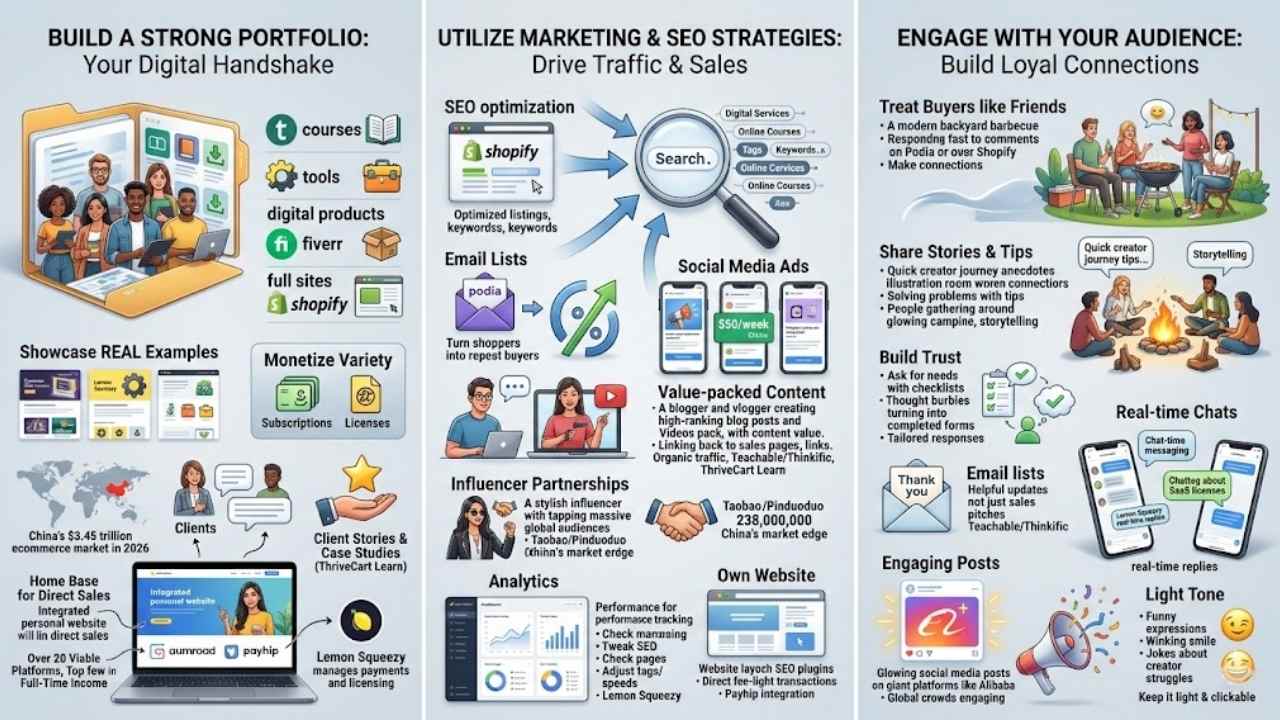
You’ve set up shop on a great site, but sales won’t skyrocket on their own, you know? Picture your digital services as hidden gems in a crowded bazaar – use Google Analytics to track visitors, craft killer posts on Instagram to pull in buyers, and chat directly with fans through email blasts from Mailchimp to turn one-time shoppers into loyal repeat customers, sparking that buzz you crave.
Building a strong portfolio (Maximize Sales)
A strong portfolio acts like your digital handshake, grabbing attention from buyers worldwide. It boosts sales by proving your skills, especially on platforms handling massive markets like China’s $3.45 trillion ecommerce scene by 2026.
- Showcase your top digital services with real examples, like courses on Teachable or tools via Lemon Squeezy, to attract global clients. Think of it as your highlight reel; buyers on Amazon or Alibaba spot quality fast. Add stats, say how even a few platforms can fund full-time work. Keep it fresh, update often to match trends in spots like JD.com or Temu.
- Pick platforms that fit your style, such as Podia for content creators or Shopify for pro setups. Imagine your portfolio as a shop window; it draws in artists and entrepreneurs. Use over 20 options out there, focus on ones like Thinkific for courses. This setup lets you monetize subscriptions or licenses easily.
- Include client stories or case studies, pulling from tools like ThriveCart Learn to show results. It’s like sharing a success tale over coffee; it builds trust. Tie in big players like Taobao or Pinduoduo for global reach. A solid mix turns small efforts into steady income.
- Integrate your own website as a core piece, linking it to platforms like Gumroad or Payhip for seamless sales. Picture it as your home base; it stands out among giants like Alibaba. Handle payments smoothly with spots like Lemon Squeezy, which manages licensing for developers. This approach supports varied services, from art to SaaS tools.
- Highlight variety in your offerings, say digital products on Fiverr or full sites via Shopify. It’s your secret sauce; mix in anecdotes from real users to engage. Note how China leads with trillions in sales, pushing you to aim high. Build it step by step, watch sales climb as buyers connect.
Utilizing marketing and SEO strategies (Maximize Sales)
You want to boost sales on digital platforms. Smart marketing and SEO can make that happen fast.
- Drive traffic with SEO by optimizing your listings on platforms like Shopify, which experts recommend for established creators needing pro e-commerce setups. Pick keywords that match what buyers search for, like “digital services” or “online courses,” and weave them into titles and descriptions. This approach mirrors how Amazon and Alibaba dominate with $3.45 trillion in China sales by 2026, pulling in global crowds through sharp search tactics. Picture your shop popping up first in results, just like those giants do it.
- Build email lists on tools like Podia, an all-in-one spot for content creators and artists to monetize products. Send fun newsletters with tips or stories that hook readers, turning them into repeat buyers. I once saw a friend double her sales by sharing quick anecdotes in emails, proving how personal touches spark loyalty amid over 20 global platforms out there.
- Run social media ads targeting folks on sites like Fiverr or Gumroad, where freelancers thrive. Set budgets low at first, say $50 a week, and track clicks to see what works, much like how Temu and JD.com grab international eyes. Hey, if a small selection of top platforms can fund full-time gigs, imagine ads amplifying that reach with laser focus.
- Create content that ranks high, using platforms such as Teachable or Thinkific for courses that draw organic traffic. Write blog posts or videos packed with value, linking back to your sales page, and watch views climb. Sources highlight ThriveCart Learn as a key player here, helping you sell digital tools without the hassle, kind of like planting seeds that grow into a sales forest.
- Partner with influencers on global giants like Taobao or Pinduoduo to tap massive audiences. Offer them free access to your services, then let their shout-outs spread the word, boosting your visibility overnight. China leads with that $3.45 trillion market edge, so borrow their playbook for cross-border buzz, turning casual mentions into real cash flow.
- Use analytics from Lemon Squeezy, built for SaaS founders selling licenses and subscriptions, to tweak your SEO game. Check which pages perform best, adjust tags or speeds, and simplify payments to keep buyers happy. This setup handles the tech side, freeing you to focus on strategies that mimic how over 20 options worldwide generate income for entrepreneurs.
- Optimize your own website as a core platform, blending it with marketing tools for custom control. Add SEO plugins to rank higher on Google, share user stories to build trust, and integrate with spots like Payhip for seamless sales. Even with big names like Amazon in the mix, your site stands out by offering direct, fee-light transactions that feel personal.
- Test promotions across platforms such as Sellfy, timing them with trends to spike interest. Drop limited-time deals or bundles, promote them via SEO-rich posts, and engage fans with quick polls or jokes. Sources note multiple platforms can sustain full-time work, so mix humor in your pitches, like saying “Grab this before it vanishes like my last diet plan,” to keep things light and clickable.
Engaging with your audience (Maximize Sales)
Engage your buyers like old friends at a backyard barbecue. Respond to comments fast on platforms like Podia or Shopify, where content creators build real connections. Share quick stories or tips that solve their problems, turning one-time shoppers into loyal fans.
Picture dropping a fun anecdote about your digital service journey; it sparks chats and boosts sales. With over 20 viable options globally, pick one with strong marketing tools to chat directly.
Build trust by asking what they need, then tailor your responses. Use email lists on Teachable or Thinkific to send helpful updates, not just sales pitches. Lemon Squeezy lets SaaS founders chat about licenses in real time, making folks feel heard.
In China’s huge market, hitting $3.45 trillion by 2026, platforms like Alibaba help you reach global crowds with engaging posts. Keep it light, maybe crack a joke about common creator struggles, and watch your income grow from a small selection of top spots.
Final Thoughts
You’ve explored top spots like Sellfy, Gumroad, Teachable, Payhip, and Fiverr for selling your digital services worldwide, plus key picks like Shopify for pro setups and Podia for creators.
These choices make global reach a breeze, with low fees and easy tools that fit right into your workflow. Pick one, and you’ll boost your income fast, turning hobbies into full-time gigs amid China’s massive ecommerce boom hitting $3.45 trillion by 2026.
Check out sites like Amazon or Alibaba for more market insights, or build your own site to stand out. I once started small on Gumroad, and it grew my side hustle into steady cash, proving anyone can do it with a bit of grit.
Jump in today, seize those platforms, and watch your digital empire take off like a rocket.
FAQs
1. What are the top platforms for selling digital services around the world?
Hey, if you’re looking to sell digital services globally, check out sites like Upwork and Fiverr; they’re like bustling online marketplaces where freelancers connect with clients from every corner. These spots let you offer things like graphic design or writing gigs, and they handle payments smoothly across borders. Imagine turning your skills into cash without leaving your couch, right?
2. How do I pick the right platform for my digital services?
Start by thinking about your niche, like if you’re into coding or marketing; some platforms shine for specific talents. Compare fees and user reviews to avoid any headaches.
3. What kinds of digital services can I sell on these global platforms?
You can sell all sorts of stuff, from web development to virtual assistance, as long as it’s digital and downloadable. Platforms like Etsy even let you hawk custom graphics or printables to buyers worldwide; it’s like opening a shop that never closes. Just make sure your offerings fit their rules, and you’ll be golden.
4. Are there fees when selling digital services on these platforms?
Yes, most take a cut, like 20% on Fiverr, but it covers global reach and secure transactions.