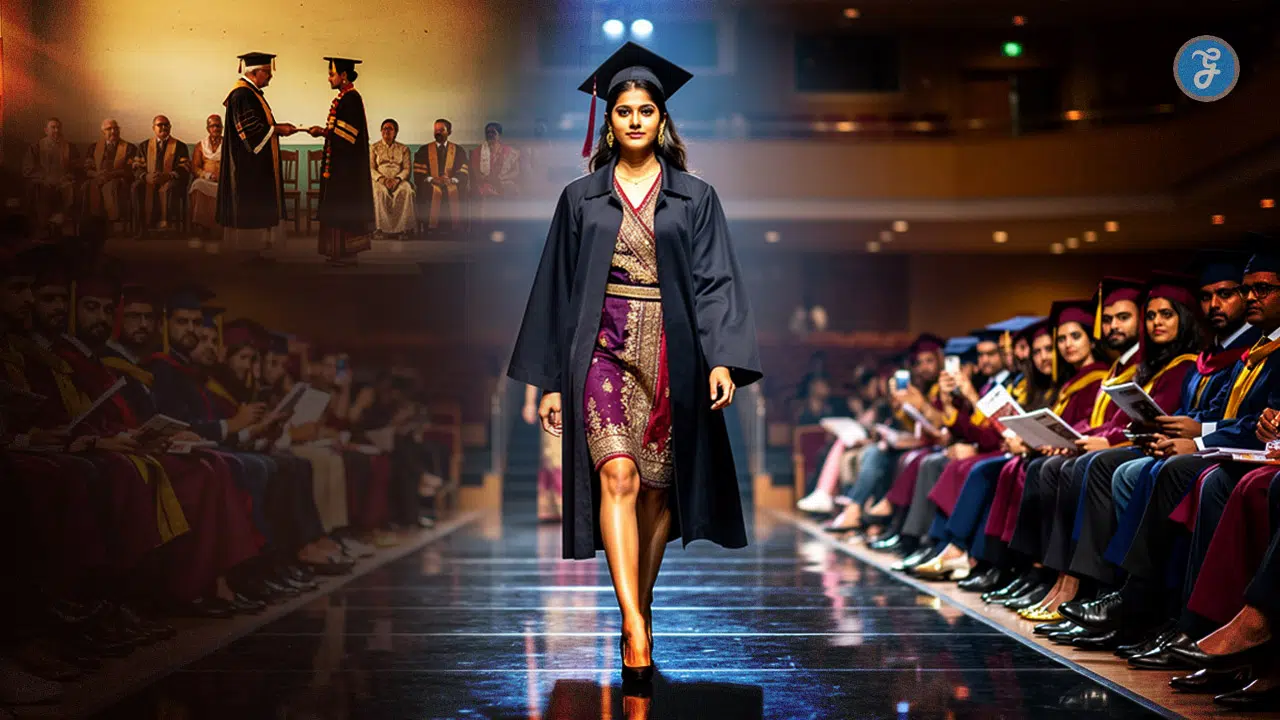
I recently visited a dental college in Greater Noida, a fast-growing educational hub on the outskirts of India’s capital, for treatment. As I walked in, I realized it was convocation day. The scent of designer perfume lingered in the air. The sharp click of stilettos echoed across marble floors. Camera flashes lit up the auditorium and the entrance. Graduation fashion had clearly taken center stage. It felt less like a quiet celebration of academic achievement and more like a carefully staged runway.
Students arrived in elaborate designer outfits and heavy makeup, their appearances meticulously curated for the lens. The clinical rigor of five demanding years in dental school seemed to recede into the background, overtaken by spectacle.
I thought back to a faded photograph of my mother on her graduation day. She stood proudly in a simple black cap. There was no artifice, no lighting crews, no performance. Even during my own college years, the scene was much the same. The focus remained squarely on the degree in our hands.
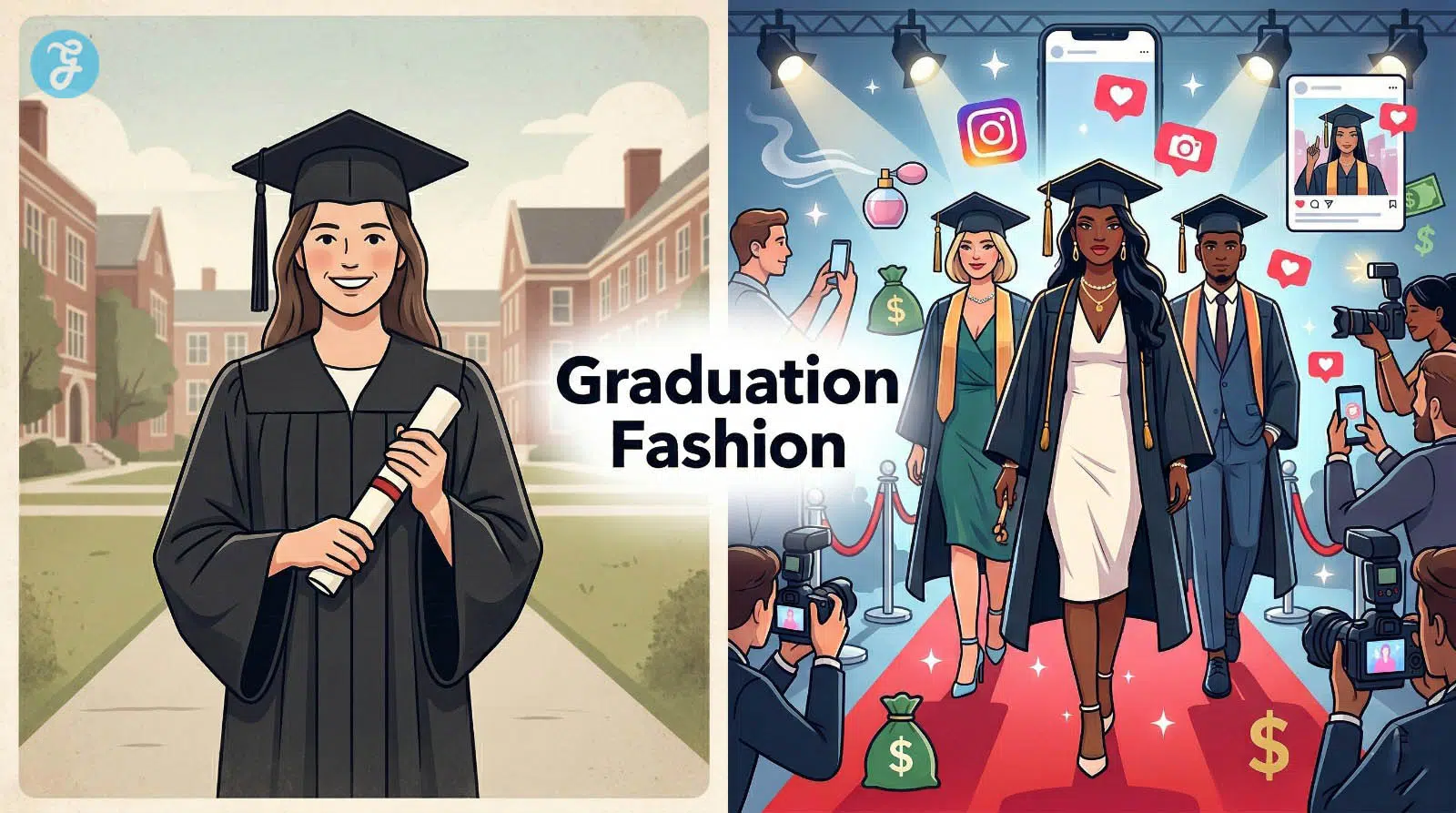
Things have changed. Social media has changed the way students experience and present these milestones. Graduation is now also a significant commercial moment. Data from the National Retail Federation shows that spending around these ceremonies hit a record $6.8 billion recently. A substantial share of this budget is directed toward apparel and styling. Students have become a key consumer base for the occasion wear market.
What was once a rite of passage for the mind is now a branding event for the body. Personal identity and consumer aspiration collide on a highly visible stage. Are these ceremonies still celebrating education, or are we staging them for digital visibility and validation?
Turning Milestones into Business
The fashion industry now treats graduation as a peak consumption event. It has joined the ranks of weddings and prom in terms of retail significance. Brands no longer see students as mere academics. They see them as high value customers ready to spend on a singular moment.
The graduation season is now a primary driver for the occasion wear market. Retailers launch specific collections to target this demographic. They offer everything from luxury footwear to custom-tailored suits. This strategic timing ensures that students are funneled toward new purchases during their final semester.
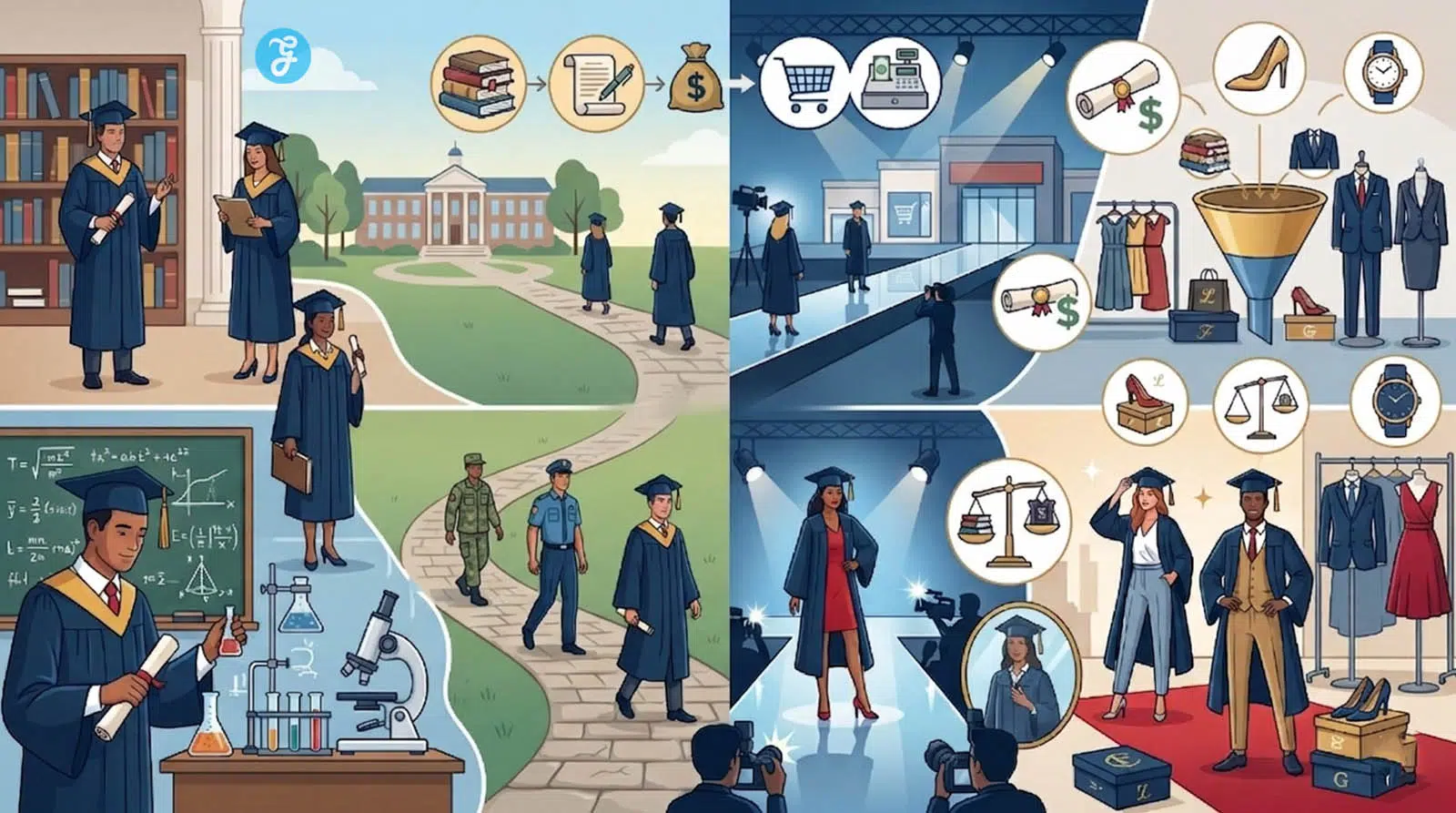
There is a striking irony in this shift for students entering technical or high-stakes professions. These graduates have spent years in labs and libraries. They have mastered complex theories and rigorous practical skills. Their daily work is often rooted in functional gear or professional uniforms. Yet, on this final day, they are marketed as fashion influencers.
The industry leverages this transition. Companies use the prestige of a new degree to sell high-end apparel. They turn an academic milestone into a luxury shopping spree. This suggests that success is no longer the only goal. Now, one must also look the part of a successful professional before the first day of work even begins. The focus has moved from the hard-earned credential to the brand on the label.
The Instagrammability of Achievement
The physical world is now a backdrop for the digital one. In our current culture, an achievement barely exists until it is shared online. This shift has changed the very look of graduation day. Venues are no longer just halls for speeches. They are stages designed for the lens.
Administrators now prioritize high quality lighting and designated photo zones. These spaces cater to the demand for perfect social media content. The visual footprint of the event often matters more than the ceremony itself. This shift aligns with what psychologists call Social Comparison Theory. Research from the American Psychological Association suggests that people determine their own worth based on how they stack up against others.
For many students, the competition begins before they even enter the job market. They are fighting for digital engagement and likes. A degree is a milestone, but the photo is the social currency. This pressure to perform success leads to a cycle of high spending.
Recent studies on consumer behavior show that Gen Z values “shareable” experiences above all else. This drive fuels the market for graduation fashion and professional photography. When the focus shifts to the image, the intellectual weight of the day can fade. We are seeing a move from private pride to public performance. Success is no longer just about what you know. It is about how well you can package your life for an audience.
Dressing for a Global Stage, Carrying the Years: Tridibes Guha
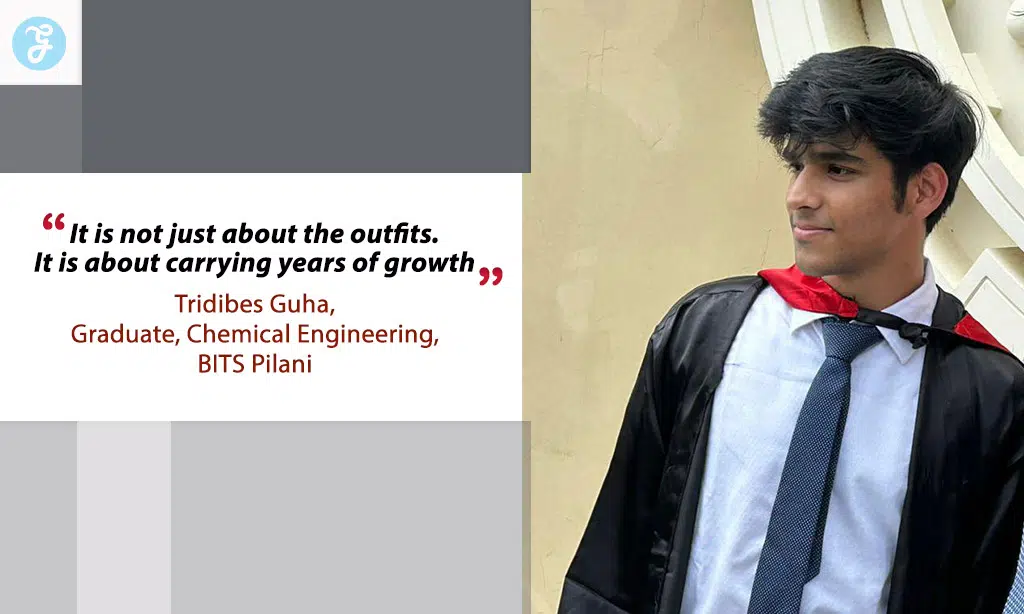
Tridibes Guha recently graduated with honors in Chemical Engineering from BITS Pilani, a renowned engineering school in Rajasthan, India. “Coming back to our alma mater, all dressed up, feels surreal,” Tridibes says. “It is not just about the outfits. It is about carrying years of growth, memories, and hard work in every step we take.”
His experience reflects a global trend where graduation is now both a personal milestone and a shared visual moment. “All of us dressed up to mark the occasion,” Tridibes explains. “Even my grandfather, my nana, made a special effort to be there, dressed for the day.”
A Lesson in Substance: Dr. Atashi Karpha, Principal, Gokhale Memorial Girls’ College

Dr. Atashi Karpha, Principal of Kolkata’s well-known Gokhale Memorial Girls’ College, offers a real world view on the shifting nature of these academic milestones. Her focus remains on the core values of the institution and the students it shapes.
“Convocation is a moment of dignity, achievement, and quiet pride,” Dr. Karpha says. “Traditional attire, in this context, adds depth and meaning, connecting the present milestone with heritage. It is a symbol of humility and the journey of learning. While style and presentation have their place, convocation is less about display and more about honoring years of effort, discipline, and growth. Convocation may have the walk, but not catwalk.”
The Price of the Perfect Shot
The cost of a degree now extends far beyond tuition and textbooks. A new category of spending has emerged for the modern graduate. This financial pressure stems from the need to look flawless on a single afternoon. Students often find themselves balancing the high costs of their education with the expensive demands of graduation fashion.
The Hidden Costs of Commencement
The financial burden does not stop at the gown rental. Graduates now pay for professional makeup artists and hair stylists to ensure they are camera ready. Designer rentals and luxury footwear have become standard requirements for the ceremony. These expenses add up quickly for students who are often already facing significant debt. What used to be a simple celebration has turned into a high cost production.
Buying a Professional Identity
The fashion industry cleverly targets the aspirations of young professionals. An expensive suit or a designer dress serves as a visual symbol of the status the degree is supposed to provide. McKinsey and Company reports that younger consumers are more likely to spend on experiences that offer high quality social media content. For many, the outfit is an investment in their personal brand. They are not just buying clothes. They are purchasing the image of a successful future.
The Social Currency of Achievement
For Gen Z and Millennials, the value of an event is often measured by its digital reach. This drive for “shareable” moments creates a cycle of competitive spending. Students feel they must match the visual standards set by their peers online. This pressure turns a personal milestone into a public performance. When the focus shifts to the cost of the appearance, the actual achievement of the degree can sometimes feel secondary.
Does Aesthetics Diminish Academic Weight?
The focus on aesthetics might be thinning the intellectual weight of the degree. We must ask if the substance of education is being buried under the layers of graduation fashion. The shift from academic rigor to visual perfection changes the nature of the milestone. It turns a ceremony of the mind into a spectacle of the skin.
The Original Equalizer
Historically the academic gown served a specific purpose. It was designed to hide the social class of the student. By covering the clothes of the wealthy and the poor alike, the robe ensured that only merit was visible. It stood as a symbol of intellectual equality. Everyone walked the stage as a scholar rather than a consumer.
A New Social Hierarchy
Today the gown is often worn open or accessorized to reveal what lies beneath. A new hierarchy has emerged based on purchasing power. Students now use designer labels and luxury brands to signal their status.
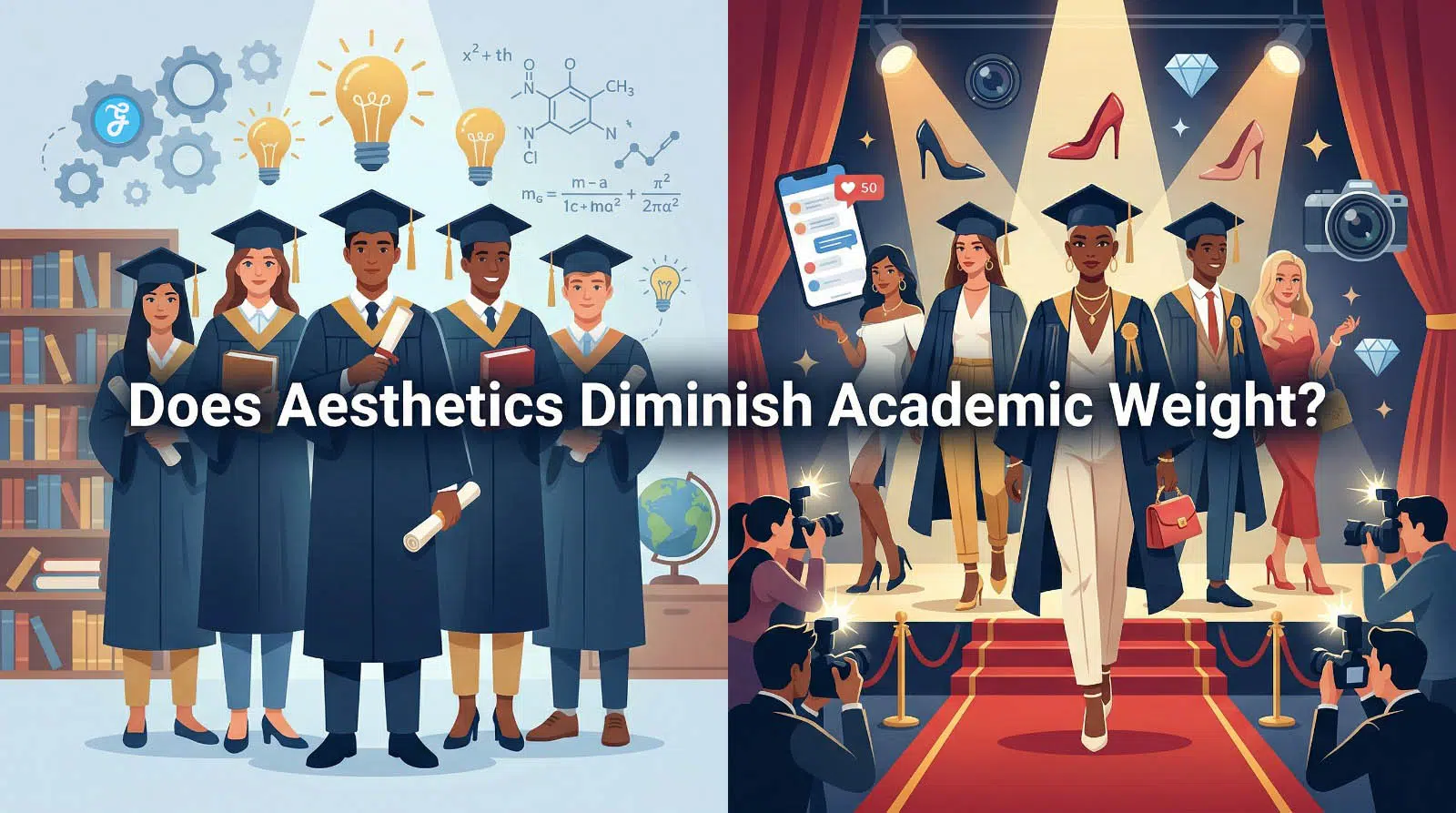
This creates a divide that the traditional robe was meant to erase. Success is now measured by the cost of the outfit rather than the grade point average.
The Stage-Managed Ceremony
Universities may be complicit in this shift. Many institutions treat convocations as marketing opportunities for their own brand visibility. They design the event to look good in promotional videos and social media posts. By prioritizing the digital footprint, the school shifts the focus from the graduate to the image. This turns the ceremony into a staged event designed for validation instead of a sincere academic celebration.
The Business of the Big Day
The fashion industry has successfully turned graduation into a recurring sales season. Brands no longer wait for weddings or holidays to drive their revenue. They have pivoted to target the specific window of spring convocations.
Direct Marketing and Seasonal Collections
Retailers now launch dedicated graduation collections as early as March. These lines are not just about traditional suits or dresses. They include everything from luxury accessories to high end footwear specifically marketed for the stage.
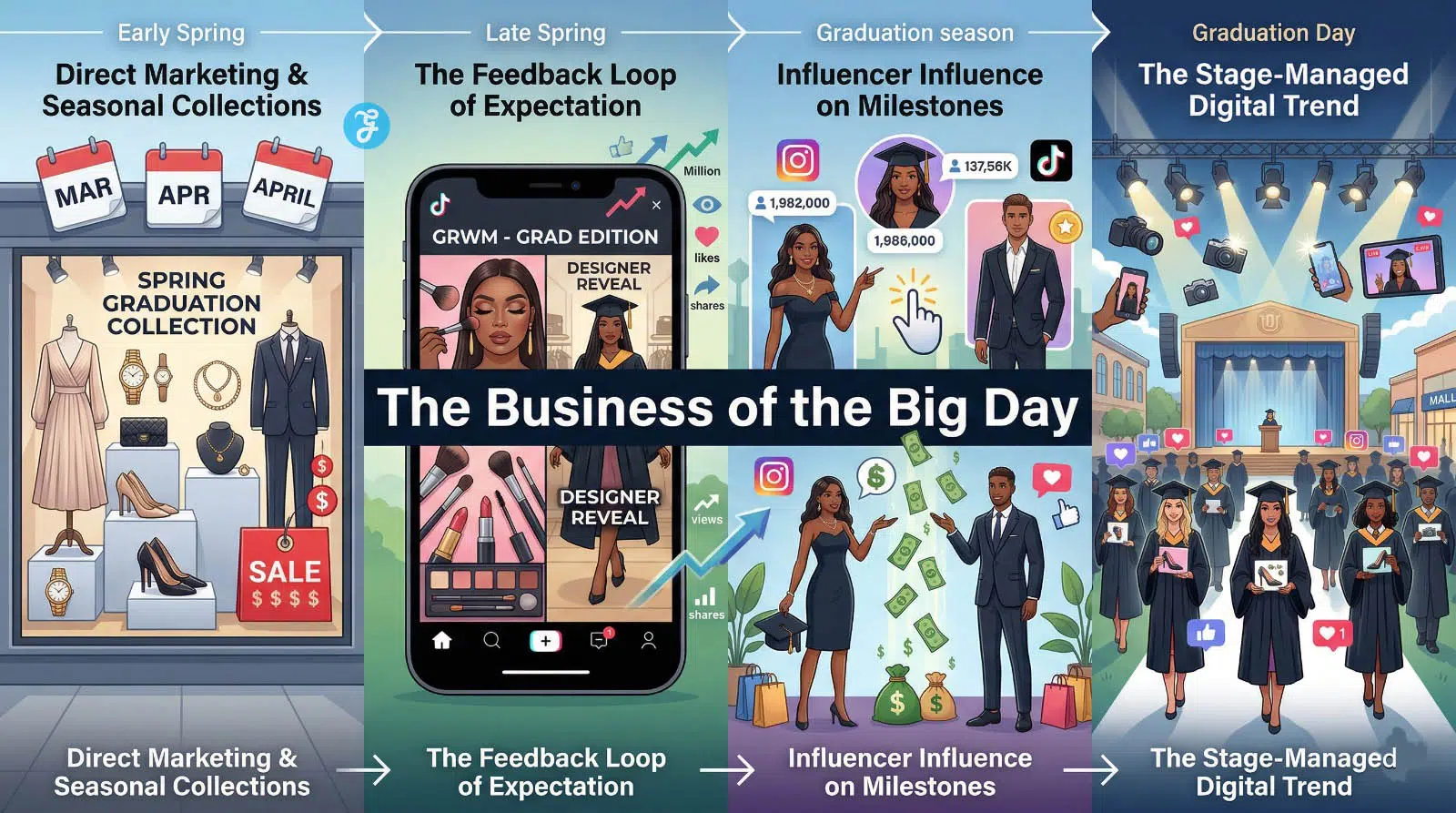
By framing these items as essential for a once in a lifetime moment, brands capitalize on the emotional weight of the day. This direct marketing turns a scholarly event into a significant retail milestone.
The Feedback Loop of Expectation
Social media has created a digital blueprint for how a graduate should look. The “Get Ready With Me” (GRWM) format has exploded, with graduation themed videos garnering millions of views on platforms like TikTok and Instagram. These clips show a step by step process of professional styling, from heavy makeup to designer reveals. This content creates a feedback loop. Students see these high standards online and feel a social obligation to replicate them for their own ceremonies.
Influencer Influence on Milestones
HubSpot’s research on the state of marketing reveals that social media is now the cornerstone of brand strategy. Influencer marketing has become a primary driver for fashion sales, especially during milestone events. When a trusted creator shares their graduation look, it acts as a powerful recommendation that traditional ads cannot match. For many graduates, the decision of what to wear is no longer a personal choice. It is a response to a carefully managed digital trend.
Finding Our Way Back to Meaning
I look again at the photograph of my mother. Her smile is the only thing that shines. There is no designer label visible. There is no professional contouring. The black cap sits simply on her head as a mark of her effort. That image reminds me that a graduation was once a quiet victory. It was a private triumph shared with a few close family members.
Finding a Middle Ground
Celebrating a degree is important. Students work for years to earn their place on that stage. However, we must find a balance between achievement and appearance. The simplicity of the past allowed the focus to stay on the internal journey. It prioritized the knowledge gained over the fabric worn. Today the noise of graduation fashion often drowns out the quiet dignity of the scholar.
The Oath or the Image
The dental students I saw at the convocation are entering a noble profession. They will soon be responsible for the health and well-being of their communities. As the ceremony ends, a haunting question remains. Years from now, what will these graduates remember most? Will they recall the weight of the oath they took to serve their patients? Or will they only remember the specific filter they used for their Instagram post?
Degree or Debut
We have arrived at a crossroads of identity and consumerism. We must decide if we are gathered to celebrate a hard-earned degree or a social media debut. If the ceremony is merely a stage for visibility and validation, we lose the heart of academia. It is time to reclaim the cap and gown as symbols of merit rather than tools for marketing. The true value of the day lies in the mind of the graduate, not the cost of the catwalk.