Imagine this: You work hard all your life to build a home, save money, and care for your loved ones, but then something unexpected happens, and your family faces chaos without a clear plan. Fights break out over who gets what, bills pile up from taxes, and your kids might end up with the wrong guardian. This mess hits many families every day, leaving them stressed and heartbroken.
Did you know that over half of American adults lack any estate plan at all, which often leads to costly court battles and lost assets? In this post on Estate Planning Basics, we’ll break it down into easy steps, from listing your stuff to picking beneficiaries, so you can shield your family from trouble.
We’ll share tips to dodge common pitfalls and cut taxes, too. Ready to protect what matters most?
What is Estate Planning?
Now that we’ve set the stage with why estate planning matters for your family’s future, let’s jump right into the basics. Estate planning boils down to mapping out what happens to your stuff, like your home, savings, and other assets, after you pass away.
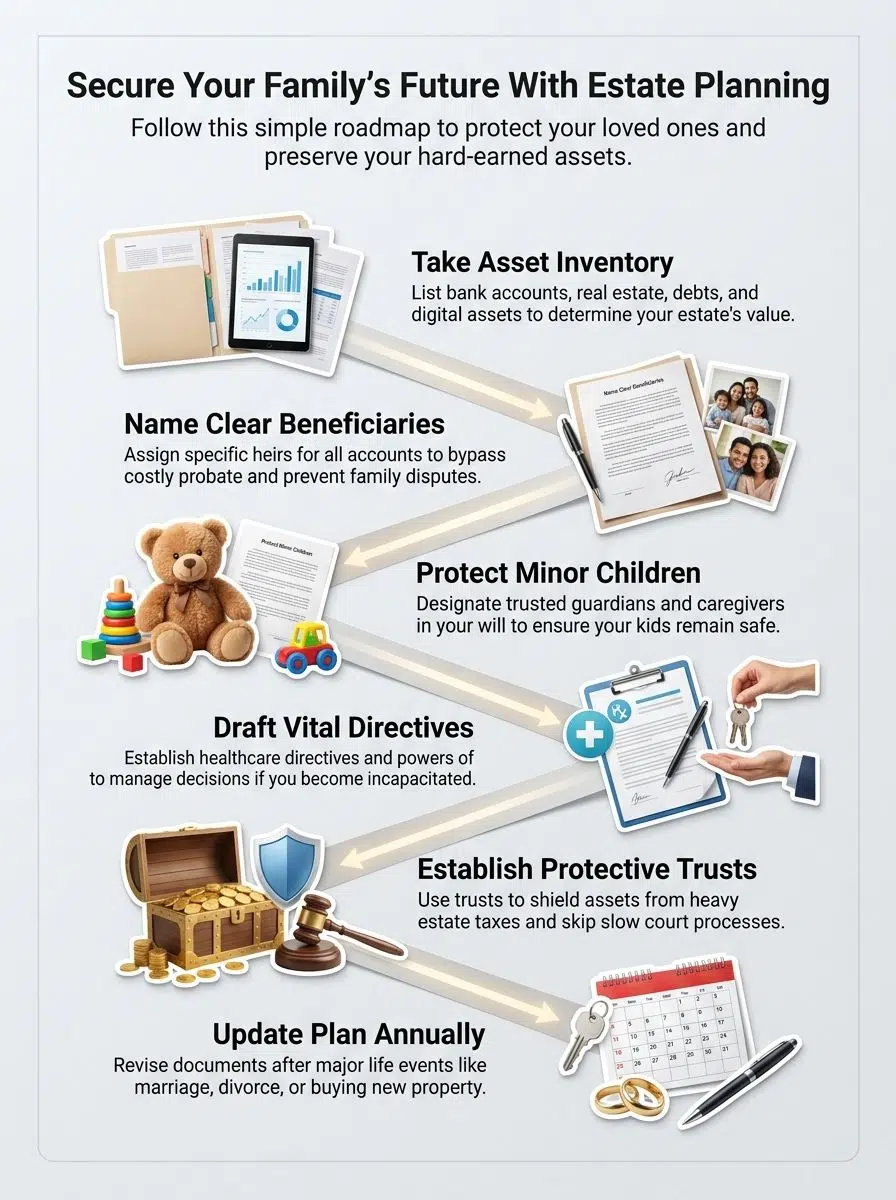
You create a clear plan that spells out your wishes, so your loved ones avoid the headache of probate court, that slow legal process that sorts out inheritance without a will. Think of it as a roadmap for asset distribution, one that includes tools like a will to name beneficiaries and a trust to protect those assets from taxes or disputes.
This setup handles financial planning and covers family protection, say by naming a guardian for your kids if needed. People often mix up estate planning with just writing a will, but it goes deeper, like adding a power of attorney for someone to handle your finances if you can’t, or a health care directive for medical choices.
Imagine your estate as a big pie, your plan slices it up fairly to lower estate taxes and skip costly legal fees. Folks skip this step, then families face chaos over things like life insurance payouts or retirement accounts.
You pull together these pieces to shield your heirs, making sure your hard-earned wealth lands where you want, with less drama and more peace of mind.
Why You Need an Estate Plan
Imagine your family scrambling after you’re gone, like a ship without a captain in a storm. An estate plan acts as that steady rudder, guiding your loved ones through tough times with clear directions and fewer worries.
Ensuring Financial Security for Your Family
Estate planning locks in financial security for your family, like a safety net that catches them if life throws a curveball. You build this through a solid will and trust, which guide asset distribution without the mess of probate.
Think of it as handing over the keys to your estate smoothly, so loved ones avoid steep estate taxes and legal headaches. Families often face tough times after a loss, but your plan steps in to protect inheritance for beneficiaries, covering everything from life insurance to non-retirement accounts.

Picture a friend who skipped this step; his kids fought over assets, draining money on court fees instead of building their future. You can dodge that drama by designating power of attorney for financial planning decisions.
This keeps family protection at the forefront, ensuring guardians handle things if you’re out of the picture. Asset protection becomes a breeze, and your heirs breathe easier knowing healthcare directives align with your wishes.
Preventing Family Disputes and Confusion
Family fights can tear apart even the closest kin after you’re gone. Think of it like a game of telephone gone wrong, where everyone hears a different version of your wishes. A solid estate plan acts as your clear voice, spelling out who gets what through a will or trust.
This stops confusion over assets and beneficiaries right from the start. Imagine your kids squabbling over the family home; you prevent that mess by naming guardians for minors and setting up powers of attorney for smooth decisions.
Probate courts often step in without a plan, dragging things out and fueling disputes. You avoid this headache by planning for inheritance and asset distribution ahead of time. Picture a puzzle with all pieces fitting perfectly; that’s your estate with clear directives.
Empathy kicks in here, folks, because nobody wants their loved ones stressed over healthcare choices or financial planning woes. Add a dash of humor: don’t let your legacy be a bad soap opera plot.
Lowering Taxes and Legal Costs
Estate planning cuts taxes and legal fees for your loved ones. You save money by skipping probate, that slow court process for wills. Trusts help here; they move assets straight to beneficiaries without extra costs.
Picture your family dodging high estate taxes, like a smart detour around a traffic jam. Power of attorney lets someone handle your finances smoothly, avoiding court fights. Heirs get more inheritance when you plan ahead with these tools.

A good estate plan is like a safety net, catching your family’s future without the hefty price tag, says financial expert Jane Doe.
Smart moves in estate planning lower those pesky taxes on assets. Use life insurance to shield money from estate taxes. Name beneficiaries on accounts to bypass probate fees. This keeps more cash in your family’s pocket.
Think of it as planting seeds for a bountiful harvest, minus the weeds of legal hassles. Update your plan often to match changing laws on inheritance.
Key Components of an Estate Plan
Estate planning feels like building a sturdy fence around your family’s future, with vital pieces that lock in your wishes and shield your loved ones from chaos, so stick around to see how they fit together.
Drafting Wills
Drafting a will stands as your roadmap for asset distribution after you pass. You spell out who gets what, from your house to that old coin collection. This simple document names beneficiaries for your estate, like kids or a favorite charity.
Skip it, and probate courts step in, which drags on and costs your family big time. Think of it as giving your loved ones a clear path, not a puzzle.
Name a guardian for minor kids in your will to keep things smooth. You also pick an executor, that trusted person who handles the details. Update it often, say after a big life change, to match your current wishes.
A will protects your family’s inheritance and cuts down on fights over assets. Talk to a lawyer; they make sure it fits state laws and avoids common slips.
Establishing Trusts
Trusts form a key part of your estate plan. You set them up to hold assets like property or money for your beneficiaries. Think of a trust as a safe box that protects your stuff from probate hassles.
Families often use them to skip court delays and keep things private. A revocable trust lets you change it anytime, while an irrevocable one locks in your choices for tax perks. Imagine passing on your home without a big tax bite; that’s what trusts can do.
Pick a trustee, someone you count on, to manage it all. This step shields your family’s future from surprises. People create trusts to control how assets flow to heirs, maybe over time if kids are young. Avoid the mess of everything going through probate court. Your trust can name guardians for minor children, too.
It ties into financial planning by lowering estate taxes. Chat with a pro to match it to your needs, folks; it makes a world of difference. Now, let’s talk about designating powers of attorney.
Designating Powers of Attorney
Once you’ve set up trusts to safeguard your assets, consider who will handle your affairs if illness or injury strikes. Designate a power of attorney, and pick someone you trust to make choices on your behalf.
This legal tool lets that person manage your finances, pay bills, or even sell property if needed. Think of it like handing over the car keys to a reliable friend during a storm; it keeps things moving smoothly.
Choose wisely for different types, like a financial power of attorney for money matters or a healthcare one for medical decisions. Name backups in case your first choice can’t step up.
This step ties into your complete estate plan, protecting your family from tough spots. Imagine the relief when your loved ones avoid guessing games in a crisis. It promotes smart financial planning and ensures your wishes guide the way.
Writing Living Wills
After naming someone to make choices through the power of attorney, you take the next step by writing a living will. This document spells out your wishes for healthcare if you can’t speak for yourself.
Think of it as your voice in tough times, like when machines keep you alive against your true desires. Living wills focus on end-of-life care, such as refusing certain treatments. They ease the burden on your family, who might face hard calls without your clear input.
Doctors follow these directives to honor what you want. Pair this with a health care directive for full coverage. You avoid confusion and protect your loved ones from guilt. Many folks add details on pain relief or organ donation.
Talk to a lawyer to make it legal in your state. Living wills fit into your complete estate plan, linking with trusts and wills for family protection. They reduce stress during crises, keeping your inheritance plans smooth. Imagine the peace it brings, knowing your healthcare aligns with your values.
Steps to Create an Estate Plan
Picture yourself mapping out a treasure hunt for your loved ones, with clear paths to follow after you’re gone. Jump in with these easy moves, and you’ll safeguard what matters most, feeling that weight lift off your shoulders.
Step 1: Create an inventory of assets and debts
You start estate planning by listing your assets and debts. This step helps you see your full financial picture, like mapping out a treasure hunt for your family’s future.
- Gather all your assets, such as bank accounts, real estate, investments, and life insurance policies, to understand what you own. Think of it as taking stock of your life’s work, the stuff that makes up your estate. List everything with details like account numbers and values, so nothing slips through the cracks during probate. Include personal items, too, like cars or jewelry, because asset distribution counts on a clear view.
- Note down your debts, including mortgages, loans, and credit card balances, to avoid surprises for your heirs. Imagine passing on a puzzle with missing pieces; this list prevents that mess. Write the amounts owed and to whom, tying into financial planning for smoother inheritance. It protects your family by showing the real net worth of your estate.
- Value each item accurately, perhaps with appraisals for property or recent statements for accounts, linking to asset protection. You know, like weighing your gold before hiding it; accuracy matters here. This helps in lowering estate taxes later, as you spot ways to shield assets through tools like trusts.
- Organize the inventory in a simple document or spreadsheet, making it easy for your power of attorney to access if needed. Picture chatting with a friend about your stuff; keep it straightforward and up-to-date. Include digital assets too, like online accounts, for complete family protection.
- Review for any overlooked items, such as retirement funds or business interests, to ensure nothing derails your healthcare directives or guardianship plans. Folks often forget these, but hey, a quick double-check saves headaches. This ties into avoiding probate pitfalls and securing beneficiary designations.
With your inventory in hand, you can now identify your beneficiaries.
Step 2: Identify your beneficiaries
Once you’ve wrapped up Step 1 by creating that inventory of your assets and debts, you can move smoothly into deciding who will inherit them. This next part focuses on naming your beneficiaries, a key move in estate planning. It helps protect your family and ensures your wishes come true.
- Think about your loved ones first, like your spouse, kids, or even close friends, as these folks often become your main beneficiaries in a will or trust. Name them clearly to avoid probate headaches, where courts step in and slow down asset distribution. For example, if you have life insurance, pick a beneficiary right away so the money goes straight to them without extra taxes or delays.
- Consider contingent beneficiaries as backups, in case your primary choices pass away before you do. This smart step keeps your estate plan solid and prevents confusion for your family. Envision a situation where your sibling steps in if needed; it adds peace of mind and boosts family protection.
- Factor in charities or organizations if you want to leave a legacy beyond family, tying into your full financial planning. List them as beneficiaries on accounts like retirement funds to cut down on estate taxes for your heirs. One guy I know left part of his inheritance to a local animal shelter, and it felt great knowing his assets supported a cause he loved.
- Review any existing designations on accounts, such as bank or investment ones, because these override your will in many cases. Update them to match your current wishes, avoiding mix-ups in asset protection. Think about the surprise if an old ex ends up as a beneficiary; fix that now with a quick call to your bank.
- Talk openly with your chosen beneficiaries about your plans, using natural dialogue to explain why you picked them. This reduces the chance of family disputes and builds trust. Empathy matters here; share a light anecdote about how your grandma’s clear inheritance talk kept everyone on the same page, like a well-oiled machine.
- Include guardians for minor kids in this step, linking to guardianship in your estate plan. Choose someone reliable to care for them, and name alternates, too. It’s like picking a team captain for your family’s future, ensuring healthcare directives and financial support align with your vision.
- Use a power of attorney to appoint someone who can handle decisions if you’re unable, tying beneficiaries to broader health care directives. This person might overlap with your beneficiaries, making sure your estate flows smoothly. A humorous tip: Don’t pick the family joker unless you want surprises; go for the steady one instead.
Step 3: Plan for minor children and their caregivers
Planning for minor children in your estate plan hits close to home for many parents. You want to shield them from uncertainty if something happens to you.
- Name a guardian in your will to care for your minor children, picking someone who shares your values and can provide a stable home, like a trusted family member or close friend who knows your kids well.
- Set up a trust to manage inheritance for your beneficiaries, ensuring assets like life insurance payouts or property get distributed wisely over time, avoiding a big lump sum that could overwhelm a young person.
- Choose a caregiver who handles financial planning for the kids, separate from the guardian if needed, to protect assets and cover needs like education or healthcare without probate hassles.
- Include provisions for guardianship in case of your incapacity, using a power of attorney to appoint someone who makes decisions on health care directives and daily life for your children.
- Think about asset protection by designating how funds from your estate support the minors, perhaps through a trust that minimizes estate taxes and ensures family protection long-term.
- Discuss your choices openly with potential guardians, sharing anecdotes from your life to explain why they’re the right fit, and get their buy-in to avoid surprises down the road.
With your kids’ future secured, let’s establish directives for your wishes.
Step 4: Establish directives for your wishes
You reach a key point in estate planning here. Directives let you spell out your wishes for health care and financial matters, giving peace of mind to your family.
- Start by creating a health care directive, which tells doctors your preferences for medical treatment if you can’t speak for yourself, like whether to use life support in tough spots; this document, often called a living will, protects your values and eases tough choices for loved ones during crises.
- Name a power of attorney for health care, picking a trusted person to make decisions on your behalf if illness strikes; imagine your spouse or child stepping in seamlessly, avoiding court battles over who calls the shots.
- Set up a financial power of attorney next, choosing someone to handle your assets and bills if you become unable to do so; this covers everything from paying debts to managing investments, keeping your estate on track without probate delays.
- Include details on asset distribution in your will or trust, linking back to your beneficiaries to ensure inheritance flows as you want; think of it as a roadmap that guards against confusion, much like leaving clear instructions for a family recipe.
- Consider guardianship wishes if you have minor kids, though you’ve planned for caregivers already, tying this into broader family protection by stating backup options; it’s like having a safety net that keeps everyone secure.
With directives in place, shift focus to sidestepping pitfalls in your plan under common mistakes to avoid in estate planning.
Common Mistakes to Avoid in Estate Planning
Picture forgetting to tweak your estate plan after a big life shift, like a new baby or a move across states, and bam, your loved ones face a mess. Or imagine skipping the fine print on taxes, leaving your heirs with a surprise bill that eats into their inheritance, talk about a plot twist nobody wants.
Failing to update your plan
Life changes fast, folks. You set up a strong will and trust years ago, but then marriage hits, or a baby arrives. Skip updates, and your beneficiary choices might not match your current wishes.
Old plans could send assets to an ex-spouse, sparking probate headaches. Update that power of attorney, too, so your estate stays in line with family protection goals.
Think of your estate plan like a favorite old car. It runs fine at first, but ignore tune-ups, and problems pile up. Divorce or new property ownership? Revise those documents now. This keeps inheritance smooth, avoids estate tax surprises, and guards against family disputes over assets.
Stay on top, and your loved ones will thank you later.
Overlooking state laws on estate taxes
Many folks skip over state laws on estate taxes, and that can hit your heirs hard. Imagine you work your whole life to build assets, only for taxes to gobble up a big chunk when you pass.
States like New York and Oregon impose their own estate taxes on top of federal ones, often starting at lower thresholds. Your family might face a bill of over $1 million if your estate tops $6 million in some places.
Check these rules early to protect inheritance for your beneficiaries.
Talk to a pro about trusts or gifting strategies to dodge high estate taxes. For example, folks in California use life insurance payouts, which skip probate and taxes altogether. You avoid leaving your loved ones in a pickle, scrambling with unexpected costs.
Asset distribution stays smooth, keeping family protection intact without nasty surprises from overlooked laws.
Ignoring non-retirement accounts
State laws on estate taxes can trip you up, and so can skipping over your non-retirement accounts. People often focus on retirement funds like 401(k)s, but they leave out checking accounts, savings, or investments.
These assets need clear beneficiaries, too. Without them, your money might go through probate, a slow court process that ties up inheritance for your family. Imagine your loved ones waiting months for cash they need right away, all because you missed this step.
Designate beneficiaries on those accounts now. It skips probate and sends assets straight to heirs. For example, add a payable-on-death note to your bank account. This simple move protects your family’s financial planning.
Think of it like leaving a clear map to buried treasure, no riddles involved. Your estate stays smooth, and everyone avoids headaches.
How Estate Planning Reduces Taxes for Heirs
Smart estate planning slashes the tax bite on your legacy, letting your loved ones keep more of what you’ve built. Imagine passing on wealth without Uncle Sam grabbing a huge chunk – yeah, strategies like clever account conversions make that dream real, so dig deeper to see how you can shield your family’s future from hefty bills.
Understanding estate tax laws
Estate taxes hit when you pass on your assets. They apply to big estates over a certain amount. The federal exemption sits at $12.92 million per person. You avoid taxes on anything below that.
States add their own rules, some with lower limits. Think of it like a toll booth on the road to inheritance; smart planning eases the ride for your family.
Use trusts to shield assets from heavy taxes. Name beneficiaries on life insurance to skip probate. This keeps more money in heirs’ pockets. Picture your estate as a pie, and taxes take a slice, but tools like Roth conversions shrink that bite.
Utilizing the Roth workaround
You know that sinking feeling when taxes eat into your hard-earned savings? Well, the Roth workaround flips the script on that for your heirs. Convert a traditional IRA to a Roth IRA, and you pay the income taxes upfront.
Your beneficiaries then inherit the account tax-free. This smart move slashes estate taxes, keeps more money in your family’s pocket, and boosts financial planning for the long haul.
Picture your kids or grandkids getting assets without the IRS taking a big bite; it’s like giving them a head start in a relay race.
Folks often overlook this trick, but it shines in estate planning. Name your loved ones as beneficiaries on the Roth account to skip probate headaches. They access funds easily, with no tax drag on distributions.
Pair it with life insurance for extra asset protection, and you’ve got a solid shield for family protection. Think of it as planting a money tree that grows tax-free fruit for generations.
Reviewing and Updating Your Estate Plan
Life changes fast, like a plot twist in your favorite show, so pull out that estate plan every year and give it a fresh look. You might spot tweaks that keep everything smooth for your loved ones, and hey, it’s easier than you think to stay on top of it all.
Life events to consider (marriage, divorce, or death of a spouse)
Major changes in your life can shake up your estate plan. You need to update it to keep your family’s protection strong.
- Marriage brings joy, but it also calls for tweaks in your will and trusts. Add your new spouse as a beneficiary to share in your assets. Think about how this affects inheritance for kids from before. Update power of attorney docs too, so your partner can handle health care choices if needed. Picture tying the knot, then forgetting to change your plan, like leaving an old flame in charge, what a mix-up that would be.
- Divorce flips your world upside down, and your estate plan must follow suit. Remove your ex from beneficiary spots on life insurance and financial accounts to avoid probate headaches. Revise your will to cut them out of asset distribution, or risk family disputes later. Chat with a lawyer about guardianship for any kids, keeping their future secure. It’s like cleaning house after a storm, you toss the old stuff to make room for calm.
- The death of a spouse hits hard, yet it pushes you to review everything fast. Shift assets and update trusts to reflect your new solo status. Check estate taxes on inheritance, maybe use tools like the Roth workaround to ease the load on heirs. Designate new powers of attorney for financial planning and health care directives. Imagine your partner gone, and old plans linger like ghosts; it’s better to honor their memory by fixing things now.
Changes in financial accounts or property ownership
Life events like marriage or divorce shake up your world, but so do shifts in your money matters or what you own. These changes hit your estate plan hard. They demand quick tweaks to keep things smooth.
- Buying or selling property means you update your will and trust right away, so your assets go to the right beneficiary without probate headaches; think of it as reshuffling the deck to avoid a family mess over inheritance.
- Opening new financial accounts, like a fresh investment portfolio, requires you to name beneficiaries clearly, which protects your family’s future and cuts down on estate taxes that could eat into their share.
- Paying off big debts alters your estate’s value, so review powers of attorney and asset distribution plans to match the new reality, kind of like trimming sails on a boat to stay on course.
- Inheriting assets from someone else boosts your own estate, pushing you to adjust trusts for better asset protection and to dodge extra taxes, ensuring your heirs get more without legal snags.
- Switching jobs often changes retirement accounts or life insurance, so designate new powers of attorney if needed and update health care directives to reflect your current financial planning goals.
- Acquiring business ownership tweaks property stakes, making it smart to revise guardianship plans for minor kids and align everything with state estate tax rules for solid family protection.
The Closing Thoughts
Estate planning acts like a safety net for your loved ones, catching them if things go south. You craft a will to guide asset distribution, name beneficiaries to avoid probate pitfalls, and set up trusts for smart inheritance moves.
Imagine your family sailing through tough times without the storm of confusion, all because you designated a power of attorney for key decisions. This setup shields healthcare choices, too, with a healthcare directive in place.
Take charge now, chat with pros about estate taxes and life insurance to boost family protection. Picture dodging legal headaches by planning for guardianship if kids are involved. Your financial planning turns into a legacy, easing burdens on those you cherish. Empathy kicks in here; no one wants disputes over assets to tear folks apart.
FAQs on Estate Planning Basics
1. What is estate planning, anyway?
Estate planning is like mapping out a treasure hunt for your loved ones, you know, making sure they find what you leave behind without any headaches. It covers basics like drafting a will, setting up trusts, and naming beneficiaries to protect your family’s future. Think of it as your safety net, catching everyone if life throws a curveball.
2. Why should I bother with estate planning now?
Don’t wait until the eleventh hour; starting early shields your family from nasty surprises down the road. It helps avoid family squabbles over assets and keeps taxes from gobbling up your hard-earned savings.
3. What key documents do I need for basic estate planning?
You’ll want a will to spell out who gets what, a power of attorney for someone to handle your affairs if you can’t, and maybe a living trust to skip the probate mess. Oh, and don’t forget health care directives; they’re like your voice when you can’t speak up for yourself. These tools work together, keeping things smooth for your kin.
4. How can estate planning really protect my family’s future?
Picture this: without a plan, your family might face a bureaucratic nightmare, like probate court dragging on forever. It lets you decide guardians for your kids, ensuring they’re in good hands, and minimizes taxes so more goes to them, not Uncle Sam.