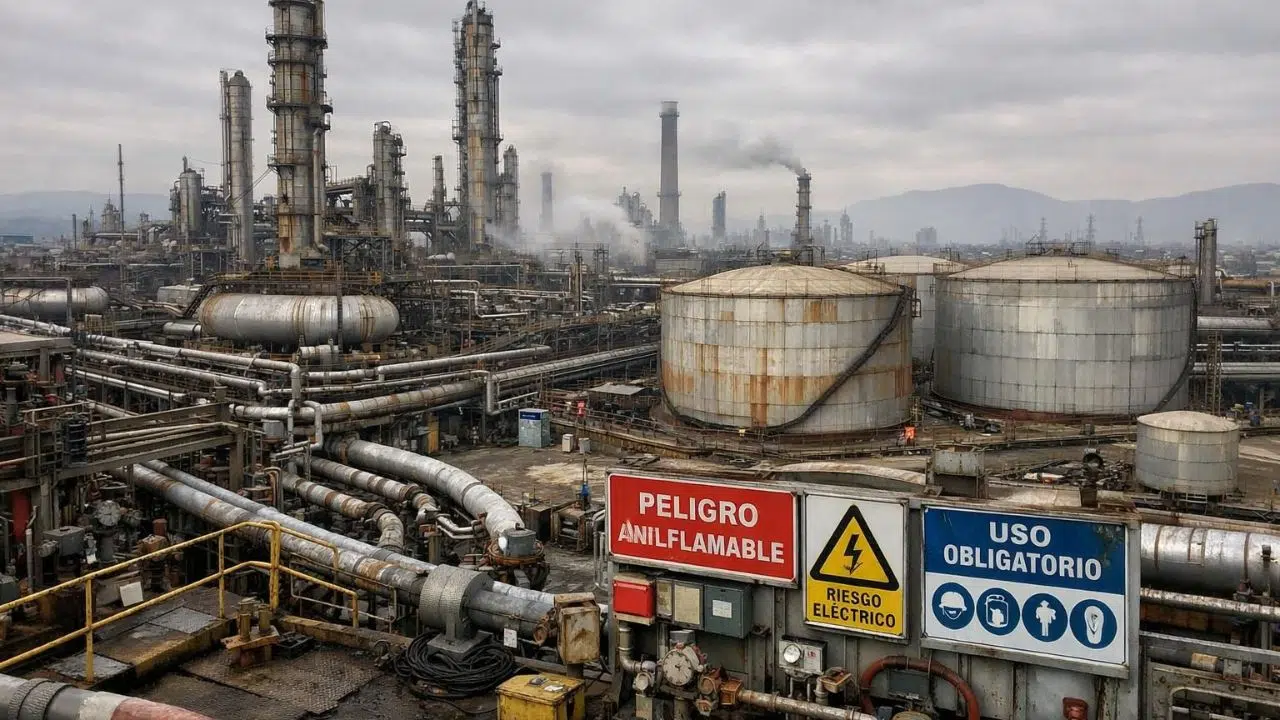
Running a liquid fuel operation in Chile? You face a lot of rules. The regulations can feel overwhelming, especially if you work in production, refining, transportation, or storage. One wrong move, and your business hits a wall. You need clear guidance on what the government actually requires. That’s where Decreto Supremo 160 comes in.
Chile’s Ministry of Economy issued Decreto Supremo 160 on July 7, 2009, establishing comprehensive safety regulations for liquid fuel operations. This decree applies to all stages of fuel handling, from production and refining to transportation, storage, distribution, and supply.
The rules cover everything, and they matter. Businesses that follow them operate smoothly. Those who skip steps face serious consequences.
This guide breaks down Decreto Supremo 160 into simple pieces. You’ll learn the key objectives behind the decree, the core provisions that affect your daily work, and what compliance actually looks like for your business.
We’ll show you the real impact on your operations, the challenges you might face, and the opportunities waiting for you. By the end, you’ll know exactly what the Ministry of Economy requires and how to meet those requirements without confusion or guesswork.
Key Objectives of Decreto Supremo 160
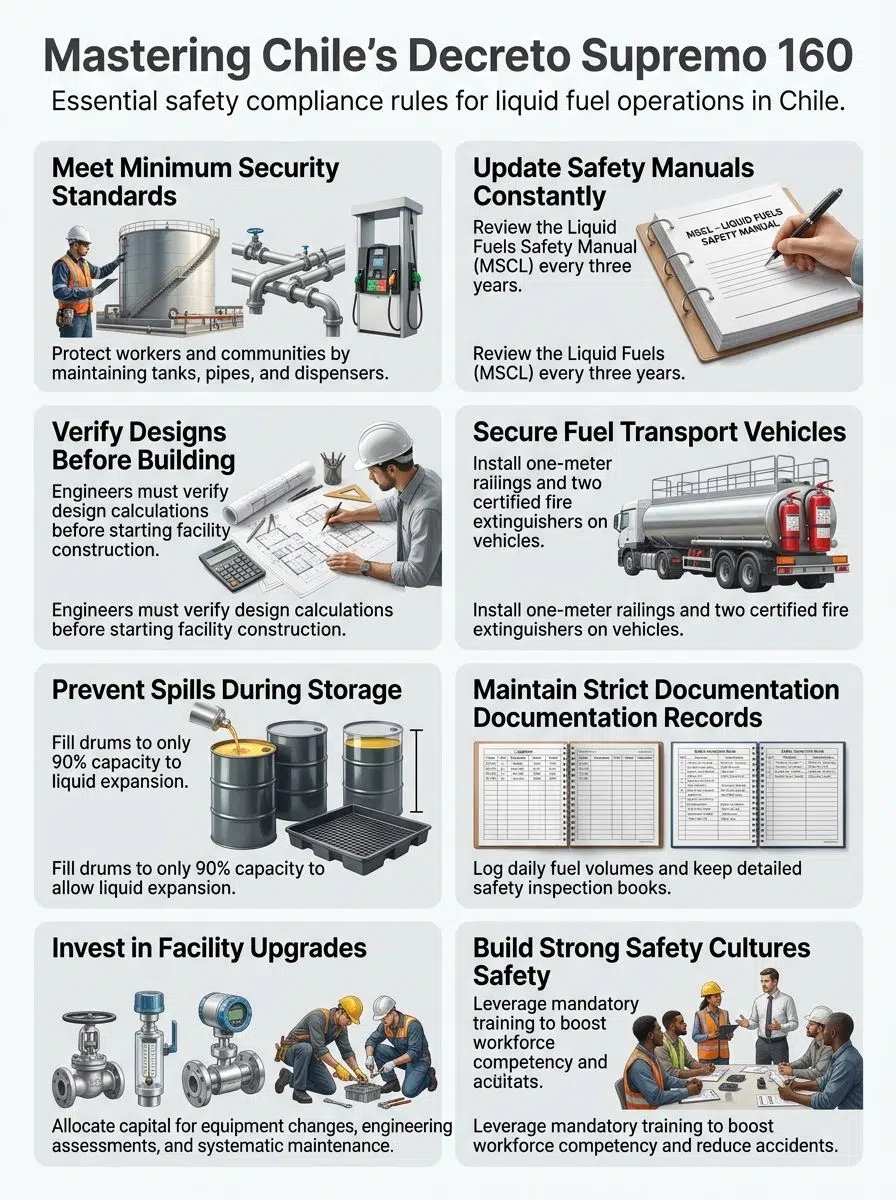
Chile’s Ministry of Economy created Decreto Supremo 160 to tighten safety rules across liquid fuel operations. This regulation sets minimum security standards that facilities must follow to protect workers, equipment, and communities from harm.
Strengthening Safety Regulations
Decreto Supremo 160 strengthens safety regulations across Chile’s fuel sector by setting minimum safety requirements that facilities must meet. The Ministry of Economy established these rules to protect workers and the public from accidents and occupational diseases.
Owners and operators now face clear mandates to maintain tanks, pipes, and dispensing units in top condition. Regular inspections catch problems before they become dangerous. Documentation of these inspections proves compliance with the reglamento de seguridad.
The Superintendencia de Electricidad y Combustibles oversees this work and holds companies accountable. Safety signage stays current so emergency responders know what they face. Tank identification remains visible at all times.
These steps cut down on leaks and emissions that could harm people or damage the environment.
Decreto Supremo 160 requires security measures during fuel transportation to prevent accidents on the road. Drivers and handlers must follow strict protocols when moving combustibles líquidos derivados del petróleo and biocombustibles.
The decree covers production and refinación operations where risks run high. Workers receive training on how to spot hazards. Companies must implement controls that match the danger level at each site.
Facility managers perform memory de cálculo checks and review planos del diseño to catch structural problems. The law applies force across all operations, from storage areas to delivery points.
Compliance with decreto supremo 160 carries real consequences for businesses that cut corners. This approach shifts responsibility to those who control the fuel, making them active partners in keeping everyone safe.
Ensuring Compliance in Liquid Fuel Operations
Liquid fuel operations demand serious attention to safety rules and regulations. The Ministry of Economy established Decreto Supremo 160 to set minimum security standards that all facilities must follow.
Storage facilities need a manual that details safe operation procedures, and this manual must cover every step workers take. Personnel operating these facilities receive proper training to meet compliance standards.
Companies storing liquid fuel derivatives from petroleum and biocombustibles must declare their operations to the SEC, or Superintendence of Electricity and Fuel, unless they store less than 1,100 liters.
This declaration requirement keeps authorities informed about fuel storage locations and quantities across the country.
Risk prevention experts play a critical role in maintaining compliance throughout operations. Facilities must maintain a registered inspection book that documents all safety checks and maintenance work.
The Safety Manual for Liquid Fuels, known as MSCL, requires review every three years or whenever modifications occur at the facility. Regular consultation with qualified risk prevention specialists helps companies identify potential hazards before they cause problems.
Occupational safety and health standards guide these inspections and consultations. Infrastructure improvements, worker training programs, and proper governance structures work together to create safe operations.
Businesses that follow these regulatory compliance requirements protect their workers, their communities, and their bottom line from costly accidents and penalties.
Core Provisions of the Decreto Supremo 160 Decree
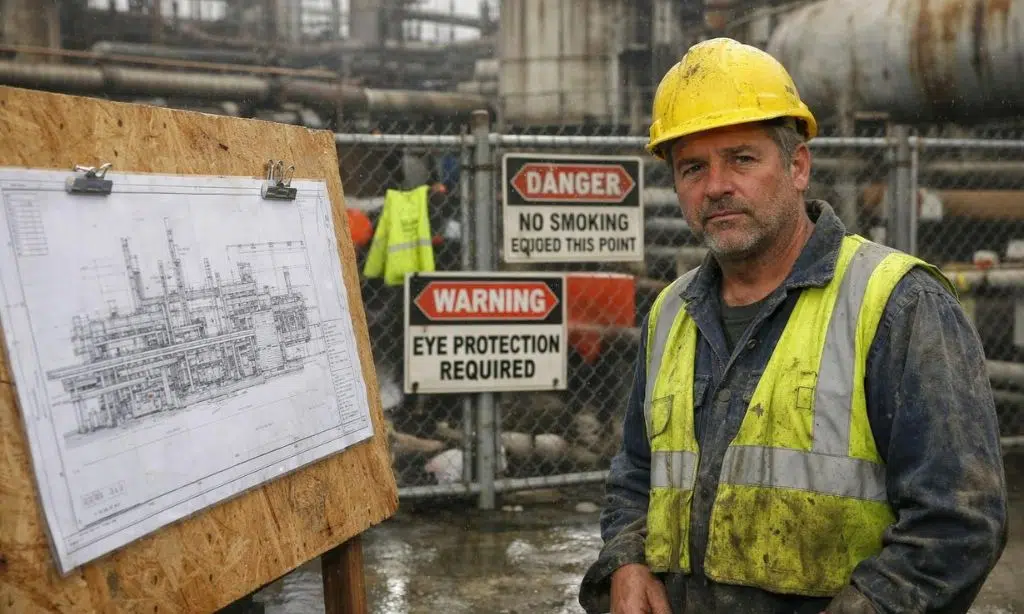
Decreto Supremo 160 lays out specific rules that companies must follow when they handle liquid fuels. These rules cover everything from how plants get built to how workers stay safe on the job.
Guidelines for Production and Refining
Production and refining operations in Chile must follow strict safety rules set by the Ministerio de Economía. These guidelines protect workers, equipment, and the surrounding environment from serious accidents.
- Operators must establish clear safety standards within all fuel production and refining processes to prevent dangerous situations from developing.
- Facilities need to follow design requirements that engineers must verify through detailed memory de cálculo calculations before construction begins.
- Production areas must include preventive maintenance schedules that owners and operators implement systematically to keep all installations working efficiently.
- The Safety Manual for Liquid Fuels, called MSCL, outlines operational procedures that cover every stage of production and refinement work.
- Refining operations require workers to follow specific protocols for handling combustibles líquidos derivados del petróleo safely during processing.
- Facilities must measure all tanks accurately and track fuel supply to vehicles to prevent loss or contamination during production stages.
- Operators need to establish safe storage practices that minimize the risk of spills or explosions while materials move through refining equipment.
- Waste disposal procedures must appear in the MSCL so that all staff members understand how to handle byproducts from production correctly.
- Biocombustibles and biodiésel production lines require the same rigorous safety standards as traditional petroleum fuel operations.
- Production facilities must conduct regular audits to verify that all personnel follow established guidelines for handling combustibles líquidos during refining.
- Engineers must design refining installations with safety features that prevent accidents before they occur in production areas.
- Operators must train staff members on the requisitos mínimos de seguridad requirements so that everyone understands their safety responsibilities during work.
Regulations for Transportation and Storage
Decreto Supremo 160 sets strict rules for moving and keeping combustibles líquidos derivados del petróleo and biocombustibles. These regulations protect workers, the public, and the environment during every step of the process.
- Transport vehicles must have rear doors and railings that stand at least 1 meter high to prevent cargo from falling during movement.
- Two certified fire extinguishers with a minimum extinguishing potential of 20 BC must be installed on every transport vehicle carrying fuel.
- Drums require a secure fastening system, such as slings, to keep them stable and prevent shifting while the vehicle moves.
- Visible signage indicating the type of fuel being transported must appear on vehicles so drivers and other road users know what hazardous material is present.
- “DANGER” and “NO SMOKING” warning signs must be clearly posted on all transport vehicles to alert people about fire risks.
- An appropriate number of wedges must be present on vehicles to secure them during transport and prevent unwanted movement.
- Drums should be filled only to 90% capacity, leaving space for liquid expansion and reducing spill risks during transport.
- Vertical storage of drums with appropriate lids protects the fuel from contamination and environmental exposure.
- Storage facilities must establish and maintain an emergency plan that covers fire response, spill containment, and worker evacuation procedures.
- Abandonment procedures must prioritize safety and environmental protection when closing facilities, ensuring proper disposal and site restoration.
- Guidelines for production and refining operations establish the requisitos mínimos de seguridad that facilities must follow throughout their operational life.
- Transportation regulations under Decreto 160 work to reduce accidents, injuries, and environmental damage across Chile’s fuel supply chain.
Implications for Businesses and Stakeholders
Decreto Supremo 160 reshapes how companies handle liquid fuel operations, forcing businesses to rethink their production, storage, and transportation methods. Companies face real costs when they upgrade facilities to meet the new safety standards that the Ministry of Economy demands.
Operational Compliance Requirements
Businesses operating fuel facilities must follow strict rules from the Ministry of Economy. These operational compliance requirements keep everyone safe and protect the environment.
- Owners and operators must maintain daily verification of fuel volumes and record these measurements without fail, creating a clear paper trail for regulators to review.
- Fire safety systems need regular maintenance checks, and workers must document each inspection to prove the facility meets minimum safety standards.
- Electrical installations in facilities require constant upkeep, with all maintenance work recorded in detail for compliance purposes.
- An “As Built” plan archive must be created and kept at the facility, ensuring transparency and allowing regulatory oversight to happen smoothly.
- Personnel accessing the facility need training on the MSCL, which applies to all workers regardless of their job title or experience level.
- Leak prevention measures must be implemented throughout operations, prioritizing both safety and environmental protection at every stage.
- Unloading procedures demand special precautions to prevent spills, falls, or fuel loss during transfer operations.
- Storage areas for combustibles líquidos derived from petroleum and biocombustibles must follow guidelines for production and refining that the regulation establishes.
- Transportation routes and methods need approval from facility managers, with documentation showing how liquid fuel moves from one location to another.
- Staff must understand the requisitos mínimos de seguridad that apply to instalaciones de combustibles, receiving training on hazard identification and response protocols.
- Facilities must keep records of all safety-related activities, creating a complete history that demonstrates commitment to the regulations for liquid fuel operations.
Economic Impact on Local Industries
Decreto Supremo 160 hits local industries where it matters most: their bottom line. Companies operating liquid fuel installations must invest in equipment upgrades, staff training, and detailed documentation to meet the safety requirements outlined in Articles 13, 15, 27, 28, 29, and 34.
These operational costs add up fast. Facilities need memory de cálculo reports, certification of safety systems, and systematic preventive maintenance programs. The decree’s safety regulations for combustibles líquidos derivados del petróleo and biocombustibles require businesses to spend money on design changes, engineering assessments, and compliance monitoring.
Small and medium enterprises feel this pinch harder than large corporations because they lack the resources to absorb these expenses quickly.
Design modifications may become necessary over time to enhance facility functionality or maintain compliance, which drives additional spending. Efficient operation and systematic preventive maintenance become mandatory, not optional, forcing companies to allocate fresh capital toward these initiatives.
Local industries in the energy sector, particularly those handling etanol and other biofuels, face higher training costs and equipment investments. The decreto con fuerza de ley establishes minimum safety requirements that reshape how businesses operate their instalaciones de combustibles líquidos.
Some companies view these expenses as growing pains; others see them as necessary investments in worker protection and environmental responsibility. Either way, the impact reshapes operational budgets across the fuel production and refinación landscape in Chile.
Challenges and Opportunities in the Implementation of Decreto Supremo 160
Operators face real hurdles when putting Decreto Supremo 160 into action. Safe fuel supply systems demand careful planning, and protecting both personnel and facilities creates logistical challenges that test company resources.
Personnel training requirements add another layer of complexity, since all staff accessing the facility must complete proper instruction. Maintaining a registered book for inspections and systematic documentation increases the administrative workload significantly.
Visible signage and safety warnings need constant upkeep to stay effective. These demands strain budgets and staff time, but they also push companies to build stronger safety cultures.
Collaboration with risk prevention experts becomes essential, and this partnership fosters knowledge sharing across organizations. The Superintendencia de Electricidad y Combustibles works alongside businesses to make compliance smoother.
Opportunities emerge from these same requirements, though. The need for regular review and updating of the MSCL every three years or after modifications offers continuous improvement pathways.
Companies that invest in personnel training boost workforce competency and create competitive advantages. Systematic documentation through registered books ensures traceability and builds trust with regulators and stakeholders.
Organizations that embrace these requirements early position themselves as industry leaders in safety standards for liquid fuel operations. Businesses gain chances to innovate in storage solutions, transportation methods, and production refinement processes.
The decreto supremo 160 reflects Chile’s commitment to sustainable development and biocarburante advancement. Companies that master these regulations discover they can operate more efficiently, reduce accidents, and attract better talent who value working in safe environments.
Final Words
Decreto Supremo 160 shapes how Chile handles liquid fuel safety, and businesses must take it seriously. Companies that follow these rules protect their workers, avoid fines, and build trust with customers.
The decree requires real work; operators need proper storage tanks, certified fire extinguishers, safety manuals, and regular inspections. Those who invest in compliance now gain a competitive edge, while those who delay face costly penalties from the Superintendencia de Seguridad Social.
Chile’s fuel industry moves forward when every facility meets these standards, making roads safer and communities stronger.
FAQs on Decreto Supremo 160
1. What is Decreto Supremo 160, and who issues it?
Decreto Supremo 160, or DS 160, comes from Chile’s Ministry of Economy. This supreme decree sets the rules for safety in facilities and operations tied to the production, storage, and refining of liquid fuels like petroleum products and biocombustibles.
2. Which installations must follow the requirements set by DS 160?
All installations handling combustible liquids derived from oil or biofuels must comply with these minimum safety standards. That includes places storing or processing fuel in a liquid state.
3. What are the core objectives of this regulation?
The main goal is to protect people by setting clear security guidelines for engineering design, operation, and maintenance at fuel sites. It also aims to boost business agility while keeping risks low.
4. Who checks if companies meet these safety requirements?
Chile’s Superintendence of Electricity oversees compliance with DS 160 regulations; they work alongside the Comptroller General’s Office to make sure everything lines up with national law.
5. How does DS 160 impact stakeholders such as businesses or educators?
For corporate groups, following this policy means safer workplaces and fewer legal headaches down the road. For education providers teaching about energy sources like biomass or ethanol fuel, understanding these rules helps students see real-world applications.
6. Does Decreto Supremo 160 connect with other laws in Chile?
Yes, it ties into Ley Chile along with parts of the country’s Political Constitution, plus specific articles like Article 32 Number Three, which gives power to approve such decrees for the public good, so nothing happens out of thin air here!