The organic label is officially broken. By the end of 2025, the glossy green stickers that once promised purity lost their sparkle. Consumers grew weary of the vague claims and industrial loopholes that allowed factory farms to wear an organic mask. We have now entered the era of the Regenerative Baseline. In 2026, this is the mandatory entry fee for any brand that dares to call itself luxury. True prestige is no longer about a logo or a price tag. It is about the verifiable depth of topsoil and the carbon locked beneath our feet.
The Great Organic Fatigue
For years, we settled for the bare minimum. Organic certification was a ceiling. It told us what was missing from our food, like synthetic pesticides or heavy metals. It was a passive standard of avoidance. But as the climate shifted and the Trust Economy took hold, avoidance became insufficient. The modern ethical consumer demands action. They want to see restoration.
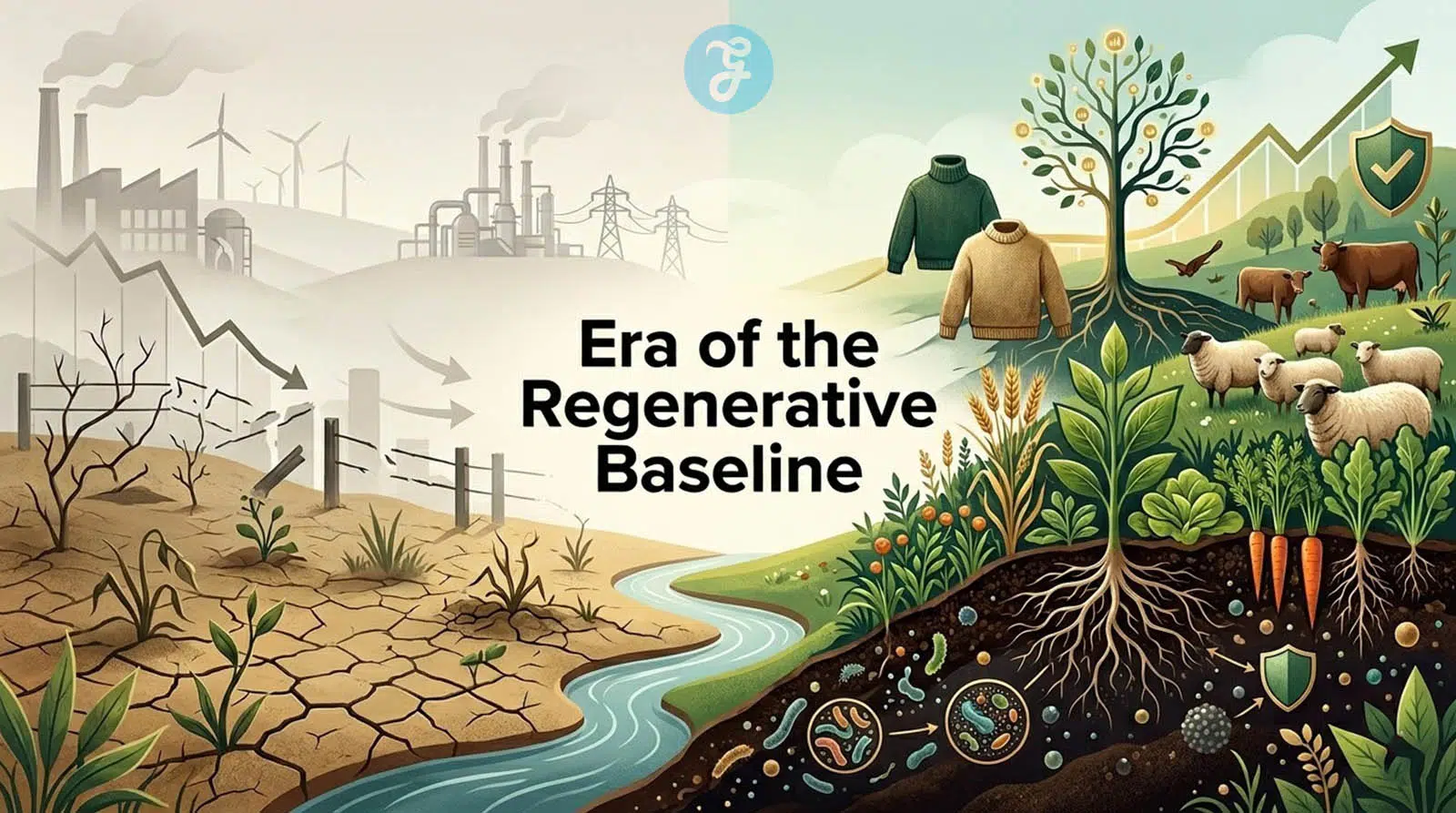
In early 2026, a massive shift in market sentiment occurred. Major luxury houses and organic food leaders realised that “sustainable” is a dead word. To sustain is merely to keep a depleted system from getting worse. It is a strategy of managed decline. The Regenerative Baseline replaces this with a strategy of growth. It is a vertical standard that measures how much life a brand returns to the earth.
The Verification Era Arrives
Greenwashing is the ghost that haunted the last decade. It created a profound trust deficit. Brands spent millions on poetic marketing campaigns while their supply chains remained opaque and brittle. This lack of honesty led to the Verification Era. Today, shoppers do not want poetry. They want proof.
According to data from the Bionutrient Institute, the nutritional variance between two organic crops can be as high as 200 per cent. One carrot might be a powerhouse of beta carotene. Another is just orange water. This gap is the direct result of soil health. When a brand meets the Regenerative Baseline, it is not just making an environmental claim. It is making a biological promise.
Soil as the New Balance Sheet
In the boardrooms of 2026, the primary metric for corporate responsibility has moved from the profit margin to the microbial margin. Soil health is now the ultimate indicator of a company’s longevity. A brand that depletes its source is a brand with no future.
The Rodale Institute highlights that regenerative systems can sequester more than 100 per cent of current annual global carbon emissions if adopted widely. This is the hard data that fuels the new luxury market. When you buy a climate-positive wool jumper or a nutrient-dense heritage grain, you are investing in a biological ledger. By adhering to the Regenerative Baseline, a brand proves you are paying for carbon pulled out of the sky and tucked into the ground.
Luxury is being redefined as stewardship. Every purchase must become a mechanical act of planetary healing. It is the end of the “Green Vague” and the beginning of a grounded, honest relationship with the land.
The Genesis of the Regenerative Baseline
The journey of an organic luxury product in 2026 does not begin in a boutique or a design studio. It begins in the dark, silent world of the rhizosphere. To understand where this value comes from, we must look at the physical and biological transitions that define the Regenerative Baseline.
- Atmospheric Carbon Capture: Every organic fibre or ingredient starts as a carbon molecule pulled from the sky. Through photosynthesis, plants transform CO2 into soil sugars that fuel the entire ecosystem.
- The Microbial Exchange: These sugars are traded with underground fungi and bacteria. In return, the microbes provide the plant with deep-earth minerals that conventional farming cannot access.
- Aggregation and Structure: As life returns to the dirt, the soil becomes a sponge. This increased Soil Organic Matter (SOM) is the physical proof that a brand is meeting its Regenerative Baseline.
- Nutrient Loading: This complex biological dance results in a more resilient plant. Whether it is cotton for a shirt or a heritage grain for a meal, the final product is denser in the minerals that support human health.
The Science of the Soil: Carbon as Currency
The mechanical heart of the Regenerative Baseline is a measurement called Soil Organic Matter. This is not a vague concept. It is a hard number. For decades, industrial farming stripped this matter away to chase short-term yields. In 2026, we are finally paying the bill for that exhaustion.
The Rodale Institute has proven that healthy soil acts as the world’s most efficient carbon sponge. Their research shows that shifting to regenerative practices can move us from a carbon crisis to a carbon solution. This is why luxury brands are now obsessing over dirt. They understand that a high Soil Organic Matter count is the only way to verify their environmental claims.
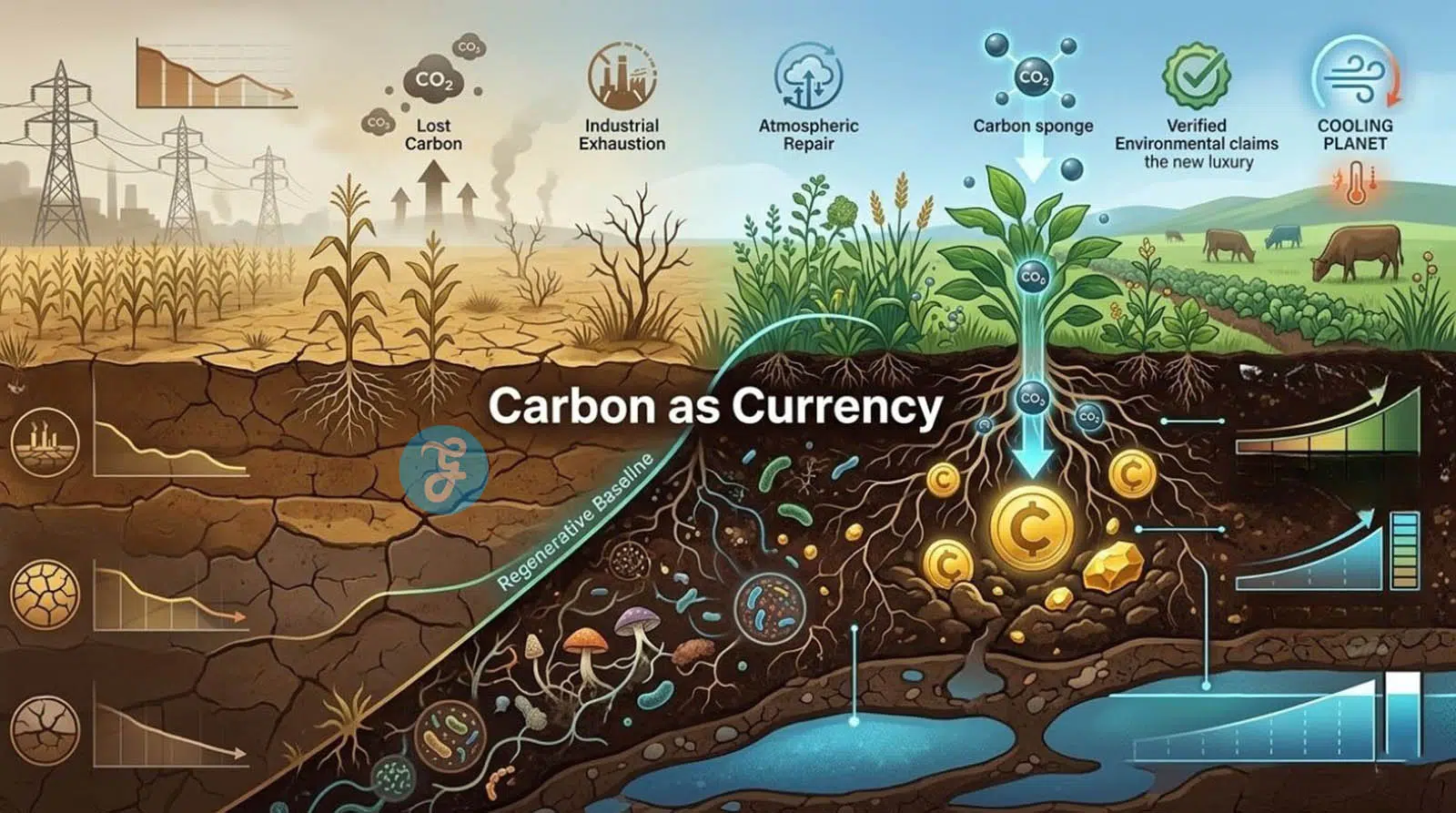
When a brand adopts the Regenerative Baseline, they are trading in a new kind of currency. Carbon is no longer just a pollutant to be taxed. It is a physical asset to be stored on the earth. Every 1 per cent increase in soil organic matter allows an acre of land to hold an additional 20,000 gallons of water. This creates a natural buffer against the droughts and floods that define our current climate.
For the 2026 consumer, this data is the ultimate luxury. It provides a level of security that a traditional organic label cannot match. You are not just buying a product. You are buying into a system that is actively cooling the planet. The Regenerative Baseline turns the act of shopping into an act of atmospheric repair. It is a transparent, data-led approach to a crisis that was previously ignored by the luxury market.
From Scarcity to Stewardship
The old definition of luxury was built on exclusion. It was about owning something that others could not. High price tags and rare materials created a wall between the brand and the common market. In 2026, that wall has crumbled. Scarcity is no longer the primary driver of desire. Instead, the global elite are chasing stewardship. They want to be part of a story that leaves the planet better than they found it. This shift has turned the traditional luxury model on its head.
The New Aesthetic of Biological Character
For decades, industrial perfection was the goal. We wanted every organic apple to look identical and every cotton shirt to have a flat, sterile finish. Today, that uniformity feels cheap. It smells like a factory. The 2026 luxury consumer looks for what we now call biological character. This is the visible proof of a Regenerative Baseline in action. It is the slight variation in the weave of a climate-positive linen. It is the deep, irregular hue of a heritage grain that has fought for its nutrients in living soil.
We are seeing the wine concept of terroir expand into every corner of the organic market. Terroir is the unique sense of place. It is the taste of the rain, the mineral profile of the rock, and the health of the local worms. When you buy a luxury silk scarf today, you are buying the terroir of a specific regenerative farm. You are choosing a product that has a soul. This biological honesty is the new gold standard for the Trust Economy.
The Carbon Underground defines these standards as a move far beyond the old idea of being sustainable. To be sustainable is to merely survive. To be regenerative is to thrive. Their framework insists on a draw down of atmospheric carbon into the soil. This is the mechanical reality that separates a true luxury brand from a pretender. If a product does not contribute to this draw down, it fails the Regenerative Baseline test. It is seen as an industrial commodity, regardless of the price.
This pivot to stewardship has created a new type of consumer loyalty. People are no longer just buying a brand. They are investing in a specific piece of earth. They are choosing to support farmers who act as guardians of the topsoil. In this new world, the most expensive thing you can own is a clean conscience. True luxury is the knowledge that your lifestyle is a restorative force. It is the ultimate expression of human values in a data led world.
Silicon and Soil: The Real-Time Revolution
The era of the annual paper audit is dead. For decades, a brand could claim organic status by filling out a form once a year. It was a snapshot in time that ignored the daily reality of the land.

In 2026, the Regenerative Baseline is maintained through always-on monitoring. We have moved from a system of blind faith to one of constant visibility. Technology has become the silent guardian of the earth.
From Sensors to Satellites
Modern luxury farms are now wired for truth. On-farm IoT sensors sit deep in the topsoil to track moisture levels and microbial activity every hour. This is the pulse of the planet. These sensors talk to a network of satellites that monitor biomass and carbon sequestration from space. There is nowhere for a greenwashing brand to hide. If the soil health dips, the data shows it instantly.
Regen Network is at the forefront of this ecological verification. They use a combination of satellite imagery and blockchain technology to create a transparent record of the land. This is not just a marketing claim. It is a scientific ledger that cannot be altered. When a brand says they are restoring a forest or a pasture, the data provides the proof. This level of scrutiny ensures that the Regenerative Baseline remains a hard fact.
The Digital Passport: From Worm to Wallet
This data does not just stay on the farm. It travels with the product. As we explored in our analysis of the Integrated Value Chain, every item now carries a Digital Food Passport. This is a unique identity that links the consumer directly to the soil. You can scan a QR code on a silk dress or a bag of ancient grains and see the exact GPS coordinates of the harvest. You can see the day the carbon was measured.
This transparency creates a profound connection between the worm and the wallet. You are no longer a passive buyer. You are an active participant in a restorative loop. The Regenerative Baseline ensures that the value of the product is tied to its biological impact. If the data shows the land is being depleted, the luxury status is stripped away. It is a brutal but necessary honesty for the 2026 market.
The Trust Economy relies on this technological backbone. It turns the “invisible” work of nature into a visible asset. By using remote sensing and decentralised ledgers, we are finally holding brands accountable for their environmental footprint. True luxury is now a data-led reality. It is the peace of mind that comes from knowing exactly where your food and fibre began their journey.
The Metabolic Link: Luxury as a Biological Right
We are finally beginning to understand that the health of the human starts with the health of the soil. For years, we treated food like a generic commodity. An apple was just an apple. In 2026, the Regenerative Baseline has shattered that illusion. We now know that the quality of our internal biology is a direct reflection of the external ecology. Luxury is no longer just about the pleasure of the palate. It is about the precision of the molecule.
The Rise of the Healthy Human
True luxury consumers are moving away from empty calories and toward a strict Nutrient Density Scoring framework. This system measures the actual vitamins and minerals packed into every gram of food. It turns out that when soil is alive and thriving, it passes that vitality directly to the plant. If the soil is dead, the food is hollow. By 2026, the Regenerative Baseline has become the primary predictor of human wellness.
The Bionutrient Institute has conducted extensive research through its Real Food Campaign. Their findings are startling. They discovered that the antioxidant levels in one leaf of spinach can be four times higher than another. This is the difference between a crop grown in depleted dirt and one raised in a regenerative system. This variance is why the modern elite are happy to pay a premium. They are not just buying groceries. They are buying a biological insurance policy.
The Bio-Availability Premium
There is a deep connection here to what we call Fibremaxxing and cognitive longevity. A mineral-dense diet is the secret fuel for a high-performing brain. If you want mental clarity and emotional stability in a fast-paced world, you need bio-available nutrients. These are minerals that the body can actually absorb and use. Synthetic supplements are a poor substitute for the complex chemistry of a plant grown under a Regenerative Baseline.
This is why we see a shift in how we value organic luxury. The focus is now on the Bio-Availability Premium. Consumers are looking for high levels of magnesium, zinc, and polyphenols to protect their long-term health. They want food that supports their gut microbiome and their nervous system. In the Trust Economy, a brand that cannot prove its nutrient density is essentially selling a defective product.
The link between the earth and the mind is now a verified fact. We are what we eat, but more importantly, we are what the soil was allowed to become. A restorative farm is a pharmacy for the future. By supporting these systems, we are claiming our right to a vibrant, healthy life. It is the most personal form of stewardship there is.
The Pioneers: Leading the Trust Economy
Theory is only as strong as its application. In 2026, the brands dominating the organic luxury sector are those that stopped talking about sustainability and started measuring their biological impact. These market leaders have moved beyond the middleman. They are now deeply embedded in the land. They treat the Regenerative Baseline as their most valuable asset.
Fashion and the Climate-Positive Thread
The garment industry has faced the harshest scrutiny. In response, elite fashion houses have pivoted to climate-positive wool and cotton. This is a massive shift from the old organic model. These brands now partner with sheep stations that use rotational grazing to sink carbon into the grasslands. The wool is no longer just a textile. It is a carbon-sequestering tool.
Textile Exchange has tracked this transition in their Regenerative Agriculture Landscape Analysis. Their data shows a surge in Tier 1 brands investing directly in soil health programmes. By securing their supply at the root, these houses ensure their fibres are resilient to the extreme weather of 2026. They are not just buying wool. They are building an ecological fortress.
Soil-First Food and Beauty Purity
In the food sector, we are seeing the rise of soil-first organic independence. Small, high-end producers are rejecting the industrial organic complex. They focus on heritage seeds and fungal-dominant soils to create products with superior flavour profiles. These items are the new status symbols at dinner parties. To serve a dish grown under a Regenerative Baseline is to show you understand the true cost of quality.
The beauty industry has followed a similar path. Skincare giants are now purchasing their own regenerative farms in the outskirts of major hubs like Delhi and across the Mediterranean. They want total control over their botanical extracts. By owning the land, they can guarantee purity at the source. There are no pesticides, no heavy metals, and no synthetic fillers. Just raw, biological potency.
These case studies prove that restoration is profitable. Consumers are voting with their wallets for a world that works. They want brands that act as guardians. This is the new social contract of the 2026 luxury market. Stewardship is the only way forward. It is the end of extraction and the beginning of a truly beautiful relationship with our environment.
The Geopolitical Shield: Soil as Security
We often think of national security in terms of borders and battalions. In 2026, we have learned that true safety lies in the topsoil. A nation that cannot feed itself or clothe its people is a nation at risk. The Regenerative Baseline is no longer just a luxury standard. It is a biological fortress. By restoring the health of the land, we are securing our collective future against a volatile global stage.
The Macro View: Food and Fibre Independence
As we noted in our evaluation of the Non-UPF Verified movement, the era of relying on brittle, ultra-processed supply chains is over. True independence requires a shift toward local, nutrient-dense production. When a country prioritises the Regenerative Baseline, it builds a resilient system that does not depend on foreign chemicals or synthetic fertilisers. We are seeing a return to high-quality fibre and food sovereignty.
This is the only way to survive the 2026 fuel shocks. Industrial farming is an energy-intensive process that relies on fossil fuels for every step. Regenerative systems are different. They use the free energy of the sun and the natural labour of the soil microbiome. This makes them the only models capable of thriving during a supply chain collapse. They are self-sustaining loops that turn local waste into local wealth.
Soil security is now a primary pillar of national policy. It protects the water table, prevents erosion, and ensures that the next generation has a foundation for growth. In the Trust Economy, a stable environment is the greatest asset a country can possess. By investing in the Regenerative Baseline, we are not just saving the planet. We are defending our home.
The New Social Contract: A Grounded Future
The transition from “organic” to “regenerative” is a sign of our collective maturity. We have moved past the myths of marketing and into the mechanics of restoration. The Regenerative Baseline is the signature of a brand that values truth over trends. It is a promise that every transaction contributes to a cooling planet and a healthier human race.
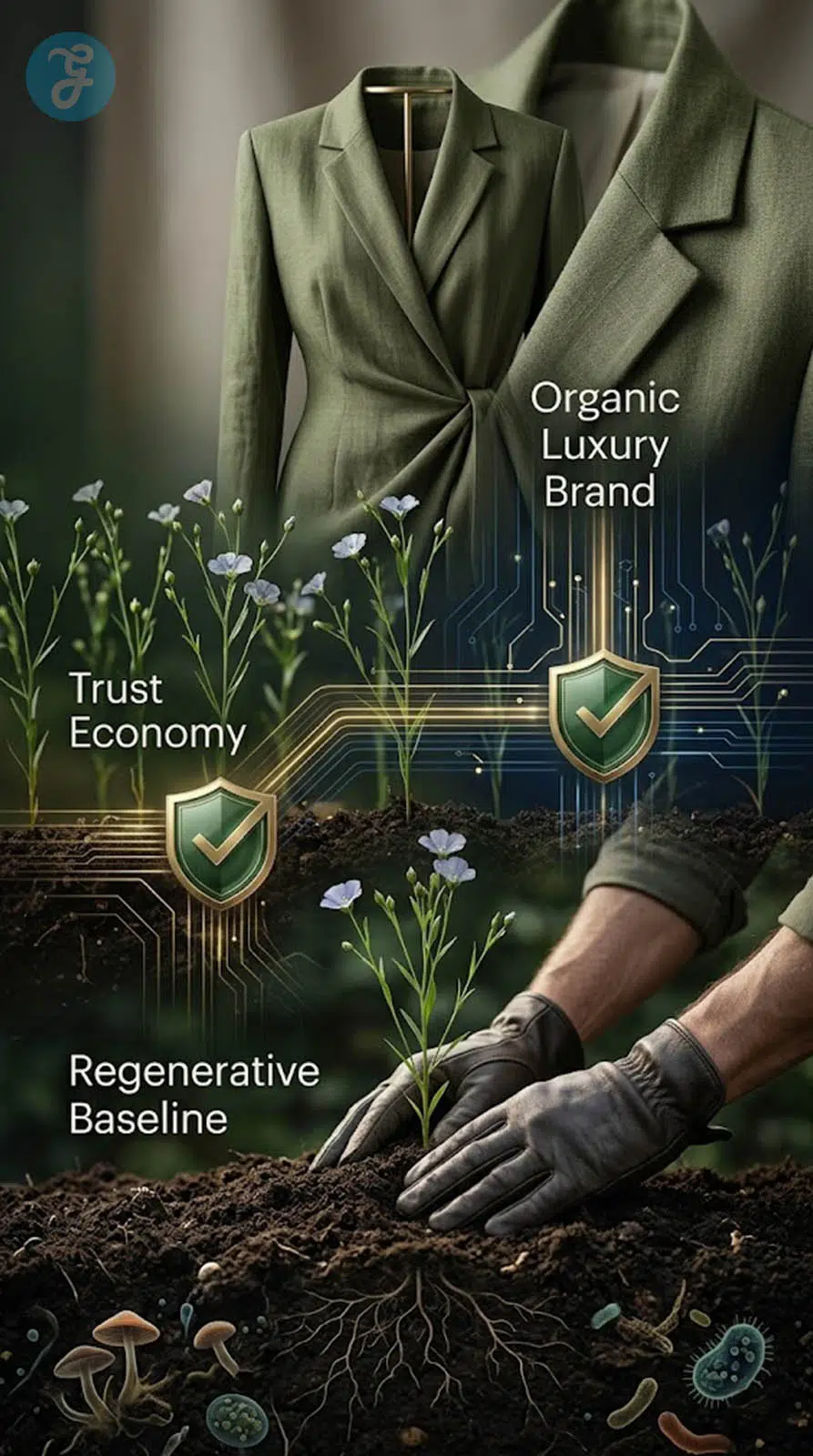
We are no longer looking for a green escape. We are looking for a way back to the earth. The Trust Economy has given us the tools to verify our impact and hold the powerful to account. As we move deeper into 2026, the brands that thrive will be those that act as stewards of the microbial world. True luxury is finally honest. It is grounded, verifiable, and deeply human.