You spend hours picking keywords and chasing the ones everyone talks about. Yet your content still gets lost in a sea of search results. Ever wonder why your posts don’t get the clicks you expect? Maybe those big keywords are not the answer.
Here is one fact you might find surprising. Some search terms show zero monthly searches in keyword tools but can still bring visitors to your site. This guide will help you spot these hidden words and create content that reaches people few others target.
Grab a coffee and let’s walk through the smart tips for turning “zero-search” moments into real results. The following steps illustrate precisely how it is done.
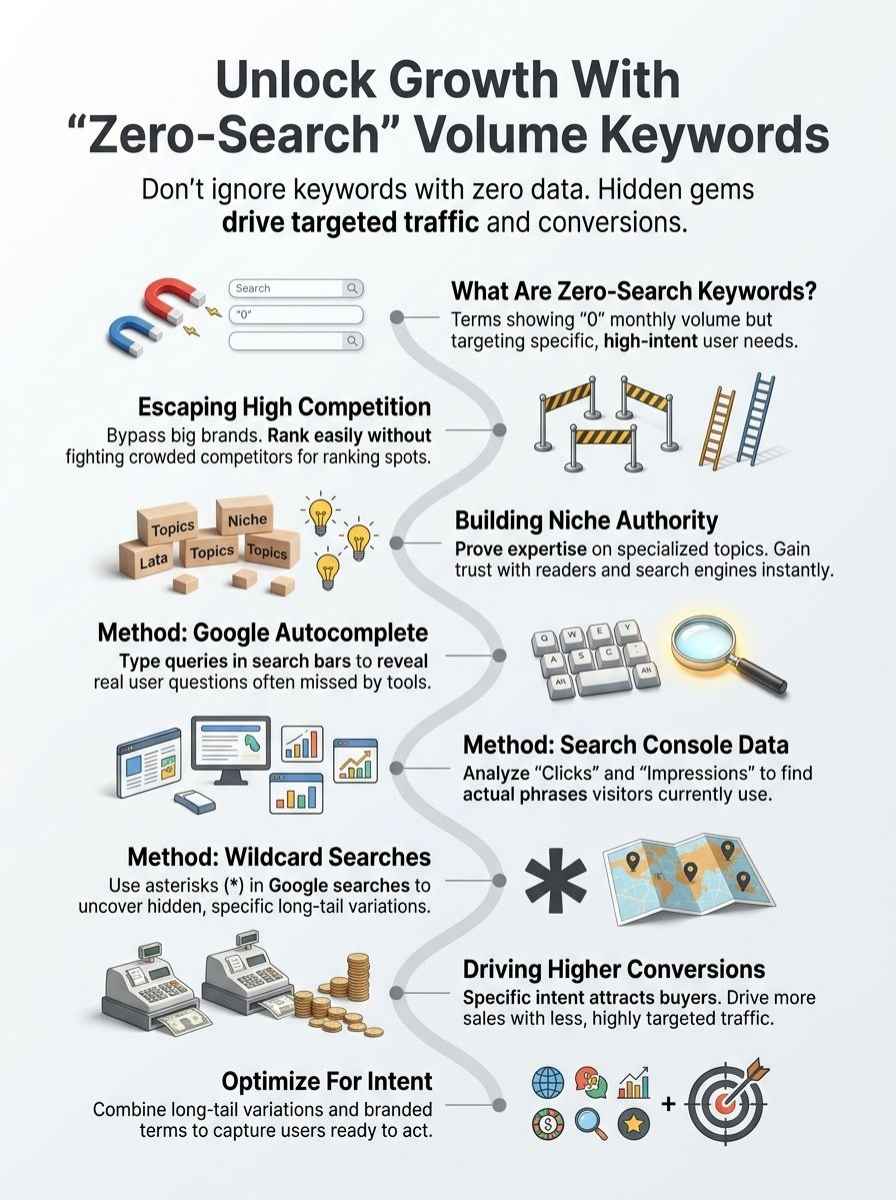
What Are Zero-Search Volume Keywords?
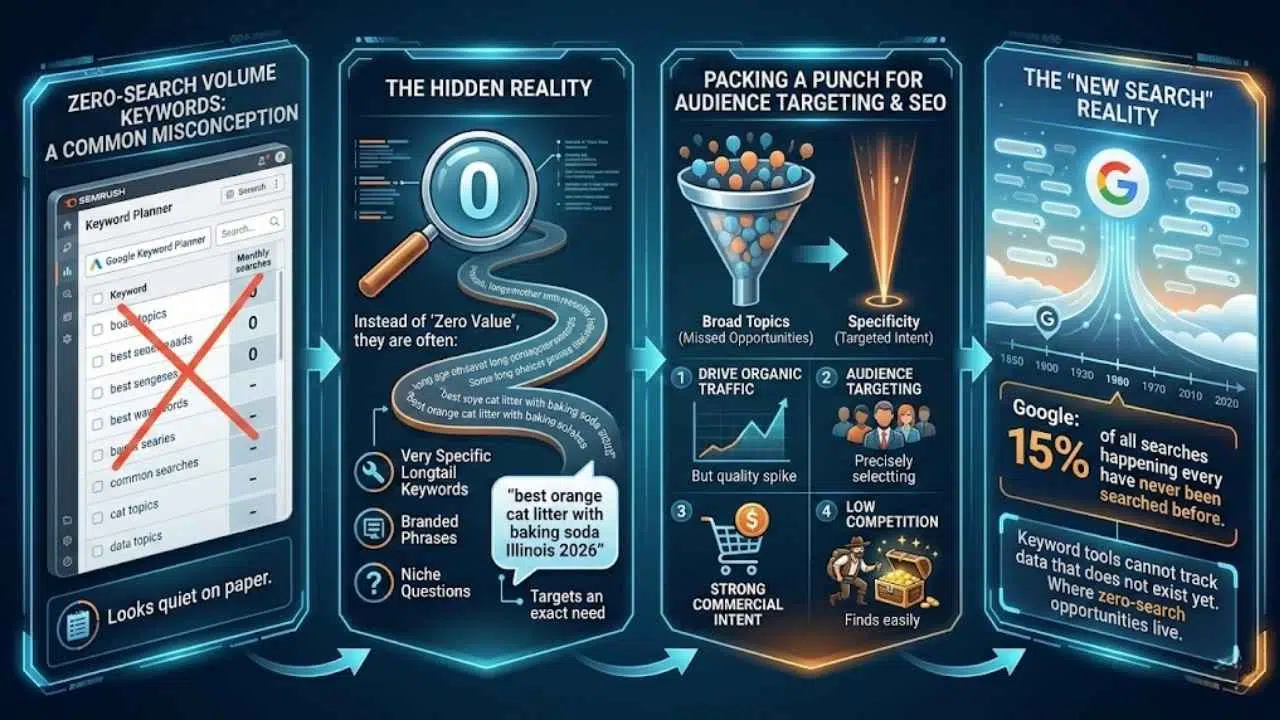
Zero-search volume keywords are search terms showing “0” or a dash for monthly searches in tools like SEMrush and Google Keyword Planner. These phrases look quiet on paper. However, they often include very specific longtail keywords, branded phrases, or niche questions.
For example, “best orange cat litter with baking soda Illinois 2026” may show zero traffic. Yet it targets an exact need.
Many assume these have no value. In truth, their specificity packs a punch for audience targeting and SEO optimization. They can drive organic traffic that big broad topics miss. Strong commercial intent lives in these hidden gems. Businesses find gold by uncovering such low competition keywords before others do in their content strategy.
The “New Search” Reality: According to Google, 15% of all searches happening every day have never been searched before. Keyword tools cannot track data that does not exist yet. This is exactly where zero-search opportunities live.
Why Should You Target Zero-Search Volume Keywords?
Zero-search keywords can be quiet goldmines hiding in plain sight. Chasing them feels like finding extra fries at the bottom of the bag. It is surprising and rewarding.
Low Competition
Fewer people chase after low competition keywords. This is especially true for those that show zero or dash symbols in tools like SEMrush and Google Keyword Planner. Big brands often ignore these longtail keywords. This gives smaller sites a real chance to grab search engine ranking spots.
Focusing on such niche topics can help bloggers and businesses reach an audience without fighting bigger fish for the same space. Since there is less crowding around these terms, content stands out more easily. For example, “vintage Star Wars mugs 1979” shows almost no monthly searches but still attracts collectors ready to buy.
Marketers who spot trends early use low competition keywords for trend analysis or niche marketing before everyone else jumps in. Content creation gets faster results with stronger commercial intent using these organic traffic gems.
Building Niche Authority
Zero search volume keywords put you in front of specific audiences that big brands ignore. Talk about a wide-open field! By using these rare longtail keywords like “2026 organic peach dog treats for seniors” you prove your depth and gain trust fast.
Imagine being one of the three sites online talking about a specialized brand or tiny topic. That is instant street cred with both readers and search engines. Google notices focus. It rewards experts who give answers no one else offers.
Content strategy built on zero-search gems can turn you into a local guide for hard-to-find questions or new trends before they become popular searches. SEMrush and Google Keyword Planner help spot those hidden terms marked as “0” or “-.” Targeting such content is how small players start ranking higher than noisy competitors.
Early Adoption of Emerging Trends
Spotting zero-search volume keywords early helps you catch new trends before they become popular. For example, brands and websites that used longtail keywords like “AI-generated lesson plans 2023” or “Google SGE ranking updates” in their content saw fast gains.
These search terms may show up as “0” searches now on SEMrush or Google Keyword Planner. But once people catch on, organic traffic can grow quickly. Content creators who act fast can build authority on niche topics before the competition catches up.
Marketers use trend analysis to spot hidden gems even if there is little data yet. This boosts SEO optimization since many businesses ignore these terms due to low numbers from keyword research tools. Early action creates strong positions for future search engine ranking battles and brings in a flood of targeted visitors once the topic spikes in interest.
Common Misconceptions About Zero-Search Volume Keywords
Many think zero-search volume keywords are pointless because tools like SEMrush or Google Keyword Planner report “0” or “-” monthly searches. That number does not mean people never search those words.
It usually just means the volume is too low for the tool’s database to register accurately. It is a data gap rather than a traffic gap. To clear this up, look at the difference between what the tool says and the reality:
| The Myth | The Reality |
|---|---|
| “No one searches for this.” | People search for it, but the volume is below the tool’s reporting threshold (often under 10/month). |
| “It won’t drive sales.” | These searches often have the highest conversion rates because the user knows exactly what they want. |
| “It’s a waste of time.” | Ranking is often instant because no one else is competing for the term. |
There is a myth that these super specific long-tail keywords do not bring any organic traffic or help with SEO optimization. In truth, targeting niche topics gives you a chance to rank higher and faster due to low competition.
Content creators using these hidden gems have more control over their audience targeting. They sometimes find valuable opportunities for trend analysis before anyone else catches on.
How to Identify Zero-Search Volume Keywords
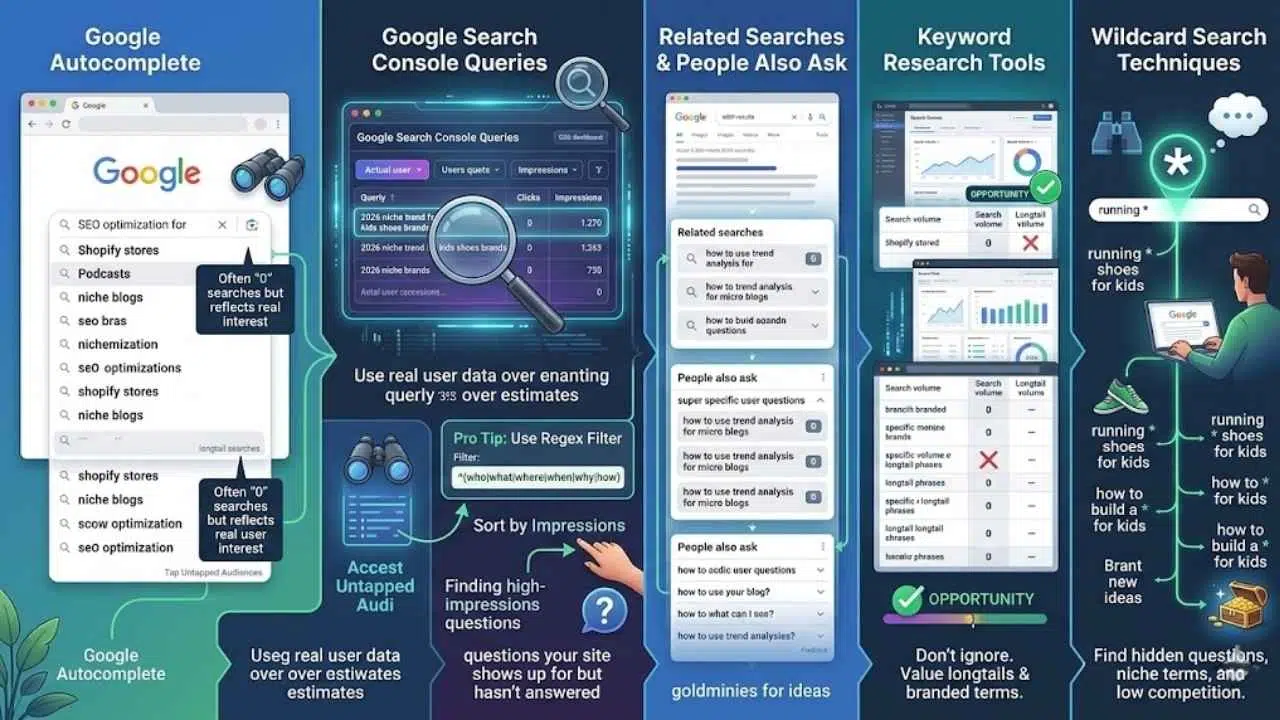
Finding these keywords is both an art and a bit of detective work. Use simple tools, sharp observation, and a curious mind to spot phrases others miss.
Google Autocomplete
Google Autocomplete shows search suggestions as you type in the Google search box. This feature reveals longtail keywords that keyword research tools often miss, including zero-search volume keywords.
For example, typing “SEO optimization for” brings up niche topics like “SEO optimization for Shopify stores” or “SEO optimization for podcasts.” Each suggestion has potential even if it registers as “0” searches per month on SEMrush or Google Keyword Planner.
These autocomplete ideas stem from real user queries typed into Google. They reflect actual interests and problems people face. Tapping these low competition keywords can help your content strategy reach untapped audiences and improve organic traffic. Use these phrases to create articles focused on narrow needs and jump ahead of larger competitors still chasing broad terms.
Google Search Console Queries
Google Search Console shows the exact words people use to find your pages. This happens even if those keywords show zero monthly searches in popular tools. Real user data often proves more useful than estimates from SEMrush or Keyword Planner since you see what brings visitors now.
Sometimes a phrase like “2026 niche trend for kids shoes brands” might bring in a few clicks each month. This occurs even with “0” search volume showing elsewhere. Clicks and impressions reports can uncover hidden gems for your content strategy.
- Pro Tip: Use the “Regular Expression” (Regex) filter in your Performance report.
- Enter a query like
^(who|what|where|when|why|how)to filter specifically for question-based keywords. - Sort by “Impressions” to find questions your site shows up for but hasn’t fully answered yet.
These longtail keywords usually have low competition and strong commercial intent that helps with SEO optimization. Use these real search queries to target audiences who want something specific rather than chasing broad terms everyone else is fighting over.
Related Searches and People Also Ask
Related searches and “People Also Ask” boxes help uncover zero-search volume keywords missed by big keyword research tools. Typing a core topic or longtail keyword into the search bar lets you spot super specific questions people actually type in.
Some of these will show “0” monthly searches on platforms like SEMrush. For example, entering “content strategy for niche marketing” might suggest rare queries such as “how to use trend analysis for micro blogs.” This gives you new content ideas.
These suggestions point toward hidden user intent and commercial opportunities. Many longtail keywords here have little competition and stronger buying signals. This makes them goldmines for organic traffic or SEO optimization. Businesses can grab these low-hanging fruits early to build authority and even improve conversion rates.
Keyword Research Tools
Tools like SEMrush and Google Keyword Planner help spot zero search volume keywords. These platforms may show “0” or even a dash for monthly searches. Do not let that fool you.
Branded terms with low search numbers can still pack a punch for your SEO strategy. Smart marketers use these tools to sniff out longtail keywords that fly under the radar of competitors. Sometimes digging through Google Search Console or looking at wildcards uncovers hidden gems too.
The value hides in specifics. Super-targeted phrases attract buyers who know exactly what they need. Trend analysis on these tools also reveals fresh topics before they get crowded with competition. Using strong keyword research methods keeps your content strategy ahead by catching organic traffic others miss out on every month.
Wildcard Search Techniques
Wildcard search techniques can uncover longtail keywords and zero-search volume topics that most keyword research tools miss. Type an asterisk or star symbol into Google’s search box with your main term like “running * shoes for kids.”
This trick helps find hidden questions and phrases real people use but do not show up in monthly search reports. Marketers use this method to spot super specific niche terms. This is especially useful for those that get marked as “0” or “-” searches on SEMrush or Google Keyword Planner.
This works well for finding low competition keywords in content marketing and SEO strategy. Small changes to wildcard placements show new ideas fast. Try placing the star between words or at the end of phrases. Many bloggers swear by this shortcut for hunting down questions that appear in People Also Ask boxes too. Zero-search-volume keyword mining using wildcards often leads to untapped organic traffic and better audience targeting before trends go mainstream.
Benefits of Creating Content for Zero-Search Volume Keywords
You might be surprised how these words attract readers who want very specific answers. Tapping into these topics can give your site a real leg up. It works faster than you would expect.
Specific Audience Targeting
Zero-search volume keywords are laser-focused. These search terms often hint at a clear need like “2026 waterproof dog boots for huskies.” Big keyword tools may show zero searches for these phrases but real people still use them.
Content built around these longtail keywords targets users who already know what they want. Super specific content can draw this exact group to your site. They arrive ready and willing to read or buy. Businesses using zero search volume keywords can attract visitors with high commercial intent.
A blog post about “how to fix Canon MG3620 orange blink error” may not wow most marketers with big numbers. However, it serves a tiny pool of readers hungry for solutions right now. This focus boosts SEO optimization by pulling in real traffic that cares deeply about the topic.
Higher Conversion Rates
Zero search volume keywords are like hidden treasure chests in content marketing. These longtail keywords may not show much search activity on tools like Google Keyword Planner or SEMrush. But they often hold strong commercial intent.
For example, someone searching for “buy blue striped cotton socks size 8 men” is probably ready to make a purchase. Targeting these specific keywords can help businesses reach people who already know what they want. This leads to more sales with fewer visitors.
The traffic might be small yet it is full of buyers instead of browsers. That means less window shopping and more checkouts for your business. Even low competition keywords with zero searches can quickly boost conversion rates because the audience fits the offer perfectly. No wasted clicks or guesses are needed.
Faster Ranking Opportunities
Google and other search engines have less content to compare for low competition keywords. Your page can climb up the ranks faster. Most zero-search volume keywords are longtail phrases with very specific intent.
This means fewer websites use them in their SEO strategy. For example, a business that targets “2026 eco-friendly backpacks for toddlers” might see results far sooner than one using broad terms like “backpacks.” SEMrush and Google Keyword Planner may show these phrases as having zero or very little monthly searches. This is just a surface-level number.
Fact Check: A study by Ahrefs suggests that for high-volume keywords, the average top-ranking page is over two years old. For low-volume keywords, you can often rank on Page 1 in a matter of weeks.
With such targeted audience targeting even a handful of visitors can make your effort pay off quickly. New trends often start with almost no search data at all. Early adoption puts you ahead before others catch on. Websites that publish timely posts about emerging topics often win top spots while competitors try to catch up later on. These quick wins help boost site authority and drive organic traffic from other niche marketing efforts too.
Examples of Zero-Search Volume Keywords in Action
A small bakery in Ohio launched a blog post answering, “Is gluten-free rye bread possible?” This longtail keyword showed “0” searches per month in SEMrush and Google Keyword Planner. Yet that article drew over 80 monthly visitors within three months.
Curious foodies with this exact question found the bakery first. A local gym wrote about “best stretches for old knee injuries from basketball.” That phrase also had zero search volume but soon brought steady organic traffic from older athletes searching for help.
Both sites targeted very specific audience needs rather than chasing broader high-competition terms. Tech startups often use zero-search keywords to build niche authority fast.
- The Smartwatch Example: A brand analyzed its Google Search Console data.
- The Discovery: They spotted no-volume phrases like “charging issues on HoloBand Z4 Pro.”
- The Action: They answered these hyper-specific problems before competitors even noticed them.
- The Result: The support page ranked quickly because few others had tackled the issue online.
Such content helps customer satisfaction and improves search engine ranking by signaling expertise to algorithms. It provides fresh answers on new products or emerging trends. This is clear evidence that value sometimes hides inside those overlooked corners of keyword research tools.
Pro Tips for Optimizing Content with Zero-Search Volume Keywords
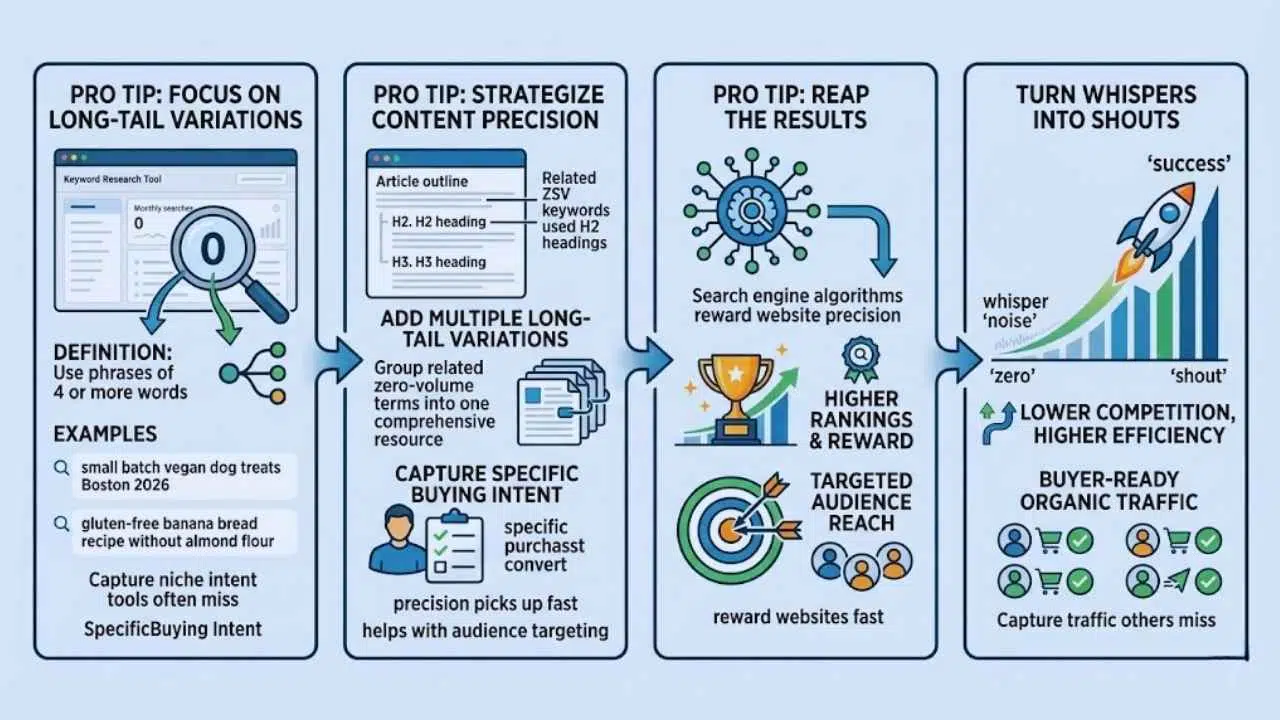
Ready for some sharp tricks to supercharge your zero-search keyword game? Keep reading and discover ideas that might just turn whispers into shouts.
Focus on Long-Tail Variations
Longtail keywords open the door to zero-search volume opportunities. These phrases use four or more words such as “small batch vegan dog treats Boston 2026” or “best eco-friendly running shoes for women size 10.”
Tools like SEMrush and Google Keyword Planner often report a monthly search count of zero for these exact terms. Yet people still search using super specific longtail queries every day even though they do not show up in big keyword lists. Brands can grab low competition keywords by targeting these detailed topics.
Search engine algorithms pick up on this precision fast and reward websites with higher rankings. Adding multiple longtail keywords also helps with audience targeting in content strategy and brings in organic traffic from users ready to buy. For example, a home baker might write about “gluten-free banana bread recipe without almond flour.” This captures specific buying intent where other sites miss out due to small numbers shown in search tools.
Incorporate Branded Keywords
Branded keywords help search engines connect your content with your business name. Think “Starbucks spring cold brew recipe” instead of just “cold brew recipe.” Even if a branded keyword shows zero monthly searches in tools like SEMrush or Google Keyword Planner it can still send traffic and boost rankings for niche topics.
These keywords often carry higher buying intent so landing a top spot may bring ready-to-buy visitors. Adding your brand to low competition keywords gives you an edge in SEO strategy.
Niche marketing thrives on this mix. Think about how many people type “Nike running shoes size 9 black Friday deal” even when tools say zero volume. Early adoption puts you ahead before trends get crowded. This helps build authority and trust faster than waiting for popular terms to take off.
Final Thoughts
You have just learned how zero-search volume keywords can boost your SEO and fill gaps that big sites miss. These strategies are simple to use and bring results even with little search data.
Focusing on longtail keywords opens new paths for organic traffic while keeping competition low. Small changes in content strategy here can mean big wins down the line. Never dismiss those “zero” numbers you spot during keyword research.
Check out tools like Google Search Console or SEMrush for more insight. The smallest ideas often lead to the largest growth online. Sometimes all it takes is one hidden phrase catching fire. Years back my site saw its first real spike from what seemed like an oddball query with zero searches. Sometimes gold hides where few bother looking!