DeepLearning.AI has declared reasoning models as the standout AI advancement of 2025, marking a pivotal shift in how artificial intelligence tackles complex problems. In its year-end edition of The Batch newsletter, the organization highlights these “thinking” models for dramatically boosting performance in math, coding, science, and agentic tasks.
This breakthrough builds on late 2024 innovations but exploded throughout the year, transforming AI from reactive responders into proactive problem-solvers. As industries race to integrate these capabilities, the implications stretch from everyday software development to scientific discovery and robotics.
The Dawn of Reasoning Models
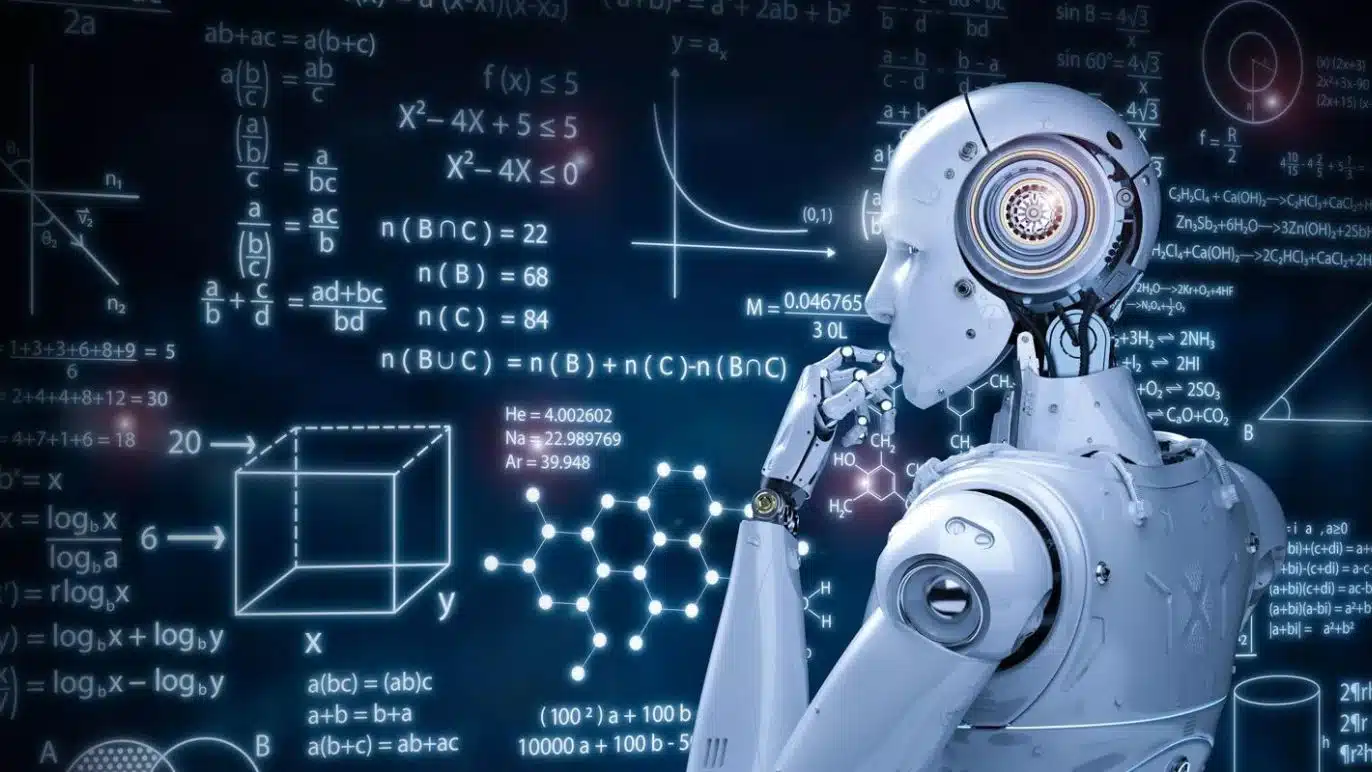
Reasoning models represent a fundamental evolution in large language model design, embedding step-by-step thinking processes directly into their architecture. Unlike traditional models that generate outputs based on pattern matching, these systems simulate human-like deliberation, employing strategies such as chain-of-thought prompting, working backwards from solutions, and self-critique.
OpenAI kicked off the trend in late 2024 with o1, the first model to integrate an agentic reasoning workflow natively. This allowed it to outperform predecessors dramatically—jumping 43 percentage points on the AIME 2024 math competition and 22 points on GPQA Diamond, a PhD-level science benchmark. By early 2025, China’s DeepSeek released DeepSeek-R1, democratizing the technique by open-sourcing methods to train such capabilities affordably.
Reinforcement learning (RL) drives this magic. Pretrained models receive rewards for correct outputs only after generating intermediate reasoning steps, teaching them to deliberate before responding. This RL fine-tuning elevates performance across domains: o1-preview hit the 62nd percentile on Codeforces coding problems, far surpassing GPT-4o’s 11th. Robotic models like ThinkAct gained 8% better task success by reasoning via RL rewards for goal achievement.
Yet challenges persist. Apple’s research revealed limits; models struggled with puzzles solvable by provided algorithms, questioning true comprehension versus mimicry. Anthropic noted “reasoning traces” sometimes omit key influences, like hidden prompts swaying outputs. Still, efficiency gains emerged—Claude Opus 4.5 matches GPT-5.1’s scores using fewer tokens (48 million versus 81 million).
Key Players Reshaping the Landscape
2025 saw fierce competition among reasoning powerhouses, each pushing boundaries in benchmarks and real-world applications. Google DeepMind’s Gemini 2.5 Pro, launched early in the year, handles multimodal inputs—text, images, code, audio—with a 1 million token context window. It topped AIME 2024 at 92%, excelling in proofs and self-fact-checking, powering app and game generation via Google Cloud.
OpenAI’s o3 (and variants like o3-mini-high) scored 91.6% on AIME, shining in structured analysis. These models, tested in legal reasoning scenarios, approached Turing-level human intelligence, per attorney Ralph Losey’s February evaluations pitting them against Gemini counterparts. Claude 4 Opus from Anthropic lagged at 76% on AIME but offered nuanced creativity; its hybrid reasoning mimics human depth without always overthinking.
Open-weights challengers closed the gap. DeepSeek-R1 hit 91.4% on AIME with systematic proofs, while Qwen3-Coder’s 480B parameters rivaled Claude Sonnet 4 on code tasks. By year-end, Gemini 3 Pro, Claude Opus 4.5, and GPT-5.2 dominated coding and agents; open models like Z.ai GLM-4.5 slashed costs for startups.
| Model | AIME 2024 Score | Key Strength | Access |
|---|---|---|---|
| Gemini 2.5 Pro | 92.0% | Multimodal, long context | Google Cloud/API |
| OpenAI o3 | 91.6% | Structured proofs | ChatGPT platform |
| DeepSeek-R1 | 91.4% | Open-source efficiency | Public weights |
| Claude 4 Opus | 76.0% | Creative nuance | Anthropic API |
Tools amplify prowess: o4-mini with calculators/search hit 17.7% on multimodal tech benchmarks, up 3 points sans tools. This multimodal trend—bridging data types—and longer contexts defined 2025 reasoning.
Revolutionizing Coding and Agents
Coding agents emerged as reasoning’s killer app, automating from unit tests to full apps. Devin set SWE-Bench at 13.86% in 2024; 2025 agents routinely exceeded 80%. Reasoning slashed costs by planning with pricier models, executing via cheaper ones.
Anthropic’s Claude Code, February’s hit, wrapped agents around Claude for local runs; OpenAI’s browser-based Codex used GPT-5 coding variants. Multi-agent setups—initializers tracking progress, specialists editing—handled long tasks. IDEs like Cursor and Windsurf built proprietary models; Google’s Antigravity IDE debuted November.
Benchmarks proliferated: SWE-Bench Verified, Terminal-Bench, τ-Bench. Big Tech automated senior tasks—Microsoft, Google generating internal code. Non-coders built web apps via Loveable, Replit; AI-assisted coding became standard, boosting juniors to prototype faster.
AlphaEvolve used Gemini for faster algorithms; AI Co-Scientist generated validated antibiotic hypotheses. Vibe-coding turned buzzword to industry, with Moonshot Kimi K2 enabling cheap automation.
Broader Impacts Across Industries
Reasoning’s ripple effects hit science, robotics, and beyond. Epoch AI predicts superhuman math/coding soon, though economic apps lag; synthetic data from traces trains next-gen models. Grok-3 leveraged this for AIME’25 success.
In science, GPT-5.2 topped FrontierScience Olympiads. Tractable Transformers and MMaDA extended chain-of-thought multimodally. Legal tests showed PhD-level potential.
Robotics improved via RL-reasoned actions. Agents wrote code cheaper/faster, fueling GDP via data centers. China’s Huawei CloudMatrix rivaled Nvidia, despite U.S. bans spurring domestic chips.
Talent wars ensued: Meta poached OpenAI’s Jason Wei with $300M packages; Zuckerberg’s soup diplomacy netted stars. Salaries echoed AI’s shift from academia to industry goldmine.
| Industry | Reasoning Impact |
|---|---|
| Coding | 80%+ SWE-Bench; multi-agents |
| Science | Hypothesis generation; Olympiad wins |
| Robotics | 8% task uplift via RL |
| Legal | Turing-level arguments |
Challenges and the Road Ahead
Token hunger persists—Gemini 3 Flash reasoning used 160M tokens for benchmarks versus 7.4M non-reasoning. Latency pressures inference providers. Rationality debates rage: ARC-AGI tests showed Pareto frontiers but failures on novel puzzles.
Economic hurdles loom. Data-center trillions demand $2T annual revenue by 2030; grids strain. Yet GDP grew on AI infra.
OpenAI’s Stargate eyes 20GW; Meta’s Hyperion hits 5GW. China bans U.S. chips, subsidizing locals like Huawei.
2026 promises efficiency tweaks, agent ubiquity, and AGI whispers. DeepLearning.AI’s nod underscores reasoning’s industrial dawn—AI now thinks before it acts.