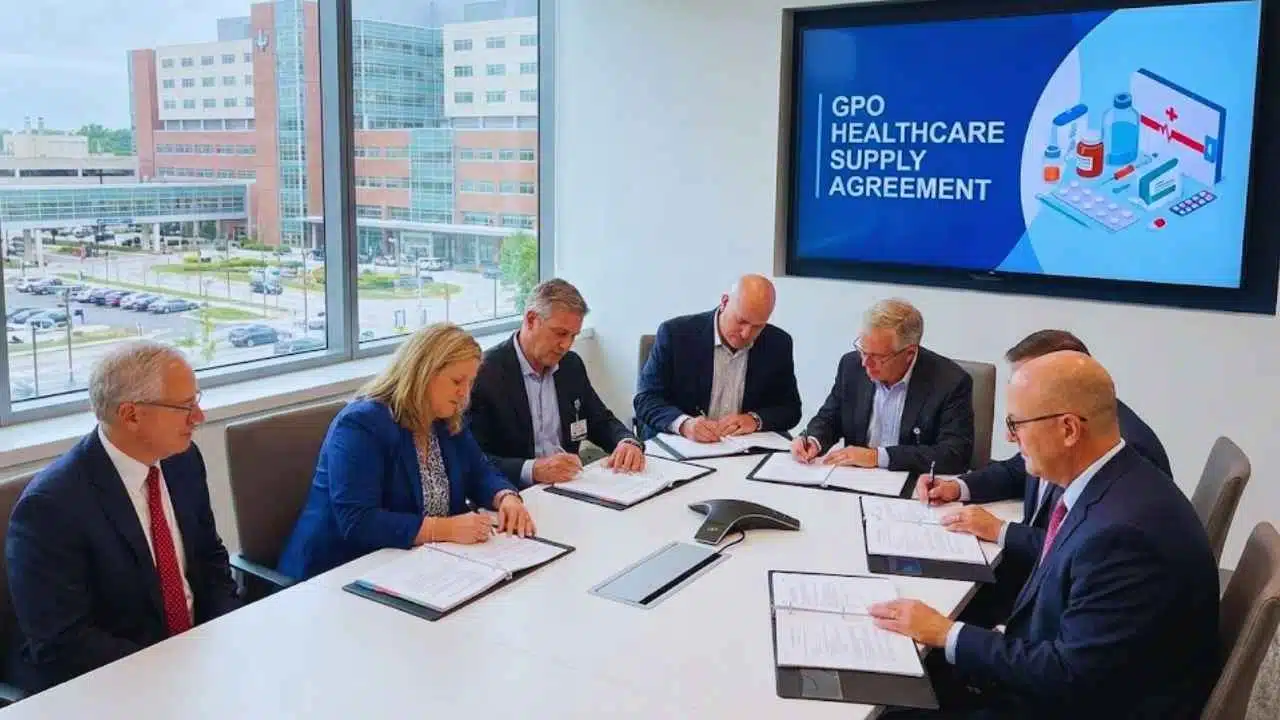
The power of scale helps healthcare providers buy smarter and spend less. By joining forces, organizations can unlock better pricing and stable supply terms. This is made possible through GPO contracts that combine purchasing power. It allows mid-sized providers to compete with larger systems.
Rising costs make it harder for mid-sized healthcare providers to survive. Limited buying power often means higher prices and tighter budgets. GPO contracts change this challenge into an advantage. They turn shared demand into real savings and stronger control.
Through GPO contracts, providers gain access to fair pricing and reliable suppliers. These agreements reduce financial pressure and improve budget planning. Clinics can focus more on patient care instead of negotiations. Scale becomes a strength, not a barrier.
What Is a Group Purchasing Organization (GPO)?
A Group Purchasing Organization (GPO) helps healthcare providers buy smarter together. It brings multiple clinics and hospitals under one purchasing group. By combining demand, it secures better prices from suppliers.
This shared buying power reduces overall supply costs. Through GPO contracts, members access fair pricing without negotiating alone. It is a simple way to gain scale and stay competitive.
Why Scale Matters in Healthcare Purchasing
Scale matters in healthcare purchasing because bigger demand leads to better prices. Suppliers offer stronger deals when order volumes are high. Small providers often pay more when buying alone.
Shared purchasing helps balance this gap. Through GPO contracts, mid-sized providers gain real buying power. Scale turns limited budgets into smarter savings.
How GPO Contracts Create Financial Efficiency
Smart purchasing is key to controlling healthcare costs. GPO contracts help providers save money without reducing quality.
- Lower Supply Costs: GPO contracts combine demand to secure better pricing on everyday medical supplies.
- Budget Stability: Fixed pricing helps clinics plan expenses with less financial stress.
- Reduced Admin Work: Fewer negotiations save time and improve operational efficiency.
Leveling the Playing Field for Mid-Sized Healthcare Providers
Mid-sized healthcare providers often compete with much larger networks. Limited buying power makes costs harder to control. Shared purchasing helps close this gap.
Through GPO contracts, providers access fair pricing and trusted suppliers. This support strengthens financial balance. It allows smaller organizations to compete with confidence.
Supporting Profitability Without Compromising Care
Supporting profitability is vital for long-term healthcare success. Rising supply costs often reduce available resources. Smart purchasing helps protect financial balance.
With GPO contracts, providers lower expenses without cutting care quality. Savings can support staff, tools, and patient services. Profit and care can grow together.
Reducing Administrative Complexity
Managing multiple suppliers can slow healthcare operations. GPO contracts simplify purchasing and save valuable time.
- Less Paperwork: Pre-negotiated GPO contracts reduce forms, approvals, and contract reviews.
- Faster Purchasing: Standard terms speed up ordering and decision-making.
- More Focus on Care: Teams spend less time on admin tasks and more time supporting patients.
Stability During Market Volatility
Market changes often disrupt healthcare supply planning. Prices can rise without warning. Stable purchasing helps reduce this risk.
With GPO contracts, providers gain more predictable pricing. Supply access becomes more reliable. This stability supports confident long-term planning.
Enhancing Supplier Relationships
Strong supplier relationships improve healthcare operations. Clear agreements build trust on both sides. Consistent demand supports long-term partnerships.
Through GPO contracts, communication becomes more structured. Suppliers value stability and reliability. This balance creates smoother and stronger collaboration.
Improving Strategic Decision-Making
Better decisions drive stronger healthcare growth. GPO contracts provide data and savings to guide smarter choices.
- Data-Driven Choices: Insights from GPO contracts help providers plan purchases effectively.
- Budget Forecasting: Predictable pricing supports accurate financial planning.
- Operational Flexibility: Savings and stability allow focus on growth and patient care.
Maintaining Independence While Gaining Scale
Healthcare providers can grow without losing control. Independence in decisions remains crucial. Shared purchasing adds scale and savings.
Through GPO contracts, providers gain buying power easily. Costs decrease while autonomy stays intact. This balance strengthens both operations and patient care.
Addressing the Core Pain Point: Rising Costs
Rising costs challenge every healthcare provider. Small and mid-sized clinics feel the pressure most. GPO contracts help lower supply expenses.
Shared purchasing turns high costs into savings. Providers can protect margins without cutting care. This approach eases financial stress and supports growth.
Why the GPO Model Continues to Grow
The GPO model keeps expanding as healthcare needs evolve. GPO contracts provide efficiency, savings, and reliability for providers.
- Cost Savings: Providers benefit from lower prices through collective buying power.
- Operational Efficiency: Standardized GPO contracts simplify procurement and reduce admin work.
- Market Competitiveness: Smaller providers gain advantages similar to large networks.
Final Thoughts
In today’s healthcare world, scale is a game-changer. Mid-sized providers face high costs and limited buying power. GPO contracts help them access fair pricing and reliable suppliers. Savings and efficiency improve budgets and patient care.
Providers stay independent while gaining scale. By leveraging these contracts, smaller clinics and hospitals can compete confidently, reduce financial pressure, and focus on delivering quality healthcare every day.
FAQ’s
What Is A GPO in Healthcare?
A GPO is a group that combines the buying power of multiple providers. GPO contracts help secure better pricing and terms.
How Do GPOS Help Mid-Sized Providers?
They level the playing field by offering cost savings and supply reliability through GPO contracts.
Can Providers Stay Independent With GPOS?
Yes, mid-sized clinics retain control while gaining scale and efficiency via GPO contracts.
Why Are GPO Contracts Important For Budgets?
They reduce costs, simplify purchasing, and improve financial planning for smaller healthcare providers.