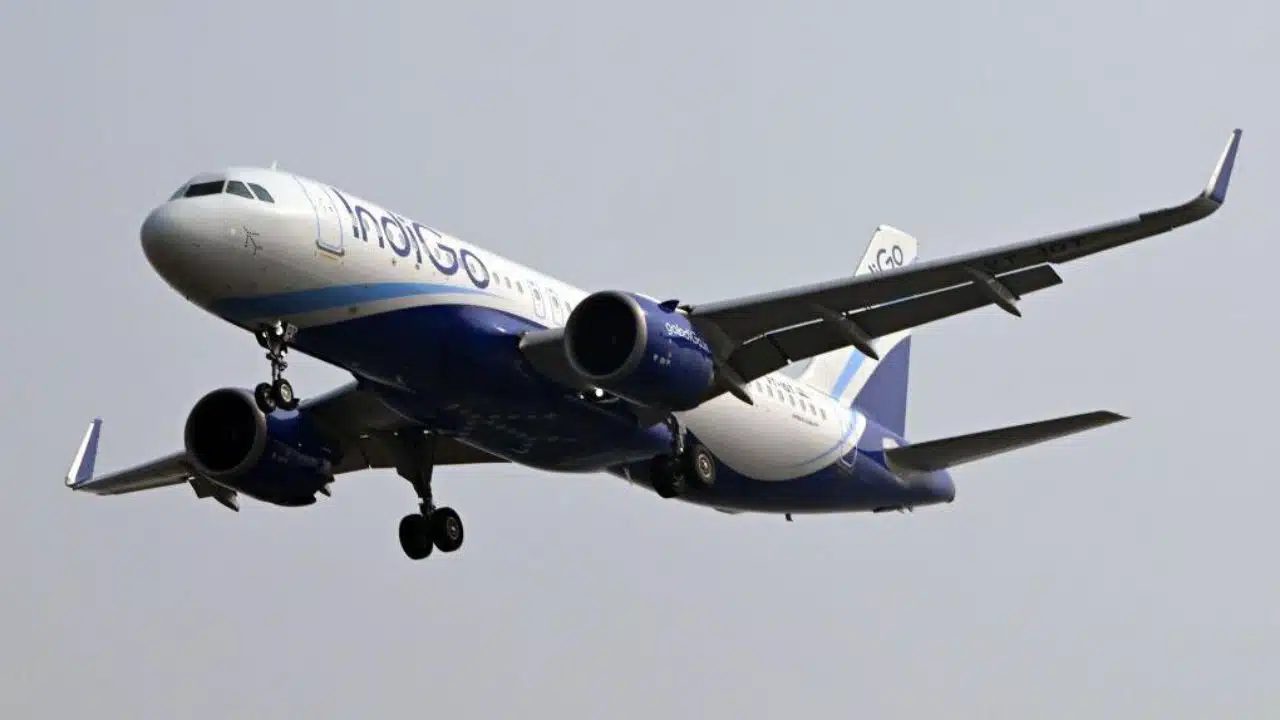
India-China direct flights have resumed for the first time in nearly five years, with an IndiGo flight from Kolkata landing in Guangzhou on Monday. This landmark restart marks a significant, if cautious, step towards normalizing relations frozen since the 2020 pandemic and subsequent border clashes.
Key Facts: The Resumption
- First Flight: IndiGo flight 6E1703, an Airbus A320neo, departed Kolkata (CCU) at approximately 10:07 PM on Sunday, October 26, 2025. It landed in Guangzhou (CAN) around 4:05 AM (local time) on October 27, carrying nearly 180 passengers.
- The Hiatus: This is the first direct passenger flight between mainland India and China since services were suspended in early 2020, first by the COVID-19 pandemic and then by the severe diplomatic fallout from the June 2020 Galwan Valley border clash.
- New Routes: Connectivity is set to expand quickly. China Eastern Airlines will resume its Shanghai (PVG) to New Delhi (DEL) route on November 9, 2025 (three times weekly). IndiGo will add a second daily service, Delhi (DEL) to Guangzhou (CAN), starting November 10, 2025.
- Economic Driver: The reopening provides a crucial artery for a massive $127.7 billion bilateral trade relationship (Fiscal Year 2024-25), which has been operating inefficiently on long-haul connecting flights.
- Pre-COVID Scale: The restart is modest. In December 2019, before the suspension, 539 direct flights per month operated between the two nations, highlighting the long road back to full capacity.
A ‘Landmark’ Moment: The First Flight Takes Off
In a moment laden with diplomatic and economic significance, India-China direct flights were officially reinstated on Sunday night. At Kolkata’s Netaji Subhas Chandra Bose International (NSCBI) Airport, passengers, airline crew, and officials marked the departure of IndiGo flight 6E1703 with a ceremonial lamp lighting.
The flight, reportedly at 100% capacity with 176 passengers, was celebrated by officials from both nations as a breakthrough.
Dr. P. R. Beuria, the Airport Director at NSCBI, highlighted the practical importance of the new route. “It is a great initiative by the government of India,” he told reporters. “It will boost business, tourism, and cargo links between eastern India and southern China.”
The flight’s symbolism was not lost on the Chinese officials present. Qin Yong, China’s Deputy Consul General in Kolkata, called the resumption a “very important day for the India-China relationship.”
“After five years of suspension, it is a very big improvement for the bilateral relations,” Qin told ANI at the ceremony. He described the flight as the “first fruit” of the recent high-level consensus reached between Prime Minister Narendra Modi and Chinese President Xi Jinping.
The Five-Year Freeze: How a Vital Air Corridor Vanished
The five-year gap was the result of a “dual shock” that sent bilateral relations into their worst crisis in decades.
The COVID-19 Shutdown and Galwan Clash
Direct air links were first severed in early 2020 as the COVID-19 pandemic erupted, with both nations grounding international travel. However, as other countries began reopening air bubbles through 2020 and 2021, the India-China corridor remained firmly shut.
The reason was political. The deadly military clash in the Galwan Valley in June 2020, which resulted in the deaths of at least 20 Indian and four Chinese soldiers, caused a diplomatic deep freeze. New Delhi adopted a firm stance that the restoration of normal relations was contingent on peace and tranquility at the border.
The Economic & Human Cost of the Hiatus
The suspension had severe practical consequences. With no direct flights, thousands of Indian students, business executives, and families were left stranded or forced to undertake arduous and expensive journeys.
Travel between the two Asian giants required “10 to 15-hour-long” one-stop flights, typically routing through hubs like Hong Kong (which had separate services), Singapore, Bangkok, or Dubai.
“For the last five years, we had to travel via Delhi and Bangkok to reach China,” one businessman, Arjun Gupta, told Patrika News. The resumption, he noted, will save significant time and money.
The lack of connectivity was a major inefficiency for the world’s second- and fifth-largest economies. Before the freeze, the market was robust.
- Pre-COVID Baseline (December 2019): Data from before the pandemic shows the sheer scale of the previous connectivity. In December 2019 alone, there were 539 scheduled direct flights between India and mainland China. This market was dominated by Chinese carriers (like Air China, China Southern, and China Eastern), which operated nearly 70% of the flights, with Indian carriers (IndiGo and Air India) making up the rest.
Data & Economic Imbalance: Why the Flights are Critical
The push to resume flights, despite ongoing political friction, is rooted in economic reality. The trade relationship between India and China is one of the world’s largest, but it is also one of the most imbalanced.
- Total Bilateral Trade (FY 2024-25): For the fiscal year ending March 31, 2025, bilateral trade between India and China stood at $127.7 billion. China remains India’s second-largest trading partner.
- Record Trade Deficit (FY 2024-25): This trade volume is powered by a massive, record-breaking trade deficit for India, which surged to $99.2 billion in the last fiscal year. India’s imports from China (e.g., electronics, active pharmaceutical ingredients (APIs), and heavy machinery) hit $113.5 billion, while its exports to China were just $14.25 billion.
This structural dependency means that efficient, direct cargo and business travel is a core economic priority for India. The five-year hiatus on direct flights acted as a major bottleneck, driving up costs for Indian industries reliant on Chinese components.
A Calculated Thaw: The Diplomatic Path to Reopening
The resumption of flights is the most tangible outcome of a “gradual normalisation of bilateral exchanges,” as India’s Ministry of External Affairs (MEA) has termed it.
This thaw has been carefully negotiated over the past year. Key diplomatic milestones include:
- October 2024: Both sides reached a critical agreement on new patrolling arrangements along the Line of Actual Control (LAC), a key confidence-building measure.
- August 2025: Prime Minister Narendra Modi visited China for the first time in seven years to attend the Shanghai Cooperation Organisation (SCO) summit, holding high-level talks with President Xi Jinping.
- October 2025: India’s MEA formally announced that both countries had agreed to resume direct air services, paving the way for airlines to file for slots.
Voices from the Ground: ‘A Smooth and Easy, Lovable Trip’
For the passengers on the first flight, the resumption was a matter of convenience and relief.
“It was such a smooth and easy, lovable trip,” said Rashika Mintri, a 44-year-old interior designer from Kolkata, upon arriving in Guangzhou. “I could come again and again.”
The news was also met with relief in Kolkata’s historic Tangra district, home to one of India’s oldest Chinese communities, which has strong familial and business ties to southern China.
What to Watch Next: A Trickle, Not a Flood
While the resumption is a landmark, aviation analysts caution that this is a “trickle, not a flood.”
According to data from aviation analytics firm VariFlight, the newly announced schedule—IndiGo’s two daily routes and China Eastern’s three-times-weekly service—will amount to 17 flights per week.
This is a stark contrast to the pre-COVID reality. The 539 flights in December 2019 averaged nearly 125 flights per week.
The new schedule represents only about 13-14% of the 2019 capacity. Other carriers, including Air India and Chinese state-owned airlines like China Southern (which historically operated the Guangzhou route), are expected to announce their own schedules, but no firm dates have been set.
The resumption is a clear signal of a cautious, pragmatic engagement. While deep strategic mistrust and the border dispute remain unresolved, both Asian giants have acknowledged that a $127 billion economic relationship cannot function without a direct flight path.