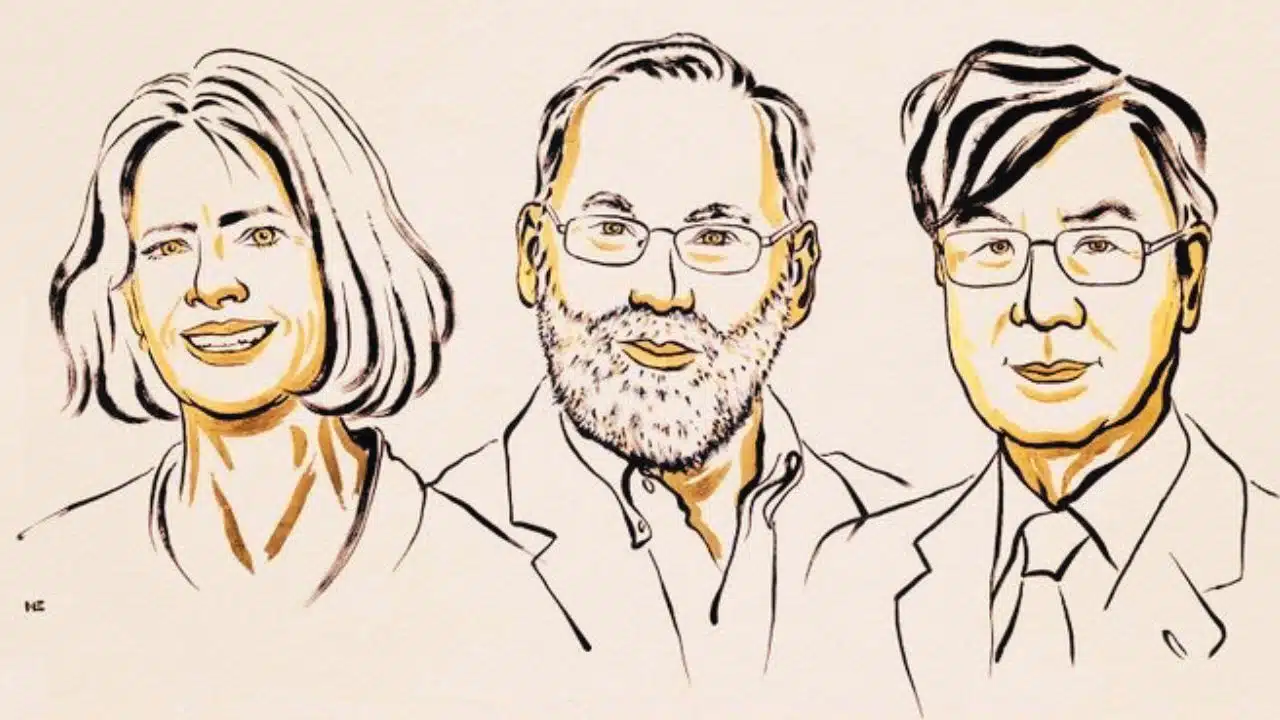
The 2025 Nobel Prize in Physiology or Medicine has been awarded jointly to three scientists—Mary Brunkow, Fred Ramsdell, and Shimon Sakaguchi—for their revolutionary discoveries on the immune system’s master regulators, a class of cells that prevent the body from attacking itself. Their work has fundamentally altered our understanding of immune tolerance and paved the way for novel therapies for autoimmune diseases, cancer, and organ transplantation.
The Nobel Assembly at the Karolinska Institute announced on Monday, October 6, 2025, that the trio’s discoveries concerning “peripheral immune tolerance” have been decisive in explaining how the body’s powerful defense system is kept in check. Dr. Sakaguchi, of Osaka University in Japan, identified a unique population of immune cells, now known as regulatory T cells (Tregs). Dr. Brunkow, of the Institute for Systems Biology in Seattle, and Dr. Ramsdell, of Sonoma Biotherapeutics in San Francisco, pinpointed the master gene, FOXP3, that is essential for their function. Together, their findings solved a long-standing immunological puzzle and opened a new field of research that is already yielding promising clinical applications.
The Decades-Long Discovery Unraveling Immune Balance
A Paradox of the Immune System
For much of the 20th century, immunologists believed the body achieved “self-tolerance”—its ability to avoid attacking its own tissues—primarily through a process called “central tolerance.” This theory held that potentially self-reactive T cells (a type of white blood cell) were identified and eliminated in the thymus gland during their development.
However, this did not fully explain why autoimmune diseases occurred, nor did it account for self-reactive T cells that were known to exist in the bloodstream of healthy individuals. There had to be another mechanism at play, a form of “peripheral tolerance” that actively suppressed rogue immune responses throughout the body.
Shimon Sakaguchi’s Breakthrough: The Discovery of Tregs
In a landmark paper published in 1995, Shimon Sakaguchi provided the first definitive evidence for this missing link. (Source: Journal of Immunology, 1995). Working at Kyoto University, he demonstrated that a small subset of T cells, identifiable by a surface marker called CD25, possessed a unique suppressive function. When these cells were removed from mice, the animals rapidly developed severe autoimmune diseases, proving that these “regulatory T cells” were essential for maintaining self-tolerance.
Initially met with skepticism, Sakaguchi’s discovery laid the foundation for an entirely new field of immunology. He had identified the immune system’s dedicated peacekeeping force.
Brunkow and Ramsdell: Finding the Master Switch
Six years later, a crucial piece of the genetic puzzle was solved by Mary Brunkow and Fred Ramsdell. In a 2001 publication in Nature Genetics, they identified a single gene responsible for a devastating autoimmune condition in “scurfy” mice, a strain known for its dysfunctional immune system. (Source: Nature Genetics, 2001). They named this gene Foxp3.
Simultaneously, they linked mutations in the human equivalent of this gene to a rare but fatal human disorder, IPEX syndrome (Immune dysregulation, Polyendocrinopathy, Enteropathy, X-linked). This condition, which affects young boys, results in a multi-organ autoimmune attack. Their work established that FOXP3 was the “master switch” essential for producing functional Tregs.
Two years later, Sakaguchi connected these findings, proving conclusively that the FOXP3 gene was the definitive controller for the development and function of the very Tregs he had discovered.
Latest Data & Statistics
The importance of this research is underscored by the global burden of autoimmune diseases.
- Prevalence in the United States: A 2025 study from the Mayo Clinic estimated that approximately 15 million people in the U.S. (around 4.6% of the population) have been diagnosed with at least one autoimmune disease. The study found that women are nearly twice as likely as men to be affected. (Source: Journal of Clinical Investigation, January 6, 2025).
- Global Market for Therapies: The market for autoimmune disease diagnostics is a strong indicator of the scale of the problem. It was valued at $6.25 billion in 2025 and is projected to grow to $8.81 billion by 2029, reflecting the rising incidence and awareness of these conditions. (Source: Research and Markets, January 15, 2025).
- Clinical Trial Pipeline: As of late 2025, numerous clinical trials are underway globally to harness Tregs. These trials are exploring adoptive Treg cell transfer for preventing organ rejection and treating conditions like lupus and type 1 diabetes, as well as developing drugs that inhibit Treg function within tumors to enhance cancer immunotherapy. (Source: U.S. National Library of Medicine, ClinicalTrials.gov, accessed October 2025).
Official Responses & Expert Analysis
The Nobel Committee praised the laureates for their foundational work. “Their discoveries have been decisive for our understanding of how the immune system functions and why we do not all develop serious autoimmune diseases,” said Olle Kämpe, chair of the Nobel Committee for Physiology or Medicine, during the announcement in Stockholm. (Source: The Nobel Foundation).
Thomas Perlmann, Secretary-General of the Nobel Committee, shared that he had managed to reach Dr. Sakaguchi in his lab in Japan. “He sounded incredibly grateful, expressed that it was a fantastic honor. He was quite taken by the news,” Perlmann stated. (Source: Associated Press).
Editor’s Note: As of the time of publication, direct statements from Dr. Brunkow and Dr. Ramsdell were not yet available. The Nobel Committee noted it had left messages for them.
The impact of their work is felt across the scientific community. Dr. Marie Wahren-Herlenius, a rheumatology professor at the Karolinska Institute, commented that the discoveries “laid the foundation for a new field of research and spurred the development of new treatments.” (Source: Reuters).
From Rare Disease to Broad Therapies
The direct link between the FOXP3 gene and IPEX syndrome was one of the first clear human connections to this research. For families affected by this devastating disease, the discovery provided a definitive genetic diagnosis and a clear biological target.
More broadly, the potential to manipulate Tregs offers hope for millions. For patients with rheumatoid arthritis, lupus, or multiple sclerosis, therapies that boost Treg function could offer a way to re-establish immune balance and calm the self-destructive attacks. Conversely, in oncology, many cancers protect themselves by attracting Tregs into the tumor microenvironment, which shuts down the body’s anti-cancer immune response. Drugs that block Treg function are a major focus of cancer immunotherapy research, aimed at “releasing the brakes” on the immune system.
What to Watch Next
The coming years will be critical for translating these Nobel-winning discoveries into mainstream medical treatments. Key areas to watch include:
- Cell Therapy Trials: The results of late-stage clinical trials involving the infusion of lab-grown Tregs for autoimmune diseases and organ transplant tolerance.
- Cancer Immunotherapy Combinations: The effectiveness of new drugs that target Tregs when used in combination with existing checkpoint inhibitors to treat advanced cancers.
- Gene Editing Applications: The potential use of technologies like CRISPR to correct FOXP3 mutations or create more potent and stable therapeutic Treg cells.
The work of Mary Brunkow, Fred Ramsdell, and Shimon Sakaguchi is a testament to the power of fundamental research. What began as an investigation into a niche biological question has revealed a universal principle of immune regulation. By discovering the immune system’s own guardians and the gene that commands them, the 2025 Nobel laureates have provided medicine with a powerful new toolkit to address some of humanity’s most challenging diseases.