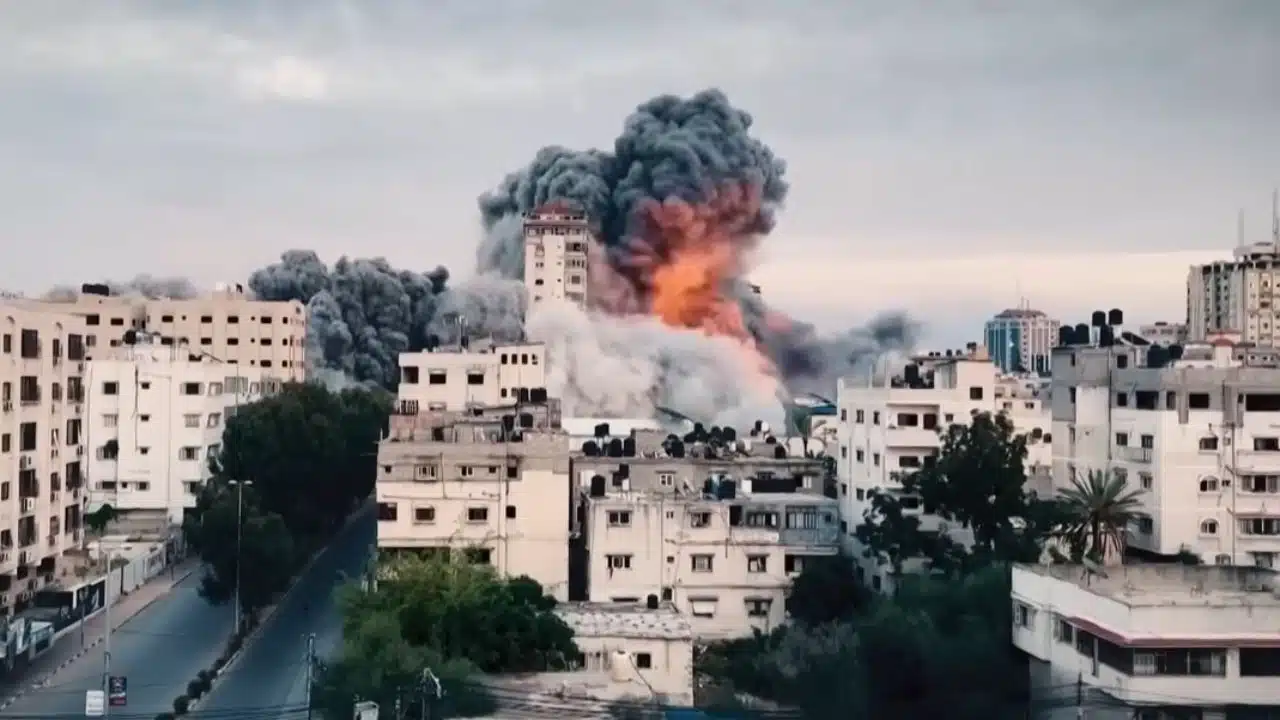
The Palestinian Medical Relief Society (PMRS) announced that its main health center in Gaza City has been destroyed by an Israeli airstrike. According to the charity, the six-story building, located in the Samer area, was reduced to rubble on Tuesday after Israeli forces had earlier ordered its evacuation.
The center was not just a building; it had been one of the few lifelines for civilians in the besieged city. PMRS explained that the facility provided blood donation and laboratory testing services, trauma and emergency care, distribution of cancer medicines, and treatment for chronic illnesses such as diabetes and hypertension. The destruction, they said, has stripped Gaza City of a crucial pillar of healthcare at a time when residents are already struggling with shortages of medicine, food, and electricity.
Wider Damage to the Health System
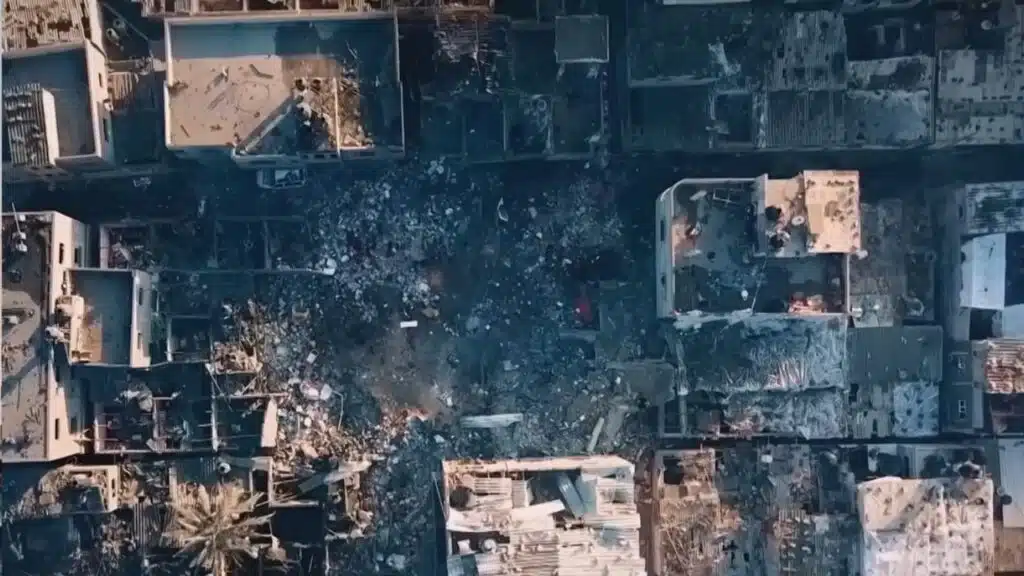
PMRS added that the strike on its main building was not an isolated incident. At least two other health centres linked to the charity have also been hit:
- One was severely damaged and is now surrounded by Israeli ground troops.
- Another center was completely destroyed in a separate airstrike.
These losses compound an already dire situation in Gaza, where multiple hospitals have been forced to halt operations amid constant bombardments and ground assaults. The Al-Rantisi Children’s Hospital and the Specialized Eye Hospital, both located in Gaza City, were forced to shut down earlier this week because of nearby Israeli military activity, according to the Gaza Health Ministry.
Humanitarian groups stress that such closures have left thousands of patients without care, including children with cancer, newborns in incubators, and people requiring dialysis or surgery.
Israel’s Military Justification
The Israeli military has not issued an immediate statement about the specific strike on the PMRS health centre. However, Israel often argues that Hamas militants use civilian infrastructure, including hospitals and clinics, to shield their activities.
Under international humanitarian law, medical facilities are considered protected sites. But if a facility is used for military purposes, it may lose that protected status. Critics, however, note that Israel frequently provides little or no publicly verifiable evidence of such military use. Human rights groups and international organizations have warned that broad attacks on health facilities without concrete proof risk amounting to violations of international law.
WHO and International Condemnation
The attack has drawn global condemnation. Tedros Adhanom Ghebreyesus, head of the World Health Organization (WHO), said in a post on X that:
“Attacks on health facilities must end. The senseless violence must stop. Ceasefire!”
The WHO had previously partnered with PMRS to deliver medicines and medical training. Tedros’s condemnation reflects growing international alarm over the collapse of Gaza’s health system.
In addition, 24 nations—including Canada, France, and Germany—released a joint statement earlier this week calling on Israel to:
- Restore a medical corridor so that Palestinian patients could receive treatment in East Jerusalem and the West Bank.
- Allow more medical supplies, equipment, and personnel into Gaza, where restrictions have sharply limited humanitarian access.
Humanitarian Crisis and Health System Collapse
The destruction of the health center comes as Gaza faces a famine, according to the UN’s leading hunger authority. The combination of Israel’s blockade, ongoing military operations, and the near-total destruction of civilian infrastructure has pushed the city to the brink.
Reports from aid agencies and local doctors describe scenes of overcrowded emergency wards, surgeries performed without anesthesia, shortages of antibiotics, and patients dying due to lack of basic care. Many hospitals have run out of fuel to power generators, leaving life-support equipment non-functional.
The Guardian recently reported that the remaining hospitals in Gaza are overwhelmed, facing a “tsunami of patients” as thousands of civilians flee into already overburdened facilities. Doctors describe choosing who to treat first and who to let go, a practice sometimes referred to as “disaster triage,” which highlights the scale of the humanitarian emergency.
The Broader Military Offensive
Israel launched its latest large-scale offensive on Gaza City earlier this month. The stated objective is to pressure Hamas to surrender and secure the release of the remaining hostages captured during Hamas’s cross-border attack on 7 October 2023.
Israel believes that out of the 48 hostages still unaccounted for, around 20 may still be alive. The offensive, however, has left Gaza City—already devastated by nearly two years of war—in ruins. Entire neighborhoods have been flattened, and vital services such as electricity, water, and healthcare have nearly collapsed.
According to recent humanitarian tallies, at least 65,000 Palestinians have been killed since the conflict began, with Gaza City bearing a large share of the casualties. The numbers are impossible to independently verify due to restricted access, but international aid agencies confirm that the toll is catastrophic.
Calls for Accountability
Human rights experts at the United Nations have warned that the relentless attacks on Gaza’s healthcare system amount to “medicide”—the deliberate destruction of medical infrastructure and denial of care to a civilian population. They argue that such actions may constitute war crimes under international law.
For Israel, however, the government maintains that it is fighting an existential battle against Hamas, insisting that military necessity outweighs international criticism. The country has also accused critics of ignoring the suffering of Israeli civilians, including families of the hostages.
The destruction of the Palestinian Medical Relief Society’s main health centre in Gaza City marks yet another devastating blow to a population already enduring famine, mass displacement, and relentless bombardment. As medical facilities fall one after another, the prospect of providing even basic healthcare to Gaza’s residents is vanishing.
International bodies like the WHO, the UN, and dozens of governments continue to urge Israel to protect civilian infrastructure and restore humanitarian corridors. But with the offensive in Gaza City intensifying and hospitals shutting down, the crisis has become both a medical and moral catastrophe—raising urgent questions about the limits of warfare and the protection of civilians in conflict.
the Information is Collected from Arab news and MSN.