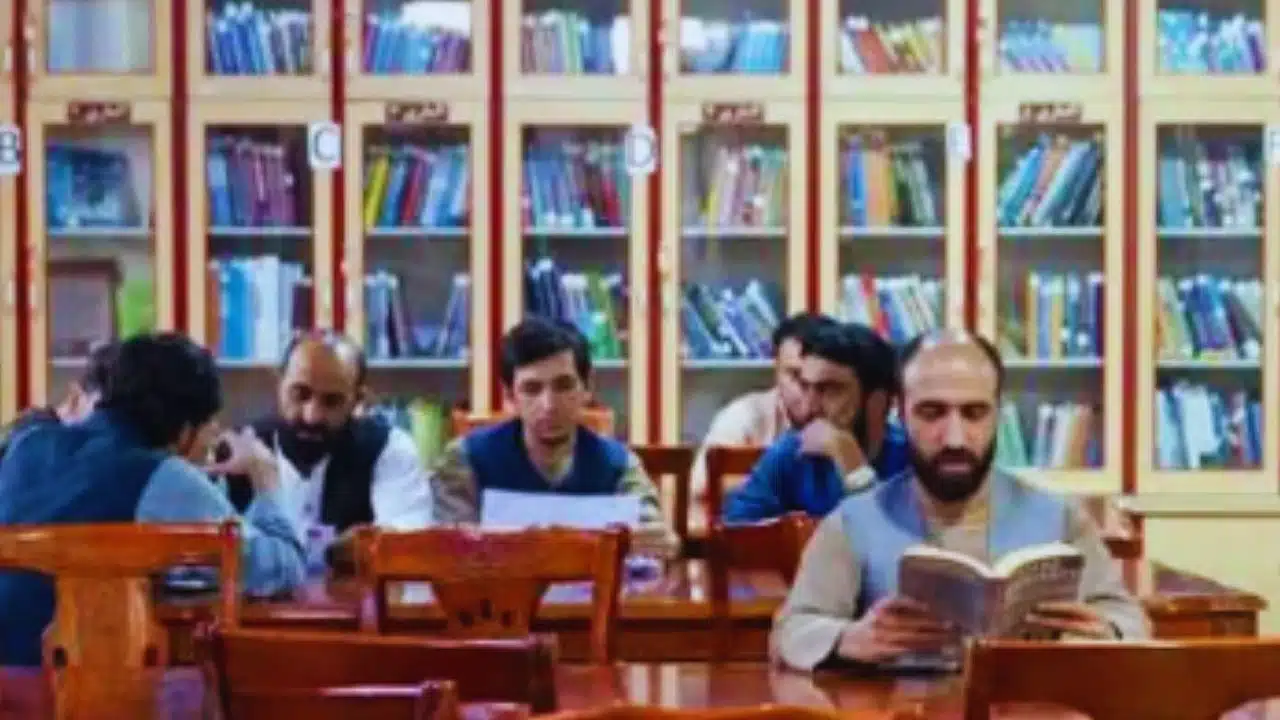
As Afghanistan’s new academic year begins, the Taliban has announced one of the largest-ever purges of university learning materials in the country. The Ministry of Higher Education has officially banned 679 textbooks from public and private universities, claiming they conflict with the group’s interpretation of Islamic Sharia law.
The ban was ordered through a formal directive signed by Deputy Higher Education Minister Ziaur Rahman Aryoubi, which was circulated to universities across the country in late August. The letter, obtained by Independent Persian, makes clear that the move followed a comprehensive review process involving Taliban clerics, officials from the Ministry of Higher Education, and Islamic law scholars.
The committee concluded that the books contained material considered “ideological, cultural, religious and scientific” violations of Sharia principles. As a result, universities were told to immediately stop teaching, citing, or distributing these works.
Courses Removed from Curriculums
The new restrictions are not limited to books alone. The Taliban has also banned 18 entire courses that it deems incompatible with Islamic principles. Among the banned subjects are:
- Afghan constitutional law
- Gender and development studies
- Human rights and democracy
- Political systems and electoral studies
- History of religions
- Globalisation and development
- Women’s role in public communication
- Courses addressing sexual harassment
- Philosophy and women’s studies
Additionally, 201 other courses across law, political science, sociology, history, journalism, and other fields have been flagged as “problematic” and are currently under review. The ministry has said further bans may follow once the committee completes its assessments.
Core Academic Texts on the Ban List
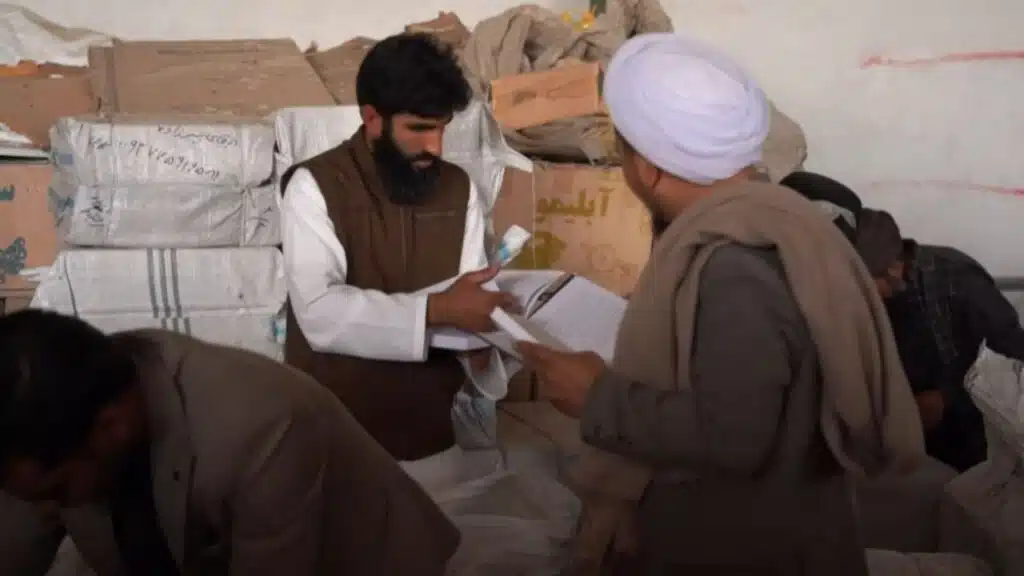
The 50-page list of prohibited titles extends across almost every academic discipline. Many are seminal works written by internationally recognized scholars and widely taught at universities worldwide. Some examples include:
- Globalization: A Critical Introduction by Jan Aart Scholte
- International Sustainable Development by Shamsalsadat Zahedi
- Comparative Human Rights by Abdul Rahman Salim
- Principles of Law by Nasrullah Stanekzai
- Political Terminology and International Relations by Zakia Adeli
- Introduction to Sociology by Bruce J. Cohen
- Masters of Sociological Thought by Lewis A. Coser
- History of Western Philosophy by Abdul Rahman Alam
- Public Relations Theory by Carl H. Botan and Vincent Hazleton
- Organizational Communication: Approaches and Processes by Katherine Miller
- Contemporary Sociological Theory and Its Classical Roots by George Ritzer
In some cases, even books with no direct political or religious content have been blacklisted. For example, works on public relations, organizational communication, and sociology — subjects central to journalism and media faculties — are no longer permitted.
Impact on University Faculties
The directive affects nearly every faculty in Afghan universities:
- Law and Political Science: Courses on governance, democracy, constitutional law, and human rights are banned, effectively reshaping legal education in the country.
- Education Faculties: Texts on sociology and educational theory are now forbidden.
- Journalism and Media Studies: Several foundational works, including books on online journalism, investigative reporting, and mobile journalism, have been removed.
- Social Sciences and Humanities: Philosophy, history, international relations, and women’s studies are heavily targeted.
- Even Medical Faculties: Professors are being required to attend weekly two-hour Sharia sessions, despite the non-religious nature of their field.
University officials in Kabul have warned that this ban will cripple higher education, leaving professors and students without core reference materials. One private university academic told Independent Persian:
“There’s no substitute for many of these 679 books. They are essential for higher education. Unless the Taliban writes new texts themselves, universities will struggle to function.”
Wider Censorship in Education and Publishing
This crackdown on higher education is part of a much broader campaign of censorship and ideological control.
- The Taliban’s Ministry of Information and Culture has already confiscated hundreds of books from libraries and bookshops across Kabul and Herat. These included works on women’s rights, democracy, art, philosophy, and history.
- A 14-member book review committee, established by the ministry, meets every two weeks to review new and imported publications. Books judged to be against Islamic values, Afghan culture, or the “strategy of the Islamic Emirate” are banned from publication, sale, or distribution.
- At a meeting in August 2025, the committee reviewed 354 additional books, suggesting more bans are imminent.
This has created a chilling effect across Afghanistan’s publishing industry, with many publishers fearing heavy losses or closure.
Talibanisation of Education
Since regaining power in 2021, the Taliban has steadily reshaped Afghanistan’s education system. The dismissal of hundreds of professors, mostly from law, political science, fine arts, journalism, and economics, was one of the first steps. Professors are now required to attend religious sessions emphasizing Taliban ideology, beard growth, and Islamic preaching, even if they teach in medical or technical fields.
The Taliban has also significantly expanded mandatory religious coursework, placing clerics in charge of teaching Sharia principles to students and staff across all faculties.
Analysts warn that this marks a systematic Talibanisation of Afghanistan’s higher education system, where independent thought, international scholarship, and exposure to global knowledge are being replaced with narrow, doctrinal teachings.
International Concerns
The international community has repeatedly expressed concern over the Taliban’s approach to education, particularly regarding women. The UN and several human rights organizations argue that the removal of women’s studies, human rights, and democracy courses represents a deliberate attempt to erase women and minority voices from academic spaces.
Experts fear this ban will further isolate Afghanistan from the global academic community. Universities worldwide rely on these very same texts for legal, social, and political science education. Cutting Afghan students off from them could leave the country generations behind in education, governance, and development.
Consequences for Students and Future Generations
For Afghan students — especially women, many of whom are already barred from attending secondary schools and universities — the banning of books and courses represents another blow to their future.
Students who previously studied law, political science, sociology, journalism, or women’s studies will now find their degrees stripped of value outside Afghanistan, limiting their opportunities for scholarships, jobs, or international collaboration.
Professors, too, face increasing pressure. Many have fled the country since 2021, while others who remain risk losing their jobs if they oppose Taliban ideology.
The Taliban’s ban on 679 textbooks and nearly 20 academic courses is not just a matter of curriculum — it is a fundamental restructuring of Afghanistan’s intellectual and educational landscape. By erasing key subjects such as women’s rights, human rights, democracy, philosophy, and international law, the Taliban is moving to create a generation of students cut off from modern knowledge and global scholarship.
This sweeping censorship campaign — extending from universities to libraries, publishing houses, and bookstores — represents the broadest cultural clampdown since the Taliban’s return to power. Critics warn it will leave Afghanistan’s higher education system paralyzed, its students isolated, and its future deeply uncertain.