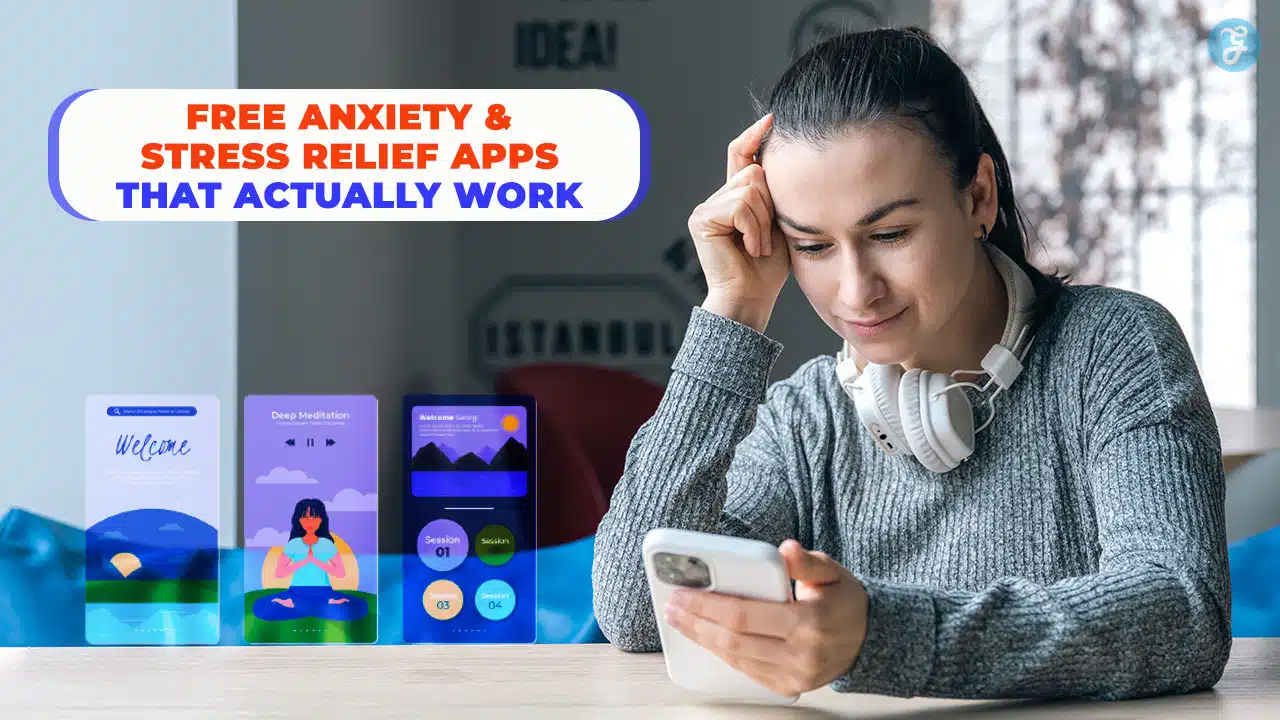
Do your thoughts race like a runaway train when you face a busy day? Anxiety can hit hard and slow you down. You may try deep breaths, but stress sticks. You want a tool that fits in your pocket.
More than 40 million U.S. adults face anxiety each year. You can use free mental health apps, with guided meditations, breathing exercises, and cognitive behavioral therapy tools. This post reviews ten apps that work fast and need just a few minutes a day.
You can make stress less of a burden. Here we go.
Key Takeaways
- More than 40 million U.S. adults face anxiety each year. Ten free apps offer guided meditations, breathing drills, and CBT tools to ease stress fast.
- Calm and Headspace let you press play on meditations or soundscapes in five minutes or less to calm racing thoughts.
- MindShift CBT, Sanvello (approved by the Anxiety and Depression Society of America), and The Worry Box use mood tracking, journaling, and CBT tasks to fight worry.
- Insight Timer gives a vast library of free meditations and music. Breathe2Relax (from the National Center for Telehealth & Technology) guides paced breathing and relaxation exercises.
- Happify and Smiling Mind pack games, gratitude prompts, and kid-friendly programs to build resilience and log mood shifts each day.
How can Calm help me manage anxiety every day?
The Calm app blends mindfulness and meditation in a calm layout. Users tap on guided meditations or relaxing sounds to ease tension. Each session takes five minutes or less, so people fit it into day or night.
Mobile access makes it a handy tool for stress management. A gentle alert nudges you to pause, press play, and unwind. Small doses of calm add up to lower anxiety.
What stress relief techniques does Headspace offer?

Headspace offers guided breathing sessions and body scan drills that ease tense muscles and aid stress management. Experts in mindfulness craft relaxation techniques you can master in minutes.
Soundscapes with waves or rain boost relaxation and sleep quality. Progress trackers show streaks and patterns in mood or sleep. Reminder alerts nudge you to stick with mindfulness exercises.
This meditation app builds coping mechanisms with each short module.
Quick SOS exercises calm racing thoughts during panic attacks or high stress. Body scans walk you from head to toe, easing tension bit by bit. Meditation masters craft focus drills that sharpen attention and melt anxiety.
Interactive charts use simple graphs to track calm and stress levels. Gentle nudges remind you to log moods or try a new session. Positive thinking messages pair with guided meditations to boost mental well-being.
How does Sanvello help reduce stress effectively?
Sanvello offers mood tracking, thought logging, and guided breathing drills to boost stress management. Its cognitive behavioral therapy features help you swap harmful ideas for positive ones.
It complements therapy with deep breathing tools and behavioral exercises. Professionals at the Anxiety and Depression Society of America have approved its approach.
Users can record their own voice for relaxation prompts. This feature personalizes each session, making stress relief feel more real. This mental health app also delivers fast relaxation techniques and simple coping mechanisms.
It stands out among wellness apps for its practical tools and clear interface.
How can Insight Timer meditation relieve stress?
Insight Timer offers a vast library of free guided meditations, talks, and music for stress relief. It guides users through relaxation techniques, simple breathing exercises, and mindful pauses.
The app fits both beginners and advanced meditators. Listeners can pick sessions that match their mood or stressors. Drop into a 5 minute track or a longer practice. Gentle music fills ears with relaxing sounds from birds to waves.
Users set reminders to build a daily habit. Progress charts help track calm minutes and mood shifts. Global groups share tips, goals, and support in real time. Many people report less anxiety, better sleep after a few weeks.
The app packs coping strategies, meditation tools, and breathing exercises. It drives positive thinking and boosts stress management skills.
What breathing exercises does Breathe2Relax include?
Calming breaths curb stress in minutes.
Breathe2Relax, a free wellness app from the National Center for Telehealth & Technology, guides breathing exercises for anxiety relief.
- Diaphragmatic breathing: Engages lower lungs for deep inhalation, helps manage fight-or-flight responses, stabilizes mood, and supports stress management with belly-full breaths.
- Box breathing: Guides inhale, hold, exhale, and hold each for equal counts; this rhythmic pattern trains breathing exercises, slows racing thoughts, and sharpens coping mechanisms.
- Four-seven-eight breathing: Inhale for four seconds, pause for seven, exhale eight; this cycle ups oxygen flow, lowers heart rate, and brings quick relaxation techniques.
- Pursed-lip breathing: Teaches gentle exhale through tight lips to slow breathing rate, ease anxious behaviors, and keep the mind as cool as a cucumber in tense moments.
- Animated paced breathing: Features a pulsing circle on mobile devices that syncs inhale and exhale, offers guided meditations visuals, and boosts mood tracking and stress relief.
What activities does Happify offer to reduce anxiety and stress?
Happify packs games and quick exercises. It taps positive psychology to build resilience in just a few minutes for millions of users.
- Gratitude prompts jumpstart positive thinking, lift mood, and support mental wellness on a mental health app.
- Mindful breathing sessions guide box breathing to ease panic disorder and speed stress relief.
- Cognitive reframing quizzes use cognitive-behavioral therapy tasks to tackle anxiety disorders and sharpen coping mechanisms.
- Savoring exercises ask you to note a small win daily, build stress resilience, and fight depressive symptoms.
- Body scan routines teach muscle relaxation, focus attention, and serve as quick relaxation techniques.
- Puzzle challenges sharpen focus, boost stress management skills, and train your mind against test anxiety.
- Mood tracking logs let you chart patterns, flag triggers for social anxiety, and guide mindfulness practice.
- Guided meditations deliver ocean wave recordings, voice coaching, and treat clinical anxiety with meditation apps.
How does Smiling Mind promote mindfulness for daily stress relief?
Smiling Mind acts as a free non profit mental health app for stress management. Content suits kids, teens and adults in daily life. Structured programs guide users through simple mindfulness exercises and guided meditations.
Progress tracking tools let people log moods and review growth. Reminder features nudge people to pause and practice when stress peaks.
Each session helps people build emotional resilience and positive thinking. Breathing exercises and relaxing sounds calm racing thoughts. Families join group programs for shared coping mechanisms.
Mood tracking shows anxiety relief over time. This meditation app follows cognitive behavioral therapy (cbt) principles and serves as a key mental health resource.
What tools does MindShift CBT provide to tackle anxiety?
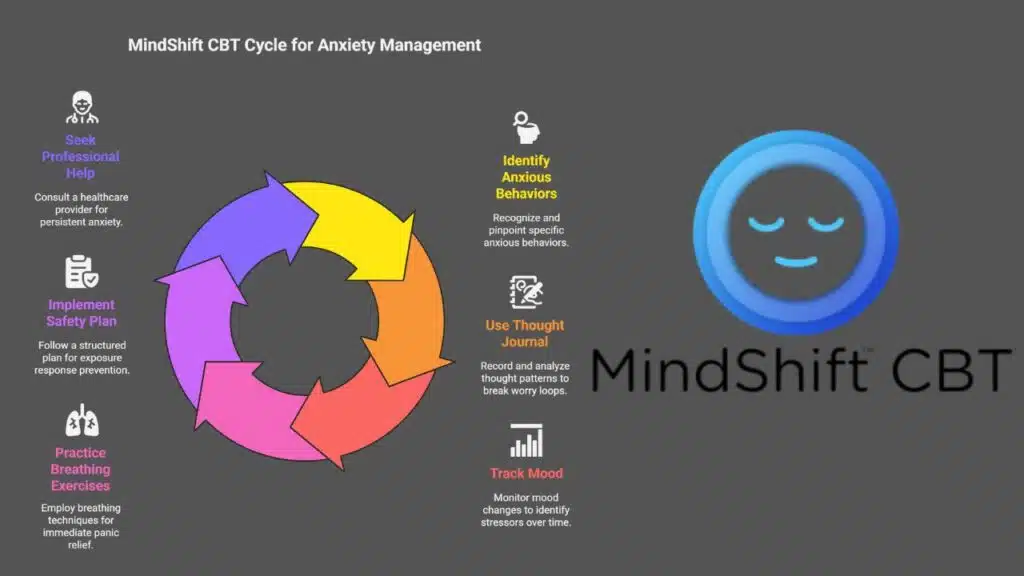
MindShift CBT uses cognitive behavioral therapy methods at your fingertips for anxious tweens and teens. Its Chill Out feature guides breathing drills, muscle relaxation, and calming imagery.
Users explore relaxation techniques in a few taps. This mobile mental health app reaches into daily life.
Teens tap Quick Tips to fetch bite-size coping cards that teach positive thinking and thought testing. A mood tracker logs stress levels, it exposes performance anxiety spikes. Exposure work appears as a fear ladder, so users face fears one small step at a time.
Few minutes on these tools can deliver stress relief, ease panic, and fight perfectionism.
How can The Worry Box help me manage anxiety effectively?
People tap into The Worry Box mental health app to log anxious thoughts in minutes. It uses journaling and cognitive behavioral therapy tactics to change worry patterns. Each entry stays saved so anyone can review fears later.
This feature builds positive thinking and boosts stress management naturally.
Anyone can open the app on smartphones and tablets. It needs only a few minutes of focus to lower anxiety. Many folks struggling with anxiety and depression find relief here. Quick sessions add up to steady anxiety relief over time.
Takeaways
Ten free smartphone tools can ease your mind in minutes. Stress bugs us all every day.
You can use hypnosis sessions, guided mindfulness, breathing exercises or cognitive behavioral therapy drills when anxiety strikes. MindShift mobile program and calm modes fit in any pocket, ready to calm you fast.
Tracking moods and facing fears with small steps now feels doable. Give these tools a try, pick your favorite, and watch daily stress fade.
FAQs
1. What types of free apps help with stress management and anxiety relief?
Free apps pack guided meditations, breathing exercises, and relaxing sounds. They feel like a pocket coach, offering mood tracking, coping mechanisms, and even brain training games.
2. Can I use mental health apps for PTSD or phobias?
Yes, some apps use exposure therapy and exposure response prevention for PTSD or phobias. They give veterans and anyone with trauma steps to face fears, bit by bit.
3. How do apps use cognitive-behavioral therapy?
Many apps break down cognitive behavioral therapy into short sessions. They teach positive thinking and guide you through thought logs.
4. Will these meditation apps help with sleep issues?
Absolutely, they include relaxation techniques, breathing exercises, and guided meditations designed for cognitive behavioral therapy for insomnia. You can drift off with a lullaby for your brain.
5. Are these wellness apps good for teenagers or carers?
Yes, they blend simple stress relief tips, mood tracking charts, and counseling-style guides. They offer mental health resources for teenagers, carers, and anyone with postpartum depression.
6. How do these apps track my progress?
They use mood tracking, sleep logs, and let you log stress levels. They show patterns and suggest stress reduction exercises, all in one place.