

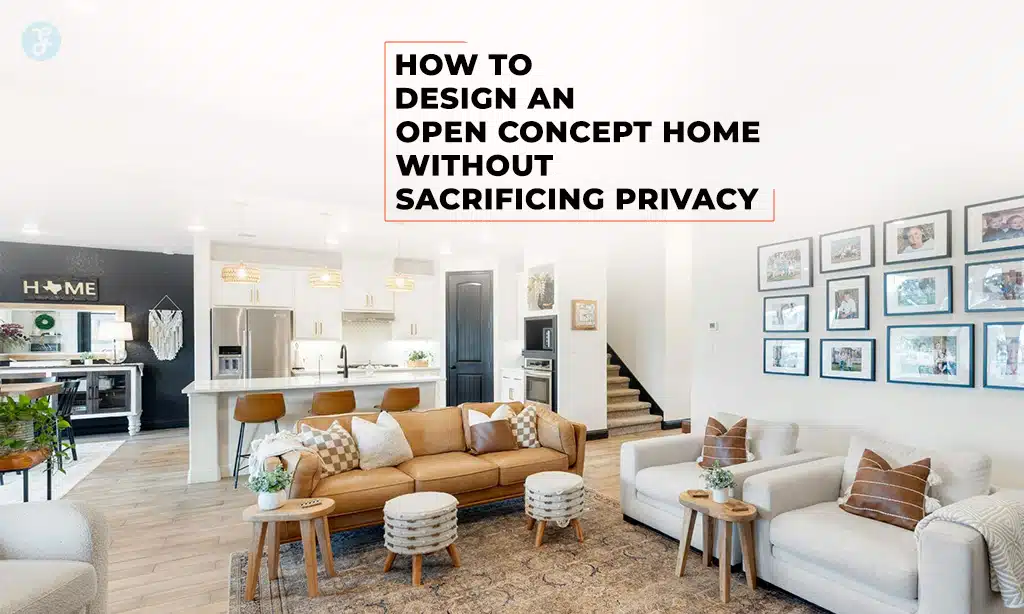
Open floor plans are trendy, but they come with a challenge. While these layouts feel airy and bright, they often lack privacy. You might love the idea of an open kitchen flowing into your living room, but what happens when you need a quiet spot to work or relax? It can get tricky.
The good news is that you don’t have to choose between openness and privacy Smart interior design ideas like using partial walls or room dividers can give you balance. This post will guide you on how to keep that open-concept look while making space for privacy.
Ready for creative solutions? Keep reading!
Use Partial Walls
Partial walls work well in an open floor plan. They let spaces feel connected but provide some privacy. Use them to separate the kitchen from the living room or frame a home office area.
These walls can act as backdrops for furniture, like couches or kitchen cabinets.
They also help with sound control without blocking natural light. Add shelves or décor to make them functional and stylish. A partial wall near a bedroom corner can create a cozy reading nook while still keeping the open-concept look intact.
Incorporate Decorative Dividers
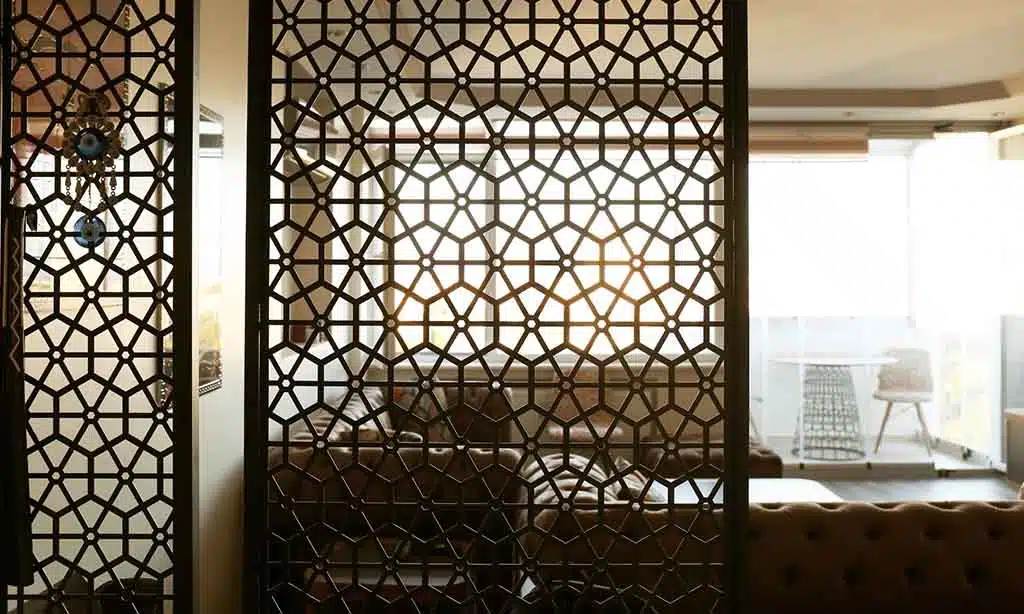
Decorative dividers give privacy without closing off spaces. Use a folding screen to separate your living room and dining area. It adds style while keeping the open feel of an open-concept home.
Choose screens with patterns or materials that match your decor.
A thin metal frame with hanging fabric can act as a creative divider. Macramé or bead curtains work well, too, if you love something playful yet functional. These options allow natural light to pass through while breaking up large areas in your open floor plan.
Add a Bookshelf for Separation
A tall bookshelf can break up an open layout. Place it between spaces like the living room and dining area. It acts as a wall but keeps the open concept alive. Use it for books, plants, or decor to make it both functional and stylish.
Choose one with an open-back design for more natural light to flow through. This helps maintain an airy feel while creating privacy. A smart setup turns your storage into a room divider that feels modern and cozy at the same time.
Install Sliding or Pocket Doors
Sliding and pocket doors offer privacy without making spaces feel closed off. They save floor space, unlike swinging doors. Use them to separate multifunctional spaces like a home office or guest room in an open layout.
Frosted glass sliding doors can keep natural light flowing while adding a sleek touch.
Barn doors are another stylish option for dividing areas without permanent walls. Choose designs that match your home decor for a cohesive look. These doors make it easy to switch between open flow and private zones in seconds!
Use Frosted or Textured Glass Panels
Frosted or textured glass panels are perfect for privacy. They block views but still let natural light flow through. These panels work well in open-floor plans, like between a home office and living room.
Glass with patterns adds style to your space. Try frosted sliding doors for bedrooms or textured dividers in kitchens. This option keeps areas bright while creating separation without heavy walls.
Include a Two-Way Fireplace
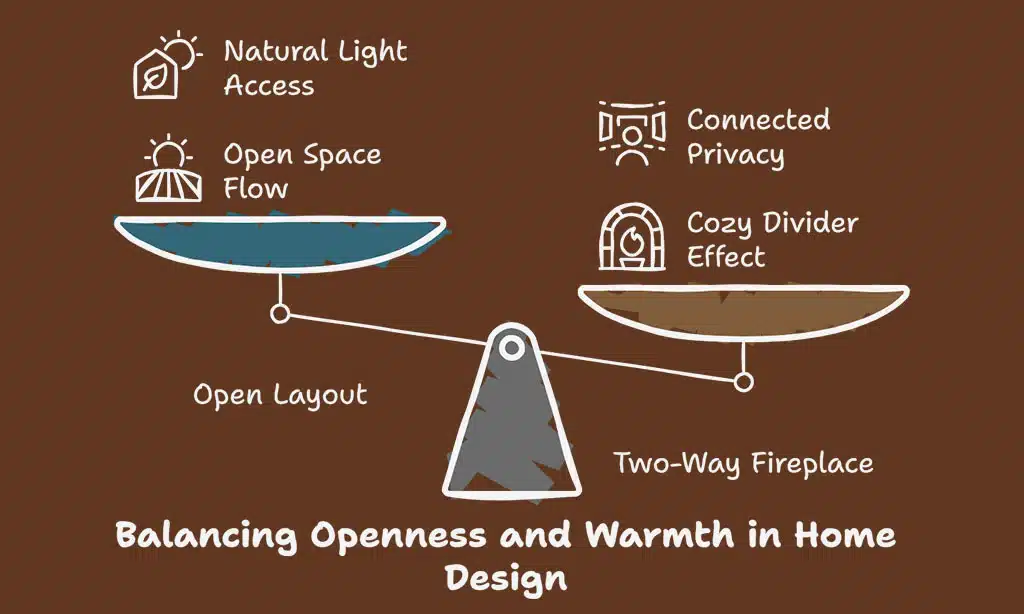
A two-way fireplace works perfectly in an open layout. It warms up both spaces while giving a cozy divider effect. You can place it between the living room and dining area or even near a kitchen island.
This feature adds charm without blocking natural light. It also keeps both areas connected yet private. The flicker of flames creates a relaxing vibe, making multifunctional spaces feel more inviting.
Hang Floating Artwork
Floating artwork adds style and privacy to an open floor plan. Hang large panels or canvas pieces in strategic spots, like between the living room and dining area. Use bold colors or patterns to draw attention while creating a subtle divider.
Lightweight frames keep spaces open yet defined. Choose art with earthy tones for calm vibes, or abstract designs for energy. This approach keeps natural light flowing and transforms your open-concept home into a multifunctional space with personality.
Place House Plants Strategically
House plants can act as natural room dividers. Tall plants like fiddle-leaf figs create soft boundaries in an open layout. Use these to separate areas like the home office from the living room.
Group smaller plants on shelves or tables for more privacy zones. Large planters near a kitchen island add charm while defining space. Plants also improve air quality, making your home healthy and stylish.
Install Curtain Tracks with Drapes
Curtain tracks with drapes can divide open layouts. They create flexible walls you can move anytime. Choose thick fabrics for better privacy and soundproofing. Light fabrics work well to keep natural light flowing.
These tracks fit along ceilings, staying neat and out of sight. Use them between the living room and kitchen or around a home office space. This solution is stylish, practical, and easy to change when needed.
Add Soundproofing Elements
Open-concept homes can get noisy. Adding soundproofing can help keep things calm and private.
- Use rugs to absorb sound. They also define spaces, like the living room or dining area, in an open layout.
- Place fabric sofas and chairs instead of leather ones to reduce echo. Soft materials soak up sound better than hard ones.
- Install acoustic panels on walls or ceilings for better noise control without blocking natural light.
- Add heavy curtains on windows for privacy and sound absorption, especially near busy streets or loud neighbors.
- Put weatherstripping on doors to seal gaps that let noise travel between rooms easily.
- Pick bookshelves with closed backs as dividers to create a buffer against noise between multifunctional spaces.
- Choose textured wall coverings to dampen sounds bouncing around the open-plan design.
- Invest in thicker underlays beneath carpets or rugs for extra soundproofing in high-traffic areas.
- Use double-pane glass panels where possible, especially if you prefer lots of light but want quiet too.
- Add plants with large leaves—they absorb both sound and add life to your home decor at the same time.
- Consider a two-way fireplace; it separates spaces while muffling noise from one side to the other.
Each step improves the space little by little while keeping it stylish!
Takeaways
Designing an open layout with privacy doesn’t have to be hard. Partial walls, shelves, and dividers offer simple fixes. Sliding doors and curtains add flexibility without closing off spaces.
Plants or textured glass provide both style and separation. Smart lighting and rugs can also define areas while staying open. Small changes make a big impact, turning your space into something functional yet cozy.
Go ahead—create a home where openness meets comfort!
FAQs
1. How can I maintain privacy in an open-concept home?
You can use room dividers, barn doors, or even tall bookshelves to create private spaces while keeping the open layout intact.
2. What are some privacy solutions for a home office in an open floor plan?
Consider adding a sliding barn door or portable room divider to separate your workspace without blocking natural light.
3. Can multifunctional spaces work with an open-plan design?
Yes, you can optimize space by using furniture like a kitchen island that doubles as storage or seating while maintaining flow and functionality.
4. How do I balance interior design with privacy needs in an open-concept home?
Choose decor items like curtains, rugs, and plants that define areas subtly without closing off the entire space.
5. Does having more natural light affect how private my home feels?
Natural light enhances openness but doesn’t have to reduce privacy; frosted glass panels or sheer curtains keep the brightness while adding separation where needed.






















