
Personal injury claims in Australia are not just about proving that an injury occurred; they are about following a stringent legal process with multiple deadlines that must be met.
Whether you have been injured in a car accident, suffered a workplace injury, or experienced an accident in a public space, missing one of these deadlines could have serious consequences for your case.
Personal injury claims are time-sensitive, and the clock starts ticking the moment the injury occurs.
In this article, we will explore 9 important deadlines for personal injury claims in Australia. By understanding these deadlines and taking timely action, you can ensure that your claim is filed correctly and within the stipulated time frames.
Missing any of these deadlines could not only delay your case but could also result in a complete denial of your right to compensation.
We’ll discuss each of these deadlines in detail, providing practical insights and real-life examples to help you navigate the legal process effectively.
Introduction to Personal Injury Claims in Australia
Personal injury claims in Australia allow individuals to seek compensation for injuries sustained due to the negligence or wrongdoing of others. These claims can be made for a wide range of accidents, including car accidents, slips and falls, medical malpractice, and workplace injuries.
The compensation you may receive is intended to cover medical expenses, lost wages, pain and suffering, and other damages.
However, one of the most critical aspects of pursuing a personal injury claim is adhering to the legal deadlines. Important deadlines for personal injury claims in Australia are set by law to ensure that claims are processed in a timely manner. Missing these deadlines can be detrimental, causing the dismissal of your case or the loss of your ability to receive compensation altogether.
The deadlines vary by state and the nature of the claim, and understanding them is crucial for a successful legal outcome.
With this in mind, here are the nine crucial deadlines you must be aware of when filing a personal injury claim in Australia.
9 Important Deadlines for Personal Injury Claims in Australia
Navigating the legal system for personal injury claims can be overwhelming, especially when there are strict deadlines involved. Understanding the crucial deadlines that apply to personal injury claims in Australia is essential for protecting your rights and ensuring that you receive the compensation you deserve.
Failing to meet these deadlines can result in your claim being dismissed or reduced in value, so it’s important to stay informed and act promptly.
Here, we’ll break down the 9 key deadlines you need to be aware of when filing a personal injury claim in Australia, ensuring that your case is handled properly from start to finish.
1. The General Statute of Limitations
The statute of limitations is the maximum period within which you can file a personal injury claim.
In Australia, the statute of limitations typically begins from the date of the injury or, in some cases, from the date when the injury should have been reasonably detected. This period varies depending on the type of claim and the jurisdiction.
Each state and territory in Australia sets its own statute of limitations, so it’s essential to know the time frame that applies to your specific situation.
Specific Time Frames by State
Here’s a detailed breakdown of the statute of limitations for personal injury claims across different states and territories in Australia:
| State/Territory | Statute of Limitations |
| New South Wales (NSW) | 3 years from the date of injury |
| Victoria (VIC) | 3 years from the date of injury |
| Queensland (QLD) | 3 years from the date of injury |
| South Australia (SA) | 3 years from the date of injury |
| Western Australia (WA) | 3 years from the date of injury |
| Tasmania (TAS) | 3 years from the date of injury |
| Australian Capital Territory (ACT) | 3 years from the date of injury |
| Northern Territory (NT) | 3 years from the date of injury |
For certain cases, the statute of limitations may be extended or modified. For instance, in cases involving children or individuals with cognitive impairments, the clock may start later, or the limitation period could be extended.
Case Example:
In a well-known case in New South Wales, a woman who was severely injured in a car accident failed to file her claim within the statute of limitations.
Despite having a valid claim, she missed the deadline and lost the opportunity to receive compensation for her injuries.
2. Notification of Injury to the Insurer

When you are involved in an accident, it’s crucial to notify the relevant insurance companies as soon as possible. Depending on the nature of the injury, you are usually required to notify the insurer within a specific timeframe, often ranging from 28 days to 3 months.
For motor vehicle accidents, you are generally required to report the incident to your car insurer within 28 days.
For workers’ compensation claims, you must inform your employer and the insurer within 30 days of the injury.
Key Points:
- Motor vehicle accident claims: Notify your insurer within 28 days.
- Workers’ compensation claims: Notify your employer and insurer within 30 days.
- Public liability claims: Notify the relevant insurer within 3 months.
Table: Common Notification Deadlines
| Type of Injury | Time Frame to Notify Insurer |
| Motor vehicle accident | 28 days |
| Workplace injury (workers’ compensation) | 30 days |
| Public liability claims | 3 months |
Case Study:
A truck driver in Queensland suffered an injury due to faulty equipment on the job. However, due to not notifying the workers’ compensation insurer within the prescribed 30 days, the driver was unable to claim the full compensation he was entitled to.
It’s important to follow this deadline to avoid financial loss.
3. Filing Your Claim with the Court
If settlement negotiations with the insurance company don’t result in an agreement, you will likely need to take your case to court. In most personal injury cases, you must file your claim within the statute of limitations, which usually spans 3 years from the date of injury. However, once the claim is filed, there are additional deadlines that you must follow throughout the legal process.
Key Dates to Remember:
- Statement of Claim: This is the formal document that outlines the details of your injury and the damages you seek. It must be filed with the court within the statute of limitations period.
- Evidence submission: Timely submission of medical evidence, expert testimony, and witness statements is essential to strengthen your case.
Practical Example:
In a recent case in Victoria, a claimant missed the 30-day deadline for submitting evidence after filing the claim. The delay weakened the case, and the court ruled in favor of the defendant.
This case highlights the importance of staying on top of all deadlines during the court process.
Key Deadlines for Court Filing
| Action | Deadline |
| Statement of Claim | 3 years from injury |
| Submission of evidence | Varies (often within 30-60 days of filing) |
| Witness statements | Varies (before trial) |
4. Medical Evidence Submission Deadline
Medical evidence is a cornerstone of personal injury claims. It helps establish the extent of your injuries, the treatment you’ve undergone, and how the injury has affected your life.
Without solid medical evidence, it can be difficult to prove the severity of your injuries and justify the compensation you’re seeking.
Deadline for Submitting Evidence
In personal injury claims, there is usually a deadline for submitting all medical evidence. This typically happens after you have filed your claim with the court, and the deadline can be 30 to 60 days before your trial date.
Timely submission of evidence is vital to ensure that the medical documentation is properly considered by the court.
Case Study:
In a Queensland case, a claimant was involved in a motorbike accident and delayed submitting medical evidence, hoping to gather additional records. As a result, the insurer challenged the authenticity and timeliness of the evidence, which hurt the claimant’s chances of receiving full compensation. Submitting evidence on time is crucial for success.
Medical Evidence Submission Table
| Type of Evidence | Deadline |
| Medical records | 30-60 days before trial |
| Expert testimony | 30-60 days before trial |
| Witness statements | Varies based on jurisdiction |
5. The Settlement Offer Deadline
Most personal injury claims are resolved outside of court, typically through settlement negotiations with the defendant or their insurance company. However, these negotiations are time-sensitive, and settlement offers often come with an expiration date.
If you fail to respond to a settlement offer within the specified time, the offer may expire, or the defendant may choose to make a less favorable offer later. Ensure that you review settlement offers promptly and consult your lawyer before making any decisions.
Table: Settlement Negotiation Timeline
| Stage | Time Frame |
| Initial settlement offer | Within 1-3 months post-accident |
| Response to settlement offer | Within 14-30 days |
| Final settlement agreement | Varies, often within 6 months |
6. The Pre-Trial Conference Deadline
Pre-trial conferences are meetings between the parties involved in the case, facilitated by a judge or mediator. These meetings aim to narrow down the issues for trial, discuss settlement possibilities, and ensure the case is ready for trial.
Deadlines for Pre-Trial Conference
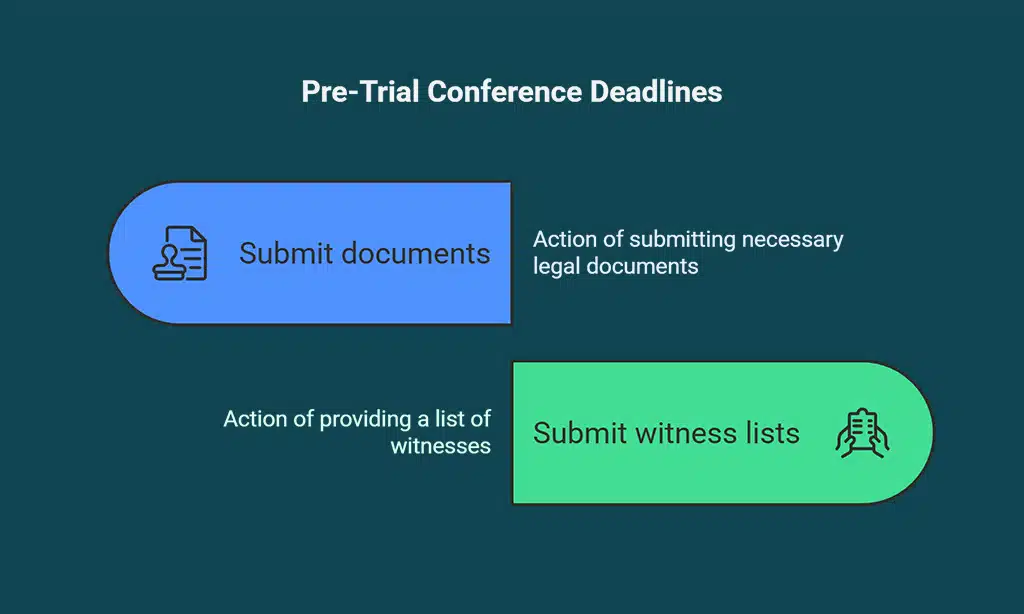
Before the pre-trial conference, the court typically requires the parties to submit essential documents, including witness lists and expert reports. These must be submitted within a few months before the trial date.
Pre-Trial Conference Deadlines
| Action | Deadline |
| Submit documents | 3-4 months before trial |
| Submit witness lists | 3-4 months before trial |
7. Deadline for Filing an Appeal
If you disagree with the outcome of your case, you have the right to file an appeal. However, you must do so within a specified time frame, typically 21-42 days after the judgment is handed down. Missing this deadline could prevent you from seeking further legal recourse.
Case Example:
A claimant in South Australia lost her initial case due to the defendant’s claim of insufficient evidence. She was aware of the option to appeal but missed the 30-day filing deadline, which meant she could no longer seek a different outcome.
Appeal Filing Deadlines
| Action | Deadline |
| Filing an appeal | 21-42 days after judgment |
8. Expert Report Submission Deadline
Expert reports are essential in cases that involve technical details or complicated injuries. Expert witnesses, such as doctors or engineers, provide testimony to support your claim. Without expert reports, your case may lack the evidence needed to win in court.
Deadlines for Submission
Expert reports are usually due several months before the trial date. Ensure that the experts you rely on can meet these deadlines, and submit the reports in accordance with the court’s requirements.
Expert Report Deadlines
| Type of Expert | Deadline |
| Medical experts | 3-4 months before trial |
| Accident reconstructionists | 3-4 months before trial |
9. Time Limit for Claiming Future Losses
Future losses refer to anticipated costs that you will incur as a result of your injury. This can include ongoing medical treatment, future rehabilitation, or lost wages due to long-term disability.
Deadline for Claiming Future Losses
The time limit for claiming future losses is typically the same as the statute of limitations for your case. However, it’s crucial to document these future losses as early as possible, as waiting too long may result in the loss of entitlement to certain damages.
Table: Future Losses Claim Deadline
| Type of Loss | Deadline |
| Medical treatment costs | Within 3 years from injury |
| Lost wages | Within 3 years from injury |
How Missing Deadlines Can Impact Your Claim
Deadlines are not just formalities; they play a critical role in ensuring that your personal injury claim is heard and resolved efficiently. Missing any deadline could have serious consequences, including the loss of your right to compensation.
Important deadlines for personal injury claims in Australia are designed to protect both the claimant and the defendant by ensuring that cases are resolved in a timely manner.
Takeaways
Filing a personal injury claim in Australia can be complex, but staying on top of important deadlines for personal injury claims in Australia is crucial for securing compensation.
By understanding the timeframes and following them diligently, you can ensure that your case is handled properly and that your legal rights are protected.
Be proactive, stay organized, and seek legal advice to help you navigate the process. Remember, your ability to meet deadlines is not just a matter of formality—it’s essential for achieving a favorable outcome in your claim.