Debt can feel overwhelming, and getting out of it often seems like an uphill battle. If you’ve ever wondered how to start taking control of your finances, you’re not alone.
Many people face financial struggles, but the good news is that even small changes in your spending and saving habits can make a big difference.
This article will share five easy budgeting hacks to get out of debt faster. These tips are actionable, simple, and proven to work.
What Are Budgeting Hacks and Why Do They Work?
Budgeting hacks are small, smart strategies designed to simplify financial management and help you allocate your money more effectively. These hacks work because they encourage consistency and mindfulness about your spending habits. By implementing these strategies, you can tackle debt head-on and start building a more secure financial future. Think of them as shortcuts to better money management—simple, but powerful enough to make a real impact over time.
Additionally, budgeting hacks allow you to take control of your financial narrative. Instead of feeling like you’re constantly playing catch-up, these strategies give you a proactive approach to managing your money. They’re effective for people of all income levels and can be tailored to your unique circumstances.
5 Easy Budgeting Tips to Help You Eliminate Debt Quickly
Let’s dive in!
1. Track Every Dollar You Spend
One of the most effective ways to start your journey toward debt freedom is to track every single dollar you spend. When you know exactly where your money is going, it’s easier to identify areas where you can cut back.
Tracking your spending also helps you uncover hidden expenses. Many people are surprised to learn how much they spend on small, everyday items like coffee, snacks, or convenience fees. These small amounts add up over time and can significantly impact your budget if left unchecked.
Steps to Track Your Spending:
- Use a notebook, spreadsheet, or budgeting app like Mint or YNAB (You Need A Budget).
- Categorize your expenses (e.g., groceries, utilities, entertainment).
- Review your spending weekly to spot patterns.
- Set a weekly reminder to evaluate and adjust your spending habits.
Sample Table:
| Expense Category | Amount Spent ($) |
| Groceries | 300 |
| Utilities | 150 |
| Entertainment | 100 |
| Subscriptions | 50 |
By tracking your expenses, you’ll gain valuable insights into your financial habits and identify areas where you can save money. It’s a powerful first step toward creating a budget that works for you.
2. Create a Realistic Budget Based on Your Income
A realistic budget is the foundation of effective financial management. Without one, it’s easy to overspend and find yourself deeper in debt. A budget ensures that every dollar has a purpose.
Creating a budget isn’t just about restricting your spending; it’s about giving you freedom and control. When you allocate your income to specific categories, you’re less likely to waste money on unnecessary purchases. Instead, you can prioritize what truly matters, like paying off debt or saving for the future.
The 50/30/20 Rule:
- 50% of your income goes to necessities (rent, utilities, groceries).
- 30% is allocated to wants (entertainment, dining out).
- 20% is for savings and debt repayment.
If you’re heavily in debt, you may need to adjust this rule by reducing discretionary spending and focusing more on paying off what you owe. Consider cutting your wants category down to 10% or less temporarily and funneling the extra funds into debt repayment.
Example Budget Breakdown:
| Category | Percentage (%) | Monthly Allocation ($) |
| Necessities | 50 | 1,500 |
| Wants | 20 | 600 |
| Savings/Debt | 30 | 900 |
By creating a budget tailored to your income and expenses, you’ll have a clear roadmap to financial freedom. Remember to revisit your budget regularly to make adjustments as your financial situation evolves.
3. Automate Your Savings and Debt Payments

Automation is a game-changer when it comes to managing money. Setting up automatic transfers ensures that your savings and debt payments are prioritized, leaving less room for impulsive spending.
Automation helps you stay consistent, even during busy times or unexpected life events. When payments are automated, you’re less likely to miss due dates or forget to save. This strategy is particularly effective for people who struggle with discipline or find it hard to stick to manual systems.
How to Automate Payments:
- Schedule recurring payments for credit card bills or loans.
- Set up automatic transfers to a savings account each payday.
- Use tools like your bank’s app to manage automation.
Benefits of Automation:
- Avoid late payment fees.
- Build savings effortlessly.
- Stay consistent with debt repayment plans.
Sample Table:
| Automation Type | Frequency | Amount ($) |
| Savings Transfer | Biweekly | 200 |
| Credit Card Payment | Monthly | 300 |
| Loan Repayment | Monthly | 400 |
Automation makes it easier to stick to your financial goals and reduces the stress of remembering payment deadlines. Plus, it creates a “set-it-and-forget-it” system that simplifies your financial life.
4. Cut Unnecessary Subscriptions and Expenses
We’ve all signed up for services we don’t use regularly. These recurring expenses can add up quickly. By canceling subscriptions you don’t need, you can free up more money for debt repayment.
Cutting unnecessary expenses doesn’t mean depriving yourself of all enjoyment. It’s about prioritizing what truly adds value to your life. For example, if you rarely watch a particular streaming service, it’s better to cancel it and put that money toward paying down your debt.
How to Identify Unnecessary Expenses:
- Review your bank statements for recurring charges.
- Ask yourself if you use the service enough to justify the cost.
- Look for cheaper alternatives or bundle services.
- Consider pausing subscriptions temporarily to see if you miss them.
Examples of Expenses to Cut:
| Subscription Type | Monthly Cost ($) | Action |
| Streaming Services | 15 | Cancel if unused |
| Gym Membership | 50 | Switch to home workouts |
| Meal Kits | 100 | Cook at home |
Eliminating wasteful spending is one of the easiest ways to free up money for debt repayment. It’s a small change that can have a big impact over time.
5. Use the Snowball or Avalanche Method for Debt Repayment
Choosing the right debt repayment strategy can accelerate your progress. The two most popular methods are the snowball and avalanche techniques.
The snowball method is ideal for those who need quick wins to stay motivated. By focusing on the smallest debt first, you’ll see progress faster, which can keep you encouraged. On the other hand, the avalanche method is perfect for those who want to save the most money in the long run by targeting high-interest debts first.
Snowball Method:
- Pay off the smallest debt first while making minimum payments on others.
- Once the smallest debt is paid, move to the next smallest.
- Motivates you by providing quick wins.
Avalanche Method:
- Focus on paying off debts with the highest interest rate first.
- Saves more money in the long run.
- Requires discipline to tackle larger debts initially.
Comparison Table:
| Method | Focus Area | Key Benefit |
| Snowball | Smallest Debt | Quick Motivation |
| Avalanche | Highest Interest | Saves More Money |
Choose the method that aligns with your financial goals and personality. Both approaches work if applied consistently. Consider combining these strategies for a customized plan that suits your needs.
Benefits of Using These Budgeting Hacks
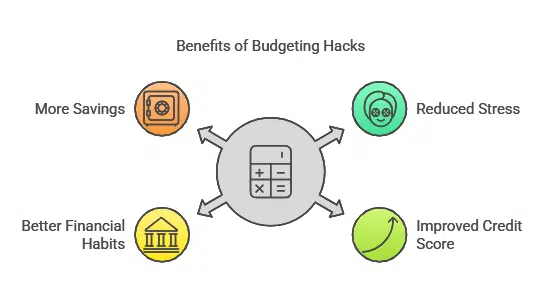
Implementing these budgeting hacks comes with numerous benefits beyond just getting out of debt:
- Reduced Stress: Gain peace of mind knowing you have a plan.
- Improved Credit Score: Timely payments and reduced debt positively impact your credit.
- Better Financial Habits: Develop long-term habits that promote stability.
- More Savings: Free up money for future goals like buying a home or traveling.
By following these hacks, you’ll not only eliminate debt but also create a healthier relationship with money. These strategies provide a clear path to financial freedom, making your journey smoother and more manageable.
Takeaways
Getting out of debt doesn’t have to be overwhelming. With the five budgeting hacks shared in this article, you can take control of your finances one step at a time.
Start by tracking every dollar, create a realistic budget, automate payments, cut unnecessary expenses, and choose a debt repayment method that works for you. Remember, small, consistent efforts lead to big financial changes. Take the first step today and watch your financial situation transform.