During the keynote session at Google I/O 2024, the company unveiled a remarkable array of artificial intelligence (AI) models and tools they have been developing. These innovations promise to redefine how users interact with technology, with most new features set to be available in public previews in the upcoming months.
However, Google DeepMind’s Project Astra, the most intriguing and ground-breaking technology on display at the event, won’t be available for some time.
Introduction to Project Astra
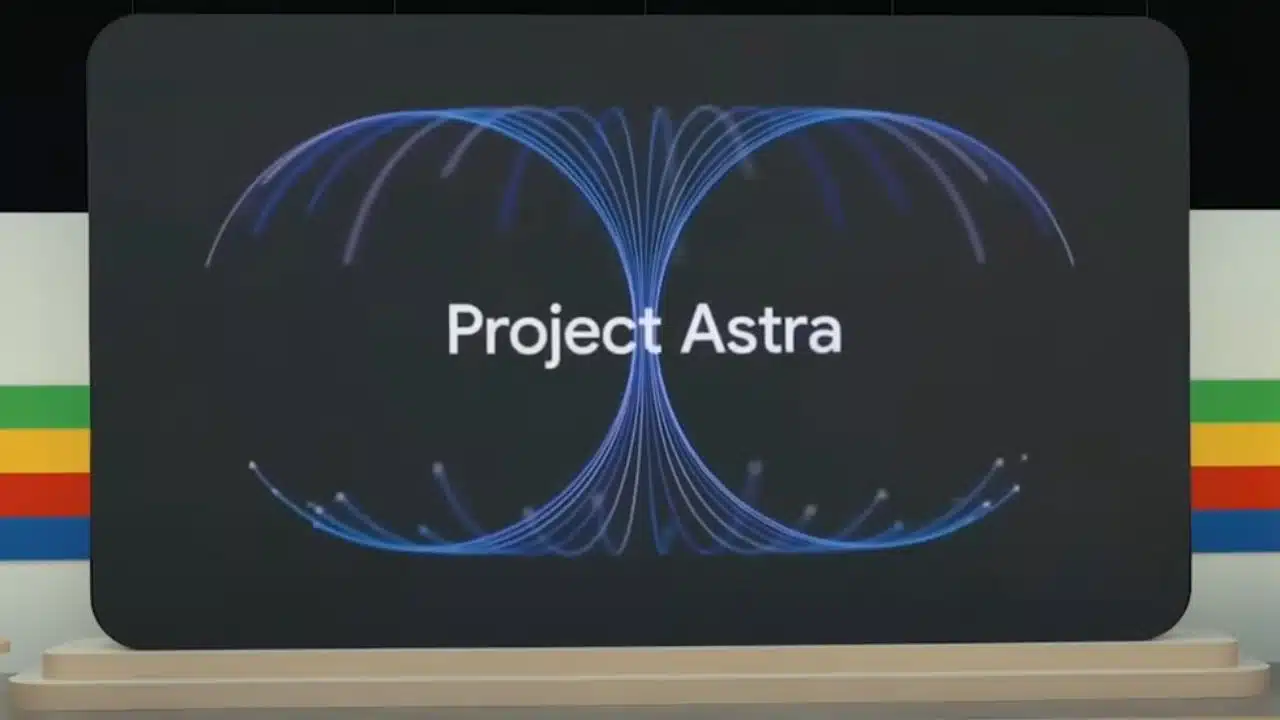
Project Astra is an advanced AI assistant that leverages real-time, computer vision-based interaction capabilities. This project represents a significant leap beyond current chatbot technology, offering a more sophisticated and intuitive user experience.
Unlike traditional AI assistants that rely primarily on text or voice commands, Project Astra can interpret and respond to visual inputs, making it a versatile tool for various real-world applications.
Demis Hassabis, the co-founder and CEO of Google DeepMind, introduced Project Astra during the keynote. “Today, we have some exciting new progress to share about the future of AI assistants… that we are calling Project Astra.
For a long time, we wanted to build a universal AI agent that can be truly helpful in everyday life,” Hassabis stated. His introduction set the stage for a detailed demonstration of the AI assistant’s capabilities.
Demonstration of Capabilities
In a video demonstration, Project Astra showcased its ability to respond to voice commands while analyzing visual input from a phone camera and smart glasses. This multi-modal interaction allows the AI to perform a variety of complex tasks seamlessly.
One of the standout features demonstrated was Astra’s ability to accurately identify sequences of code. This capability is particularly useful for developers and engineers, as it can suggest enhancements and debug errors in real time.
Additionally, Astra showed proficiency in interpreting and improving electrical circuit diagrams, a task that requires high-level understanding and precision.
Astra also demonstrated its potential in everyday scenarios. For example, it recognized the King’s Cross area of London through the camera lens and provided contextual information about the location.
Furthermore, the AI assistant could track personal items, reminding the user where they had placed their glasses, showcasing its practical utility in daily life.
Training and Development Strategy
Project Astra exemplifies Google’s strategy of using its largest and most powerful AI models to train production-ready versions.
This approach ensures that the AI models are robust, efficient, and capable of handling a wide range of tasks.
By leveraging the extensive resources and expertise of Google DeepMind, Project Astra benefits from cutting-edge research and development in the field of artificial intelligence. The project’s reliance on computer vision and real-time interaction sets it apart from other AI assistants currently on the market.
This advancement is expected to open new possibilities for integrating AI into various aspects of daily life, from professional environments to personal use.
Future Prospects and Impact
While Project Astra is still in the development phase and not yet available to the public, its potential impact is significant.
The ability to understand and respond to visual inputs could revolutionize industries such as healthcare, education, and technology.
For instance, in healthcare, Astra could assist doctors by providing real-time analysis of medical images, enhancing diagnostic accuracy. In education, it could offer personalized learning experiences by interpreting visual cues from students.
Google’s emphasis on creating a universal AI agent reflects its long-term vision for AI integration. As AI technology continues to evolve, tools like Project Astra will likely become indispensable in both professional and personal settings.
What’s Next?
Project Astra marks a significant milestone in AI development, showcasing Google DeepMind’s commitment to pushing the boundaries of what AI can achieve.
The advanced capabilities of this AI assistant, from interpreting code and diagrams to recognizing locations and personal items, highlight its potential to transform everyday interactions with technology.
As Google prepares to release more of its AI innovations to the public, the anticipation for Project Astra grows. Its eventual launch could redefine the standards for AI assistants, making real-time, computer vision-based interactions a new norm in the tech world.
The future of AI at Google looks promising, with Project Astra leading the way towards more intelligent and versatile AI solutions.
The Information is Taken from Times of India and The Verge