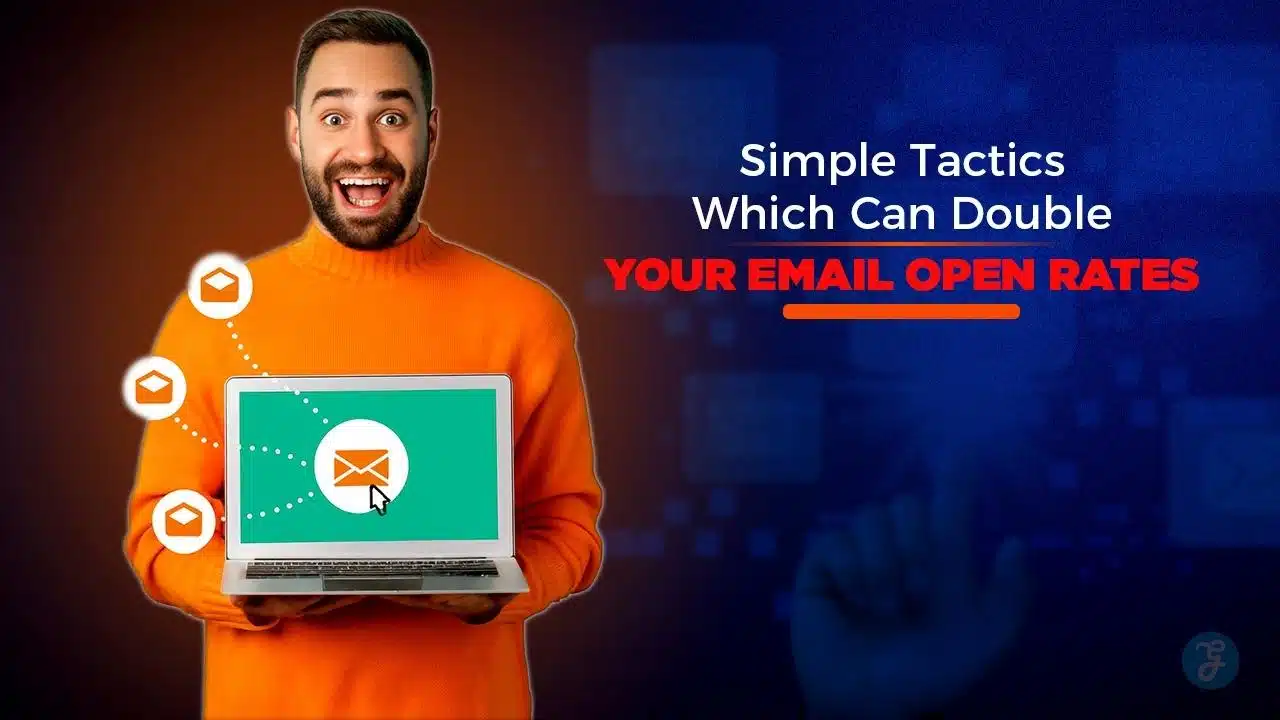
Email keeps changing, but one truth remains: if your readers won’t open your mail, nothing else matters. It is simple to send and hard to be seen. Editors, marketers, and newsroom teams face a common fact: if readers don’t open your mail, your words do not matter. You can double your email open rates; it is not a trick, but a discipline. It comes from cleaning lists, sharpening subject lines, targeting messages, and testing with surgical care.
Here comes the twelve practical tactics, backed by recent industry research, and each is immediately actionable. Also, a 30-day plan that turns experiments into lasting gains, so you can plan tests that actually move the needle.
Why Email Open Rates Matter?
Email open rates are the earliest signal of relevance and trust. They tell you whether your subject line, sender identity, and timing convinced people to click. Benchmarks vary by source, but recent industry datasets report median open rates in the 30–42% range for many publishers and services; individual industries vary widely. Use these figures as context, not as a target: progress is about relative improvement — not matching an average.
Moreover, doubling your email open rate is a practical, not mythical, objective. If your list currently opens at 15%, reaching ~30% is an attainable goal with disciplined testing and cleaner targeting. If you’re starting at 35% the same tactics might still deliver big gains, but the steps differ: when you’re already strong, gains come from nuance and personalization rather than broad housekeeping.
The 12 Tactics That Can Double Your Email Open Rates
Below are the tactics I recommend, ordered by impact and speed of implementation. Each tactic is written as an editorial prescription: why it matters, how to test it, and how to measure real effects.
1) Clean and segment your list regularly
- Why it matters: a large list of disengaged addresses drags down open-rate percentages and harms deliverability. ISPs and major inbox providers favor senders who get meaningful engagement; removing persistent non-openers improves sender reputation and future inbox placement.
- How to act: run list-hygiene weekly or monthly. Remove hard bounces immediately. Move repeated non-openers into a “dormant” segment and run a short re-engagement campaign before removing them permanently.
- Measure: track open rate and bounce rate before and after a clean. If deliverability improves, opens will often follow.
2) Segment by behavior and lifecycle, not only by demographics
- Why it matters: Segmentation drives relevance. Marketers report that segmented emails produce substantially higher opens and clicks; relevant content earns attention more reliably than broad blasts.
- How to act: create at least three behavioral segments for starters — new subscribers (0–14 days), active readers (opened at least 2 of the last 4), and lapsed readers (no opens in 90 days). Tailor subject lines and preheaders for each group.
- Measure: run the same message to two segments and compare open rates; segmented wins should be clear within a few sends.
3) Treat subject lines like headlines — be specific, not cryptic
- Why it matters: Subject lines determine opens. Tests show that benefit-driven and curiosity-with-clarity headlines usually outperform vague clickbait. Keep subjects short enough to show on mobile and speak to clear value.
- How to act: write subject lines as editorial headlines. Use active verbs and concrete benefits. Test formats (benefit-led, curiosity, direct question) in A/B tests.
- Measure: A/B test subject variant A vs B on a meaningful sample and compare unique open rate (not just raw opens).
4) Use preheaders as a second headline
- Why it matters: Most inbox views show subject + preheader. The preheader can clarify, add urgency, or complete a thought that the subject begins. Together they function as a two-line headline unit.
- How to act: craft preheaders that add fresh information — a statistic, a short tease, or a benefit statement. Don’t repeat the subject.
- Measure: A/B test identical subjects with different preheaders on comparable samples.
5) Optimize send time by audience & timezone — then keep testing
- Why it matters: many studies find weekday sends (Tue–Thu) and mid-morning to early afternoon often perform well, but your audience can differ. Successful teams always test send windows and use timezone-aware scheduling.
- How to act: pick a control time (e.g., Tuesday 10 am local time) and test alternatives (early morning, lunchtime, evening) with smaller samples. Implement timezone sends if you have a geographically distributed list.
- Measure: run a multivariate test across days/hours and compare open rates per segment. Use a 2–4 week test window to smooth daily variance.
6) Make the sender identity human and consistent
- Why it matters: readers open mail from people more often than from generic addresses. Using a consistent human + brand format (e.g., “Maya from The Ledger”) builds recognition and trust.
- How to act: adopt a single sender name across campaigns for a period (4–8 sends) to let recognition build. If your editorial brand uses multiple voices, consider a rotating but labeled format (“Editor’s Desk — Maya”).
- Measure: compare opens for the same subject with “noreply@” vs a human name in small tests.
7) Set expectations at signup — frequency, value, and sample content
- Why it matters: surprise frequency is the main driver of list churn. Explicitly telling subscribers what to expect reduces unsubscribe rates, which keeps core open rates healthier.
- How to act: during sign-up, show cadence (weekly/monthly), topics covered, and the typical send format. Reinforce this in the welcome email.
- Measure: compare churn and first-30-day opens for signups with clear expectations vs an older control cohort.
8) Design for mobile-first subject lines and previews
- Why it matters: most opens happen on mobile; inbox clients truncate subject lines. A short, scannable subject that leads naturally into the preheader wins more attention.
- How to act: craft subject lines that communicate the key message in the first 30 characters; use the preheader to expand or add urgency.
- Measure: check open-rate differences between mobile users and desktop users and adapt copy accordingly.
9) Deploy re-engagement and win-back sequences — but be decisive
- Why it matters: re-engagement sequences often recover a portion of cold readers and help you prune the rest. That process concentrates engagement and improves your future open-rate baselines.
- How to act: a three-step re-engagement sequence works well: an initial “we miss you” value email; a second email with a strong bonus (editor’s picks, special content); a final “still interested?” email that offers the unsubscribe link or a preference center.
- Measure: track how many re-engaged users open subsequent regular campaigns. Remove hard negatives after the sequence.
10) Practice rigorous A/B testing — one variable at a time
- Why it matters: Small, isolated tests let you know what move caused the change. Test subject line A vs B, preheader A vs B, or send time — but not several variables simultaneously unless you use factorial design.
- How to act: pick a primary variable, run the test on a representative subgroup (5–20% depending on list size), then send the winner to the remainder.
- Measure: use statistical significance principles, and allow enough time for results to stabilize (often 24–72 hours for opens).
- Why it matters: urgency and social proof raise perceived value and can lift opens when used sparingly and truthfully. Overuse becomes noise and erodes trust.
- How to act: when relevant, highlight scarcity, deadline, or a reader count (e.g., “Join 20,000 readers this week”). Avoid hyperbole and misrepresentation.
- Measure: test headlines that include social proof vs neutral headlines and measure open and downstream click behavior.
12) Fix deliverability fundamentals — authentication, reputation, and content hygiene
- Why it matters: technical factors (SPF, DKIM, DMARC) and content signals influence whether mail lands in Primary or Promotions, or in spam. No subject-line hack works if mail never reaches the inbox.
- How to act: authenticate your domain, monitor complaint rates, maintain a low spam-complaint ratio, and avoid purchased lists. Keep the image-to-text ratio sensible and avoid spammy subject constructions.
- Measure: monitor deliverability reports, spam-folder tests across clients, and complaint & bounce rates.
A 30-day Playbook to Increase Email Open-rate
Below is a practical sequence that stacks the tactics above into a month of disciplined work. Treat it as an editorial sprint: test, measure, and adapt.
Week 1 — Audit and Quick Wins
- Export core metrics: open rate (30/90 day), click rate, bounce rate, spam complaints.
- Run list hygiene: remove hard bounces, correct obvious typos, and tag inactive readers.
- Adopt a consistent sender name for the next 4 sends.
- Prepare three subject-line variants (benefit, curiosity, question) for the next send.
Week 2 — Segmentation, Preheader Testing, and Send-time Experiments
- Create core segments: new subscribers, active, lapsed, and high-value (frequent clickers or purchasers).
- Run subject-line A/B tests in each segment (same preheader) to see if one style wins broadly or by segment.
- Time-test: send the same message to small groups at different times (e.g., Tue 10 am, Tue 4 pm, Sat 9 am). Use timezone-aware sends.
Week 3 — Re-engage and Measure Deliverability
- Launch a three-step re-engagement series to the lapsed cohort.
- Verify SPF/DKIM/DMARC and check inbox placement with a seed list of major clients (Gmail, Outlook, Yahoo).
- Track complaint rates during the re-engagement series; pause if complaints spike.
Week 4 — Iterate, Scale Winners, and Document
- Adopt the winning subject style and send time for the main list.
- Remove users who failed re-engagement and add a “preference center” link to reduce future unsubscribes.
- Document changes, metrics, and next tests (e.g., personalization beyond name, dynamic content experiments).
Metrics to Watch — and the Limitations of “Open Rate”
Open rate matters, but it is imperfect. Clients increasingly block tracking pixels and privacy features (image-blocking and mail proxies can change open-detection behavior). Complement opens with clicks, engagement time on landing pages, and conversion metrics. Track these metrics together: unique open rate, click-to-open rate (CTOR), unsubscribe rate, complaint rate, and deliverability scores. Trends over time are more instructive than single-campaign snapshots.
Concrete Subject-line Examples to Test
To translate the tactics into immediate tests, try these subject-line styles (short, mobile-minded):
- Benefit-led: “How to finish smarter in 10 minutes”
- Curiosity + specific: “The one data point editors miss”
- Question: “Are you still reading long newsletters?”
- Social proof: “Join 12,000 readers this week”
- Urgency (truthful): “Last day: subscriber-only briefing”
- Personalization (behavior): “You liked: 3 posts you’ll want next”
Run these across different segments and preheaders to find the winning combination.
Realistic Expectations and Editorial Cautions
Doubling open rates is achievable for many lists — especially those that start with poor hygiene or broad, undifferentiated content. However, results vary by list quality, industry, and existing audience habits. Benchmarks and research indicate segmentation and personalization consistently drive the largest improvements.
Avoid clickbait. Short-term spikes from sensational subject lines can damage long-term trust. The editorial aim should be to set correct expectations and deliver the promised value.
Be careful with personalization. It works best when tied to behavior and context; mere use of first names is often insufficient on its own. Research suggests personalization tied to behavior or lifecycle performs best.
Wrapping Up
Doubling your email open rates starts with respect for the reader: clean lists, honest subject lines, timely sends, and relevant content. Technical hygiene (authentication and deliverability) and behavioral targeting compound those gains. The work is iterative: small changes, validated by A/B tests, create reliable momentum. Follow the 30-day playbook above, measure the right metrics, and write subject lines like headlines — your audience will notice the difference.