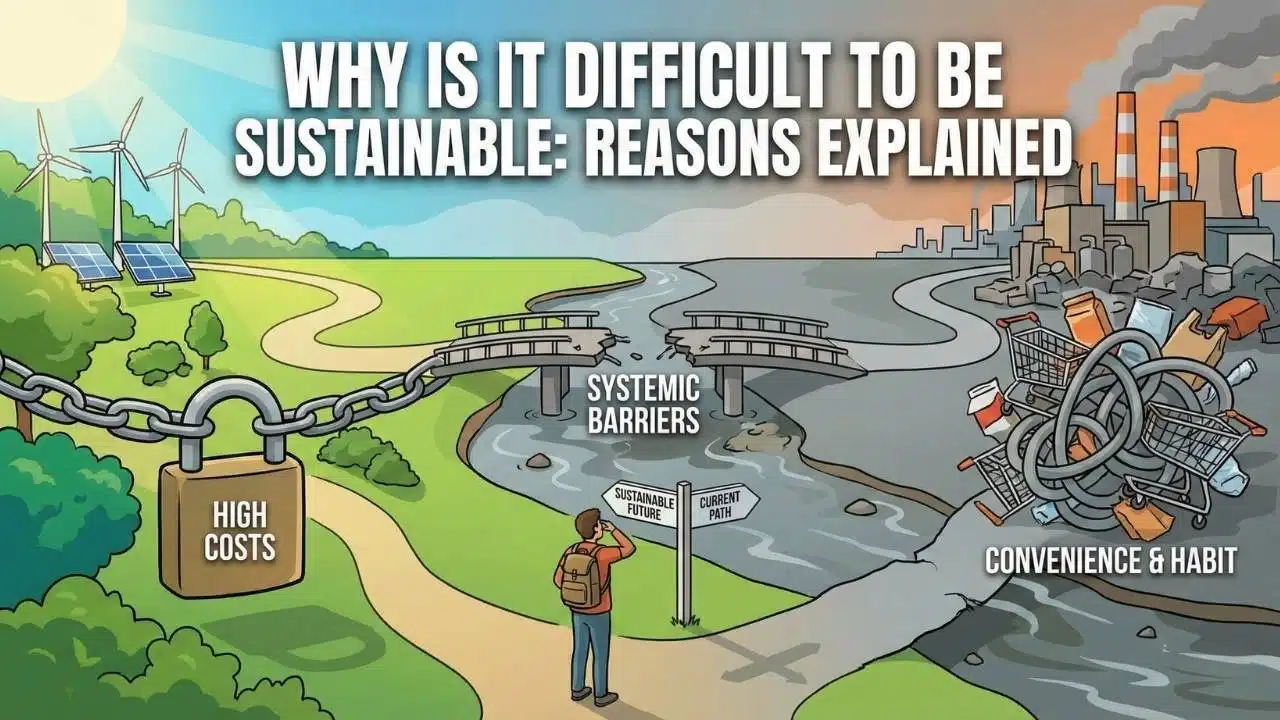
Ever wonder or question why is it difficult to be sustainable, even when you try hard? Most people in the U.S. would need more than one Earth if everyone lived as they do. In this blog post, you will learn simple reasons behind these challenges and find easy steps for a more sustainable lifestyle.
Keep reading for answers that might surprise you!
Key Takeaways
- Many people in the U.S. would need more than one Earth to support their lifestyles, even those who try to be eco-friendly. One teacher said if you need more than one planet, your habits are not sustainable.
- Living green is tough because of high costs, lack of knowledge, hard habits to break, and systems that push unsustainable choices. For example, stores use a lot of plastic packaging, and most “green” items cost more money.
- Not everyone knows about climate issues or how their actions impact nature. Schools and communities need better education programs so people learn about recycling and reducing waste early on.
- Economic problems make it hard for many families to buy eco-friendly products or spend extra time recycling. Some must focus on saving money instead of making green choices each day.
- Small steps help: using reusable bags, tracking progress, joining groups, or sharing efforts with others can change habits over time. Support from friends plus good local rules can help everyone live greener lives together.
The Definition of Sustainability
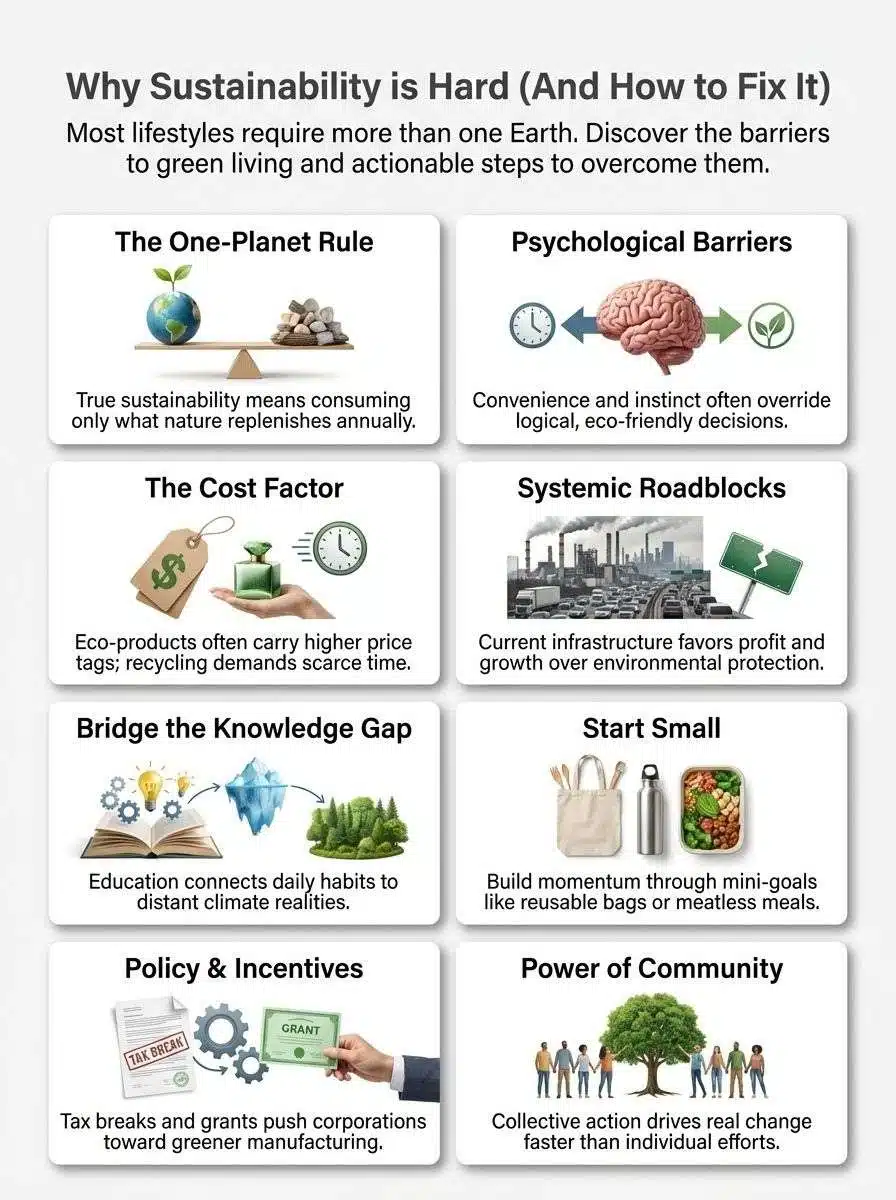
Sustainability means living in a way that protects the earth. People try to use only what nature can give back each year. For example, Richardson’s students checked how many Earths we would need if everyone lived like them.
Even those who cared about eco-friendly choices still needed three planets to support their habits! “If your lifestyle needs more than one planet, it’s not really sustainable,” said one teacher.
The goal is simple: don’t take out more from nature than it can replace. This idea pops up everywhere—like using recyclable water bottles or switching to energy-efficient LEDs and compact fluorescent lamps instead of old light bulbs.
It links with big words too, such as climate change, sustainable development goals (SDGs), and greenhouse gas emissions. Every small choice adds up for a greener future; simple swaps help build that path today.
Why Is It Difficult To Be Sustainable
Living sustainably often feels like running uphill with a backpack full of bricks. The whole system pushes us to buy more, use more, and toss out what we do not need. Even people who care about the environment face walls at every turn.
In the U.S., choosing an environmentally friendly lightbulb or reusable bag seems simple, but it takes effort that most folks cannot keep up with every day. Our society is built on growth and profit, not always caring for the planet first.
Supermarkets pack food in mountains of plastic; companies chase profits over sustainable practices; supply chains hide unsustainable steps from our view.
Science shows change is hard for anyone stuck in old habits or working two jobs just to pay rent. Most businesses focus on short-term gains instead of protecting the environment for tomorrow’s kids.
People talk about recycled fabrics and green gadgets, yet most options cost more money or take extra time to find. Institutions make rules that sound good but are tough to follow without better infrastructure or easier choices at the store.
Emotional stress adds weight—eco-anxiety grows as we hear about microplastics everywhere and see slow action on climate change by big companies and leaders like Starbucks or major supermarkets.
Even those with high environmental awareness feel lost between their values and real-life decisions shaped by everyday struggles around consumer behavior, decision-making processes, finances, labor demands, brand loyalty pressures, and plain willpower fatigue before dinner’s even cooked. Here are 5 reasons that cause difficulties even when we try to be sustainable.
Lack of Awareness and Education
Many people are not well-informed about sustainability. This limited understanding makes it challenging to take action. The issues related to climate change can seem distant, even though they affect us every day.
Extreme weather events are occurring more frequently, yet many still don’t connect these dots. There is a gap between what we know and how we respond.
Education can help close this gap. Schools and communities need to teach about sustainable living early on. When people learn the facts, they may change their behaviors for the better.
Awareness starts at home too; simple discussions about recycling or reducing plastic waste can make a significant difference in attitudes toward environmental actions.
Resistance to Behavioral Change
Changing our habits is challenging. Many people find it tough to choose sustainable options over easy ones. We often prefer what feels good at the moment, like driving a car instead of walking in bad weather.
This pull towards convenience comes from our feelings and instincts, known as the affective system.
When we try to act sustainably, it necessitates us to think more logically and make extra effort with the rational system. Sometimes this makes people uncomfortable because their views clash with their actions; this is called cognitive dissonance.
For instance, if someone supports protecting the environment but drives a gas guzzler every day, they might feel uneasy about that choice. To address this discomfort, they can change their behavior or adjust their views about sustainability.
Economic Barriers to Sustainable Choices
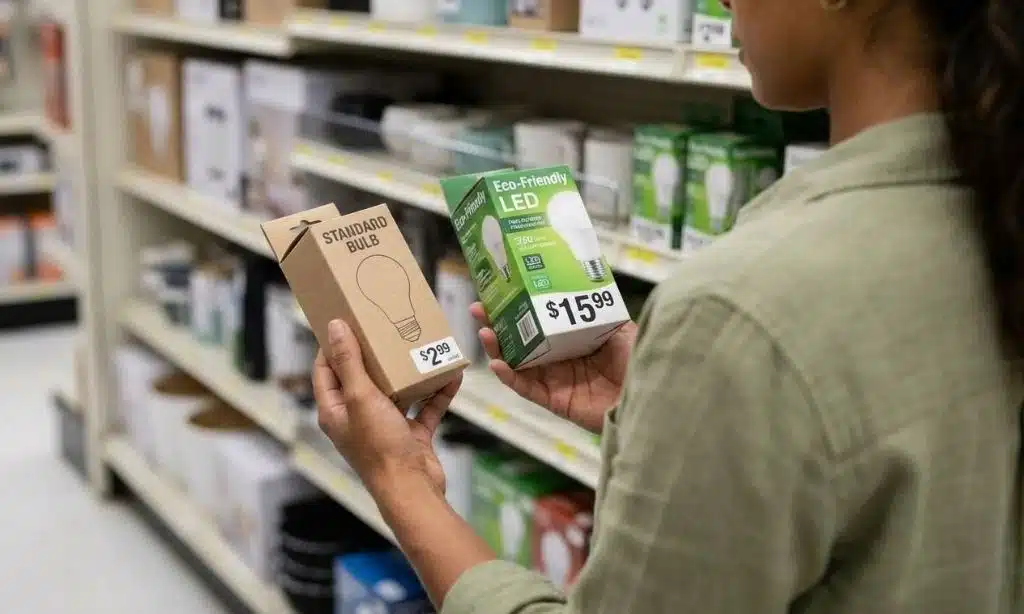
Sustainable choices can cost more. Buying eco-friendly products often means paying higher prices. For many, that extra expense can hurt their wallets. When you look at options like green lightbulbs or organic groceries, they may seem pricey compared to regular ones.
Many people don’t have enough money to choose the sustainable route. This makes it hard for them to pick better options.
Time is another factor in making these choices. Sustainable practices often take longer than standard ones. Think about recycling: sorting your trash takes time and effort that busy lives sometimes lack.
Individuals face economic barriers every day, which make living a sustainable lifestyle tough. Those with limited resources feel this pressure even more deeply; they are forced to prioritize immediate needs over long-term gains like environmental benefits or reducing carbon footprint.
Systemic and Institutional Challenges
Living sustainably is tough because of systemic and institutional challenges. Many people want to make better choices, but the system often pushes them in the opposite direction. For example, it takes effort to read labels for safe products or use public transport instead of driving a car.
This can feel like swimming upstream.
Policies that aim for sustainability tend to favor certain groups. They often reflect the views of wealthy, well-educated individuals from urban areas. This creates barriers for those who are not part of these groups.
As a result, many good ideas do not reach everyone equally, which makes achieving real change harder. These challenges show why we must rethink how our systems work if we want a sustainable future.
Conflicting Priorities in Society
Society often puts economic growth above sustainability. People chase profit and convenience, ignoring the need for green practices. Powerful groups shape policies that usually favor their interests.
Their views don’t always reflect the needs of less privileged populations. Many who promote green living still lead unsustainable lifestyles with big homes and frequent travel.
This clash between priorities makes it hard to achieve a sustainable lifestyle. The focus on constant consumption can drown out calls for change. Plastic pollution piles up while we turn a blind eye to its effects.
It is tough to balance these conflicting goals, but solutions exist if we work together and change our mindset about what matters most in life.
Solutions to Address Lack of Awareness
Lack of awareness makes sustainability tough. Many people just don’t know enough about it. Here are some solutions to help clear the fog.
- Create simple and engaging educational programs about sustainability. Schools, communities, and companies can host fun events to teach people what it means to live green.
- Use social media platforms to spread knowledge. Fun videos or infographics can grab attention and share tips on sustainable living.
- Encourage local workshops where people can share ideas about going green. These gatherings can build a sense of community and inspire action.
- Reduce the gap between good intentions and actual actions. Highlight stories of those who made changes in their lives, showing real results from sustainable choices.
- Raise awareness through campaigns that focus on environmental issues we face today, like climate change. Clear messaging can make the problem feel urgent and relatable.
- Partner with local businesses to promote sustainable practices in stores and online shops, using catchy slogans that draw attention.
- Develop apps that provide tips for eco-friendly habits crafted for families or individuals; users can track their progress toward a sustainable lifestyle.
- Provide incentives for learning about sustainability; discounts or rewards might encourage more people to engage with educational resources.
- Collaborate with environmentalists to create fun challenges that encourage everyone to reduce waste or conserve energy as a group activity.
- Use community art projects that visualize unsustainability’s effects, making the message clear while inspiring change through creativity.
Each step helps bridge the gap between thoughts and actions regarding sustainability efforts!
Encouraging Small, Incremental Changes

Making small changes can lead to big results. It takes time to grow new sustainable habits. Here are some ways to encourage those little steps.
- Start with one change. Choose something simple, like using a reusable bag instead of plastic ones.
- Set mini-goals. If you want to eat a sustainable diet, aim for one meatless day each week.
- Track your progress. Write down what you do every week; it helps keep you motivated.
- Share your efforts with friends or family. When others join in, it makes the journey more fun.
- Celebrate small wins. Reward yourself for sticking to your goals, even if it’s just a high-five!
- Make learning fun. Watch videos or read books about sustainability to spark interest.
- Join local groups focused on sustainability issues; they can help inspire and guide you.
- Take part in community activities like cleanup events; they build camaraderie and raise awareness.
- Keep it simple; choose easy-to-find local products over exotic items that travel far.
- Build accountability with a buddy system; check in with each other regularly about your efforts in reducing your environmental footprint.
Changes don’t have to be huge to matter, and every step counts toward climate action!
Policies and Incentives for Sustainable Practices
Governments can play a big part in making sustainable living easier. Good policies and incentives help people make better choices for the planet.
- Financial rewards can encourage businesses to choose eco-friendly practices. Tax breaks can lower costs for companies that follow green rules.
- Grants can support startups focused on sustainability. These funds help new ideas grow and thrive.
- Simple rules can make sustainable choices the easy option for everyone. Policies should aim to make recycling, energy use, and public transport more accessible.
- Educational programs can teach people about sustainability. Schools and communities should share information about eco-friendly habits.
- Strict regulations can hold companies responsible for their impact on the environment. Rules should limit pollution and promote safer materials in products.
- Collaboration between businesses and local governments is key to success. Working together helps create solutions that benefit everyone.
- Public campaigns can raise awareness about the importance of being sustainable. They inform people about how their actions relate to climate change.
- Incentives for using renewable energy sources are vital, too. Rebates or credits could encourage homeowners to install solar panels or wind turbines.
- Support for community gardens and urban farms promotes local food sources, reducing transportation waste while also improving access to fresh produce.
- Encourage research into new technologies that drive sustainability forward, like electric vehicles or biodegradable products; this will keep innovation alive in green sectors.
- Transparency in supply chains builds trust with consumers, allowing them to make informed choices about the products they buy; this also helps fight against greenwashing practices in various industries.
The Role of Collaboration and Community Efforts
Collaboration encourages the development of a more sustainable future. When people work together, they can achieve big goals. Community efforts make it easier for everyone to join in and support each other.
This means that no one is excluded from the journey towards sustainability.
Creating local groups can help share knowledge about environmental choices. Events like clean-up days or workshops teach practical skills. These actions increase awareness of climate change and promote eco-friendly habits.
By coming together, we all become part of a larger movement for sustainable living. Collective action drives real change, making our communities stronger and greener!
Final Words
Sustainability is tough for many reasons. Systemic issues often hold us back. We need to make eco-friendly choices easier for everyone. Small changes can add up; together, we can push for better policies, too.
Let’s work as a community to create a world where living sustainably feels natural and possible!
FAQs on the Difficulties in Sustainable Practices
1. Why is sustainability difficult to achieve in daily life?
Sustainability is tough because people like comfort and quick results. Old habits stick, and emotions drive consumer behavior. Many folks do not know the full effects of climate change or why a sustainable lifestyle matters.
2. What are the main challenges of sustainability for businesses?
Businesses face tricky environmental regulations, complex supply chains, and pressure for profitability. They juggle environmental, social, and governance rules while trying to keep up with competitors who may not play by the same book.
3. How does consumer psychology impact sustainable consumption?
People often want what feels good now rather than thinking about future consequences. Cookies tempt us online; ads pull at our beliefs and emotions. Even if we care about carbon neutrality or traceability, old buying habits win out.
4. Why do companies struggle with sustainable business strategies?
Companies fear losing their competitive advantage or profits when switching to greener ways. Investments in laboratory research on things like blue LED lights or new filament materials can be costly upfront compared to sticking with fossil fuel products.
5. What role do suppliers play in achieving environmental sustainability?
Suppliers affect everything from how halogens get used to whether products meet compliance standards for environmentally friendly production methods. If they cut corners on ESG goals or ignore carbon taxes, it makes real progress hard.
6. How can education help solve issues around sustainability?
Teaching kids early about the consequences of climate change helps shape better choices later on as adults, whether that’s choosing human capital investments over harmful practices or supporting strong environmental policies instead of ignoring them altogether.