Do you struggle to show up when people speak to voice assistants? You want your shop to pop up and guide callers to your door. Many small businesses lose voice search traffic, and they miss nearby buyers.
Smart Voice SEO Strategies For Canadian Local Businesses can solve that.
Voice search will drive digital marketing by 2025. 40% of English Canadians use voice tech often. You will learn eight tactics to win local search. We will cover keyword research, Google Business Profile setup, site speed, FAQ pages, schema markup and featured snippets.
These tips will boost your local SEO and search engine rankings. Keep reading.
Key Takeaways
- Voice search will drive digital marketing by 2025. 40% of English Canadians use voice tech often and 27% of voice searches run on smartphones.
- Target long-tail, conversational queries like “Where can I get the best pizza in Toronto?” to win featured snippets and position zero.
- Optimize your Google Business Profile with exact name, address, phone, holiday hours, high-res photos, and five-star reviews. Google handles 92.4% of global queries.
- Create FAQ pages and add JSON-LD schema (FAQPage, LocalBusiness) so Google Assistant or Alexa can answer “What are the hours for Maple Caf in Kelowna?”
- Speed up your site with image compression and CSS/JS minify plus mobile-first design. Track voice queries in Search Console or AI tools and expect gains in six months.
Target Long-Tail and Conversational Keywords

Businesses use Google Keyword Planner and SEMrush to hunt long-tail keywords. They target conversational queries in natural language, like “Where can I get the best pizza in Toronto?” Local SEO picks these search phrases.
This tactic boosts online visibility fast.
People speak full queries to Google Assistant or Alexa. They ask “How do I find a reliable plumber near me?” Content that mirrors these phrases hits featured snippets and position zero.
It shows on top search results pages. That drives website traffic and customer engagement.
Optimize Google Business Profile for Voice Search
Add your exact name, address, and phone number to your Google Business Profile. Update business hours for each holiday, like Canada Day and Thanksgiving. Select the right category and add attributes such as wheelchair access or outdoor seating.
Post high-resolution photos of your storefront and team shots. Ask happy customers to leave five-star reviews. Voice helper favors top-rated spots on local seo. Good feedback drives higher online visibility.
Add structured data to feed voice search queries. Insert JSON-LD tags for phone, address, and hours. Apply a business markup type to highlight these details. Slip Q&A tags under FAQ pages for common queries.
Code your answer to “What are the hours for Maple Caf in Kelowna?” so voice helper pulls the data. Search engines read these tags for voice commands. This seo optimization works on smart speakers and mobile devices.
Improve Website Speed and Mobile-Friendliness
Site speed shapes user engagement. Try image compression on PNGs and JPEGs to cut file sizes. Minify CSS and JavaScript code with PageSpeed. Quick server response times boost conversion rates and brand trust.
Google Search Console tracks load times.
Smartphones drive 27% of voice searches on mobile devices. Use a mobile-first design to boost online visibility and local SEO. Test layouts on small screens and tweak touch targets.
Bing Webmaster Tools flags usability issues. This speed and design combo fuels voice search optimization and digital marketing targets.
Create FAQ Pages with Voice-Friendly Content
FAQ pages boost voice search use. They give quick answers in natural speech patterns.
- Craft questions like “How to find the best pizza in downtown Kelowna?” to mimic conversational queries, use long-tail keywords and local search terms.
- Keep answers under 30 words for clear voice-friendly content that lifts user engagement in digital marketing and local SEO.
- Apply JSON-LD data tags via Structured Data Markup Helper or a Yoast SEO plugin to signal search engines with FAQPage schema.
- Test content with Google Assistant and Alexa Skills Kit, confirm audio and video clips deliver swift replies for voice search queries.
- Embed FAQ structured data in HTML through code or with a WordPress plugin to boost online visibility and search engine optimization.
- Add short transcripts for any audio or video snippets, this speeds up scans, fits natural language queries and enhances user experience.
Implement Schema Markup for Enhanced Search Visibility
Markup adds structured data tags to pages, it tells search engines your location, hours, payment methods, reviews. LocalBusiness schema tag works well for a Kelowna bakery that wants to answer “Hey Google, what are your hours?” Google’s Structured Data Markup Helper can speed up setup.
You can test your code in the Rich Results Test to catch errors. Schema markup boosts voice search optimization for local seo. Add FAQPage schema to feed voice search with common questions, it can capture featured snippets.
A quick audit and a few lines of code can lift your online visibility.
Google Assistant and Alexa can tap into your structured data to answer search queries in plain speech. A Kelowna tour operator can set up an Alexa Skill for daily weather, or a Google Assistant Action for booking tours.
Virtual assistants read that markup like a menu, they pick out business hours, location details, review stars. Customers get quick answers, businesses earn more calls. Small outfits can boost local search with simple schema markup tweaks.
Focus on Localized Content for Canadian Audiences
Local seo helps small shops in Canada get more traffic through voice search. Add terms like near me or best in Toronto to blog posts. Post guides such as How to Find the Best Lawyer in Toronto.
Forty percent of English Canadians use voice tech like Google Assistant or Siri at least sometimes. Voice commerce grows fast as more people shop with Amazon Alexa and Google Assistant.
Optimizing your Google Business Profile boosts local search on Google Maps and Google Search. Use natural language, structured data, and long-tail, location-based keywords in your address and hours.
SEO Resellers Canada applies digital marketing and seo tools to lift online visibility and improve user experience across web design, PPC, and Google Business Profile listings. This focus helps you win voice search queries, featured snippets, and top spots in search advertising on major search engines.
Google handles 92.4% of global queries, so your location-specific content gains traction across search engines.
Optimize for Featured Snippets and Position Zero
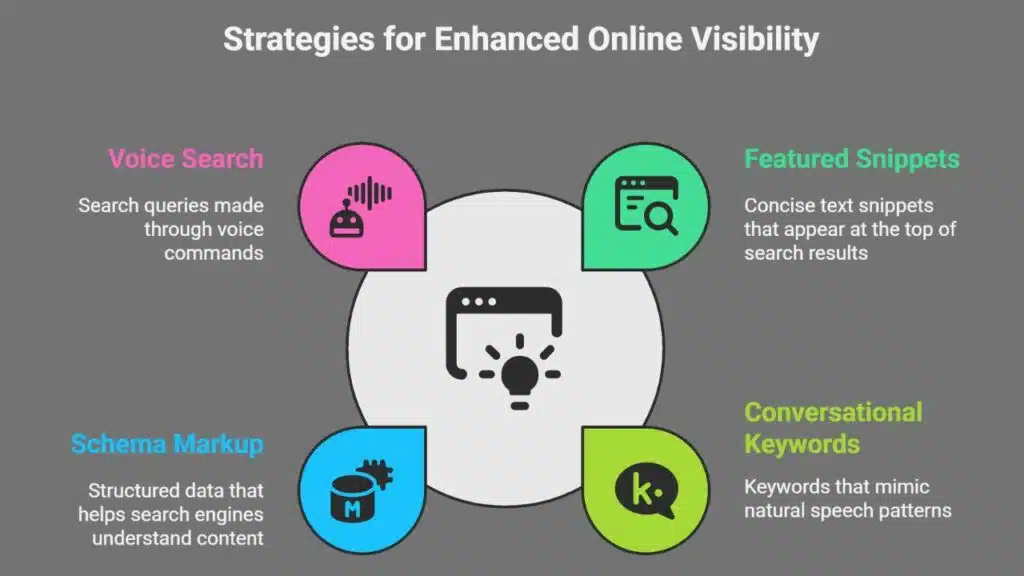
Search engines pick text that gives quick answers, boosting online visibility and local seo. Featured snippets land at position zero and matter for voice search optimization. Craft concise responses under clear headings made from conversational keywords and natural speech patterns.
Mark up each section with schema markup and structured data to score a snippet. Google Assistant may recite your business hours or local search results from your google business profile.
Voice-based search dominates digital marketing by 2025, which raises user engagement and directs smart assistant queries to your site.
Track and Measure Voice Search Performance
You can link your website to Search Console. It shows voice search queries that bring visitors to your pages. Some AI-powered platforms track conversational keywords and natural speech patterns in real time.
This data highlights click rates, session length, and traffic sources. Track spoken commands that produce more than 50 clicks per month. This metric signals strong user engagement.
Most voice SEO efforts take up to six months to show gains.
Think of your analytics dashboard like a radar for spoken commands. Mark high-ranking content in your reports. Review how users move after voice-based searches, note bounce rate, pages per session, and time on site.
You can update structured data tags and code to improve online visibility. Fresh content can boost local seo and digital marketing impact in Canadian local search. Tweak pages that rank for virtual assistants like Google Assistant, Siri, or Alexa.
Keep optimizing for user experience as voice search trends evolve.
Takeaways
Small shops can boost reach fast with these tips. Each step fits snug with your local list and structured data. Virtual assistants will pick your online listing first, so voice search will flow your way.
Our Toronto team saw smiles rise after using these tricks, and your sales can leap too. Keep it fun, track results often, and watch your digital profile shine.
FAQs
1. What is voice search optimization and why does my local business need it?
Voice search optimization means shaping your content to match natural speech patterns. It fits how people ask smart assistants and virtual assistants. This boosts your online visibility. It draws more foot traffic. It perks up your local seo.
2. How do I pick the best long-tail keywords for local seo?
Pick long-tail keywords that match how people talk on voice search queries. Use natural language and add location-based keywords like your city or neighborhood. This helps your content optimization. It makes search engines and google assistant show your page in featured snippets.
3. What role does schema markup play in voice search for local businesses?
Schema markup is like a street sign for search engines. It points them to your door. You use structured data to show address, phone, and business hours. This keeps your site user-friendly, and helps you stand out in local search.
4. How can I use my google business profile and google reviews for better local search?
Keep your google business profile up to date with correct phone, website with https://, and business hours. Ask happy customers to post google reviews. Fresh reviews and full info boost your online visibility and drive local search traffic.
5. How do I link digital marketing and voice search to boost ad campaigns?
Blending voice search with ad campaigns is like mixing two great songs. You marry conversational keywords with digital advertising. Use social media marketing and location-based keywords. This shakes up your digital marketing, and draws more ears to your brand.
6. How can I measure user engagement and track voice search success?
Use site analytics, server logs, and cookies to see real user paths. Track voice search queries in your database. Check email link clicks, ad campaigns metrics, and checkout rates. Use basic machine learning tools to spot trends. This boosts customer experience and wins more sales in the digital landscape.