You know that feeling when you look at the trash bags piled up on the curb on December 26th? It’s a bit of a holiday hangover, isn’t it?
I certainly feel it. It’s hard not to notice the mountains of shiny paper and packaging that appear overnight.
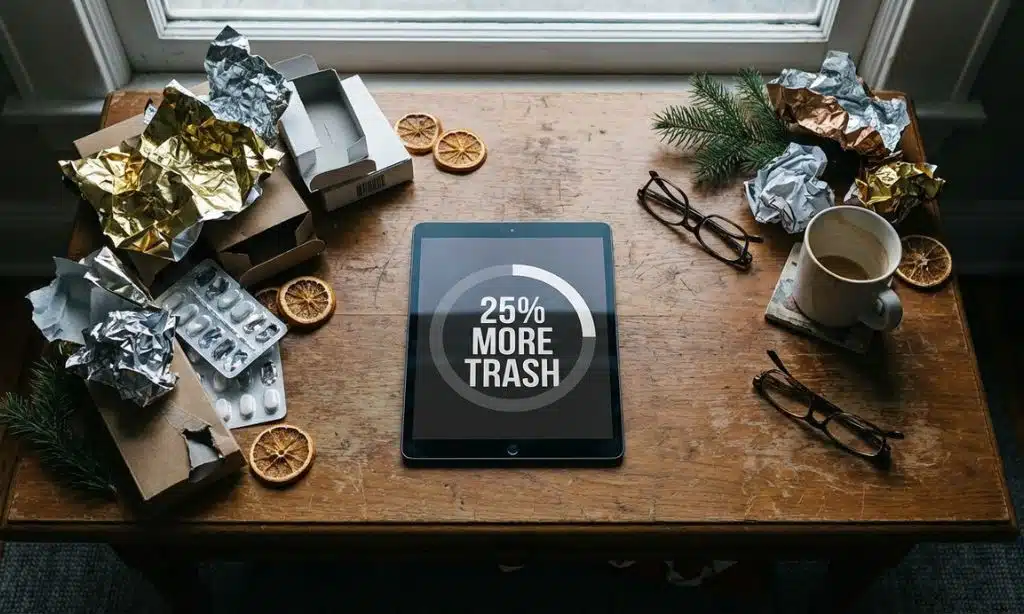
The numbers back up that feeling. According to researchers at Stanford University, Americans throw away 25% more trash between Thanksgiving and New Year’s than at any other time of year. That adds up to about one million extra tons of garbage each week.
But here is the good news: having a greener holiday doesn’t mean canceling the fun. In fact, I’ve found that the most sustainable choices often end up being the most personal and memorable ones.
So, grab a cup of coffee, and let’s walk through the exact steps I use to create a holiday season that feels magical but leaves a much lighter footprint. I’ll show you everything you need to know.
Key Takeaways
- Waste spikes during the holidays: Americans generate 25% more trash between Thanksgiving and New Year’s, adding one million extra tons of waste per week.
- Natural décor is free and compostable: Swap plastic baubles for DIY options like dried orange slices baked at 200°F, pine cones, or cranberry garlands.
- LEDs save real money: Energy Star-certified LED lights use 75% less energy than incandescent bulbs, costing roughly $2 per season to run compared to $15 for old-fashioned lights.
- Trees can be sustainable: Rent a living tree from services like Rent-A-Christmas, buy a potted Norfolk Pine, or mulch your real tree to support local parks.
- Wrapping paper is a major culprit: The US spends over $12.7 billion on wrapping paper annually. Switch to recyclable newsprint from brands like Wrappily or use the Japanese Furoshiki cloth method.

Sustainable Christmas Décor Ideas
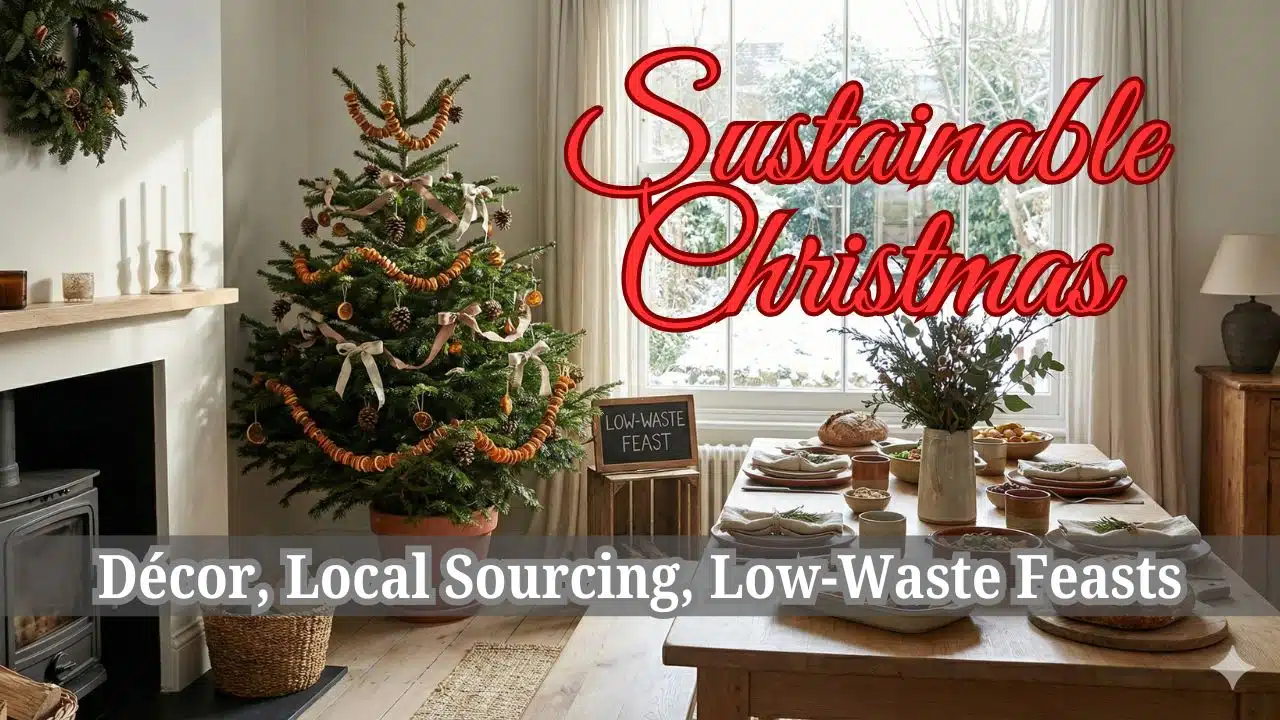
We often think we need to buy new ornaments to make our homes look festive. But some of the most beautiful decorations come straight from nature or things you already own. Mother Nature will thank you for skipping the glitter, which is essentially microplastic that never breaks down.
How can I make natural and DIY Christmas decorations?
You can make sustainable Christmas decorations at home with simple tools. I love this part of the season because it turns decorating into a family activity rather than a shopping trip.
- Dried Orange Slices: Thinly slice oranges and bake them on a rack at 200°F for 2-3 hours. They look like stained glass when hung on a tree and smell amazing.
- Foraged Greenery: Instead of buying plastic garlands, clip fresh branches from your backyard or ask for the tree trimmings at a local lot (they usually give them away for free).
- Paper Stars: Make 3D stars or snowflakes from old book pages, maps, or brown paper bags. String them together with cotton thread for a compostable garland.
- Edible Ornaments: Thread popcorn and cranberries onto a string. It’s a classic look that you can toss directly into the compost bin after the holidays.
- Twig Trees: Paint fallen twigs white and place them in a vase. This makes a stunning, minimalist tabletop display for heavy ornaments.
- Upcycled Fabrics: Turn fabric scraps into reusable tree decorations or homemade crackers using toilet tissue rolls.
- Jar Centerpieces: Fill glass jars with fairy lights, dried berries, or cinnamon sticks. You can reuse the jars for food storage in January.
What are the benefits of using LED lights for holiday lighting?
If you are still holding onto those old strings of lights from the attic, it is time for an upgrade. LED holiday lights use much less energy than old-fashioned bulbs.

The cost difference is startling. According to the US Department of Energy, lighting a six-foot tree with C9 incandescent bulbs costs about $15 per season. Lighting that same tree with C9 LEDs costs only about $2.
Pro-Tip: Look for the “Energy Star” label on your light strings. These certified products use up to 75% less energy and last up to 10 times longer than traditional strands.
LEDs also stay cool to the touch. This significantly cuts down on fire risk around dry trees or curtains. Because they last for years, you won’t be tossing broken strands into the landfill every January.
What are some alternatives to traditional Christmas trees?
You can celebrate a sustainable Christmas without a classic cut fir tree. I’ve seen many families get creative with eco-friendly choices that suit their space.
- Rent a Living Tree: Companies like Rent-A-Christmas in major cities (or local nurseries) will deliver a live, potted tree to your door and pick it up after the holidays to replant it.
- Potted Norfolk Island Pine: These soft-needled trees thrive indoors year-round. You can decorate it for December and enjoy it as a houseplant the rest of the year.
- FSC-Certified Real Trees: If you buy a cut tree, look for the Forest Stewardship Council (FSC) label. This ensures the tree was grown on a farm that protects water quality and biodiversity.
- Mulch Your Tree: Never send a real tree to a landfill where it releases methane. Use Earth911 to find a local “treecycling” program that chips it into mulch for city parks.
- Second-Hand Artificial Trees: If you want a fake tree, buy one from a thrift store or Facebook Marketplace. Giving an existing plastic tree a second life is far better than manufacturing a new one.
- Wall-Mounted Trees: For small apartments, create a tree outline on the wall using driftwood, washi tape, or string lights. It saves floor space and requires no cutting.
- Bird-Feeder Wreaths: Decorate outdoor trees with wreaths made of seeds and suet. It offers food for wildlife during the cold months.
Local Sourcing for Gifts and Décor
Holiday spirit grows strong when we support our neighbors. I make a point to do my holiday shopping on “Small Business Saturday,” which usually falls right after Thanksgiving.
How do I support local artisans and businesses during the holidays?
Shopping locally cuts down on the massive carbon footprint associated with shipping packages across the country. Plus, you find things you simply can’t get at a big-box store.
Visit your town’s holiday craft fairs or winter farmers’ markets. You can fill your reusable bags with pottery, handmade soaps, or knitwear made right in your zip code. If you prefer shopping online, you can filter platforms like Etsy to find sellers in your specific state or city.
Baylor University experts like Gary Cocke, the director of sustainability, suggest looking for gifts that support the local circular economy. This means buying from antique stores or vintage boutiques where items are getting a second life.
What are good locally made and eco-friendly gift options?
Gifts with a story always mean more. Here are some specific ideas I love for a sustainable Christmas:
- Experience Gifts: Skip the “stuff” entirely. Gift a pottery class, museum membership, or tickets to a local concert. These create memories without creating waste.
- Consumable Baskets: Create a food basket with jams, honey, or coffee from local roasters. Once the treats are gone, nothing is left behind but a reusable jar.
- Zero-Waste Kits: Help a friend start their green journey with a kit containing beeswax wraps (like Vermont-based Bee’s Wrap), a reusable water bottle, and bamboo utensils.
- FSC Wood Toys: For kids, look for wooden toys carved by local woodworkers or certified by the Forest Stewardship Council. They are durable and plastic-free.
- Soy Candles: Paraffin candles are made from petroleum. Choose locally poured soy or beeswax candles, which burn cleaner.
- Charity Donations: For the person who has everything, make a donation in their name to a group like the World Wildlife Fund (US) or a local animal shelter.
- Plant-Based Treats: Vegan cookies or chocolates from a local bakery have a lower carbon footprint than dairy-heavy options.
Low-Waste Holiday Feasts
Food waste is a massive issue during the holidays. The USDA estimates that 30-40% of the US food supply is wasted, and that number spikes in December.
How can I plan holiday meals to reduce food waste?
We often cook for an army when only ten people are coming. Planning smart is key for a sustainable Christmas feast.

I swear by the “Guestimator” tool from Save The Food. It’s a free online calculator that tells you exactly how much food to prepare based on your guest count and how many leftovers you actually want. It takes the guesswork out of grocery shopping.
- Shop Your Pantry First: Before heading to the store, check what you already have. This prevents buying duplicate spices or baking supplies.
- Stick to the List: Impulse buys are the most likely items to end up in the trash.
- Cook “Root-to-Stem”: Use vegetable scraps (like carrot tops and potato peels) to make a rich vegetable stock for soups or gravy.
- Compost Scraps: If you can’t eat it, compost it. Vegetable peels and coffee grounds are gold for your garden.
- Use the “Too Good To Go” App: This app connects you with local bakeries and restaurants that have surplus food at the end of the day. You can grab a bag of perfectly good pastries or sides for a fraction of the price.
- Reinvent Leftovers: Instead of just reheating turkey, turn it into a pot pie or a “holiday hash” with potatoes and veggies.
- Send Guests Home with Food: Ask everyone to bring a reusable container so you aren’t stuck with a mountain of mashed potatoes.
Where can I find local farmers and markets for fresh ingredients?
Shop at your town’s farmers’ market for the freshest ingredients. Food that travels fewer miles is fresher and lasts longer in your fridge.
Many markets offer “seconds” or “ugly produce”—fruits and veggies that are oddly shaped but taste perfect. Buying these helps farmers sell their entire crop. You can also look for Community Supported Agriculture (CSA) winter boxes. These subscriptions deliver a box of seasonal local produce like squash, kale, and root vegetables directly to your door.
Wrapping and Packaging Alternatives
This is one of the biggest sources of holiday trash. The US spends nearly $12.7 billion on wrapping paper each year, and much of it isn’t recyclable.
What recyclable or reusable materials can I use for gift wrapping?
Most shiny or glittery wrapping paper contains plastic and cannot be recycled. A good rule of thumb is the “Scrunch Test.” Scrunch the paper in your hand; if it stays scrunched, it is likely paper. If it bounces back, it contains plastic.
Better yet, skip the uncertainty with these alternatives:
- Brown Kraft Paper: This is my go-to. It is 100% recyclable and looks chic with a sprig of pine or a dried orange slice tied on top.
- Newsprint: Companies like Wrappily print fun holiday patterns on recycled newspaper sheets. They are compostable and recyclable.
- Old Maps and Sheet Music: These give packages a vintage, personal feel and reuse paper that would otherwise sit in a drawer.
- Furoshiki: This is the Japanese art of fabric wrapping. You use a square of cloth (like a scarf or bandana) to wrap the gift. The wrapping itself becomes a bonus gift!
- Reusable Tins and Boxes: I save sturdy boxes and cookie tins throughout the year. They don’t need wrapping paper at all—just a simple ribbon.
- Washi Tape: Standard plastic tape isn’t recyclable. Use Japanese washi tape or paper tape, which are biodegradable.
- Fabric Scraps: Use leftover fabric to tie bows instead of plastic ribbons.
How can I avoid plastic and glitter in holiday packaging?
Plastic and glitter sneak into everything. Here is how to keep them out of your holiday:
- Say No to Glitter: Avoid cards, paper, and ribbons with glitter. It is a microplastic that contaminates recycling batches.
- DIY Tags: Cut old holiday cards into gift tags for this year. Punch a hole and tie it on with jute twine.
- Natural Ribbons: Use raffia, hemp, or cotton twine instead of synthetic polyester ribbons.
- Paper Cards: Choose cards printed on 100% recycled paper without foil or plastic coatings. Or, send an e-card to save resources entirely.
- Reuse Shipping Materials: If you order online, save the brown paper dunnage and cardboard boxes to use for your own gift wrapping.
Takeaways
Going green at Christmas can sound tricky, but it is actually full of joy and meaning. Small changes like drying your own orange slices, switching to LED lights, or wrapping a gift in a beautiful scarf help our planet.
Choosing experience gifts from local artists or cooking with fresh market veggies fills your table with care and flavor. Even those silly moments of trying to figure out how to fold a Furoshiki wrap become part of the memory.
Every mindful step you take wraps up a season worth sharing for years to come.
FAQs on Sustainable Christmas
1. How can I have a sustainable Christmas without losing the holiday spirit?
You can swap traditional bulbs for LED holiday lights, which the U.S. Department of Energy states use 75% less energy and last much longer. Replace plastic tinsel with biodegradable popcorn strings or pinecones to keep your home festive while reducing the extra waste generated during the holidays.
2. Is it better to get a real Christmas tree or a fake one if I want to be green?
A real Christmas tree is typically the more sustainable option because you would need to use a plastic tree for at least 10 years to offset its higher carbon footprint.
3. What are some low-waste feast tips for my family gathering?
Since Americans generate 25% more trash between Thanksgiving and New Year’s, aim to reduce food waste by planning portions carefully and asking guests to bring reusable containers for leftovers. Sourcing ingredients from local farmers’ markets also cuts down on the heavy carbon emissions associated with long-distance food transport in the US.
4. Can I make my own sustainable Christmas decorations at home?
Yes, drying orange slices or stringing cranberries are popular 2024 trends that create beautiful, fully compostable decor. Making these items yourself helps you avoid the non-recyclable plastic packaging that comes with most store-bought ornaments.
5. Are there ways to give presents that help the planet during an eco-friendly holiday season?
Experience gifts are a perfect choice because they create memories without adding to the 2.3 million pounds of wrapping paper that ends up in US landfills each year. If you do buy physical items, look for products made from recycled materials and wrap them in reusable fabric or old maps to keep the season green.