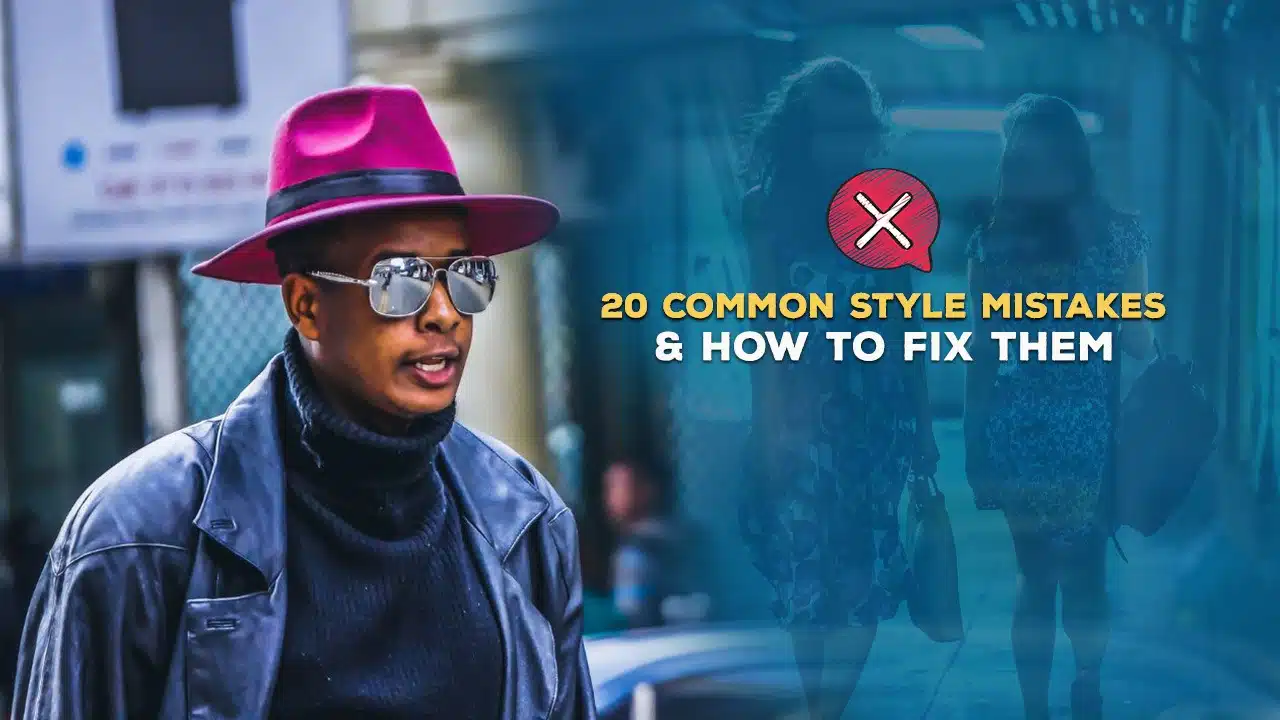
In the world of fashion and personal style, making a lasting impression is often about avoiding common pitfalls as much as it is about making bold choices. Whether you’re dressing for a job interview, a first date, or just a day at the office, your appearance speaks volumes before you even say a word. However, even the most fashion-conscious among us can fall victim to style mistakes that detract from our overall look.
This comprehensive guide will explore 20 of the most common style mistakes people make and, more importantly, how to fix them. From ill-fitting clothes to accessory overload, we’ll cover a wide range of fashion faux pas that can impact your personal and professional image. This article will equip you with the knowledge to enhance your style and showcase your best self to the world.
Our journey through these style pitfalls will not only help you identify potential issues in your own wardrobe but also provide practical solutions to address them. We’ll delve into the importance of proper fit, color coordination, and occasion-appropriate dressing, among other crucial aspects of personal style. Whether you’re a fashion novice looking to build a solid foundation or a style enthusiast aiming to refine your look, this guide offers valuable insights for everyone.
So, let’s dive in and explore the 20 common style mistakes that might be holding you back, and learn how to transform them into opportunities for sartorial success.
20 Fashion Mistakes You’re Making and How to Correct Them?
1. Clothing Fit Issues
How your clothes fit is one of the most critical aspects of style. Ill-fitting garments can make even the most expensive outfit look sloppy and unflattering. Let’s look at three common fit-related mistakes and how to correct them.
Mistake 1: Ill-fitting Pants
Pants that are too long, too short, too tight, or too loose can throw off your entire look. Baggy pants can make you appear larger than you are, while overly tight pants can be uncomfortable and unflattering.
How to fix it:
- Be aware of your measurements: Understand your waist size, inseam length, and hip measurements.
- Visit a tailor. Get your pants professionally altered for a perfect fit.
- Try different cuts: experiment with straight-leg, slim-fit, or relaxed styles to find what suits your body type best.
- Check the break: With a slight fold, the pants should gently touch the top of your shoes.
Mistake 2: Baggy Shirts
Oversized shirts can make you look unkempt and hide your body’s natural shape. This is especially problematic in professional settings where a crisp, well-fitted shirt is expected.
How to fix it:
- Focus on shoulder fit: The shirt’s shoulder seams should align with your natural shoulder edge.
- Check sleeve length: Sleeves should end at your wrist bone.
- Mind the torso: There should be no more than 2-3 inches of excess fabric when pinched at the sides.
- Consider tailoring: A skilled tailor can adjust an off-the-rack shirt to fit you perfectly.
Mistake 3: Too-tight Clothes
While baggy clothes can be unflattering, overly tight garments are equally problematic. They can restrict movement, create unflattering bulges, and make you appear uncomfortable.
How to fix it:
- Do the sit test: If you can’t comfortably sit down in an item, it’s too tight.
- Check for pulling: Look for horizontal lines or gaping buttons, which indicate the garment is too small.
- Don’t be afraid to go a size up and have the garment tailored down if needed.
- Consider stretch fabrics. For a close fit with comfort, look for clothes with a bit of stretch.
2. Color Coordination
Color plays a crucial role in creating a cohesive and appealing outfit. Poor color choices can clash, overwhelm, or wash you out. Let’s look at two common color mistakes and how to avoid them.
Mistake 4: Clashing Colors
Wearing colors that don’t complement each other can create a jarring visual effect and detract from your overall appearance.
How to fix it:
- Understand color theory: Learn about complementary, analogous, and triadic color schemes.
- Use the color wheel. Reference a color wheel to find harmonious color combinations.
- Start with neutrals: build outfits around neutral colors like black, white, gray, and navy, then add pops of color.
- Consider your skin tone. Choose colors that complement your natural coloring.
Mistake 5: Monochrome Overload
While monochromatic looks can be stylish, wearing too much of a single color can be overwhelming or boring if not done correctly.
How to fix it:
- Play with shades and tones. Mix different shades of the same color for depth and interest.
- Add texture: Incorporate different fabrics and textures to break up the monotony.
- Use accessories: To create a focal point, add a contrasting accessory or shoe.
- Consider color blocking: Combine solid blocks of color for a modern, stylish look.
3. Accessorizing Errors
Accessories can make or break an outfit. They have the power to elevate a simple look or overwhelm an otherwise stylish ensemble. Let’s explore two common accessorizing mistakes and how to avoid them.
Mistake 6: Over-accessorizing
Piling on too many accessories can create a cluttered, distracting look that detracts from your overall appearance.
How to fix it:
- Follow the “less is more” principle: choose one or two statement pieces rather than wearing all your favorites at once.
- Consider scale: Make sure your accessories are proportionate to your body size and the outfit you’re wearing.
- Create balance: If you’re wearing bold earrings, skip the necklace. If you have a statement necklace, opt for simple earrings.
- Stick to a theme: Choose accessories that complement each other in style, color, or material.
- Use the “take one off” rule: Before leaving the house, remove one accessory for a more polished look.
Mistake 7: Neglecting accessories
On the flip side, completely ignoring accessories can result in a plain, unfinished look that lacks personality and flair.
How to fix it:
- Start small. If you’re not used to wearing accessories, begin with simple, versatile pieces like a watch or a pair of stud earrings.
- Invest in the basics: Build a collection of classic accessories that work with multiple outfits, such as a leather belt, a simple necklace, or a quality watch.
- Express your personality: Choose accessories that reflect your personal style and interests.
- Consider the occasion: Use accessories to dress an outfit up or down as needed.
- Don’t forget functional accessories: Items like scarves, belts, and glasses can be both practical and stylish.
4. Footwear faux pas
Shoes are a crucial element of any outfit. They can elevate your look or completely undermine it. Here are two common footwear mistakes to avoid:.
Mistake 8: Worn-out shoes
Scuffed, dirty, or overly worn shoes can ruin an otherwise impeccable outfit and give the impression of carelessness.
How to fix it:
- Regular maintenance: Clean and polish your shoes regularly to keep them looking their best.
- Rotate your shoes: Avoid wearing the same pair every day to extend their life.
- Invest in quality: buy well-made shoes that will last longer and maintain their appearance.
- Know when to let go: Replace shoes when they show signs of excessive wear that can’t be repaired.
- Use protective sprays: Apply water and stain repellents to protect your shoes from the elements.
Mistake 9: Inappropriate footwear for the occasion
Wearing shoes that don’t match the formality or nature of an event can make you look out of place and unprepared.
How to fix it:
- Understand dress codes: Familiarize yourself with different levels of formality and what footwear is appropriate for each.
- Have versatile options: Invest in shoes that can work for multiple occasions, like leather loafers or sleek ankle boots.
- Consider the activity: Think about what you’ll be doing and choose shoes that are both appropriate and comfortable.
- Match the season: Wear weather-appropriate footwear to avoid looking out of place.
- Coordinate with your outfit: Ensure your shoes complement the style and color scheme of your clothing.
5. Grooming Mishaps
Grooming is an essential aspect of a person’s style that’s often overlooked. Poor grooming practices can undermine even the most fashionable outfit. Let’s explore two common grooming mistakes and how to address them.
Mistake 10: Unkempt Hair
Messy, greasy, or poorly styled hair can detract from your overall appearance and give the impression of carelessness.
How to fix it:
- Establish a hair care routine: Wash and condition your hair regularly, using products suitable for your hair type.
- Get regular haircuts: Schedule trims every 4-6 weeks to maintain your hairstyle and prevent split ends.
- Learn basic styling techniques: Master a few simple hairstyles that work for your hair type and face shape.
- Invest in quality tools: Use a good brush or comb, and consider heat styling tools if appropriate for your hair.
- Use styling products wisely. Apply hair products sparingly to avoid a greasy or stiff appearance.
Mistake 11: Neglected Facial Hair
Poorly maintained facial hair can look unprofessional and unkempt, detracting from an otherwise polished appearance.
How to fix it:
- Decide on a style. Choose a facial hair style that complements your face shape and personal style.
- Establish a grooming routine: trim and shape your facial hair regularly to maintain your chosen style.
- Invest in proper tools. Use a high-quality trimmer or razor for precise grooming.
- Keep it clean: Wash and condition your facial hair to keep it soft and free of food particles or odors.
- Consider professional help. Visit a barber for initial shaping or occasional maintenance of complex styles.
6. Formal Wear Mistakes
Formal occasions require special attention to detail. Mistakes in formal wear can be particularly noticeable and may indicate a lack of understanding of social etiquette. Here are two common formal wear mistakes to avoid.
Mistake 12: Mismatched suit components
Wearing suit pieces that don’t match in color, fabric, or style can create a disjointed and unprofessional look.
How to fix it:
- Buy suit separates together: Purchase jackets and trousers as a set to ensure a perfect match.
- Pay attention to fabric. Ensure all components of your suit are made from the same fabric with the same texture and sheen.
- Be cautious with black: Avoid mixing different shades of black, as the difference can be noticeable under certain lighting.
- Coordinate patterns: If mixing patterns, ensure they complement each other in scale and style.
- When in doubt, go solid. Solid-color suits are versatile and less prone to mismatching errors.
Mistake 13: Incorrect tie length
A tie that’s too long or too short can throw off the proportions of your entire outfit and make you look unprofessional.
How to fix it:
- Aim for the belt: The tip of your tie should just touch the top of your belt buckle.
- Adjust the knot: Different tie knots can affect the length, so choose one that allows for proper length.
- Consider your height: taller men may need longer ties, while shorter men might need to tuck in the small end of the tie.
- Use tie bars correctly. If wearing a tie bar, place it between the third and fourth buttons of your shirt.
- Practice tying: Spend time perfecting your tie knot to achieve the right length consistently.
7. Casual Wear Blunders
Casual doesn’t mean careless. Even in relaxed settings, your style choices matter. Let’s explore two common casual wear mistakes and how to avoid them.
Mistake 14: Overdressing for Casual Events
While it’s often better to be overdressed than underdressed, consistently overdressing for casual occasions can make you appear out of touch or uncomfortable in relaxed settings.
How to fix it:
- Understand the context: Research the venue and event type to gauge the appropriate level of casualness.
- Master smart casual: Learn to combine dressier items with more relaxed pieces for a balanced look.
- Invest in versatile pieces. Build a wardrobe of items that can be dressed up or down easily.
- Use accessories to adjust: Modify the formality of an outfit by adding or removing accessories.
- When in doubt, ask: If you’re unsure about the dress code, it’s okay to ask the host or organizer.
Mistake 15: Underdressing for Semi-Casual Occasions
On the flip side, underdressing for semi-casual events can make you appear unprepared or disrespectful.
How to fix it:
- Know your dress codes: Familiarize yourself with terms like “business casual” and “smart casual” and what they entail.
- Elevate your basics: Opt for well-fitted, high-quality casual pieces over worn-out or overly relaxed items.
- Add a polished element: Incorporate one dressier item, like a blazer or leather shoes, into your casual outfit.
- Pay attention to grooming. Even in casual settings, neat hair and clean, well-maintained clothes are important.
- Consider the venue: Adjust your casual wear based on the location; a backyard BBQ calls for different attire than a casual restaurant dinner.
8. Seasonal Style Errors
Dressing appropriately for the season is not just about comfort; it’s also a key aspect of style. Here are two common seasonal style mistakes to avoid:.
Mistake 16: Wearing out-of-season clothing
Wearing clothes that don’t match the current season can make you look out of touch with your environment and potentially uncomfortable.
How to fix it:
- Understand seasonal fabrics: Learn which materials are appropriate for different seasons (e.g., linen for summer, wool for winter).
- Transition gradually: Use layering to ease into new seasons rather than abruptly changing your entire wardrobe.
- Store off-season clothes properly. Keep out-of-season items clean and well-stored to preserve their quality.
- Shop end-of-season sales wisely. When buying discounted seasonal items, consider if you’ll still want to wear them next year.
- Adapt to your climate: Adjust your seasonal wardrobe based on your local weather patterns, not just the calendar.
Mistake 17: Ignoring Weather-Appropriate Attire
Failing to dress for the weather can lead to discomfort and potential health risks, as well as a disheveled appearance.
How to fix it:
- Check the forecast: Make a habit of checking the weather before getting dressed each day.
- Invest in quality outerwear: a good coat, umbrella, and weather-appropriate shoes are worth the investment.
- Layer strategically: Use layers to adapt to changing temperatures throughout the day.
- Consider indoor temperatures: Remember that indoor heating and air conditioning can affect your comfort level.
- Be prepared: Keep a small emergency kit with items like a compact umbrella or light sweater in your car or office.
9. Fashion Trend Missteps
Navigating fashion trends can be tricky. While staying current can keep your style fresh, blindly following every trend can lead to style mistakes. Let’s explore two common trend-related errors and how to avoid them.
Mistake 18: Blindly Following Trends
Adopting every new trend without considering your personal style, body type, or lifestyle can result in a disjointed wardrobe and an inauthentic look.
How to fix it:
- Know your personal style: Understand what looks good on you and aligns with your personality.
- Be selective. Choose trends that complement your existing wardrobe and lifestyle.
- Consider longevity: invest more in classic pieces and less in fleeting trends.
- Adapt trends: Modify trendy items to suit your style rather than wearing them exactly as seen on runways or in magazines.
- Start small: Experiment with trendy accessories before committing to major wardrobe changes.
Mistake 19: Completely Ignoring Current Styles
While blindly following trends isn’t advisable, completely ignoring current styles can make you appear outdated or out of touch.
How to fix it:
- Stay informed: Keep an eye on fashion magazines, blogs, or social media to be aware of current trends.
- Incorporate subtle updates: Add small, current elements to your classic outfits to keep them fresh.
- Focus on fit and proportion: Even if you prefer classic styles, ensure your clothes fit well according to current standards.
- Refresh the basics regularly: Update staple items like jeans or t-shirts every few years to maintain a current silhouette.
- Be open to change. Don’t dismiss new styles outright; you might find something you like that updates your look.
Mistake 20: Prioritizing Brand Names Over Style and Fit
Wearing clothing solely for the brand name, especially when it doesn’t fit well or suit your style, can appear pretentious and detract from your overall look.
How to fix it:
- Focus on fit: Prioritize how clothing fits and flatters your body over the label.
- Mix high and low: Combine designer pieces with more affordable items for a balanced, stylish look.
- Invest wisely: Spend more on quality, versatile pieces rather than trendy, logo-heavy items.
- Consider quality over brand. Look for well-made clothing, regardless of the brand name.
- Develop your personal style. Create a signature look that’s not dependent on visible logos or brand names.
Conclusion
Mastering personal style is a journey, not a destination. By being aware of these 20 common style mistakes and implementing the suggested fixes, you’re well on your way to developing a more polished, confident, and authentic personal style.
Remember, the key to great style isn’t about blindly following rules or trends, but about understanding basic principles and adapting them to suit your personality, body type, and lifestyle. It’s about feeling comfortable and confident in what you wear while also being appropriate for various occasions and seasons.