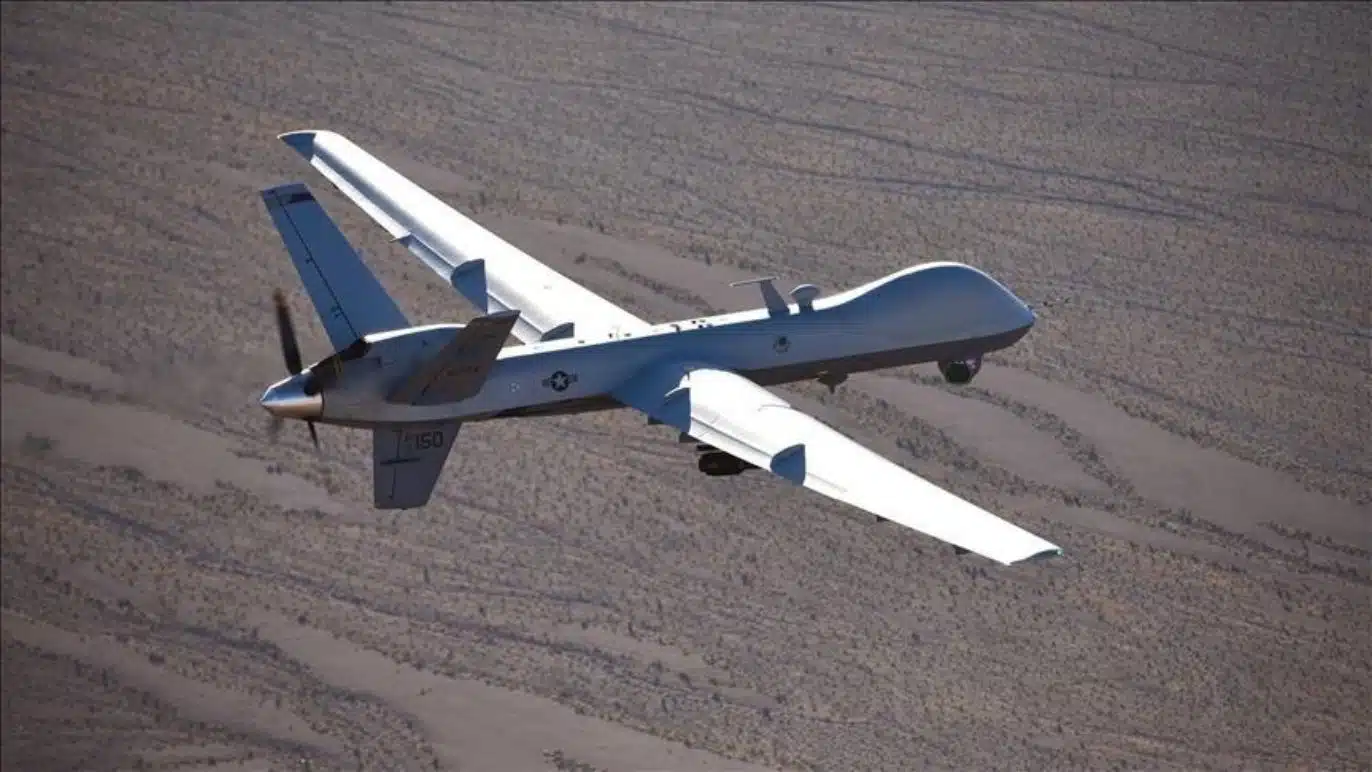
As fireworks lit up the skies over Red Square and millions welcomed 2026, Russian air defenses sprang into action, downing five Ukrainian drones bound for Moscow on New Year’s Eve. Moscow Mayor Sergei Sobyanin announced the interceptions via Telegram in the early hours of January 1, underscoring yet another brazen attempt to pierce Russia’s capital defenses during a national celebration. No casualties or major damage were reported, but the incident triggered temporary airport closures, highlighting the persistent shadow of the Ukraine conflict over everyday life in the Russian heartland.
The Incident Unfolds
The drama began unfolding just after midnight on December 31, 2025, as President Vladimir Putin delivered his traditional New Year’s address from the Kremlin. Sobyanin posted on Telegram around 3 a.m. Moscow time that air defense units had neutralized the first drone approaching the city, with debris falling in an undisclosed location where emergency crews were already on site. Over the next three hours, he updated followers four more times, confirming the downing of additional UAVs—bringing the total to five—all heading toward Moscow from Ukrainian-controlled airspace.
Specialist teams were dispatched to scour the crash sites for fragments, a standard procedure to analyze drone technology, payloads, and flight paths for intelligence purposes. Sobyanin emphasized the professionalism of the response, noting that the intercepts prevented any threat to the densely populated capital, home to over 13 million residents. While Russian officials attributed the drones to Ukraine without immediate evidence, the timing—mere hours into Russia’s most cherished holiday—amplified the psychological impact on a populace weary of distant war but increasingly feeling its reach.
Temporary flight restrictions kicked in at Domodedovo Airport, Moscow’s busiest international hub, along with other facilities in southern and central Russia like those in Krasnodar and Rostov regions. These measures, lasting under an hour in most cases, disrupted early-morning flights but were lifted swiftly as the all-clear was given. No fires, explosions, or ground injuries were linked directly to the debris, a fortunate outcome compared to prior incidents where falling wreckage sparked blazes or caused harm.
Moscow’s Air Defense Arsenal
Russia’s success in thwarting the attack relied on its layered air defense network, a multi-billion-dollar shield encompassing systems like the S-400 Triumph and Pantsir-S1, designed specifically for low-flying drone threats. Deployed around Moscow since early 2022, these platforms use radar-guided missiles and electronic warfare to detect and neutralize small, stealthy UAVs at ranges up to 400 kilometers. On New Year’s Eve, ground-based crews likely combined Pantsir short-range interceptors with longer-range S-400s, achieving a 100% hit rate against the quintet of incoming threats.
The capital’s defenses have evolved dramatically since the war’s outset, with mobile units rotated from frontline regions and integrated into a unified command under the Aerospace Forces. Training emphasizes drone swarm tactics, a Ukrainian hallmark, where decoy UAVs overwhelm radars to expose vulnerabilities. Yet, Moscow’s proximity to the border—over 400 km from Ukraine—necessitates long-endurance drones like the modified Lyutyi or Baba Yaga models, which Russian analysts claim carry limited payloads of 5-10 kg explosives. This interception adds to a ledger where Russian forces claim over 3,000 Ukrainian drones downed in 2025 alone, though independent verification remains elusive.
Critics, including Western analysts, question the opacity of these reports, pointing to unconfirmed debris photos and lack of wreckage displays as in prior high-profile claims. Nonetheless, the rapid response preserved the holiday mood, with Sobyanin praising crews for “reliably protecting the capital from enemy sabotage.”
Pattern of Escalating Drone Strikes
This was no isolated probe; it fits a grim 2025 trend where Ukrainian drones probed Moscow’s skies over 200 times, shutting airports a record 200+ instances. Earlier that month, on December 24, Russian defenses downed 15 drones near the capital amid a Christmas Eve barrage of 141 total UAVs nationwide, forcing multi-hour closures at Vnukovo and Sheremetyevo. On December 10, a massive 287-drone assault saw 40 intercepted over Moscow Oblast, targeting chemical plants and power grids.
September 2025 marked a peak with 44 drones downed in one night—the largest since March’s deadly strike killing three at a meat warehouse. May brought pre-Victory Day attacks, with four UAVs repelled ahead of parades. Each wave coincides with Ukrainian operational tempo spikes, often synced to Russian holidays or political events, aiming to erode morale and expose defensive gaps. Russia’s Defense Ministry logs these as “terrorist acts,” vowing asymmetric retaliation via intensified strikes on Kyiv infrastructure.
Ukrainian sources frame them as precision hits on military logistics, rarely acknowledging capital targets directly. The asymmetry bites: cheap drones ($10,000 each) force Russia to expend million-dollar missiles, straining budgets amid sanctions.
Broader Context of the Conflict
The New Year’s Eve bid reflects Ukraine’s pivot to deep-strike drone warfare, compensating for manpower shortages and Western aid delays under President Trump’s reelection. Since June’s Operation Spiderweb—a covert SBU raid deep into Russia—Kyiv has scaled production to thousands monthly, per open-source intelligence. Targets expanded from oil refineries (like Tuapse in Krasnodar) to symbolic sites, including an alleged December 28-29 attempt on Putin’s Valdai residence, where 91 drones were reportedly downed hundreds of kilometers out.
Putin’s December 31 address struck a defiant tone, asserting “Russia will triumph” despite “Kyiv regime terrorism,” linking the attacks to stalled U.S.-brokered talks. Retaliation followed: Russian forces hammered Odesa with drones on January 1, injuring six in residential zones. This tit-for-tat escalates a war entering its fourth year, with 2025 seeing record drone exchanges—Russia launching 131 into Ukraine overnight on December 24 alone.
Economically, disruptions compound woes: Moscow airports lost millions in delays last year, while energy strikes shave 5-10% off refining capacity. Public sentiment mixes resignation with resolve; polls show 70% back escalation, though urban elites chafe at “frontline” inconveniences.
Reactions from Leaders and the Public
Sobyanin, a Putin ally managing Moscow since 2010, used the incident to rally unity, posting live updates that garnered millions of views. Kremlin spokesman Dmitry Peskov called it “another failed Kyiv provocation,” crediting “preemptive measures.” Foreign Minister Sergei Lavrov decried prior Valdai bids as “state terrorism,” promising “non-diplomatic” reprisals.
Ukraine’s silence was telling—no claim of responsibility, aligning with policy on deniable ops. Zelenskyy focused New Year’s messaging on resilience, omitting Moscow mentions amid domestic power outages from Russian strikes. Internationally, Reuters and Straits Times amplified Russian claims neutrally, while Al Jazeera noted reciprocal Odesa hits.
In Moscow, revelers shrugged off alerts amid champagne toasts. Social media buzzed with videos of distant intercepts lighting the sky like rogue fireworks, some joking “the real show of 2026.” Yet, underlying anxiety simmers: a late-50s man suffered shrapnel wounds in one debris fall, per local reports. Emergency services cleared sites by dawn, restoring normalcy.
Technical Breakdown of the Drones
Likely culprits: Ukraine’s AQ-400 or converted commercial quadcopters, boasting 500-800 km range via satellite navigation and fiber-optic guidance to evade jamming. Weighing 50-100 kg, they pack RPG-grade warheads but prioritize swarming over solo impact. Russian wreckage analysis—from black composites to red wiring—mirrors prior intercepts, aiding countermeasures like AI-driven radar upgrades.
Intercepts involved electronic spoofing first, followed by kinetic kills, minimizing fallout over urban zones. This event’s clean outcome owes to pre-positioned radars scanning from Bryansk to Tula borders.
Strategic Implications Moving Forward
The failed incursion signals Ukraine’s intent to contest Russian airspace psychologically, forcing resource diversion from Donbas advances. For Moscow, it validates defense investments but exposes scalability limits against massed swarms—projected to hit 5,000 monthly by mid-2026. Airport chiefs now drill “drone protocols,” with AI sentinels at key nodes.
Diplomatically, it torpedoes fragile talks; Trump administration signals urge de-escalation, but Putin ties ceasefires to NATO retreats. As 2026 dawns, expect intensified exchanges: Ukraine eyes refineries, Russia ports. The drone war redefines attrition, where victory lies not in territory but unbroken skies over capitals.
This episode, though repelled, etches a stark reminder: peace remains distant as fireworks yield to flares.