Overcoming Post-Eid Sluggishness is a silent psychological hurdle that millions of professionals navigate the moment the festive lights dim and the office laptop screen flickers back to life. After days of deep spiritual connection, family reunions, and the vibrant chaos of traditional feasts, the return to a sterile professional routine feels less like a restart and more like a heavy industrial reboot. The “Eid Glow” is a high-dopamine state that makes the subsequent “low-power mode” of daily work feel uninspiring; however, from a strategic perspective, this transition is actually an opportunity to audit your habits before the next quarter begins.
To navigate this mental fog, we must stop viewing the post-holiday slump as a failure of character and start seeing it as a predictable biological recalibration. The transition from a state of total celebration to one of high-stakes productivity requires a bridge, not a leap. When we understand the contrast between these two worlds, we can begin to build the architecture for a sustainable return to form.
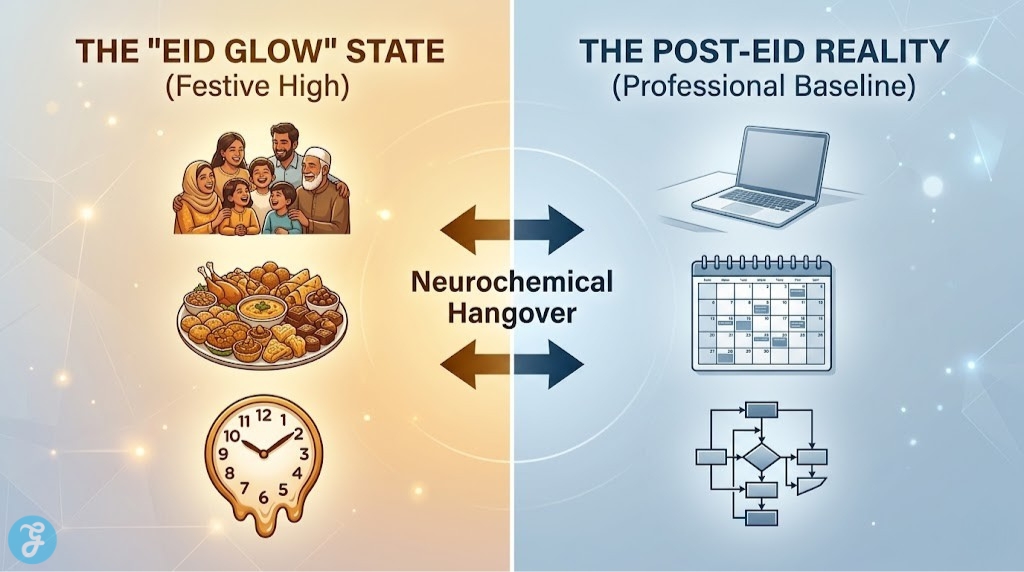
Here’s a strategic breakdown of the transition from the festive high to the professional baseline, highlighting why your brain feels “stuck” in a celebratory loop.
| Cognitive Dimension | The “Eid Glow” State | The Post-Eid Professional Reality |
| Dopamine Source | Social connection, novelty, and indulgence. | Task completion and routine logic. |
| Time Perception | Fluid and relaxed; focused on the present. | Rigid and structured; focused on deadlines. |
| Physical State | High caloric intake and irregular sleep. | Sedentary positioning and structured sleep. |
| Decision Energy | Low; choices are based on pleasure/tradition. | High; choices require analytical rigour. |
The Neurochemistry of the Post-Festive Slump
Understanding the “why” behind the lethargy is the first step toward reclaiming your focus. During Eid, the brain is bathed in oxytocin (from social bonding) and dopamine (from variety). When these levels return to their baseline, it creates a “neurochemical hangover” that manifests as intense procrastination. Before you can effectively dive back into complex projects, you must address this physiological lag.
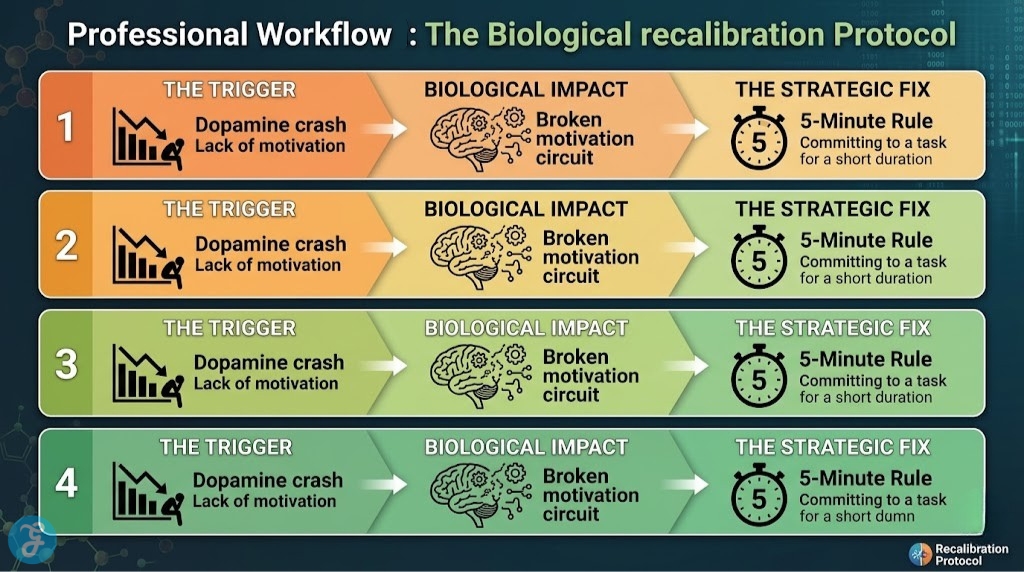
Rather than relying on raw willpower—which is a finite resource—you should look at the specific triggers of your sluggishness. By treating the body as a system that needs a gentle reboot, you bypass the shame cycle associated with a slow start.
Here’s how to fix them:
| Sluggishness Trigger | Biological Impact | The Strategic Fix (Immediate Action) |
| Dopamine Crash | Lack of motivation to start mundane tasks. | Apply the “5-Minute Rule” for small wins. |
| Circadian Shift | Daytime sleepiness and night-time alertness. | 15 mins of morning sunlight to reset the clock. |
| Decision Fatigue | Overwhelmed by the volume of unread data. | Categorize tasks by “Action” vs. “Reference.” |
| Dietary Heaviness | Physical lethargy from celebratory meals. | 48-hour hydration and magnesium-rich protocol. |
Strategic Workflow Shifts for Overcoming Post-Eid Sluggishness
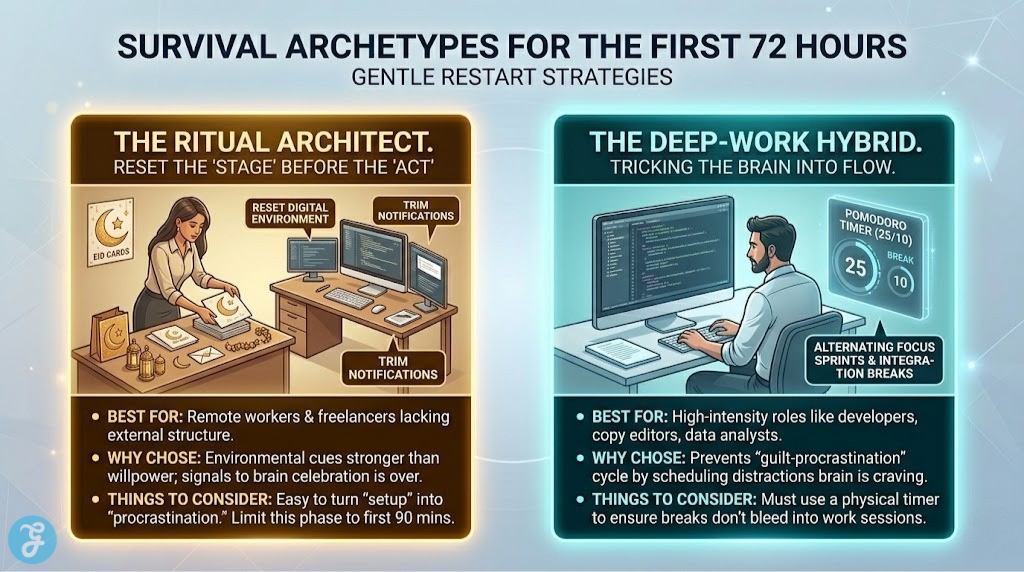
When your momentum has been disrupted, the greatest mistake is trying to resume at 100% capacity immediately. The brain is still processing the “celebration data,” and forcing a deep-work session often results in frustration. A more efficient approach involves adopting specific strategic postures that lower the barrier to entry for your most important work.
By shifting your focus from output volume to workflow architecture in the first 72 hours, you ensure that you don’t burn out by Wednesday. This approach values the long-term sustainability of your career over a single day of forced productivity.
The following is a comparison between different strategic approaches to rebuilding your daily momentum.
| Workflow Approach | Primary Focus | Best Use Case |
| The Ritual Reset | Environmental triggers and digital hygiene. | Resetting after a long period away from the desk. |
| The Pomodoro Hybrid | Alternating focus sprints and integration. | High-intensity roles requiring deep focus (Coding/Editing). |
| The Micro-Tasking Map | Breaking large goals into trivial steps. | Overcoming severe “Blank Screen Syndrome.” |
Matching Professional Output to Energy Reserves
Returning to work after Eid often reveals just how much “celebration fatigue” we’ve accumulated. While we feel rested socially, we are often physically and mentally drained from the change in routine. A strategic audit of your current energy levels—rather than your to-do list—is the most efficient way to plan your first week back.
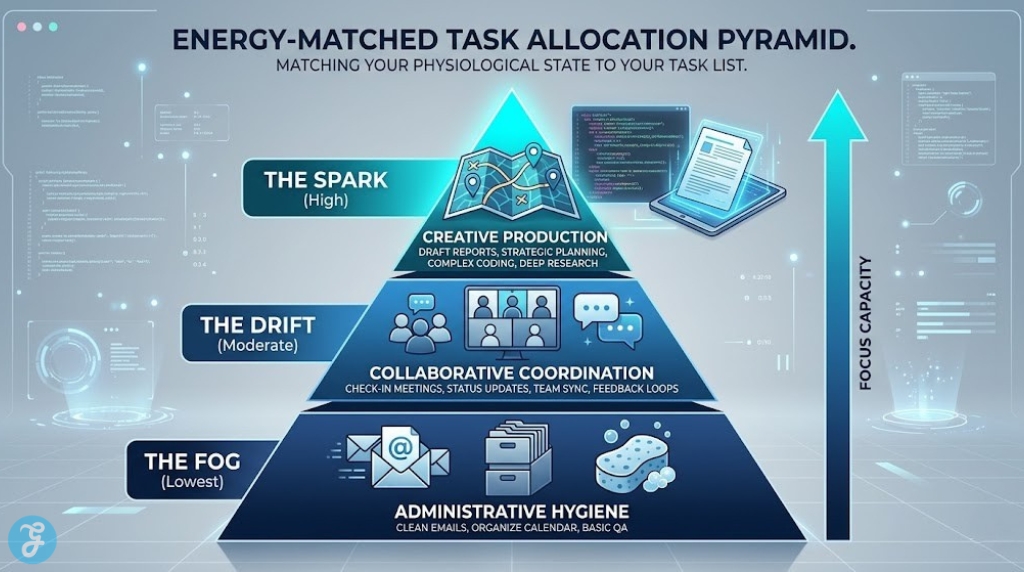
By categorizing your work based on your physiological state, you ensure that you are still contributing value even when your focus is at its most fragile. The following framework helps you match your tasks to your current focus capacity to avoid unnecessary stress.
| Energy Level | Recommended Task Category | Example Activity |
| Level 1: The Fog | Administrative Hygiene | Clearing emails, filing, and updating calendars. |
| Level 2: The Drift | Collaborative Coordination | Team syncs, status updates, and feedback loops. |
| Level 3: The Spark | Creative Production | Strategic planning, drafting reports, and deep research. |
Integrating the Glow: Carrying Festive Warmth into Routine
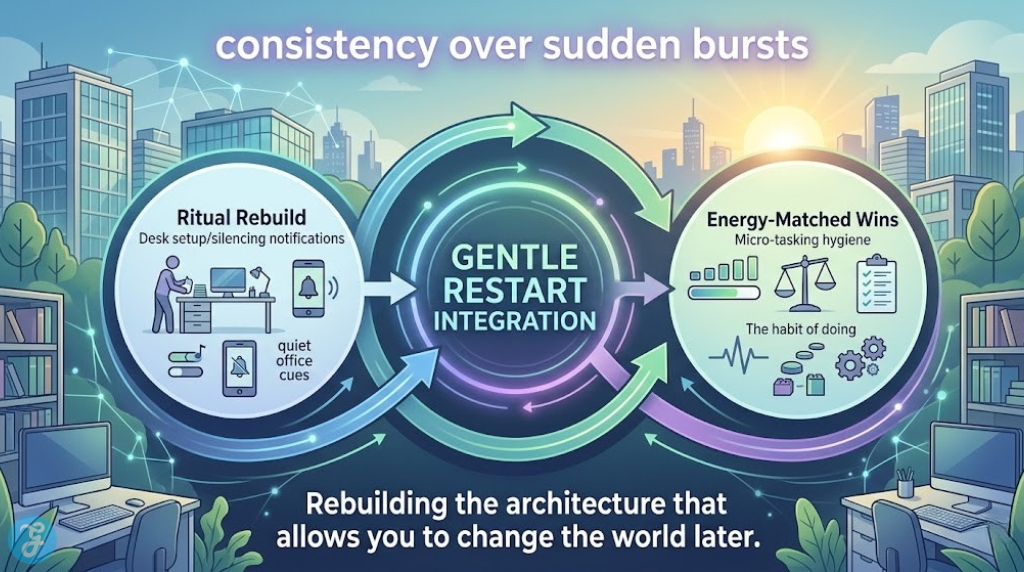
The “Eid Glow” does not have to be extinguished; it just needs to be integrated into a sustainable professional routine. The warmth of the holiday can serve as a battery for the long weeks ahead if you manage the transition with strategic intent. By prioritizing administrative hygiene and energy-matched tasks, you aren’t just getting back to work—you are building a more resilient, self-aware professional version of yourself.
The goal is to move from the celebration to the routine without losing the sense of purpose that the holiday provided. Wait for the momentum to find you, but make sure you are already moving when it arrives. Consistency is the only currency that matters during this transition, and a gentle restart is often the fastest way to full speed.
Frequently Asked Questions: Overcoming Post-Eid Sluggishness
Why is it so hard to start working after Eid?
It is primarily a biological issue known as a “dopamine crash.” During Eid, your brain is stimulated by novelty, social connection, and celebratory food. Returning to a predictable work routine causes your dopamine levels to drop to a baseline that feels “boring” or heavy. Overcoming Post-Eid Sluggishness requires acknowledging this neurochemical dip rather than fighting it with raw willpower.
How can I reset my sleep cycle quickly after the holidays?
The fastest way to reset your circadian rhythm is through “anchor habits.” Attempting to go to bed three hours earlier than usual rarely works. Instead, prioritize 10–15 minutes of direct sunlight exposure within 30 minutes of waking up. This signals your brain to stop producing melatonin and starts a countdown for natural sleepiness later that evening.
Should I try to clear my entire inbox on my first day back?
Absolutely not. Attempting to clear a backlog of emails while in a low-energy state is a recipe for decision fatigue. Instead, focus on “Administrative Hygiene”—sorting emails into folders like “Urgent Action” and “Reference Only.” Your goal on the first day isn’t to finish the work; it’s to organize the work so you can start the next day effectively.
What is the “5-Minute Rule” for post-holiday focus?
The 5-Minute Rule is a cognitive bypass for procrastination. When Overcoming Post-Eid Sluggishness, tell yourself you will only work on a task for exactly five minutes. Once you break the “activation energy” barrier and start the task, the brain’s resistance usually vanishes, and you’ll likely find the momentum to continue.
Is it normal to feel sad or “down” after Eid celebrations?
Yes, this is often referred to as “post-festive blues.” The sudden transition from high social engagement and spiritual fulfillment to the isolation of a desk can feel jarring. Integrating small “festive carries”—like sharing holiday photos with a colleague or keeping a small celebratory treat at your desk—helps bridge the emotional gap between the holiday and the routine.