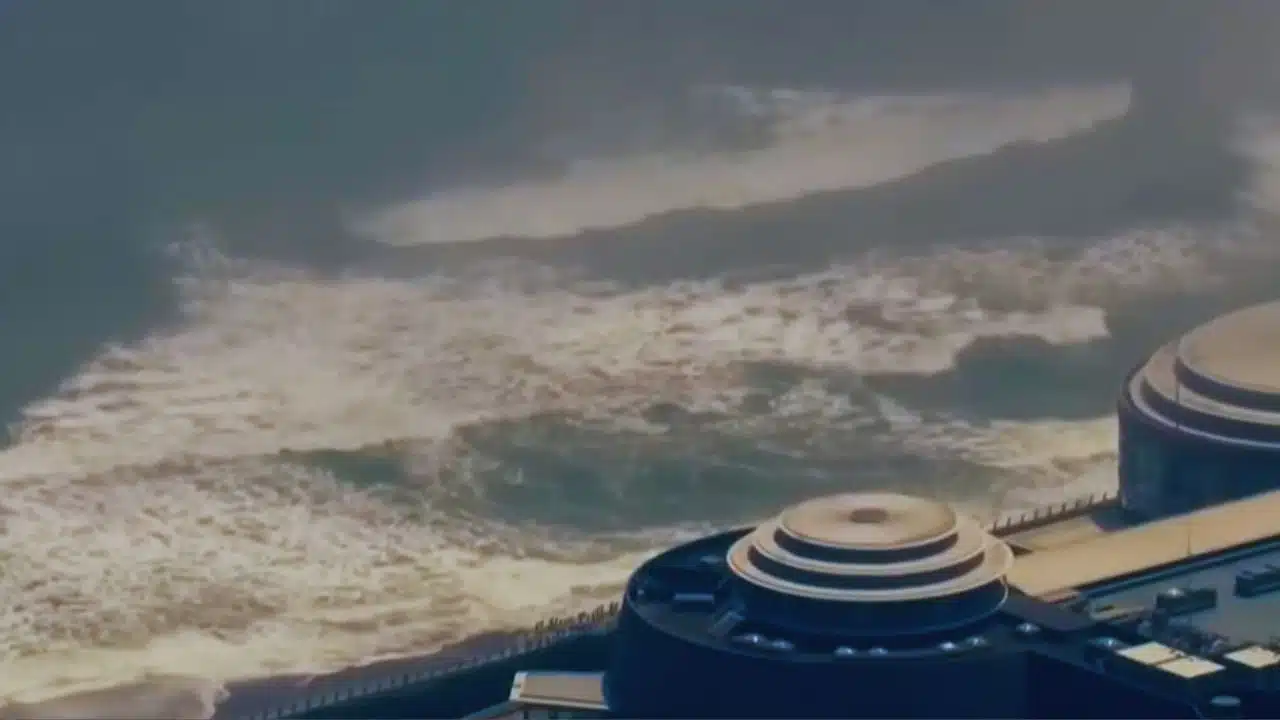
A powerful earthquake struck Russia’s Kuril Islands early Sunday, causing concern along the nearby Kamchatka Peninsula. The German Research Center for Geosciences (GFZ) reported the quake as having a magnitude of 6.8, while both the United States Geological Survey (USGS) and the Pacific Tsunami Warning Center (PTWC) recorded it as a magnitude 7.0.
The quake occurred in the Pacific Ocean, near the Kuril Islands—a region known for frequent seismic activity due to its position along the Pacific “Ring of Fire.”
Russian Authorities Predict Small Tsunami Waves
In response to the earthquake, Russian emergency officials issued a tsunami warning for parts of the Kamchatka Peninsula. According to the Kamchatka Tsunami Warning and Monitoring Center, small tsunami waves are expected to impact several coastal districts. The predicted wave heights are as follows:
- Aleutian Municipal District: up to 19 centimeters (7.5 inches)
- Ust-Kamchatsky Municipal District: up to 15 centimeters (6 inches)
- Petropavlovsk-Kamchatsky Urban District: up to 3 centimeters (1.2 inches)
Officials emphasized that although the tsunami waves are expected to be minor, residents should still remain alert and follow local safety advisories.
No Threat to Hawaii or U.S. West Coast
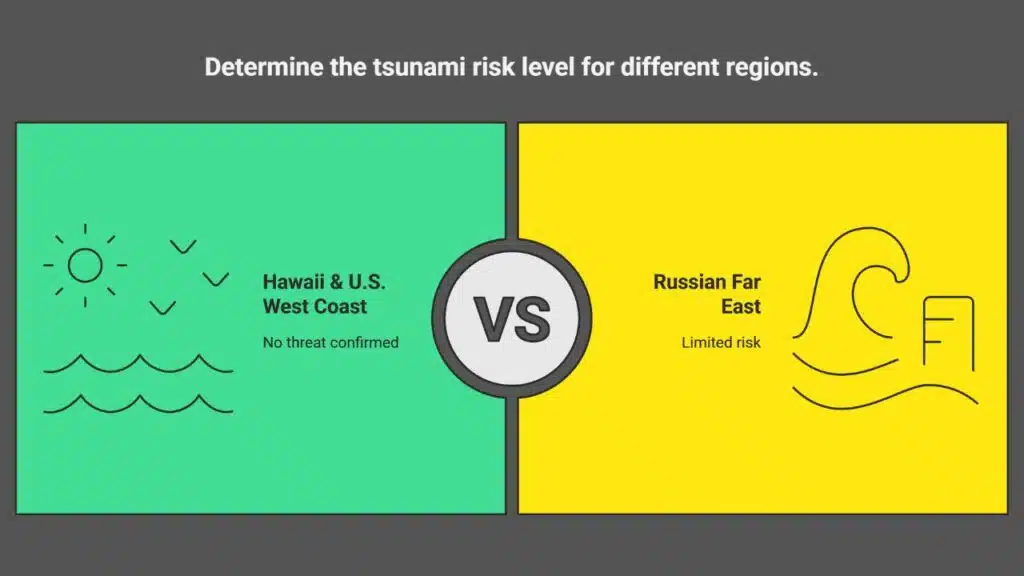
The Pacific Tsunami Warning Center reviewed the event and confirmed that there is no tsunami threat to Hawaii or the U.S. West Coast, including Alaska. Their assessment is based on the earthquake’s depth and location, which appear to pose limited risk beyond the Russian Far East.
Second Earthquake in the Region in Just Over a Week
This is the second significant earthquake to hit near Russia in just over a week. The Kuril Islands and Kamchatka region are particularly earthquake-prone because they lie along the boundary between the Pacific Plate and the Okhotsk Plate, a major subduction zone.
In recent years, scientists and emergency authorities have increased monitoring efforts in the region due to its high seismic activity and potential for tsunami events. The area has experienced several devastating tsunamis in the past, prompting strict protocols for early warning and coastal evacuation.
Seismic Monitoring and Safety Measures in Place
Russia’s emergency services and geoscience agencies are closely monitoring aftershocks, which are common following quakes of this magnitude. Local authorities have been alerted to prepare for evacuation procedures if wave heights rise unexpectedly.
Schools, coastal businesses, and residents in tsunami-prone zones have been advised to follow standard safety guidelines, including moving to higher ground if instructed.
According to the Kamchatka Tsunami Warning and Monitoring Center, their sensors are constantly updating data to track any changes in sea levels or seismic activity, ensuring the public receives timely updates.
Sunday’s earthquake off the coast of Russia’s Kuril Islands highlights the region’s ongoing seismic risks. While the tsunami waves expected along the Kamchatka coast are relatively small, the event serves as a reminder of the importance of early-warning systems, preparedness, and international cooperation in monitoring natural disasters.
Residents are urged to stay informed through official channels like the Russian Ministry of Emergency Situations (EMERCOM), the USGS, and the Pacific Tsunami Warning Center.
The Information is Collected from BBC and MSN.