
Are you tired of slow websites and constant downtime messing up your online game? Hosting tech is changing fast, with artificial intelligence now making servers smarter and more reliable than ever.
In this post, we’ll share 10 hot hosting trends for 2025 that can fix your web woes and boost your site’s speed. Stick around, it’s gonna be quick!
Key Takeaways
- AI in hosting cuts downtime by 20% and maintenance costs by 10%, with the AI market set to reach $1.6 trillion by 2030.
- Multi-cloud setups are used by 92% of enterprises, and 73% rely on two or more providers like AWS and Microsoft Azure.
- Edge computing will handle 75% of enterprise data outside traditional centers by 2025, boosted by CDNs for faster load times.
- Green hosting tackles the internet’s 3.7% share of global emissions, with 85% of people wanting renewable energy in 2021.
- Zero Trust Architecture will replace VPNs for 60% of companies by 2025, enhancing cloud security against cyber threats.
Enhanced AI and Automation in Hosting

Hey there, folks, let’s chat about how artificial intelligence (AI) and automation are shaking things up in web hosting. Picture your server as a smart buddy who knows what’s coming before you do.
AI optimizes server performance, predicts when maintenance is needed, and even helps with customer support through chatbots. It’s like having a tireless assistant who never sleeps, making sure your site runs smooth as butter.
Plus, stats show AI can cut downtime by a solid 20% and slash maintenance costs by 10%. That’s real money saved!
Now, toss in automation, and you’ve got a powerhouse combo for cloud hosting. This tech handles backups, updates, and resource scaling without you lifting a finger. Imagine not worrying about crashes or slowdowns because the system’s got your back.
With the AI market expected to hit a whopping $1.6 trillion by 2030, hosting providers are jumping on this trend fast. It’s all about keeping your site on the internet with less hassle and more reliability.
How cool is that?
Multi-Cloud and Hybrid Cloud Solutions
Dig into this, folks. Multi-cloud strategies are taking over the hosting world, and for good reason. They boost redundancy, ramp up performance, and help you adapt fast. Imagine spreading your data across different cloud providers like Amazon Web Services (AWS) and Microsoft Azure.
If one goes down, you’re still up and running. Stats show that 92% of enterprises already use a multi-cloud setup. Plus, 73% of organizations rely on two or more cloud service providers.
This approach keeps your website or app humming, no matter what hits.
Now, let’s chat about hybrid cloud solutions, a real game-changer. They mix public cloud spaces with private cloud setups, creating a sweet spot for industries like healthcare and e-commerce.
Got sensitive data? Keep it safe in a private environment. Need extra power? Tap into the public cloud. It’s like having the best of both worlds, a perfect balance for security and scale.
Companies using hybrid cloud technology can handle big demands while protecting what matters most. Stick around to see how this fits into other hosting trends for 2025.
Edge Computing and Content Delivery Networks (CDNs)
Hey there, let’s chat about something cool that’s changing the web game, edge computing and Content Delivery Networks, or CDNs. Edge computing brings data processing right near you, cutting down on wait times big time.
Imagine not having to wait forever for a video to load; that’s latency reduction in action. In fact, stats show that by 2025, a whopping 75% of enterprise data processing will happen outside old-school data centers.
So, your favorite sites will run smoother, no matter where you are.
Now, toss CDNs into the mix, and it’s like having a fast-food joint on every corner. These networks store content globally, so pages load in a snap. Think about this: 53% of users ditch a site if it takes over 3 seconds to show up.
CDNs help dodge that problem, boosting speed and keeping you hooked. With tools like Amazon Web Services (AWS) and Microsoft Azure pushing edge-computing power, your online experience just keeps getting snappier.
Core Web Vitals and SEO-Focused Hosting Features
Guess what, folks, hosting in 2025 is all about speed and user happiness with Core Web Vitals leading the charge. These metrics, like Largest Contentful Paint (LCP), measure how fast your site loads its main content.
A slow LCP can tank your rankings on search engines and frustrate visitors. Hosting providers are now stepping up, offering tools to boost these stats. Think of it as giving your website a turbo engine to zoom past the competition.
Now, imagine your site not just loading fast but also keeping users glued. SEO-focused hosting features are making this happen with smart setups for web hosting. They tweak server speeds and optimize for search visibility, so your site shines bright.
With LCP and other vitals in check, your pages grab attention and keep folks coming back for more. Stick with hosts who get this, and watch your engagement soar.
Sustainable and Green Hosting Practices
Hey there, folks, let’s chat about something super important, like saving the planet with sustainable and green hosting practices. Imagine your website running on pure, clean power, kinda like sipping a fresh smoothie instead of a sugary soda.
Hosting providers are now zooming in on energy-efficient data centers and carbon offset programs to cut down that nasty carbon footprint. Did you know the internet’s carbon footprint makes up a whopping 3.7% of global greenhouse emissions? That’s right up there with the airline industry! Plus, traditional data centers gulp down 1% of the world’s electrical usage.
So, switching to green hosting with renewable energy isn’t just cool, it’s a must.
Now, here’s the kicker, my friends, consumers like you are pushing for this change big time. Back in 2021, a huge 85% of folks wanted websites powered by green energy. On top of that, 66% of global customers are ready to shell out up to 9.7% more for brands focused on environmental sustainability.
Hosting companies are catching on, using energy-efficient hardware and aiming to be carbon-negative. Think of it as planting trees while you surf the web. Big players in cloud hosting, such as Amazon Web Services (AWS) and Microsoft Azure, are stepping up with eco-friendly moves.
This trend is all about making the digital world a greener place for everyone.
Advanced Security Measures as a Core Offering
Folks, let’s chat about why safety on the web is a big deal for hosting in 2025. Cyber threats and sneaky cyberattacks are popping up left and right. Hosting providers now see security as their top job, not just an extra perk.
They’re rolling out key tools like SSL certificates to lock down your data, malware scans to catch bad stuff, and automated backups to save your site if things go south. It’s like having a guard dog that never sleeps, watching over your online home.
Now, get this, a new approach called Zero Trust Architecture, or ZTA, is changing the game. It checks everyone all the time, no exceptions, cutting down risks from data breaches. Word on the street is that by 2025, a whopping 60% of companies will ditch old VPNs for these Zero Trust solutions.
Think of it as a bouncer at a club, always asking for ID, no matter who you are. With cybercriminals getting craftier, hosting with beefed-up cloud security isn’t just nice, it’s a must.
Hosting Optimized for AI and Machine Learning Applications
Hey there, readers, let’s chat about hosting that’s built for artificial intelligence (AI) and machine learning (ML). This isn’t just tech talk, it’s the future of how websites shine online.
Hosting made for AI and ML boosts your spot on search engine results pages, helping more folks find you. It cuts down costs, speeds things up, and ramps up security, all at once. Imagine your site running like a well-oiled machine, handling big data with ease.
Think about this, the AI market is set to hit a whopping 1.6 trillion dollars by 2030. That’s huge! Hosting providers are stepping up, offering cloud-based setups on platforms like Amazon Web Services (AWS) and Microsoft Azure.
These systems power complex ML tasks without a hitch. With such hosting, your site can tap into predictive analytics, making smart moves before issues pop up. Stick with this trend, and watch your online game soar!
The Rise of Decentralized Hosting Solutions
Check this out, folks, decentralized hosting is making waves in the web hosting world. Imagine your data not sitting in one giant data center, but spread across tons of devices worldwide.
That’s the core idea here. It’s like a big team effort, where many computers share the load instead of one big boss handling everything. This setup, often tied to blockchain technology, boosts security and cuts reliance on single points of failure.
Guess what? The blockchain market was worth 17.57 billion bucks in 2023, jumped to 27.84 billion in 2024, and is set to skyrocket to 825.93 billion by 2032. That’s a huge growth rate of 52.8% each year.
So, this tech isn’t just a passing trend; it’s got real muscle.
Now, let’s chat about the hurdles, because it’s not all smooth sailing. Scaling up decentralized hosting for massive traffic is a tough nut to crack. Many users still hesitate to jump on board due to adoption challenges.
Unlike traditional cloud hosting or dedicated hosting with giants like Amazon Web Services, this approach lacks a central control hub. It’s a bit like herding cats, honestly. Data spreads across countless IoT devices and personal machines in a network.
While this cuts down on cyber threats by avoiding one weak spot, getting everyone to play nice in the cloud infrastructure game is tricky. Stick around, because this space is heating up fast!
Scalable Hosting for High-Growth Websites
Scalable hosting is a game-changer for high-growth websites like e-commerce stores and media-heavy platforms. It lets your site handle sudden traffic spikes without crashing. Imagine your online shop during a big sale; scalable solutions keep things running smooth as butter.
This is vital for consistent performance, especially when your audience grows fast.
Think about this: cloud technology, a key player in scalable hosting, is set to grow by 21.5% in 2025. That’s huge! Hosting providers using cloud computing can boost resources on demand, keeping your site speedy.
Whether you’re on Amazon Web Services or Microsoft Azure, scalable hosting means your business stays online, no matter the crowd.
Managed Hosting Services for Simplified Operations
Hey there, readers, let’s talk about a transformative solution in web hosting. Managed hosting services remove the stress of maintaining a website. Think about not worrying over updates or technical issues.
These services take care of all the challenging tasks like maintenance, staging environments, and automatic updates. Plus, you get round-the-clock support to resolve problems quickly.
It’s like having a tech friend always ready to help, saving you time and effort.
Now, envision this for agencies looking to increase profits. With managed hosting, you concentrate on expansion, not server troubles. The web hosting industry, valued at USD 159.9 billion in 2025, is projected to reach USD 329.1 billion in the near future.
That’s a significant jump, demonstrating the importance of hosting providers. So, choosing managed solutions isn’t just wise, it’s a forward-thinking move in this dynamic cloud hosting environment.
Serverless Hosting Gains Momentum
Serverless hosting is taking off fast, folks, and it’s no surprise! This cool approach lets you run apps without worrying about managing servers. It boosts efficiency with artificial intelligence and automation, making life easier for website owners.
Plus, it meshes well with multi-cloud and hybrid cloud solutions, giving you top-notch flexibility and reliability. Imagine skipping the hassle of server upkeep, just like dodging a rainy day without an umbrella!
Now, let’s chat about speed and green vibes. Serverless setups pair with edge computing and content delivery networks, slashing delays with localized data processing for faster websites.
They also focus on core web vitals to amp up performance and SEO rankings. On top of that, sustainability shines through by cutting energy consumption. And don’t fret about safety; features like SSL certificates and automated backups shield you from cyber threats.
How sweet is that?
Increased Adoption of Containerized Hosting Solutions
Hey there, folks, let’s chat about a hot trend in web hosting, containerized solutions. These neat setups pack applications and their needs into separate boxes, kinda like packing snacks in lunch containers.
They boost flexibility and let businesses grow fast on platforms like Amazon Web Services or Microsoft Azure. Guess what? Experts predict a 21.5% jump in their use by 2025. That’s a big leap for cloud hosting!
Now, imagine mixing these containers with hybrid cloud systems, which 90% of companies might adopt by 2027. They fit right into CI/CD pipelines, speeding up app updates. Plus, they help with disaster recovery by blending dedicated hosting with cloud services.
You can tweak your setup without draining resources, making scalable hosting a breeze for any growing site. How cool is that for handling cyber threats or boosting high availability?
DIY Website Builders Continue to Expand
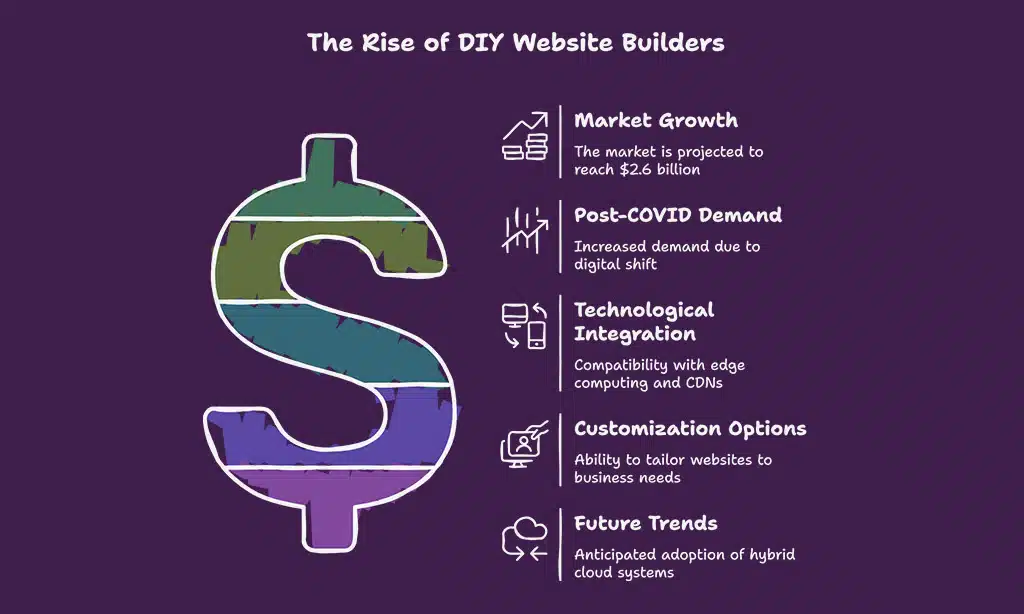
Gosh, have you noticed how DIY website builders are popping up everywhere? They’re like the Swiss Army knife of web hosting, making it super easy for anyone to create a pro-looking site.
No coding skills needed, just a bit of creativity, and boom, you’re online. The market for these tools is set to hit a whopping $2.6 billion soon, showing how much folks crave simple web solutions.
Especially after COVID-19 pushed tons of businesses to go digital, the demand for such platforms has soared through the roof.
On top of that, these builders play nice with trends like edge computing and content delivery networks, or CDNs, to slash loading times. Speed matters, right? Plus, with customization in hosting growing fast, you can tweak your site to match your business vibe.
And get this, by 2027, about 90% of companies might mix hybrid cloud systems with these DIY tools. So, crafting your corner of the internet has never been this smooth or exciting!
Blockchain Technology in Hosting Begins Emerging
Hey there, readers, let’s chat about something cool on the horizon. Blockchain technology is starting to pop up in web hosting, and it’s got some real potential. Imagine a system where data gets stored in a super secure, decentralized way.
No single point of failure, just a network that keeps things safe from cyber threats. This tech, already big in finance, is now eyeing the hosting world.
Now, here’s the scoop on its growth. The blockchain market was worth 17.57 billion bucks in 2023. It jumped to 27.84 billion in 2024. Experts predict a massive leap to 825.93 billion by 2032, with a growth rate of 52.8 percent each year.
Still, there’s a catch or two. Scalability and energy use are holding it back for now. But after 2025, watch out, as blockchain might just reshape cloud hosting and data centers for the better.
Decline of Traditional Data Centers
Let’s talk about something big, folks. Traditional data centers are fading fast from the spotlight. Back in 2015, we had a whopping 8.55 million of them worldwide, but by 2021, that number shrank to just 7.2 million.
It’s like watching an old giant slowly step aside for newer, shinier players in cloud computing and hybrid cloud solutions.
Now, here’s the kicker. By 2024, these old-school data centers will make up only 36.5% of total IT infrastructure spending. Plus, they gulp down 1% of global electrical usage, which is pushing hosting providers to pivot to energy efficiency and cloud technology like Amazon Web Services or Microsoft Azure.
It’s a shift that’s hard to ignore, don’t you think?
Zero Trust Architecture for Enhanced Security
Hey there, readers, let’s chat about a game-changer in cloud security called Zero Trust Architecture, or ZTA for short. Think of it like a strict bouncer at a club, checking IDs over and over, no matter who you are.
ZTA keeps verifying everyone and everything trying to access your data. It cuts down risks by assuming no one is safe until proven otherwise. How cool is that?
Now, get this, by 2025, a whopping 60% of companies plan to ditch old VPNs for Zero Trust solutions. Why stick with outdated tech when cyber threats lurk around every corner? ZTA steps up as a solid shield, especially for remote work setups.
It’s like having a personal bodyguard for your network, keeping your info safe on any cloud hosting platform.
Hosting Customization to Meet Brand-Specific Needs
Guess what, folks? Hosting customization is advancing rapidly, and it’s all about meeting your brand’s specific needs. Imagine your website as a suit designed just for you, fitting perfectly.
Hosting providers are rising to the occasion, creating plans that align with your business objectives. This trend is poised to expand, as more companies desire services that feel unique.
It’s like having a coffee prepared exactly to your taste, no generic options here.
Now, let’s talk about why this is significant for you. With personalized web hosting, client satisfaction sees a major improvement. Providers are concentrating on varied business requirements, ensuring your site operates seamlessly and swiftly.
Think of leaders like Amazon Web Services and Microsoft Azure setting the standard. They’re blending cloud hosting with custom adjustments to make your brand stand out. Embrace this change, and see your online presence take off!
Impact of Government Regulations on Hosting Practices
Hey there, folks, let’s chat about how government rules are shaking up the web hosting world. These regulations, especially around data privacy and security, are pushing hosting providers to step up their game.
Think of it as a strict teacher making sure everyone follows the playbook. Laws like GDPR force companies to handle and store data with extra care, keeping your info safe. Plus, data sovereignty rules mean data must stay in its home country, adding another layer to the puzzle for cloud hosting and data centers.
Now, get this, environmental sustainability laws are nudging hosting companies toward green practices, like using renewable energy to cut their carbon footprint. On top of that, security rules are driving the use of Zero Trust Architecture, where every user and device gets checked non-stop.
Cyber threat and data breach laws are also sparking AI-driven tools for better threat detection. And, oh boy, blockchain technology is sneaking into hosting due to rules boosting data integrity.
It’s a wild ride, but these changes keep your online world safer with cloud security at the forefront.
Takeaways
Well, folks, we’ve zipped through the top hosting trends set to rule 2025. Isn’t it wild how fast cloud tech, like Amazon Web Services, shifts the game? From green hosting to edge computing, these changes pack a punch for your website’s speed and safety.
So, keep your eyes peeled, and jump on these waves to stay ahead. Let’s chat more if you’re curious about scalable solutions!
FAQs
1. What’s the big deal with edge computing in hosting trends for 2025?
Hey, edge computing is shaking things up by slashing latency reduction to a bare minimum. It brings data centers closer to users, making everything zippy, especially for IoT devices and the Internet of Things. So, expect web hosting to feel like it’s right next door, no waiting around!
2. How does green hosting fit into the future of cloud technology?
Green hosting is stepping up big time, folks. It’s all about cutting that carbon footprint with renewable energy and energy-efficient hardware, making environmental sustainability a real goal for hosting providers.
3. Why are hybrid cloud solutions gaining traction for 2025?
Well, hybrid cloud solutions are like having the best of both worlds, mixing private cloud security with public cloud flexibility. They’re perfect for businesses juggling remote work and needing scalable hosting solutions. Plus, they play nice with cloud cost optimization, saving you a pretty penny.
4. Can artificial intelligence boost hosting in the coming years?
Absolutely, artificial intelligence, or AI, is a game-changer, teaming up with machine learning, or ML, to beef up cloud security against cyber threats. It’s also automating tasks like never before, making hosting smoother than a hot knife through butter.
5. What role do content delivery networks play in modern hosting?
Content delivery networks, or CDNs, are your secret weapon for speed, my friends. They spread data across the globe, cutting down wait times, and work hand-in-hand with SSL certificates to keep things safe for users on platforms like Amazon Web Services, or AWS, and Microsoft Azure.
6. How will blockchain technology shape hosting trends by 2025?
Listen up, blockchain technology is set to be a rock-solid shield in cloud computing. It’s gonna help mitigate risks and boost trust in data handling, especially for private clouds and public clouds. Pair that with continuous integration and CI/CD pipelines, and you’ve got a fortress of efficiency for software-as-a-service, or SaaS, and platform-as-a-service, or PaaS, setups.