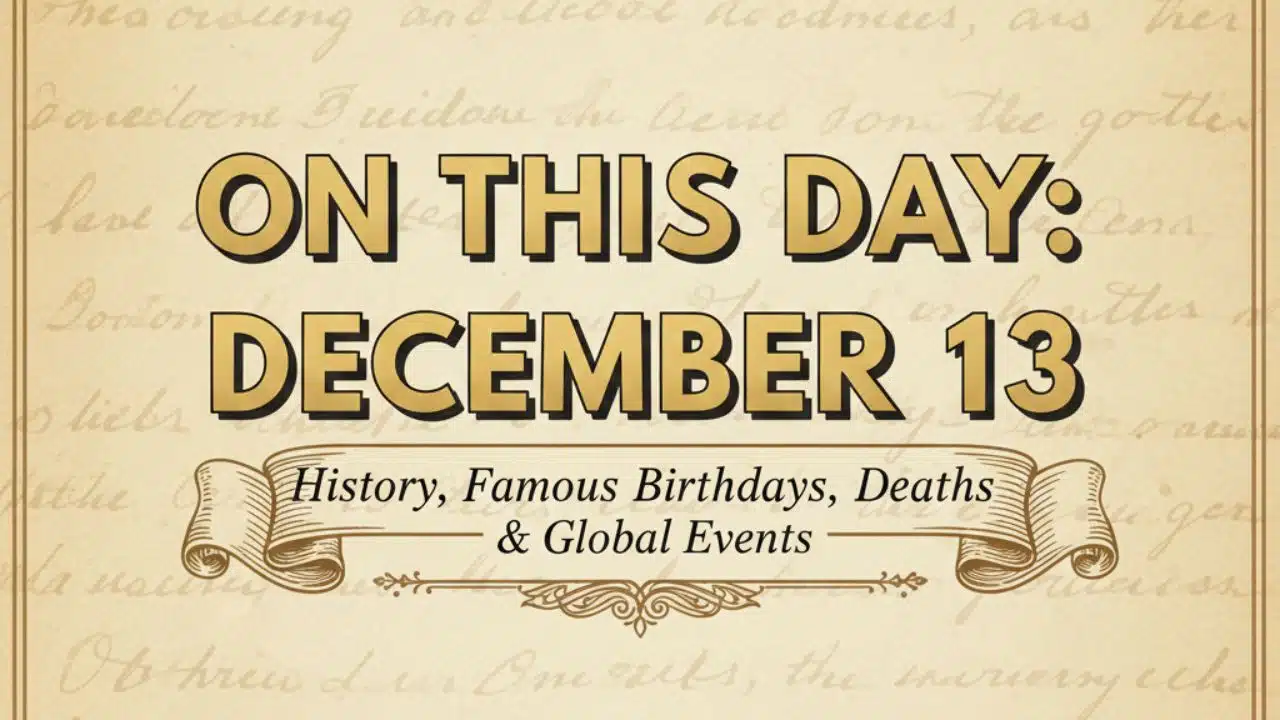
Some dates arrive quietly on the calendar, yet carry the echo of battles, revolutions, songs, and constitutional shifts. 13 December is one of those days.
In the Bangalee world, it sits in the fiery corridor leading to Victory Day in Bangladesh and carries the scar of the 2001 attack on the Indian Parliament. Globally, it marks the fall of Nanjing in 1937, martial law in Poland, the birth of activists and artists, and the move to a republic in Malta.
Let’s walk through this date—Bengal first, then the world.
The Bangalee Sphere (Bangladesh, West Bengal & Subcontinent)
Historical Events
A few days before 16 December 1971, the war for Bangladesh’s independence was reaching its climax. 13 December falls right inside that final storm.
Liberation War 1971 – Bogra & Mirzapur freed
By 13 December 1971, joint forces of the Mukti Bahini and the Indian Army had liberated several northern and central towns, including Bogra and Mirzapur (Tangail), from Pakistani occupation. These operations followed the famous Tangail airdrop (11 December) and were part of the push toward Dhaka from multiple directions.
-
Bogra was a key road and rail junction in the north; its fall disrupted Pakistani logistics.
-
Mirzapur’s liberation further secured the Dhaka–Tangail axis already shaken by Indian paratroopers.
Why it matters today:
In many Bangladeshi districts, these local “muktir dibosh” (liberation days) are as emotionally significant as Victory Day itself. They remind people that independence was won inch by inch, town by town, not just in the capital.
We can summarize the 1971 Bangalee context like this:
| Date (Dec 1971) | Place (Bangladesh) | What Happened | Impact |
|---|---|---|---|
| 11 Dec | Tangail | Indian paratroopers dropped, cutting off Pakistani retreat | Opened fast corridor toward Dhaka |
| 13 Dec | Bogra, Mirzapur | Towns liberated by joint forces | Collapsed Pakistani hold in the north/central belt |
| 16 Dec | Dhaka | Pakistani Eastern Command surrendered | Birth of independent Bangladesh |
2001 – Attack on the Parliament of India, New Delhi
On 13 December 2001, five armed militants drove into the Parliament complex in New Delhi, just after both Houses had adjourned. They were identified as Jaish-e-Mohammed operatives; Indian authorities also blamed Lashkar-e-Taiba (LeT) for involvement.
-
The attackers killed security personnel and a gardener; 14 people died including all five militants.
-
More than 100 MPs and staff were inside at the time; a massacre was narrowly averted by the quick response of security forces.
Why it matters today:
-
The attack triggered a massive India–Pakistan military standoff along the border in 2001–02, bringing two nuclear-armed neighbors close to war.
-
It hardened Indian legislation and public opinion on terrorism, security, and Kashmir.
-
Every year, Parliament holds a memorial on 13 December to honor the security staff who died defending the institution.
Famous Births (Bangalee & Subcontinent Focus)
December 13 has given South Asia some distinctive voices—from satire and socialism to governance and cinema.
| Name | Year | Place / Identity | Why They Matter |
|---|---|---|---|
| Shibram Chakraborty | 1903 | Bengali writer, West Bengal | Beloved humorist and satirist, known for wordplay, absurdist situations and unforgettable characters in modern Bengali literature. His stories remain staples in Bangla magazines and school readings. |
| Tridib Chaudhuri | 1911 | Born near Dhaka (now Bangladesh), later India | Freedom fighter turned socialist leader; a key figure of the Indian Left and a long-serving Lok Sabha MP, representing the continuity between anti-colonial struggle and post-independence parliamentary politics. |
| Manohar Parrikar | 1955 | Goa, India | First IIT-educated Chief Minister of Goa and later Defence Minister of India, associated with debates around defence reforms and “surgical strike” doctrine. |
| Daggubati Venkatesh | 1960 | Andhra Pradesh, India | One of the pillars of Telugu cinema (Venkatesh), winner of multiple Nandi Awards, with roles that range from family dramas to remakes that connect South and North Indian film industries. |
Famous Deaths (Bangladesh & India)
Smita Patil (13 December 1986)
-
Smita Patil (b. 1955) was a towering figure of the parallel cinema movement in Hindi and Marathi film—starring in Bhumika, Manthan, Sadgati, Mirch Masala and many others.
-
She died on 13 December 1986, only 31 years old, due to complications of childbirth (puerperal sepsis).
-
Over ten of her films were released posthumously, and she is still celebrated as a feminist icon for choosing roles that confronted patriarchy and rural exploitation.
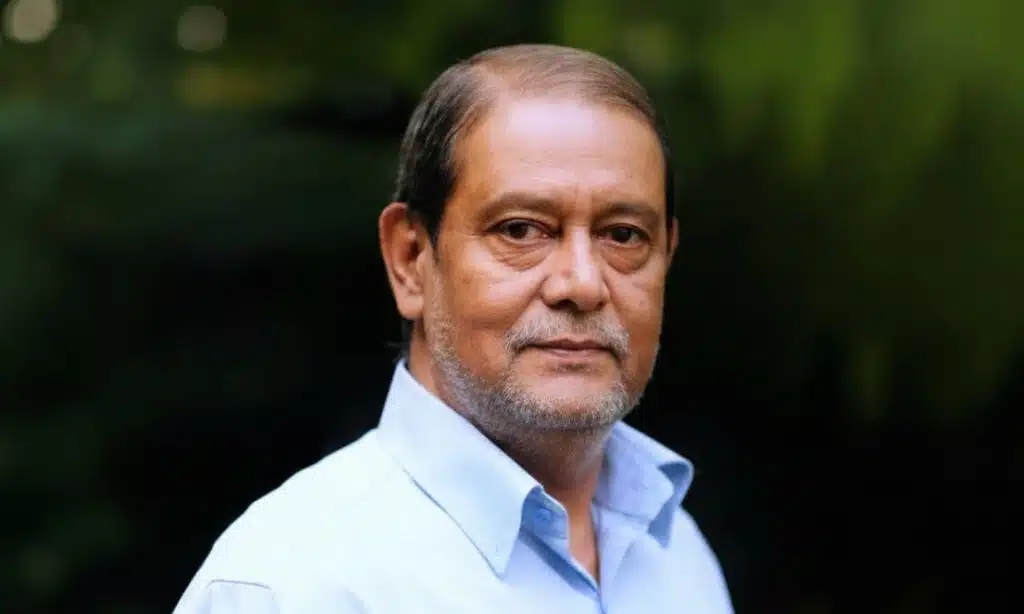
Helal Hafiz (13 December 2024)
-
Bangladeshi poet Helal Hafiz, famed for the line “Nishiddho Sompadya” and for capturing the rebellious energy of the late 20th century, passed away in Dhaka on 13 December 2024.
-
He is remembered for politically charged yet lyrical Bangla poetry, often recited at rallies and student movements.
Cultural / Civic Observances in the Bangalee Sphere
There is no fixed pan-Indian or pan-Bangladeshi religious festival locked to 13 December, but the date carries civic and historical observances:
-
In various Bangladeshi districts, particularly around Bogra and Mirzapur, 13 December is marked as a local liberation day, featuring military parades, cultural shows, and tributes to martyred freedom fighters.
-
In India, 13 December has become a day of remembrance for the Parliament attack, with wreath-laying ceremonies and high security around the complex.
These are rituals of political memory, not religious festivals—but deeply embedded in the political culture of South Asia.
International Observances & Holidays (December 13)
2.1 Republic Day – Malta
Republic Day (Jum ir-Repubblika) in Malta is celebrated on 13 December.
-
It commemorates 13 December 1974, when Malta amended its constitution, removed the British monarch as head of state, and became a republic within the Commonwealth. Sir Anthony Mamo became the first President.
Why it matters:
Republic Day marks the final constitutional step from colony to republic. British troops stayed until 1979, but 1974 is the symbolic moment when Maltese political sovereignty was fully localized.
Acadian Remembrance Day – Canada
-
Acadian Remembrance Day is observed by Acadian communities, particularly in New Brunswick and Prince Edward Island, on 13 December.
-
It recalls the sinking of the ship Duke William in 1758, which was carrying Acadian deportees from present-day PEI to France; nearly 2,000 people died.
Why it matters:
The day keeps alive the memory of deportation, shipwreck, and cultural survival, and is part of a broader effort to assert Acadian identity within modern Canada.
St. Lucia’s Day (St. Lucy’s Day) – Northern Europe
-
In Sweden, Norway, and parts of Finland and Italy, 13 December is celebrated as St. Lucia’s Day, a festival of light honoring Saint Lucy of Syracuse.
-
Children’s processions are led by a “Lucia” wearing a white dress and a crown of candles, symbolizing light in the dark winter.
Why it matters:
For Nordic countries, this festival blends Christian martyrdom stories with pre-Christian winter-light traditions, emphasizing resilience and hope at the darkest time of the year.
Other Thematic Days
-
National Guard Birthday (United States) – The US National Guard traces its origin to 13 December 1636, when the Massachusetts Bay Colony organized three militia regiments. Today it’s marked as a “birthday” celebration for the Guard, an institution that predates the United States itself.
Global History (Regional Breakdown)
Now, zooming out from Bengal and the subcontinent, here’s how 13 December appears across world history.
United States
Battlefields and Presidents
-
1862 – Battle of Fredericksburg: In mid-December 1862, with some of the heaviest fighting around 13 December, Union forces under Ambrose Burnside launched repeated frontal assaults against Confederate positions near Fredericksburg, Virginia, suffering disastrous casualties. The battle became a symbol of futile slaughter and poor leadership during the American Civil War.
-
2000 – Bush v. Gore ends the Florida recount: On 12–13 December 2000, legal and political moves around the Bush v. Gore decision effectively awarded the US presidency to George W. Bush by halting further recounts in Florida.
Why it matters: It remains a touchstone in debates on electoral legitimacy, the Electoral College, and the role of the Supreme Court.
2003 – Capture of Saddam Hussein
On 13 December 2003, US forces captured former Iraqi president Saddam Hussein near Tikrit. He was found hiding in a small underground “spider hole” on a farm.
-
For Washington, the arrest was presented as the symbolic end of Ba’athist rule.
-
For Iraqis, however, violence and insurgency continued, showing that regime change does not automatically mean stability.
Russia
1833 – “God Save the Tsar!” and Imperial Ideology
In 1833, the Russian Empire adopted “God Save the Tsar!” as its new official anthem, part of Tsar Nicholas I’s attempt to fuse Orthodoxy, autocracy, and nationality into a single imperial ideology.
Although not tied solely to this date, December 13 falls in the period when imperial ceremonies and edicts embedded this anthem into official life.
Post-Soviet Shifts
In the 1990s, the days around 12–13 December saw ratification and implementation of Russia’s 1993 constitution, which greatly strengthened the presidency. That arrangement still shapes Russian politics today and is critical to understanding the concentration of power in the post-Soviet Kremlin.
China
1937 – Fall of Nanjing and the Beginning of the Nanjing Massacre
On 13 December 1937, the Japanese army captured Nanjing, then the capital of the Republic of China; the occupation triggered what is known as the Nanjing Massacre or “Rape of Nanjing.
-
Over the following weeks, Japanese troops murdered and raped large numbers of civilians and POWs; estimates of the dead range from 100,000 to more than 300,000.
-
Historians debate the broader time frame of the massacre (some starting earlier in December, others stretching it to March 1938), but 13 December is widely commemorated as the key anniversary, marking the fall of the city and start of mass atrocities.
Why it matters today:
The Nanjing Massacre remains a central trauma in Chinese national memory and a major point of tension in Sino–Japanese relations, as disputes continue over numbers, responsibility, and historical interpretation.
United Kingdom
1266 – End of the Siege of Kenilworth
On 13 December 1266, besieged rebels at Kenilworth Castle finally surrendered after about 172 days, ending one of the longest sieges in medieval English history.
-
The subsequent Dictum of Kenilworth offered rebels a path back to royal favor via fines—an early model of negotiated settlement after civil war.
1577 – Francis Drake Sets Out
Around 13 December 1577, Francis Drake departed from Plymouth on the voyage that would become the second circumnavigation of the globe, returning in 1580.
-
The expedition combined exploration with piracy against Spanish shipping and laid groundwork for England’s emergence as a global maritime power.
Europe (Continental)
1545 – Opening of the Council of Trent
The Council of Trent opened on 13 December 1545 in the city of Trento (then part of the Holy Roman Empire, now Italy).
-
It was the central council of the Catholic Counter-Reformation, clarifying doctrine on issues contested by Protestant reformers and reforming church discipline.
-
Its decrees influenced Catholic education, art, liturgy, and missions far beyond Europe, all the way to Latin America and Asia.
1981 – Martial Law in Poland
On 13 December 1981, General Wojciech Jaruzelski declared martial law in Poland to suppress the independent trade union Solidarity, arresting thousands of activists.
-
The regime hoped to prevent a Soviet invasion by pre-emptively crushing dissent.
-
Instead, the crackdown galvanized international support for Solidarity, and by the late 1980s Poland became one of the first Eastern Bloc states to transition away from Communist rule.
Australia & Canada
Australia – Aerial Experiments & Frontier Memory
-
On 13 December 1858, Sydney witnessed an early balloon flight, part of the 19th-century fascination with aviation. It symbolized how new technologies were imported quickly into colonial societies and used for spectacles of modernity.
-
In the wider December period, historians also note Indigenous–settler frontier conflicts, reminders that Australian nation-building was bound up with violence against Aboriginal peoples.
Canada – Rebels and Republic Dreams
-
13 December 1837: Rebel leader William Lyon Mackenzie declared a short-lived “Republic of Canada” from Navy Island in the Niagara River during the Upper Canada Rebellion.
-
Though the revolt failed, it helped push Britain toward introducing responsible government in Canada—an important step toward later independence.
-
In contemporary times, the date is also tied to Acadian Remembrance Day, already noted above.
Rest of World (Asia, Africa, South America & Beyond)
1474 – Isabella I Claims the Throne of Castile
On 13 December 1474, Isabella I had herself proclaimed Queen of Castile.
-
Her marriage to Ferdinand of Aragon would unify Spain, sponsor Columbus’s voyages, and launch the Spanish empire, with enormous consequences for Indigenous peoples of the Americas.
1967 – Greek King’s Failed Counter-Coup
On 13 December 1967, King Constantine II of Greece attempted a counter-coup against the ruling military junta. The attempt failed; the king fled into exile and never returned to the throne.
-
The episode weakened the monarchy and paved the way for Greece’s eventual transition to a republic in 1974.
1996 – Kofi Annan Chosen as UN Secretary-General
On 13 December 1996, Ghanaian diplomat Kofi Annan was selected by the UN Security Council to become the seventh Secretary-General of the United Nations.
-
Annan, the first Black African to hold the post, would later share the Nobel Peace Prize (2001) with the UN for efforts in peacekeeping and human rights.
Notable Births & Deaths (Global)
Famous Births (Selected)
| Name | Year | Nationality | Why They Are Famous |
|---|---|---|---|
| Emily Carr | 1871 | Canadian | Modernist painter and writer whose works on forests and Indigenous villages in British Columbia are central to Canadian art history. |
| Ella Baker | 1903 | American | Behind-the-scenes strategist of the US civil rights movement; helped build the NAACP, SCLC, and especially the Student Nonviolent Coordinating Committee (SNCC). |
| Philip W. Anderson | 1923 | American | Nobel Prize-winning physicist whose theories in condensed-matter physics (e.g., symmetry breaking) influenced everything from superconductivity to particle physics. |
| Ted Nugent | 1948 | American | Rock guitarist later known almost as much for outspoken conservative politics as for hits like “Cat Scratch Fever.” |
| Taylor Swift | 1989 | American | Global pop and country singer-songwriter; one of the best-selling musicians of all time, with multiple Grammys and a reshaping of how artists control their catalog and tour branding. |
Famous Deaths (Selected)
| Name | Year of Death | Nationality | Legacy |
|---|---|---|---|
| Samuel Johnson | 1784 | English | Author of A Dictionary of the English Language (1755), critic, essayist, and towering man of letters; his dictionary helped standardize English spelling and usage. |
| Wassily Kandinsky | 1944 | Russian / later French resident | Pioneer of abstract painting whose theories linked colour, form, and spirituality; influenced modern art movements across Europe. |
| Ella Baker | 1986 | American | Died on her 83rd birthday; remembered as the “organizer’s organizer” and a champion of grassroots leadership in the civil rights movement. |
| Smita Patil | 1986 | Indian | New Wave and mainstream actress, feminist icon; died due to childbirth complications at 31, leaving an enduring legacy in South Asian cinema. |
| Richard Holbrooke | 2010 | American | US diplomat and chief architect of the Dayton Accords, which ended the Bosnian War; later special envoy for Afghanistan–Pakistan. |
“Did You Know?” – December 13 Trivia
-
Ella Baker’s Life Begins and Ends on December 13: American civil rights organizer Ella Baker was both born and died on 13 December (1903–1986).
-
She spent the years between those two dates tirelessly traveling, mentoring, and organizing—embodying her belief that ordinary people, not charismatic leaders, should drive movements.
-
-
The US National Guard is Older than the United States: The US National Guard traces its origin to militia regiments formed on 13 December 1636, in the Massachusetts Bay Colony—over 140 years before the Declaration of Independence.
-
Republic of Malta, but British Troops Stayed On: Malta became a republic on 13 December 1974, ending the British monarch’s role in its constitution. Yet British forces did not fully withdraw until 1979, so Republic Day commemorates constitutional independence even while foreign troops were still stationed on the islands.
Takeaways
December 13 serves as a powerful reminder that every date in the calendar carries a rich legacy shaped by countless events, influential personalities, and cultural milestones. From breakthroughs in science and politics to the birth and passing of individuals who helped define their eras, the history of this day offers a window into the progress and challenges of humanity.
By revisiting these moments, we not only honor the past but also deepen our understanding of how these stories continue to shape our world today.